 +1 (405) 638-3126
  hello@thinkitive.com





Enable Accurate, Real-Time Clinical Documentation with Workflow-Aligned AI Medical Scribe
Automatically capture encounters in real time and generate structured notes directly within your EHR.

Embedded AI Scribe in
Custom EHR

Specialty-Aligned SOAP
Templates

Structured Clinical
Data Mapping

HL7/FHIR Interoperability
Sync
Ambient AI Scribe: Real-Time Documentation Inside Your EHR.
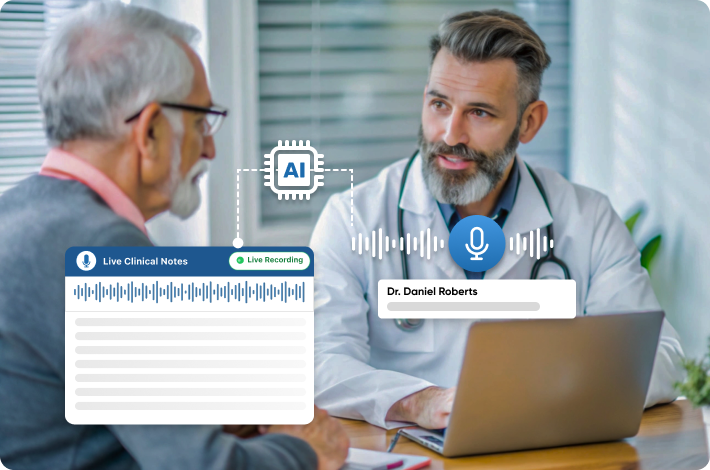
Ambient AI Scribe: Real-Time Documentation Inside Your EHR.
Smart SOAP Templates: Aligned to Your Clinical Workflow.
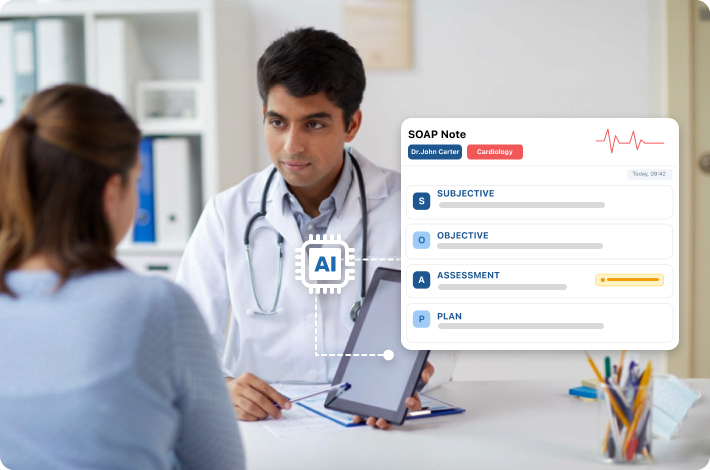
Smart SOAP Templates: Aligned to Your Clinical Workflow.
Structured Data Mapping: From Conversation to Billable Data.
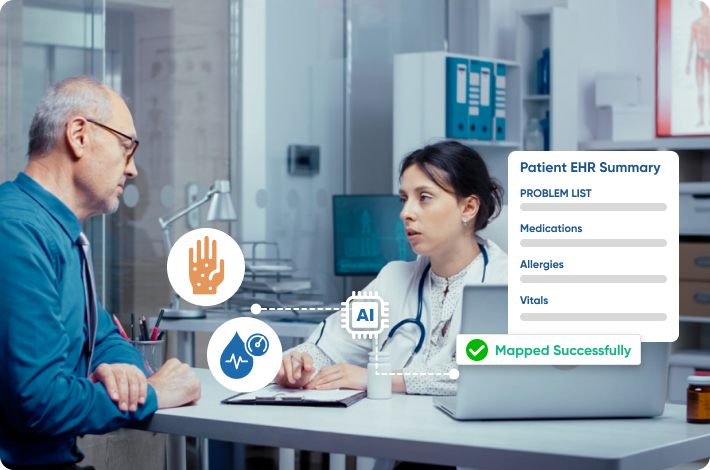
Structured Data Mapping: From Conversation to Billable Data.
HL7/FHIR Sync: Real-Time Interoperability Without Disruption.

HL7/FHIR Sync: Real-Time Interoperability Without Disruption.
WHO IT’S FOR & WHAT PROBLEM IT SOLVES
AI Medical Scribe to Reduce Documentation Overload and Eliminate Scribe Dependency
Designed for healthcare organizations facing documentation overload, scribe dependency, and workflow inefficiencies, ready to modernize with embedded ambient AI.

Primary Care & Multi-Specialty Practices
For practices where providers spend hours completing charts after the clinic. Embedded ambient AI captures encounters in real time, generates structured SOAP notes, and reduces after-hours documentation without disrupting clinical workflows.

Health Systems Reducing Scribe Dependency
For organizations seeking to scale documentation without expanding scribe teams. Automate note generation, standardize documentation quality, and maintain billing accuracy across locations with EHR-integrated AI.

Healthcare IT & Revenue Leaders
For IT and revenue teams, modernizing clinical workflows. Deliver structured, billing-ready documentation with secure HL7/FHIR integration, governance controls, and real-time synchronization across systems.

Faster AI Adoption
Electronic Health Records (EHR)

Reduced Risk
Hospital Information Systems (HIS)

Scalable Infrastructure
Revenue Cycle Management (RCM)

Aligned AI Investments
Patient Management Systems (PMS)

Ready to Reduce After-Hours Charting?
Directly integrate an AI medical scribe to automate clinical notes in real time and give your providers their evenings back.
Client Testimonials
Trusted by Healthcare Leaders Modernizing Clinical Documentation
See how providers, IT leaders, and revenue teams are reducing after-hours charting, lowering scribe dependency, and improving documentation accuracy with embedded Ambient AI.

"We reduced after-hours charting significantly within weeks..."
After deploying the embedded AI scribe, our providers stopped taking charts home. Documentation is generated during visits, reviewed quickly, and submitted the same day. It’s improved morale across our practice.

Dr. Michael Reynolds
Medical Director, ClearView Family Health
"It replaced our need to expand the scribe team..."
We were planning to hire additional scribes as we scaled. Instead, we implemented the AI documentation agent inside our EHR and reduced documentation overhead without compromising note quality.

Jennifer Collins
COO, Riverstone Medical Group
"Structured documentation improved our billing accuracy..."
The structured data mapping and SOAP alignment made our notes more coding-friendly. We’ve seen fewer documentation-related billing delays and cleaner claim submissions.

David Thompson
Director of Revenue Cycle, Summit Primary Care Network
"Providers adopted it faster than expected..."
Because it works in real time and allows in-EHR review, there was minimal resistance. The human-in-the-loop controls gave our clinicians confidence in the AI output.

Dr. Lisa Carter
Clinical Operations Lead, Liberty Multi-Specialty Clinic
"We modernized documentation without disrupting care..."
The HL7/FHIR interoperability ensured all documentation stayed synchronized across labs, billing, and reporting systems. It felt like a workflow upgrade — not a risky overhaul.

Anthony Walker
CIO, Midwest Integrated Health System
"Integration was seamless with our existing EHR..."
Unlike standalone AI tools, this solution was engineered into our workflow. No duplication, no extra dashboards — just embedded documentation where providers already work.

Robert Mitchell
Director of Healthcare IT, Evergreen Regional Health
Cost & Timelines
AI Medical Scribes Delivered On Time and Within Budget
We develop custom documentation AI agents aligned with your timelines and budget — without compromising compliance, security, or quality.
Complexity
Software complexity (its functionality scope)
Type
Software type (e.g. web, mobile, desktop)
No. of Users
The expected number of users

Integrations
The required integrations as per regulations
Compliance
Regulatory compliance requirements

Security
Performance, security, usability and accessibility requirements

Deployment
The chosen deployment model (e.g. on-premise, cloud)

Sourcing
The sourcing model (in-house, outsourcing) & team composition
We deliver healthcare software in the following timeframes
1 Week
Medical software project starts within 1 week
2-4 Months
MVP release
Every 2-4 Weeks
New healthcare software versions
What Would 2 Extra Hours Per Provider Mean for Your Practice?
Explore how embedded AI documentation can reduce documentation time, lower scribe dependency, and strengthen revenue workflows.
Case studies
Read the Success Stories of Our Clients with AI-powered Scribe

4 June, 2025
AI-Powered Matching Increases Therapist-Patient Compatibility by 50%
A rapidly expanding Washington behavioral health platform serving 45,000 patients through 850+ licensed therapists was losing patients due to flawed provider matching...

5 June, 2025
Building a Scalable GenAI Assistant for a Concierge Internal Medicine Clinic
A prestigious concierge medicine practice serving Fortune 500 executives faced unsustainable demand with 200+ prospective patients on their waiting list...
9 June, 2025
Empowering Regional Healthcare with AI-Powered Image Analysis for Critical Radiology
A 4-hospital regional network in Texas/Oklahoma experienced critical radiology delays averaging 4.2 hours for emergency cases with only three full-time radiologists covering...













Empowering Healthcare Technology Innovation
250+
Healthcare Projects
400+
Healthcare Experts
98%
Client Retention Rate
150+
Healthcare Customers
50%
Cost Saving on Development

Engagement models
Affordable & Flexible: Engagement Models for Every Need
Our flexible engagement models allow us to customize our healthcare AI development services to meet your unique needs. Whether you're looking for a dedicated team, project-based work, or ongoing support, we have the right solution for you.

I have a requirement and want
to pay a fixed price

Share your project requirements, and our team will conduct a discovery call to understand your needs in detail. We'll provide a clear project estimate and deliver high-quality work. Pay only upon project completion and your satisfaction, ensuring you're never overcharged.

I want to hire a healthcare AI software developers
on an hourly basis
Hire dedicated developers with 160 hours of focused attention each month. Enjoy peace of mind with transparent billing, daily timesheets, and our unwavering commitment to your success. Benefit from the expert guidance of our complimentary Delivery Manager.
SAVE
EXTRA 20%
Specialties
Custom AI Scribe Development Tailored to Your Specialty
We design and build documentation AI solutions for hospitals and healthcare practices based on your unique clinical workflows and operational needs.





Let’s Explore How We Can Develop AI Agents for Your Practice
Making your healthcare practice AI-ready with excellent custom healthcare AI solutions in just a Click!

Custom Documentation AI-Agent Development

Domain-specific Accelerators & Frameworks

End-to-End Healthcare Digital Transformation

Interoperable Data Systems

Assured Compliance & Security

Proficiency in Healthcare Standards

AI & Analytics Powered App Insights
Pre-Built Components
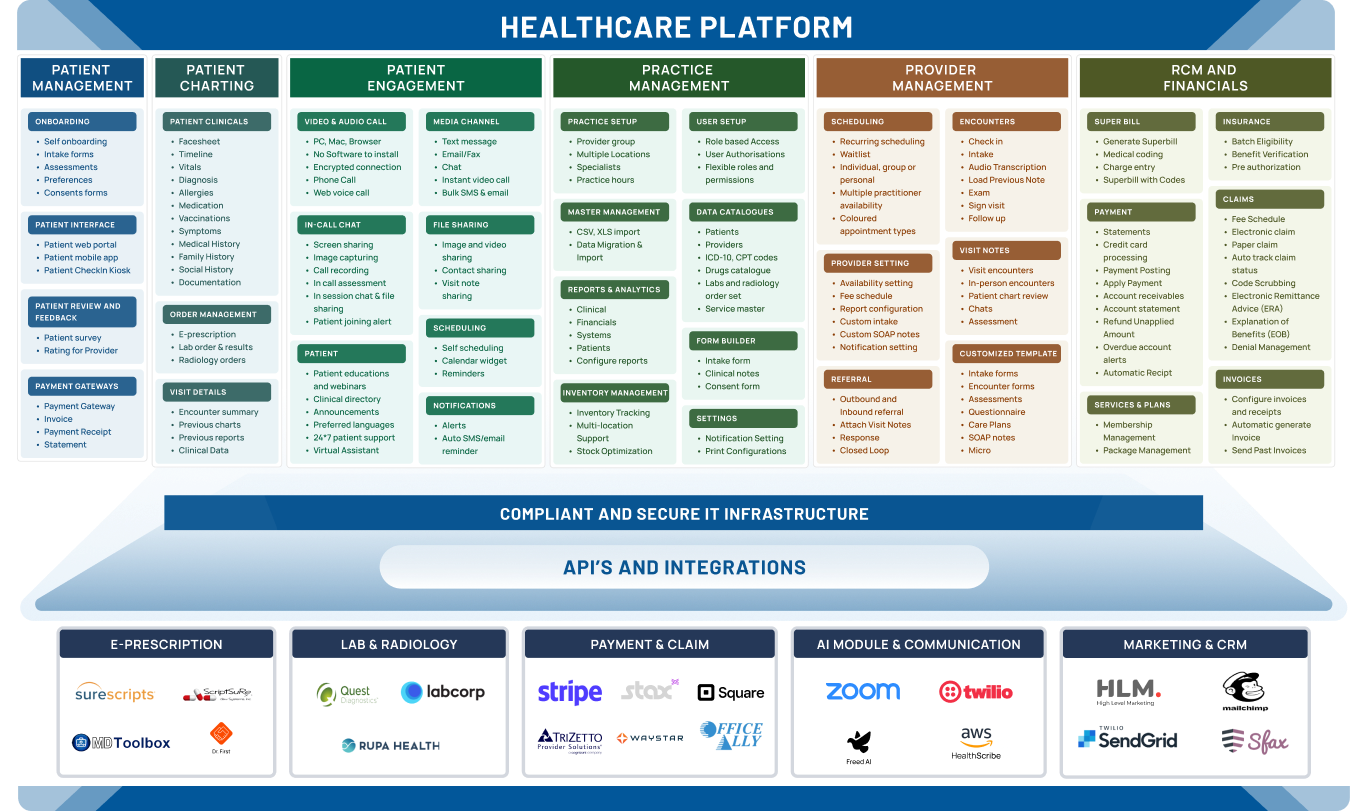
Accelerate Documentation AI Development with Healthcare-Ready Components
Use pre-built, compliant AI frameworks to shorten time-to-market and control development costs.
Integration
Make Your Practice Smarter and Quicker with Robust Integrations
Integrate your healthcare systems with ePrescribing, labs, billing, and patient engagement systems.
ePrescription & Labs Integration
We provide ePrescriptions and Labs integration with your AI ... agents to enable you to send orders directly from your healthcare system. These integrations offer multiple benefits, from minimizing errors to improving clinical efficiency and reducing the overall cost of care for both patients and providers.

Surescripts
Surescripts is the leading ePrescription network that helps improve medication ... safety and convenience for patients, providers, pharmacies, and safety and convenience for patients, providers, pharmacies, and payers. Integrate Surescripts into your AI healthcare solutions to enable secure electronic e-prescribing and real-time access to patient medication history.
Billing & Payment
Safe, secure, and seamless healthcare transactions with our billing, ... payment, and point-of-sale integrations for your AI agents. Give your virtual care practice a comprehensive real-life healthcare ecosystem.
Waystar
Waystar provides healthcare revenue cycle management solutions. Streamline claims processing, reduce denials, and optimize revenue capture through automation and AI, improving financial efficiency for healthcare organizations with Waystar.
Communication
Facilitate real-time communication with custom AI agents and ... stay connected with your patients at all times. Give your virtual care practice a comprehensive real-life healthcare ecosystem.

Sfax
Sfax is a secure faxing solution designed for healthcare. Integrating it with AI healthcare innovations enables secure exchange of patient information like faxes within the system, ensuring patient data privacy and compliance with HIPAA regulations. This streamlines communication and protects sensitive medical information.
Simplify clinical documentation with secure AI
Reduce documentation burden with HIPAA-compliant, enterprise-grade solutions.


Framework & Technology Expertise
Our Healthcare Software Developer’s Framework & Technology Expertise
Our AI development team has broad experience in all AI technologies, frameworks, and expertise in multiple databases, real-time data processing, and cloud technologies.
Back-end Programming Languages






Front-end Programming Languages
Languages


Javascript Frameworks





Mobile








Cloud





Databases/Data Storages
SQL





NOSQL





Platforms






Need to Design, Develop, or Improve
Your Healthcare Software System?
Frequently Asked Questions
Get answers to all your questions
Still have questions ?
Everything About Healthcare Software Development
Healthcare AI Development Blogs

How AI Voice Scribes Can Slash Physician Burnout

Automating Medical Coding: How AI Improves Accuracy & Speed

Step-by-Step Guide to Building Your First Healthcare AI Agent