8 Important Benefits of Electronic Medical Records in Healthcare

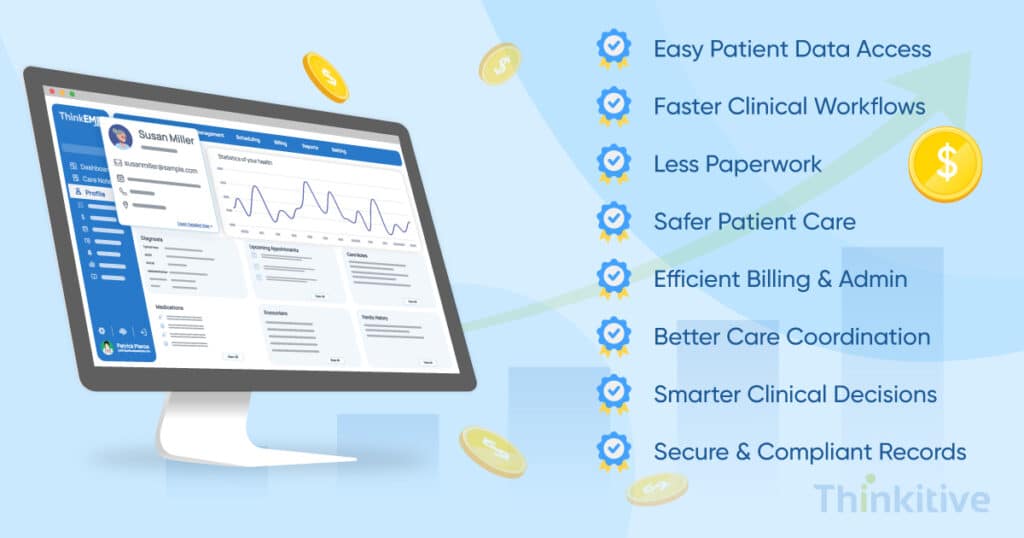
Being a healthcare provider, you must be familiar with Electronic Medical Records.
Over the years, the relevance of Electronic Medical Records in the healthcare landscape has been that of a catalyst. EMR systems have been at the epicenter of healthcare practices and have helped healthcare providers to instill evidence-based healthcare practices into their systems.
Just to give you an idea about the impact electronic medical records have had on healthcare practices, almost 65% of physicians reported improvement in patient care delivery with the use of EMR.
It is the EMR advantage that practices have managed to reduce medication errors, along with real-time, accurate access to clinical information, which supports better decision-making. This has not only helped them practice to deliver better but also improve their practice’s financial aspects as well.
For instance, according to a national study, it was revealed that with advanced EHR systems, the patient care costs per hospital admission were lowered by nearly 10% at $731. Furthermore, with improved efficiency and reduced waste, the implementation of EMRs across public and private hospitals saved the US healthcare industry almost $81 billion annually.
You see, the intricacies of EMR systems have resulted in better information exchange, allowing providers to ensure continuity of care. On top of that, with advanced technologies entering the healthcare space, the benefits of electronic medical record systems have been extremely beneficial for rural and remote patient populations.
But these are still proofs and claims, the main question that you might get here is, ‘How do EMR systems improve patient care?’ and ‘What are the benefits of electronic medical records for my practice?’
Well, the answer is quite simple and if you have been closely following the trends, then you would know that custom EHR and EMR software development is the solution to all your problems.
On that note, let’s try to find the answers to some of these above questions in this blog below along with its exclusive benefits.
Assess Your EHR System for AI Readiness
Get Free AssessmentEnhanced Accessibility & Availability of Patient Information
The EMR advantages of enhanced digital accessibility encompass improved patient outcomes and healthcare delivery, coupled with decreased dependence on manual procedures.
- Centralized and Digitalized Patient Records
Better care coordination is possible when patients, nurses, and doctors can access medical records. EMR stores a patient’s health information. This includes conditions, diagnoses, allergies, medications, history, treatment plans, immunization dates, labs, images, test results, and more. This allows individuals to be more proactive in managing their health.
Furthermore, with integrated EMR systems, your systems become the single source of information. This helps your care team to be on the same page and work together towards the same goal of improving patient outcomes.
The comprehensive nature of the records in your system gives your providers everything they need to deliver appropriate care. With these unified longitudinal patient records, which are curated after combining historical, real-time, and cross-department data, appropriate care measures can be taken to deliver the best care possible.
- Easy access to patient data anytime, anywhere
The accessibility factor becomes crucial in providing holistic care. You see, with an EMR system, providers can remotely access their patients’ information and deliver care, whether from the comfort of their homes or while traveling. This is made possible through digital Electronic Medical Records (EMR).
Even in emergency situations, the provider has immediate access to their records. Enabling them to recommend appropriate care based on their medical history and real-time data sharing capabilities.
This capability allows providers to administer care from any location and at any time. Eliminating the necessity of being physically present in a hospital setting and reducing paperwork. Additionally, patients themselves can monitor their medical progress.
Moreover, with advanced systems in place, providers can even access context-aware data which is relevant to their role, location, and care scenario. This streamlines the intricacies of care delivery and allows providers to deliver holistic care.
Efficient & Streamlined Clinical Workflows
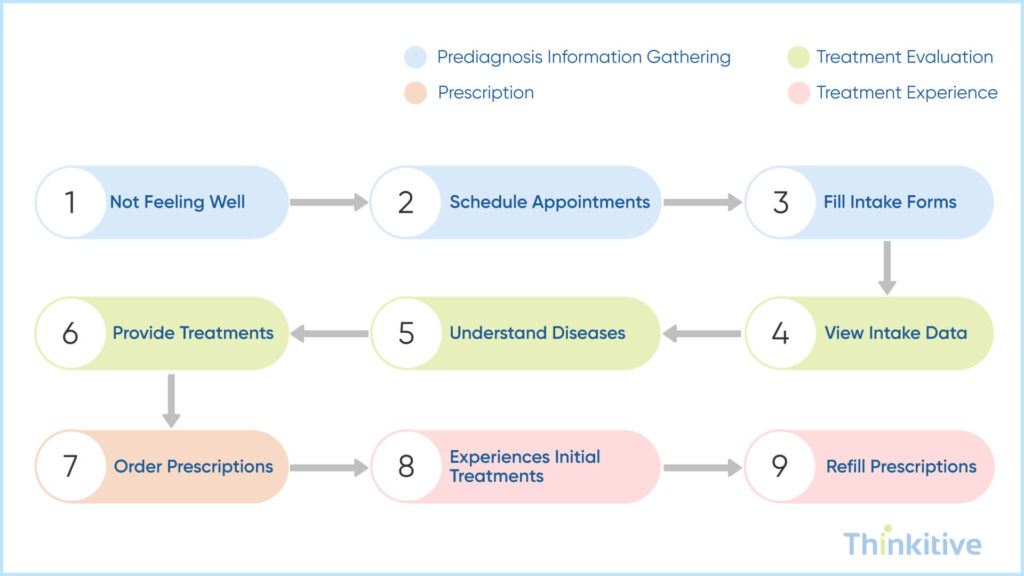
Your EMR software becomes the unified platform for care delivery and aspects of the care journey. Furthermore, to have a better idea about the patient’s care journey for digital tools, refer to the image.
- Reduction in Manual Documentation and Paperwork
Digital patient records have revolutionized healthcare practices by providing quick and convenient access to comprehensive patient information. Healthcare providers no longer need to invest their time in manual data entry.
They can effortlessly retrieve complete personal, medical, and financial details with a simple click. This not only streamlines their workflow but also significantly reduces paperwork. Furthermore, automatic reminders can notify patients about their next appointments in advance, alerting them as they approach milestones that require regular screenings.
On top of that, the transfer of critical documents, such as lab results, prescriptions, referrals, and encounter summaries, is expedited through electronic fax, messaging, email, or dedicated EMR systems. Furthermore, the capacity to securely store various patient documents, including profile pictures, insurance copies, authorization reports, eligibility reports, and lab results. It’s made effortlessly achievable. This digital approach also eliminates the need for physical storage space, a requirement of traditional paper-based patient charts.
Also, if you’re looking to integrate AI into your EMR system, then it can be a great tool to eliminate the documentation burden of your clinical and administrative staff. With AI-assisted documentation, the workflows can be streamlined and automated, reducing the significant burden on your providers.
- Real-Time Access to Clinical Guidelines and Best Practices
One of the major benefits of electronic medical records is their real-time access to clinical guidelines and best practices to make informed decisions. This results in enhanced patient care and improved outcomes. On top of that, these clinical guidelines also ensure that patients receive consistent and evidence-based care, promoting uniformity in healthcare delivery.
Providers can efficiently include best practices, saving time and facilitating rapid responses to patient needs. Moreover, these systems support interoperability, allowing different healthcare providers and facilities to share clinical guidelines seamlessly.
Furthermore, the AI-assisted guideline surfacing capability of your EMR system can nudge you in the right direction for promoting best practices in care delivery on the basis of patient context, specialty, and unique care scenarios.
Know the Functions in Your Custom EHR that can be Powered by AI
Get Free ConsultationImproved Accuracy & Efficiency In Diagnosis & Treatment Decisions
Artificial Intelligence (AI) plays a prominent role in making your Electronic Medical Records system more intelligent. For instance, AI can help healthcare providers in analyzing patient diagnostic patterns, enabling the system to present treatment options that enhance the diagnostic process.
Clinical Decision Support Systems (CDSS) also contribute significantly to improved diagnostic accuracy by seamlessly integrating patient data and medical guidelines. It facilitates informed decision-making regarding diagnosis and treatment by analyzing patterns and recommending treatment on the basis of patient data. This not only makes your care approach more holistic but also personalized in nature.
In telemedicine appointments, healthcare providers gain access to a patient’s comprehensive medical history. This access allows them to offer more precise diagnoses and develop tailored treatment plans based on the patient’s medical background.
Also, with AI-driven clinical insights, certain aspects of your care can also be supported as the system can easily detect the patients who are at risk, and you can take effective steps to deliver better preventive care.
Enhanced Patient Safety and Quality of Care
- Comprehensive and Accurate Medication Management
A robust medication management system ensures patients receive precise medication and dosage, minimizing errors. Electronic Medical Records (EMR) are crucial in optimizing this process by providing readily available, standardized drug options, dosages, and quantities. Pharmacies play a pivotal role in verifying prescriptions and bolstering accuracy, all thanks to electronic prescribing systems.
In prescribing medications, healthcare providers have the added benefit of accessing educational documents. That can provide patients with valuable guidance concerning their prescribed medicines and the conditions they are treating. Integrating clinical data within EMR facilitates this process, ensuring accessibility for healthcare providers during the prescription phase. Thereby contributing to improved service quality.
For patients grappling with chronic conditions, meticulous monitoring of medication responses is imperative. This may necessitate specific tests and assessments, underscoring the importance of ongoing patient care and assessment in managing chronic illnesses.
- Reduced Medication Errors and Adverse Drug Interactions
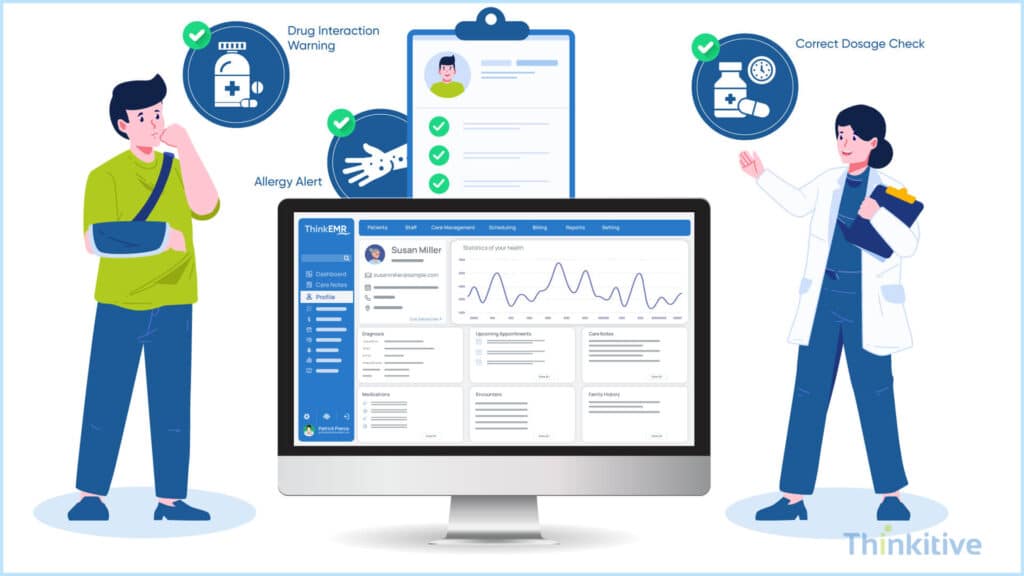
The introduction of electronic medication prescribing in modern systems offers valuable support and has played a crucial role in reducing errors in medication. For instance, these systems can display patient allergies and drug intolerances, equipping healthcare providers with essential information to make informed decisions.
On top of that, during these prescriptions, you can prevent high-risk drug interactions with predictive medication safety alerts, where the system will alert you to potential drug interactions that can be dangerous for the patient.
Furthermore, drawing from the patient’s complaints, history of the present illness, medical history, vitals, and intake forms, the administrative staff can accurately assign appropriate diagnoses and CPT (Current Procedural Terminology) codes. Streamlining the claims processes and bringing efficiency to the system.
Moreover, these advanced systems provide intelligent suggestions for medication prescriptions, treatment plans, and progress notes. This enhances precision and significantly streamlines the healthcare workflow, saving providers valuable time that would otherwise be spent on rewriting notes.
Download Compliance & Regulatory Requirements Checklist
Download ChecklistEnhanced Data Analytics & Population Health Management
Enhanced data analytics and population health management are vital components of the healthcare industry. These approaches leverage data and technology to enhance patient care, optimize resource allocation, and improve public health outcomes.
- Aggregated and Analyzable Patient Data
Bringing patient data together through integrations with multiple EHR systems. Consolidates a patient’s medical history in one accessible location. This comprehensive view aids healthcare organizations in identifying health trends and risks within specific patient groups, enabling targeted interventions and health promotion. Providers can then deliver personalized and effective care, crafting custom treatment plans tailored to each patient’s unique conditions.
- Extraction of Meaningful Insights For Population Health Management
In population health management, data is crucial. Gathering information from diverse sources like EHRs, clearinghouses, insurance records, and public health databases, your EMR system can create a comprehensive dataset encompassing patient demographics, medical records, social histories, family backgrounds, and other important medical reports. This rich data enables providers to stratify populations into risk tiers, facilitating precise interventions.
These interventions span health education, vaccination campaigns, chronic disease management, and lifestyle modification programs, collectively fostering healthier communities. This can help high-risk individuals receive tailored, intensive care and support.
Furthermore, with AI-supported analytics tools, you can proactively reach out to patients and take effective steps to improve care for a large population.
Personalized Care Plans Based on Individual Patient Data
Drawing from a patient’s medical history and diagnostic tests, healthcare providers craft precise treatment plans tailored to individual conditions. These plans encompass medications, therapies, or surgical interventions. Medication regimens are customized, accounting for allergies, sensitivities, and potential interactions.
The choice of medication, dosage, and administration schedule is thoughtfully determined. Personalized care plans incorporate a monitoring schedule, regular follow-up appointments, and assessments to maintain effectiveness. Allow for adjustments when needed.
Improved Efficiency in Administrative and Financial Processes
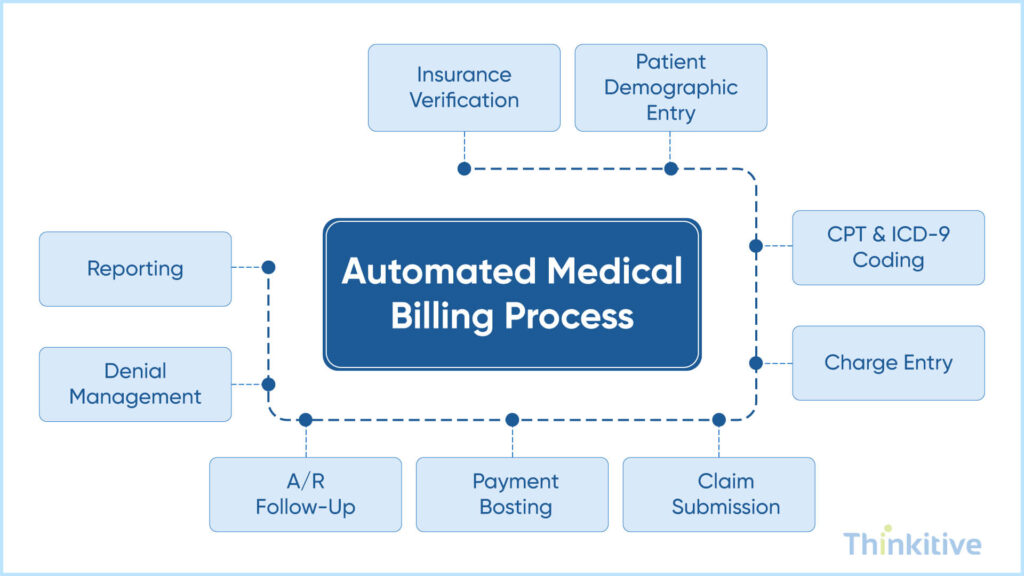
- Streamlined Billing and Coding
Billers can streamline the billing process within an Electronic Medical Records (EMR) system. They generate invoices, superbills, and submit claims to clearinghouses effortlessly. Patients can pay a predetermined copay based on their insurance eligibility when scheduling appointments.
After the visit, billers can swiftly generate superbills with auto-populated patient and service details, minimizing manual input. EMR systems can also integrate with clearinghouses and payment gateways, automating payment transfers for added efficiency.
- Accurate and timely submission of claims
Accurate and timely claim submission is a fundamental aspect of Electronic Medical Records (EMR) systems. Integrating an EMR system with Revenue Cycle Management (RCM) enhances the payment process, ensuring it runs seamlessly. Timely claim submission is crucial as it leads to faster processing, minimizing wait times for patients seeking insurance reimbursements.
In an EMR system, claims can be submitted through various channels, including paper and electronic. The system facilitates responses and allows for efficient claims tracking, providing transparency and helping healthcare providers manage their revenue cycle effectively.
Step-by-Step HIPAA-Compliance Custom EHR Development Roadmap
Get Free ConsultationFacilitated Compliance with Regulatory & Legal Requirements
To harness the exclusive benefits of electronic medical records for patients and providers, you need to make your EMR system compliant with the regulatory and legal requirements. Though there can be a separate blog for this, here are certain aspects of compliance and the regulatory landscape that you need to know:
- Adherence to Privacy and Security Regulations
To comply with privacy laws like HIPAA (Health Insurance Portability and Accountability Act) in the US. It is crucial to ensure that aggregated patient data is kept securely. Data security and patient privacy must always be protected.
- Regulatory Alignment & Coding Accuracy
Furthermore, EMR systems are adapting to the dynamic landscape of billing and coding, continuously updating their data to align with changes made by the CMS, other government regulations, and insurance companies. This commitment to proper coding accelerates better reimbursement processes and optimizes physician schedules by allowing them to see more patients while ensuring accurate procedure billing and minimizing duplications.
The adoption of an EMR system brings numerous advantages. Beyond streamlining workflows and enhancing reimbursement procedures, the initial investment is swiftly recouped through improved operational efficiency. This results in an office that runs smoothly and optimally.
You can also use your AI-powered EMR system to automate coding updates and ensure compliance checks of your systems with respect to the latest updates. This not only makes your system audit-ready but also ensures that you can seamlessly and smoothly navigate through the regulatory landscape.
Common EHR Development Challenges & How to Overcome Them
Read BlogConclusion
If you’ve made it this far, then we’ve almost covered all the major benefits of electronic medical records and how they can help you ensure quality care and streamline your administrative processes, without much overhead.
Furthermore, we’ve also discussed some of the features that give you an EMR advantage in terms of practice management, care delivery, and documentation as well.
On that note, I hope this blog has given you the answers to the questions that you might have asked, and let this blog be your guide to harness the potential of the EMR system and how you can benefit from a custom EMR.
So, what are you waiting for? Get your first consultation with our subject matter expert and start building your own EMR system.

Frequently Asked Questions
Transitioning from paper records to electronic medical records in healthcare delivers immediate clinical and financial gains. Clinically, EMRs centralize patient data, improve care coordination, and enable faster access to complete medical histories—reducing delays and errors. Financially, practices benefit from lower administrative costs, reduced paperwork, improved billing accuracy, and fewer claim denials. These benefits of EMR systems help organizations scale efficiently while improving care quality.
One of the most critical benefits of electronic medical records is enhanced patient safety. EMR systems use clinical decision support, allergy alerts, drug-drug interaction checks, and standardized order sets to significantly reduce medication errors. By eliminating illegible handwriting and manual transcription, EMRs ensure accurate prescriptions and safer medication management—directly answering the question, how do EMR systems improve patient care?
AI-powered EMR systems analyze large volumes of patient data to identify patterns, flag anomalies, and support evidence-based diagnoses. Features like predictive analytics, AI-driven alerts, and automated clinical summaries help clinicians make faster, more accurate decisions. These EMR advantages not only improve diagnostic accuracy but also reduce cognitive load on providers, enabling better outcomes and more personalized care.
Modern EMR systems are designed with HIPAA compliance at their core. They use end-to-end encryption, role-based access control, audit logs, and secure APIs to protect patient data during sharing across providers. Secure interoperability ensures that patient information flows seamlessly without compromising privacy—making data exchange both compliant and efficient across the care continuum.
Custom EHR software development aligns technology with real clinical workflows rather than forcing clinicians to adapt to rigid systems. This results in faster documentation, fewer clicks, and reduced administrative burden—directly addressing clinician burnout. From a financial perspective, tailored EMR systems eliminate unnecessary licensing costs, improve operational efficiency, and deliver stronger long-term ROI. These are some of the most overlooked benefits of electronic medical records for patients and providers alike.


