Scaling Home Care with Remote AI Agents

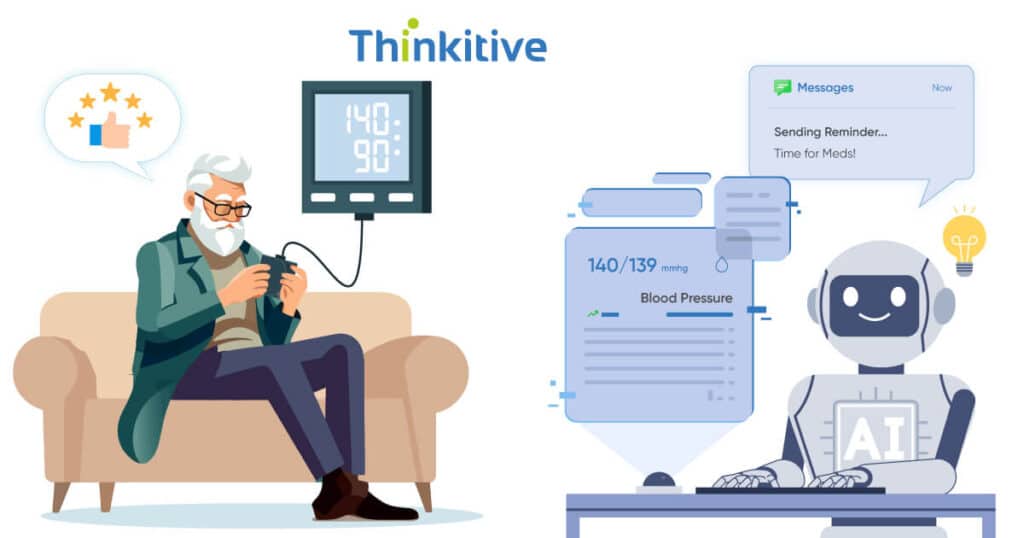
Healthcare has always been a top priority, and always in need of a strong and reliable workforce. Today, the entire healthcare industry is facing shortages, but one sector of the healthcare ecosystem that is particularly in desperate need of help is home care.
You see, as time goes by, the aging population will be on the rise, and that will raise the demand for home care services. And interestingly, the current turnover rate in the home healthcare industry has been 79.2%.
This has already made it difficult for home healthcare service providers to meet the growing patient needs. But the good news is, there have been some efforts made to improve this. For instance, with healthcare being on the verge of technological evolution, the use of advanced technologies such as home care AI remote patient monitoring, and patient medication tracking AI can do wonders.
It can be a turnaround for your home healthcare practice as home health AI can not only contribute to improving the quality of care but also reduce the operational cost by nearly 40%.
Seems unreal, right?
Well, let’s discuss home care AI remote patient monitoring and how these AI agents can change the face of your home healthcare practice, allowing you to improve the quality of care and make enough for continuous scaling.
The Silver Tsunami: Demographics Driving Home Care Innovation
The success factor for your home care practice depends on the demographics. Meaning the better you are able to study your demographics, the better you will be able to meet their needs. Let’s see how:
First things first, when you analyze the demographics of an area, then you easily categorize the demographics shift in certain areas. Also, it becomes much easier to find geographic concentration with a high aging patient population. On the basis of this, you can easily project the care demands for the future, let’s say, till 2035.
Now, rather than doing this all manually, you can actually use home health AI to analyze and divide data for you. Once that is done, you can easily predict healthcare costs and some spending trends of Medicare and Medicaid for your practice. All this data is enough for you to thrive in the home healthcare ecosystem and choose the right home-based care models.
On top of that, the preferences of patients and their families are changing with aging. Considering the quality of life and the use of technology for care delivery. You need to keep that in mind as well since you’ll be studying the demographics of the region you want to practice in.
Once you’re done with all this, you can easily understand the limitations of running a home healthcare facility, the problems with a skilled nursing force, and the need to find alternative care models in case of convenience.
So, before even thinking about starting your own home healthcare services, especially home care AI remote patient monitoring services, you need to know and study the demographics.
Calculate the Impact of Your Solution on the Aging Population – Project Your Market Opportunity
Calculate NowAI-Powered Caregiver Augmentation: Extending Human Capacity
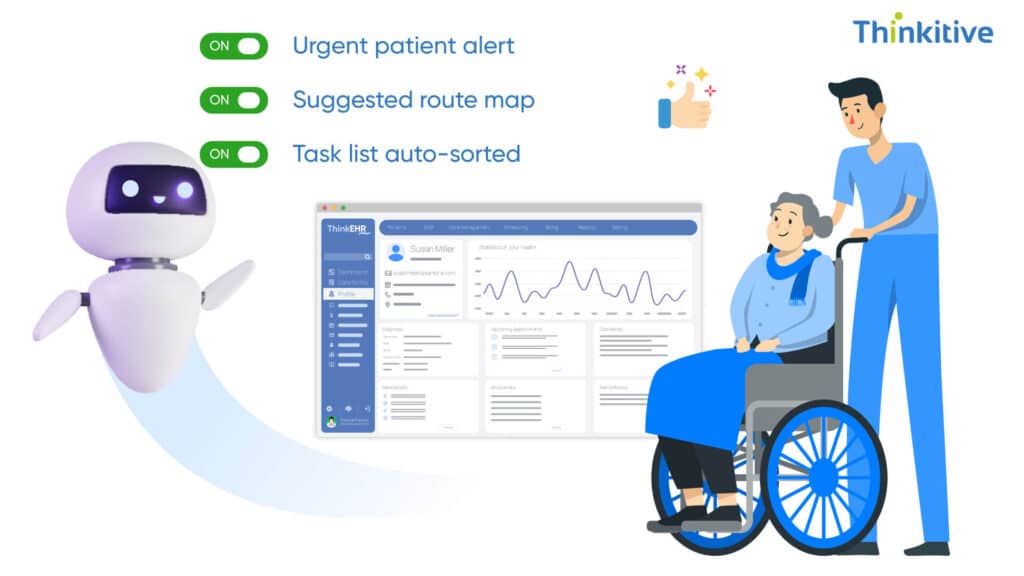
Now, addressing the existing problems in the home healthcare landscape varies from task prioritization to real-time decision support, etc. In such cases, the pressure your caregivers might be dealing with can be overwhelming. To help your caregivers in taking control, an AI caregiver assistant can be of great help.
Let’s see how an AI caregiver assistant can be the perfect assistant that they need but didn’t ask for:
1. Intelligent Task Prioritization: The very first problem that most home healthcare practices face is which task to prioritize and which care provider to assign. It can be a daunting task to do it manually, but with AI systems, they can analyze patient data, and find a caregiver that fits perfectly in the schedule, and plan their route accordingly. This way, the caregiver can also plan their day accordingly. Along with that, your home health AI can also track which patients are in dire need of urgent care and prioritize them accordingly.
2. Real-Time Decision Support: Oftentimes, caregivers find it difficult to make a decision in real time. At times, this decision can be critical for care delivery. And since the doctors are not necessarily available at the given time, AI caregiver assistants can assist them in making better decisions in real-time and ensure quality care delivery.
3. Documentation Automation: The most common problem in home healthcare services is documentation. The gaps in time and distance can cause confusion a lot of times. That is why an AI caregiver assistant with AI-powered functionalities can take visit notes, update care plans, and document everything in compliance with the requirements, which can significantly reduce the administrative burden.
The three aspects of AI caregiver assistant mentioned are just the tip of the iceberg. Solutions like RPM with GenAI and medication tracking AI are some of the great tools that can be used to ensure care continuity and quality of care delivery.
Comprehensive Remote Monitoring: Falls, Medications & Vitals
Remote patient monitoring makes up a significant part of your home healthcare services. You see, most of the future care actions can be taken on the basis of remote monitoring and health tracking of patients. A comprehensive remote monitoring landscape is what you require in this care. So, here is how RPM with GenAI can provide you with a comprehensive remote monitoring system:
1. Advanced Fall Detection Systems: Elderly people are most likely to have a fall. That is where an aging-in-place tech AI can come to your rescue. For instance, with AI-powered ambient sensors, wearable devices, and computer vision systems, any falls can be easily detected or predicted. This way, in case of a fall, help can be easily provided without much time wasted.
2. Intelligent Medication Management: Another problem of any care provider is medication adherence and management. This problem is particularly common in older adults, as they have a habit of forgetting things. For such scenarios, small pill dispensers and AI-driven medication reconciliation with clinical alerts can be placed. This will not only help in proactive care delivery but also make monitoring your patients’ adherence much easier.
3. Continuous Vital Sign Monitoring: Remote monitoring typically works when the patient manually takes readings of their health. However, by integrating these devices with AI analytics for early warning and trend analysis, continuous monitoring of the patient can be easily achieved. It can lead to improved preventive care delivery with a higher patient satisfaction rate.
4. Environmental Safety Intelligence: Since most healthcare practices are adopting holistic care delivery practices, aging-in-place tech AI can be a crucial indicator of their safety. Their integration with smart homes can measure air quality, temperature, lighting, etc., and notify the patient about the recommended measures they need to take for holistic care.
AI-Powered Remote Monitoring ROI Calculator
Calculate ROISeamless EHR Integration: Connecting Home & Clinical Care
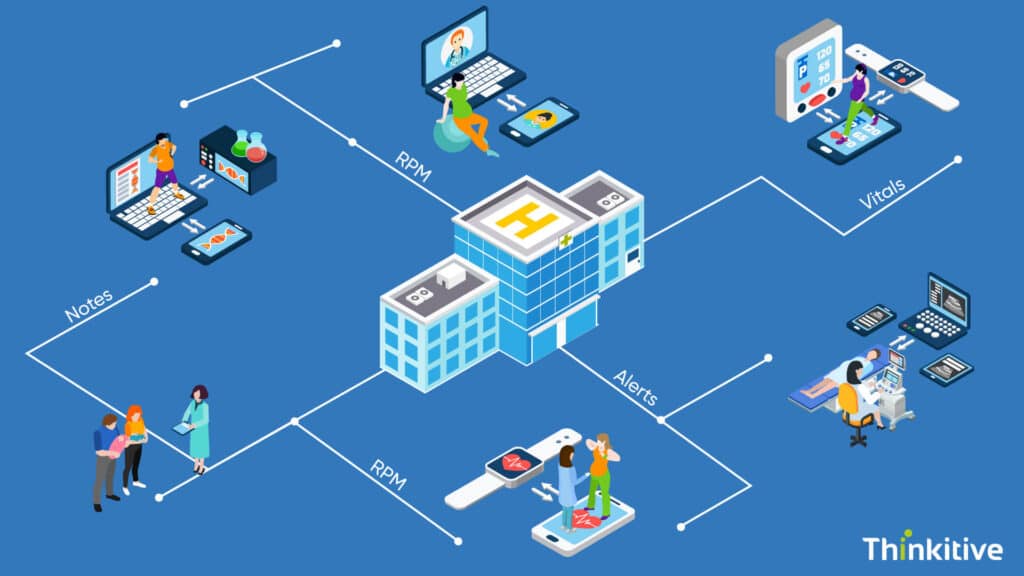
EHR being at the center of your entire healthcare practice, don’t you think it makes sense to integrate your system with the EHR integration? This integration can not only prove to be the catalyst to improve care coordination but also streamline both administrative and clinical processes.
Here is how it can revolutionize your practice:
1. Unified Patient Records: Integration of your remote monitoring devices and your healthcare system with the EHR system creates unified patient records, bringing everyone on the same page and working towards the same goal. It also helps your home health AI function properly for assessments and caregivers in making critical observations.
2. Care Team Coordination: With EHR integration, real-time data sharing between caregivers, physicians, specialists, and family members becomes possible. This marks a crucial development in ensuring coordination between everyone involved.
3. Clinical Decision Support: What do you think is crucial for making a decision? Data. Now, with EHR integration with your home care AI remote patient monitoring system, both the AI caregiver assistant and the provider can make important clinical decisions faster and better.
Intelligent Alerts & Escalations: Right Care, Right Time
Providing the right care at the right time is something that home care practices aim for. However, in a digital healthcare landscape, it can be a little difficult to keep track of everything. To enhance these things, RPM with GenAI can be something that you need to use to get intelligent alerts and escalation notifications at the right time.
1. Risk Stratification Intelligence: AI algorithms are trained to analyze multiple data streams to identify which patients are at risk. For such patients, RPM with GenAI can create alerts and notify patients in real time to provide the right care at the right time.
2. Tiered Response Protocols: In case of an emergency where clinical intervention is required, virtual home nurses with automated escalation platforms can create alerts to caregiver response based on the severity and urgency of care.
3. Family & Caregiver Communication: Family and caregivers make up almost half of the care team, and their preferences are crucial for care delivery. Moreover, keeping in the loop can be a little difficult. This puzzle can be easily solved with an intelligent notification system that keeps family members informed while respecting patient privacy preferences.
4. Emergency Integration: Keeping the aging population in mind, emergency situations can be encountered unannounced. Here, coordination with emergency services such as hospitals or urgent care facilities for seamless care transition is necessary. For this, AI caregiver assistants can be extremely useful to directly contact emergency service providers.
Conclusion
AI agents have the potential to transform your home healthcare practice only if they are curated and deployed correctly. By becoming a bridge between care providers and patients, these AI agents can be AI caregiver assistants for both patients and providers, allowing them to take a sigh of relief in this hectic home healthcare landscape.
Apart from that, the financial benefits of this need to be addressed first, and what better way to do it than by analyzing opportunities in your system? get your first free consultation.
Frequently Asked Questions
AI agents enable home healthcare agencies to scale efficiently by leveraging home care AI and home health AI for remote patient monitoring. AI caregiver assistants, virtual home nurses, and aging-in-place tech AI streamline operations by providing RPM with GenAI insights, medication tracking AI, and personalized support, reducing administrative burden and improving patient outcomes.
AI offers extensive home care remote patient monitoring, improving aging-in-place tech. It provides virtual home nurse capabilities for medication tracking AI and vital sign monitoring. AI caregiver assistants use RPM with GenAI for predictive analytics, fall detection, and personalized care plans, ensuring proactive home health AI interventions.
AI-powered fall detection systems offer high accuracy for elderly patients in home care, often exceeding 90%. These home care AI and home health AI solutions leverage various sensors for remote patient monitoring and function as an AI caregiver assistant. They significantly contribute to aging-in-place tech AI, reducing fall risks and enabling timely interventions. While not directly related to medication tracking AI or RPM with GenAI, they enhance overall virtual home nurse capabilities.
Yes, AI caregiver assistants can integrate with existing home care EHR systems. This enables seamless data flow for home care AI, facilitating remote patient monitoring (RPM with GenAI), virtual home nurse support, aging-in-place tech AI, and medication tracking AI, improving overall home health AI care.
Implementing AI agents in home healthcare, including home care AI, remote patient monitoring (RPM with GenAI), AI caregiver assistants, virtual home nurses, aging-in-place tech AI, and medication tracking AI, involves significant upfront costs (often $40K-$500K+ for advanced solutions). However, ROI stems from reduced operational expenses, improved patient outcomes, decreased readmissions, enhanced caregiver efficiency, and increased patient satisfaction, making it a financially viable investment for better home health AI.
AI medication tracking for patients with multiple prescriptions uses medication tracking AI to provide home care AI remote patient monitoring. An AI caregiver assistant or virtual home nurse leverages RPM with GenAI to analyze complex regimens, send personalized reminders, detect potential drug interactions, and monitor adherence, supporting aging-in-place tech AI by ensuring patients take the right medication at the right time.
Home care AI, through remote patient monitoring (RPM), home health AI, and AI caregiver assistants, significantly streamlines CMS and Medicaid billing. It enhances medication tracking AI and supports aging-in-place tech AI by providing accurate documentation, automating claims, and detecting errors, including fraud. RPM with GenAI and virtual home nurses improves data collection and care coordination, leading to higher reimbursement rates and reduced administrative burdens.
AI alert systems in home care leverage remote patient monitoring to detect medical emergencies. Home health AI analyzes data from sensors and wearables, identifying anomalies in vitals or behavior. An AI caregiver assistant or virtual home nurse provides real-time alerts to caregivers and healthcare professionals. RPM with GenAI enhances predictive capabilities, while aging-in-place tech AI and medication tracking AI ensure proactive interventions, promoting safety and timely assistance.
Home caregivers need training in using AI caregiver assistant tools for remote patient monitoring, including understanding data from aging-in-place tech AI and medication tracking AI. This ensures effective use of home care AI and home health AI for improved client support and RPM with GenAI.
AI home care, including home health AI, ensures HIPAA compliance and patient privacy through robust encryption, access controls, and data minimization for all patient data. Home care AI remote patient monitoring (RPM with GenAI), AI caregiver assistants, virtual home nurses, and medication tracking AI utilize secure platforms and business associate agreements to protect sensitive information, crucial for aging-in-place tech AI.


