The Impact of Mobile Technology on Custom EMR Solutions

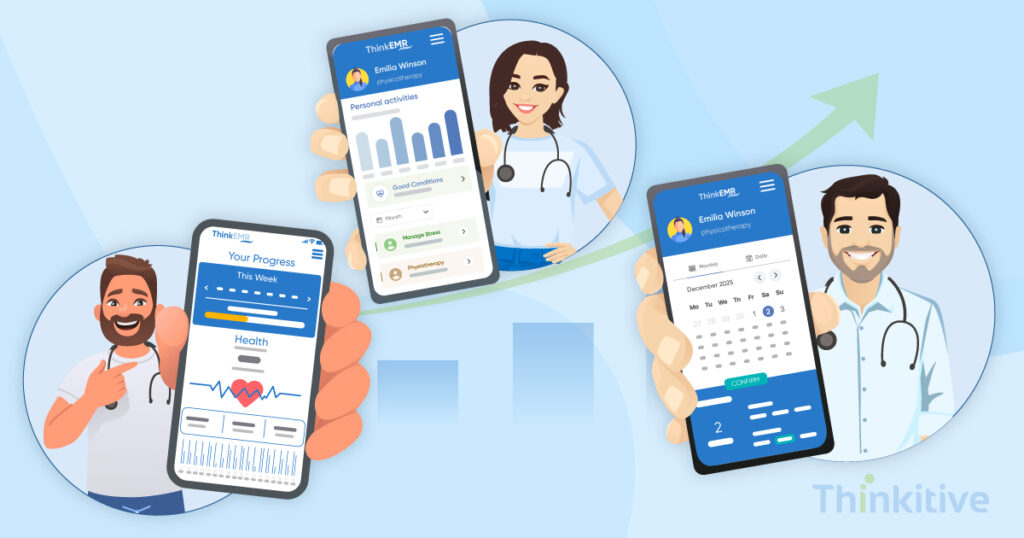
The smartphone penetration rate in the United States is over 96%, which roughly translates to 310 million users. This would give you an idea about the role mobile technology plays in our day-to-day lives.
Having said that, in an attempt to make healthcare more accessible, the government has already made attempts to make a technological shift, and the pinnacle of this has been the introduction of mHealth in EMR.
With healthcare being limited to desktop systems, the introduction of mobile technology in custom EMR has carved a new roadmap for the future of the healthcare landscape. It can not only give care accessibility to patients directly in their hands, but also the benefits of mobile EMR for healthcare providers can enable them to provide care on the go.
Furthermore, given the relevance of mobile technology, custom EMR software with a mobile-first approach is something that is in demand by many healthcare practices. And given the timing of these demands, it can be said to be a strategic requirement so that care as well as care delivery is accessible for both patients and providers.
You see, when you design your custom EMR for smartphones and tablets first, you elevate the experience of the software when used. After that, you can design it for the desktop and to match its workflow.
But here, you might get the question, ‘How mobile technology improves EMR workflows?’
Well, let’s explore exactly that, along with the benefits of mobile EMR for healthcare providers and why it is necessary to adopt a custom development approach for this.
So, without further ado, let’s get started!
Assess Your EMR System for Mobile Readiness –
Get Free AssessmentKey Takeaways
- Mobile technology allows clinicians to securely access and update EMRs from anywhere.
- Point-of-care documentation improves clinical accuracy and reduces after-hours charting.
- Mobile EMRs streamline workflows, reduce administrative burden, and improve care delivery.
- Mobile access supports faster decision-making through real-time clinical information.
- A custom mobile EMR provides greater flexibility than desktop-only systems.
The Evolution of Mobile Technology in Healthcare
The introduction of mobile health (mHealth) in healthcare can be traced back to the early 2000s, when smartphones just started to make their place in the healthcare landscape. While earlier it was just limited to the manual administrative procedures like appointment scheduling, reminders, and medication alerts, further advancements changed the way we receive and even provide healthcare services.
As smartphones became more powerful, healthcare organizations expanded mobile applications beyond administrative tasks to include secure access to patient records, clinical documentation, and care coordination.
Despite the lucrative benefits of mobile apps in healthcare, the turning point came fairly recently during the COVID-19 pandemic. Almost everyone was introduced to the digital healthcare landscape, and the role of mHealth apps has become an integral part of the modern healthcare industry, with Electronic Medical Records (EMRs).
How Does Mobile Technology Improve Custom EMR Workflows?
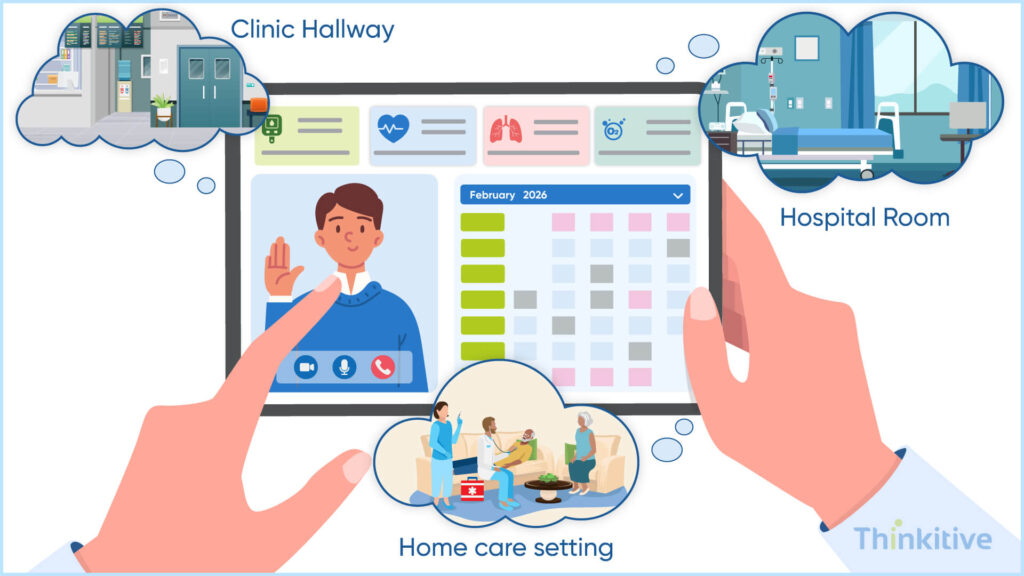
The power that mobile technology and custom EMR solutions have brought to the healthcare landscape has changed the healthcare industry for everyone. Here are some of the ways in which it has helped the healthcare industry become better:
Enhanced Clinician Workflow and Efficiency
Mobile apps give you direct access to the healthcare systems from anywhere at any time; all you need for this is a smartphone with an internet connection. So if you have a custom mobile healthcare app, then facilitating tasks like medication, repetitive administrative tasks, and patient charting becomes much easier and can be done literally anytime.
Furthermore, to bridge the communication gaps that are normally present in traditional healthcare practices, secure communication features like secure messaging and telehealth capabilities make it even more convenient to connect with your healthcare provider and receive healthcare services.
In this way, with a custom mobile healthcare app, your providers get more time with patient care, and 34% of the time spent on administrative tasks is avoided. This way, the overall clinical efficiency is enhanced, and the workflow is streamlined.
If you’re a seasoned healthcare professional, then you must know about pajama time – the after-hours providers spend on documentation. Now, with a healthcare mobility solution, this can be reduced significantly as providers can do the necessary documentation on their mobile phones themselves.
On top of that, with AI-assisted voice-to-text documentation within your mobile EMR application, automated clinical charting can be done. This is one of the most essential steps that can revolutionize your healthcare practice.
These benefits are fully realized when mobile EMRs provide an intuitive and clinician-friendly user experience that supports everyday clinical workflows. It reduces documentation time, simplifies navigation, and helps clinicians complete routine tasks more efficiently. It not only reduces documentation time but also eliminates unnecessary steps for navigating certain things and reduces taps as well.
Improved Patient Engagement and Communication
Just like a custom EMR software, a custom mobile EMR app also comes with patient portals. These patient portals empower patients with accessibility and provide them with tools that improve their communication and engagement.
For instance, a patient can easily schedule their appointments and communicate with the providers using multiple communication channels. This allows them to easily manage their healthcare services and receive care in a more convenient way. Apart from that, with medication reminders, remote patient monitoring capabilities, and telehealth consultations, patients are empowered to actively take part in their care journey.
By giving patients convenient access to appointments, communication tools, medication reminders, and remote care services, mobile EMRs encourage active participation in their care while helping providers maintain continuity of care between visits.
Want to learn how custom EMRs strengthen patient engagement through portals, digital communication, and self-service tools? Read our guide on Patient Engagement in Custom EMR Systems.
Point-of-Care Documentation
Point-of-care documentation is still a challenge for many healthcare providers. For instance, imagine an old movie scene, where the doctor comes to your bedside, holding a pad and taking notes while talking to you.
Well, the situation has changed, but the process still remains the same, except that doctors still need to rely on paper to accurately record things or remember everything, go back to their system, and type out everything.
With mobile technology in custom EMR, doctors can simply document the reading in real-time directly into the EMR system. Imagine the accuracy this process might improve in documentation.
Some of the aftermath of this can be seen in the elimination of delays in transcription, lower documentation errors, and improved relevance.
Data Collection and Analysis at the Source
With remote patient monitoring coming into the digital healthcare landscape, the role of mobile apps is becoming even more evident in capturing real-time patient data. For instance, with mobile EMR development and integration with the wearable or RPM devices, the collected patient data can be directly fed into the EMR systems.
This eliminates the time required to manually feed data into EMR systems. It makes the care delivery process easier for healthcare providers as they get to access patient health data in real-time with mobile data for personalized care delivery, proactive interventions, and even effective management of population health.
To fully realize these benefits, organizations must also ensure secure data transmission and regulatory compliance when handling continuous mobile health data.
AI-Powered Mobile Features for Your EMR Software –
Get ConsultationKey Considerations for Mobile Integrations
Mobile apps can close the gap between patients and providers to an extent we cannot even imagine. The time taken for care delivery with mHealth apps is considerably less, but there are some challenges that you must overcome. To help you prepare for developing your ideal custom mobile EMR app, here are some key considerations that you must address:
Platform Compatibility and Device Diversity
Your custom EMR mobile app needs to be compatible with all devices so that your patients and providers don’t have any trouble accessing their health records or care services. For example, some of your patients might be using Android and some iOS, so developing an app that only runs on Android is pointless for the rest of the patient population.
A custom EMR mobile app development approach that is compatible with all devices and platforms can improve accessibility by a margin. Furthermore, while addressing the compatibility concerns, you must also focus on providing a seamless user experience across different platforms, as it plays a huge role in patient satisfaction levels and in building patient loyalty.
Healthcare organizations should choose mobile EMR solutions that provide a consistent experience across devices while allowing clinicians to continue essential workflows whenever connectivity is limited. And interestingly, together, these capabilities help clinicians deliver uninterrupted care regardless of the device they use.
Data Security and Regulatory Compliance
Since you will be dealing mainly with the sensitive information of your patients, as healthcare providers, it automatically becomes your responsibility to protect and safeguard that information. That is, data security and compliance with regulatory requirements become even more evident.
Some of the compliance regulations that you must comply with are HIPAA in the United States and GDPR if you’re based in Europe. Some of the best practices to comply with data security and regulatory compliance are to abide by them during the mobile app development process and handle data in such a way.
Also, some of the best practices are to implement robust data encryption and implement role-based access control for only authorized personnel to access health information. And following the regulatory compliance for mHealth. If you want a more enhanced and secure ecosystem, then introduce biometric authentication, such as Face ID or fingerprint, as a standard to access EMR from mobile devices.
Workflow Integration and User Adoption
Seamless integration between mobile applications and the core EMR systems is necessary to ensure care is delivered accurately and efficiently. This is because the lack of integration can lead to data silos, which can create gaps in care delivery.
A well-integrated mobile EMR enables clinicians to move seamlessly between mobile and desktop environments while accessing consistent patient information. This improves workflow continuity, reduces duplicate work, and encourages faster adoption across healthcare teams.
Healthcare organizations evaluating mobile EMRs should ensure the solution integrates seamlessly with existing clinical workflows so providers can work efficiently across every point of care.
A connected mobile experience helps clinicians switch between devices without disrupting patient care, improving productivity and continuity throughout the care journey.
Ease of use plays a major role in clinician adoption. Mobile EMRs that simplify everyday tasks encourage faster adoption, reduce documentation burden, and improve overall user satisfaction.
If you’re planning to build a mobile-first EMR, read our complete guide on Mobile EMR Development to learn about architecture, UI/UX, offline access, synchronization, and implementation best practices.
The Future of Mobile-Enabled Custom EMRs
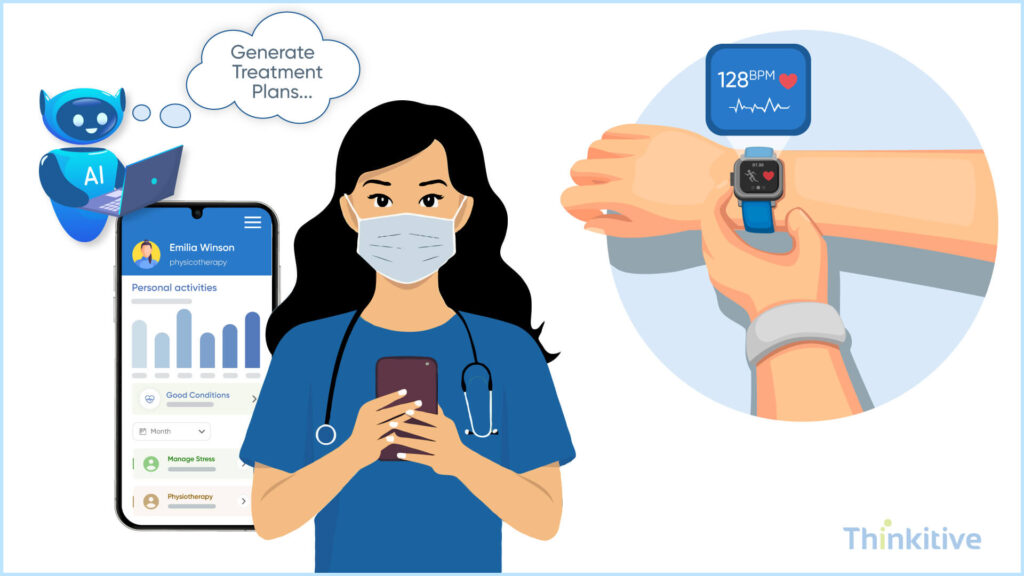
The future of mobile-enabled custom EMRs lies in combining mobility with technologies such as AI, wearable devices, remote monitoring, and telehealth to deliver faster, more connected care.
Let’s see the impact of AI on mobile health solutions with a possible application. Consider an app that examines your health information, forecasts any dangers, and even recommends tailored medical treatments. These capabilities are rapidly becoming practical applications within modern mobile healthcare solutions. Remote monitoring could be transformed by mobile technologies. Imagine having sensors that monitor your health and provide information straight to your physician, allowing for proactive treatment and averting issues.
Custom mobile EMRs could evaluate your individual genetic composition and create treatment regimens for you, thanks to developments in customized medicine. No more universally applicable answers. Additionally, chatbots driven by AI provide round-the-clock assistance, respond to inquiries, and help patients make better health decisions.
There is no denying the trend toward telemedicine. In order to provide remote diagnosis, virtual consultations, and medication monitoring, mobile apps will be essential. This encourages prompt healthcare delivery in addition to improving accessibility.
But mobile is just the start, the future holds endless possibilities in the enhancement of EMR software functionality and usage. Read ‘The Future of EMR Software: Trends and Innovations’ to get a nudge in the right direction for the future of your tech-driven healthcare practice.
Looking ahead, mobile technology will continue to redefine how care is delivered. Combined with AI, wearable devices, remote monitoring, and telehealth, mobile-enabled custom EMRs will help healthcare organizations deliver faster, more connected, and more personalized care wherever patients are.
Step-by-Step Roadmap to AI-Powered Mobile EMR Development for Your Practice –
Get Free AssessmentConclusion
In a nutshell, the development of mobile technology in the medical field has resulted in revolutionary shifts, particularly with the incorporation of personalized Electronic Medical Records (EMRs). Real-time data gathering and analysis are made possible by mobile EMRs, which also increase patient engagement and clinical productivity. Mobility is powerful because it can improve patient-centered, efficient, and accessible healthcare.
Artificial intelligence and machine learning have the potential to transform customized healthcare and usher in a new era of proactive and effective medical treatments in the future of mobile-enabled custom EMRs. The possibilities are endless as we embark on the journey towards a healthcare system enhanced by digital technology. Get your first consultation and demo with our expert and learn how an experienced EMR development company can revolutionize your practice with mobile technology.
Frequently Asked Questions
Mobile technology in custom EMR refers to the use of smartphones, tablets, and other mobile devices to securely access, update, and manage electronic medical records in real time. It enables point-of-care documentation, improves clinical workflows, and allows healthcare providers to deliver care from virtually anywhere.
Mobile-first custom EMR development means designing workflows for smartphones and tablets before desktop devices, ensuring clinicians can efficiently access and update records wherever care is delivered.
Mobile EMRs reduce burnout by enabling real-time documentation and faster task completion during clinical hours. Clinicians can chart at the bedside, dictate notes, and close encounters immediately—rather than logging in after hours. By improving responsiveness, reducing clicks, and streamlining workflows, how mobile technology improves EMR workflows becomes evident in reduced administrative load and less after-hours charting, directly addressing “pajama time.”
Point of care documentation allows clinicians to record patient information at the bedside during the encounter. Using mobile devices, data is captured while observations are fresh, minimizing reliance on memory or delayed transcription. This leads to more accurate clinical records, fewer errors, faster care decisions, and improved continuity—one of the most impactful benefits of mobile EMR for healthcare providers.
AI-powered voice scribes use speech recognition and natural language processing to convert clinician-patient conversations into structured clinical notes within mobile EMR applications. Integrated into healthcare mobility solutions, these tools allow hands-free documentation, auto-populate fields, and adapt to specialty-specific terminology. This blend of AI and mHealth in EMR significantly reduces typing, improves documentation speed, and enhances clinical focus.
Mobile EMRs succeed only when they align with clinical workflows. Intuitive UI/UX design ensures fewer taps, clear navigation, readable layouts, and fast response times on small screens. Poor design increases cognitive load and frustration, while clinician-first UI/UX accelerates adoption and trust. Effective design directly influences patient engagement technology by enabling smoother clinician-patient interactions during visits.
Secure mobile EMR applications are built with HIPAA compliance at their core, using encrypted data transmission, secure authentication, role-based access, remote device wiping, and audit logs. When implemented correctly, mobile technology in custom EMR can be just as secure—if not more—than traditional desktop systems, while still supporting scalable and compliant healthcare mobility solutions.


