Group Therapy Documentation: Why Standard EHRs Can’t Handle Multiple Clients

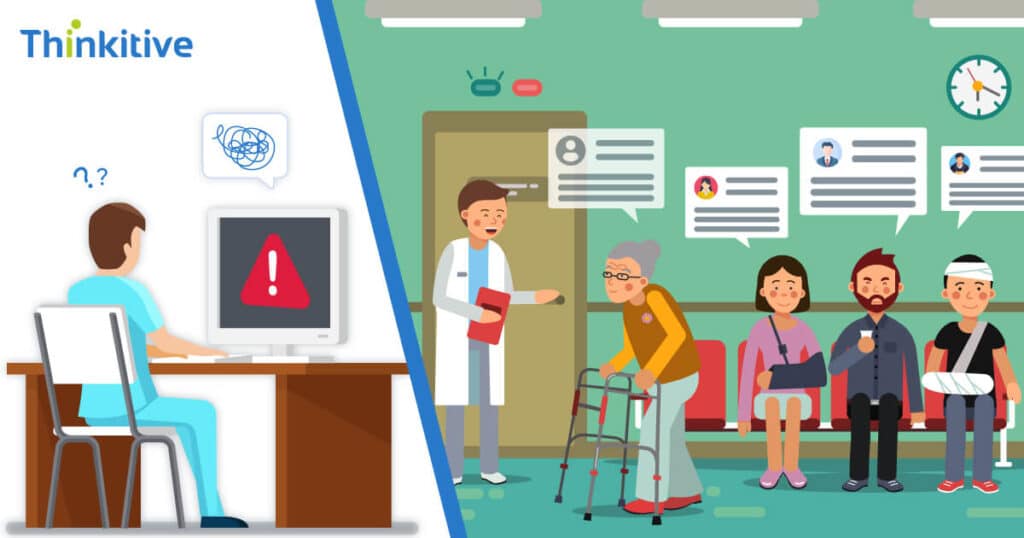
Group therapy has been a crucial part of mental health care since the 20th century. The first official group therapy session was organized in Boston in 1905 by Joseph H Pratt. Whether it’s for addiction recovery, trauma processing, or building coping skills, the group sessions allow individuals to heal together and faster.
However, for clinicians, what happens in the session room is only the first half of the work; the other half comes at the time of documentation. Unlike the individual sessions where you only need to document emotions and progress of only one person, group sessions require documentation of multiple participants.
And each patient has their own needs, behaviors, and treatment goals, which is why documenting these sessions isn’t as simple as copying and pasting. Unfortunately, most standard EHR systems were not designed for group therapies. That’s why they fall short as the templates are designed for one-on-one care delivery. The result? Time wasted, compliance risks, and less attention left for patient care.
That’s why using a custom mental health EHR is no longer optional but necessary. If you want to document the group sessions effectively, you need a mental health EHR for group sessions with tailored behavioral health group session templates.
In this blog, we are going to explore these standard EHR limitations in group therapy and why you need a customized multi-client EHR to document quickly, accurately, and efficiently.
Why Standard EHRs Struggle with Group Therapy Documentation
Most healthcare practices use generic EHRs that were built with simple use cases in mind: one provider, one patient, one session. This setting works fine for documenting individual sessions, but when it comes to group therapy EHR documentation, it creates a problem. Standard EHRs are not designed for behavioral health group documentation. Let’s see why:
1. Individual-Centric Design: Generic EHRs are designed to provide care and document single-patients. However, in multi-client EHR scenarios like group therapy, it creates challenges for providers. Clinicians do not find the needed templates to efficiently document each person while also capturing the collective group experience.
2. Lack of Group-Specific Features: Providers often search for group therapy documentation software because standard systems lack basic group features. There are no built-in group therapy note templates, no tools for tracking attendance, and no way to document shared interventions effectively.
3. Complexity of Shared Information: In behavioral health group sessions, multiple clients interact at once. The clinicians have to record each person as an individual with their directions and responses along with the group interactions, this all increases the complexity to another level. So, without tailored templates clinicians find it difficult to document all small details, raising compliance and clinical accuracy risks.
4. Privacy & Consent Management: Group sessions also make it difficult to keep the patient data private. With each patient the level of consent for sharing notes or sensitive information. However, standard systems don’t understand this and this brings EHR limitations in group therapy, making it difficult to protect privacy while documenting.
5. Workflow & Data Entry Issues: The lack of automation leaves providers duplicating notes across every client’s record. Not only is this inefficient, but the possibility of errors is also high along with contributors to burnout. A mental health EHR for group sessions should make documentation faster, not harder, but standard systems usually do the opposite.
The Risks of Inadequate Group Therapy Documentation
When group therapy documentation is incomplete, inconsistent, or forced into systems that weren’t designed for multi-client sessions, the risks go far beyond just messy notes. They directly affect compliance, revenue, care quality, and even clinician well-being.
1. Compliance Risks: Regulatory bodies require accurate, individualized records for every client, even in group sessions. Inadequate documentation leaves practices vulnerable to compliance audits, penalties, or legal exposure. Without proper group therapy note templates and workflows, it’s easy for details to slip through the cracks.
2. Billing & Reimbursement Challenges: Accurate documentation is the foundation of proper coding and billing. If notes are incomplete or duplicated, insurance claims can get denied or delayed. Practices that don’t use tailored behavioral health group documentation software often face unnecessary reimbursement headaches.
3. Lower Quality of Care: Fragmented or generalized notes make it difficult to track each client’s progress over time. This leads to missed clinical insights, weaker treatment planning, and ultimately lower-quality care. In group settings, where dynamics matter, poor documentation can cause providers to lose the thread of both individual and group growth.
4. Clinician Frustration and Turnover: Perhaps the most overlooked risk is provider burnout. When clinicians are forced to wrestle with EHR limitations in group therapy, they spend more time duplicating records than providing care. Over time, this frustration can drive turnover, something behavioral health practices can’t afford in today’s workforce shortage.
How Custom EHRs Solve Multi-Client Documentation Challenges
So, now that we have seen all the challenges and risks of using standard EHRs but when you use custom EHR for group therapy documentation it becomes much easier. By building tools specifically for multi-client EHR workflows, these platforms make documentation faster, more accurate, and less stressful for clinicians.
Here’s how custom mental health EHR helps you overcome the group therapy EHR documentation challenges:
| Challenge | Custom EHR Solution |
| Multi-Client Documentation | Group therapy note templates allow one note per session, auto-populating across all client records while still enabling individualized insights. |
| Workflow Burden | Group therapy documentation software supports attendance tracking, shared interventions, and faster notes—reducing duplicate entry and admin time. |
| Privacy & Consent | Mental health EHR for group sessions offers role-based access and client-specific confidentiality settings to maintain compliance. |
| Tracking Progress | Integrated behavioral health group session templates capture participation, goals, and outcomes, ensuring complete and accurate records for care quality. |
Solutions Beyond Custom EHR & Why they Fall Short
Although there are some alternatives to using custom EHR they do not have the efficiency and effectiveness of a custom solution. Many clinics try to use add-on tools or manual workarounds inside their existing EHRs.
While these may seem helpful, they don’t address the issue at its root and often create more complexity. You have to go through extra logins, slow integrations, and resource-heavy custom builds that are hard to maintain.
So, what seems as a solution to make documentation better without changing everything can further complicate things. The clinics need a purpose-built mental health that can seamlessly function in individual as well as group settings.
Conclusion
In a nutshell, standard EHRs can’t support the behavioral health group documentation as it’s more complex than individual documentation. Rather than bringing efficiency using these EHRs brings compliance and patient safety risks. Also, keeping patient data private and preventing clinician burnouts becomes more difficult.
That’s why a custom solution is the most effective way to address these challenges. By offering multi-client documentation templates, streamlined workflows, integrated privacy and consent management, and tools for tracking participation and progress, custom EHRs make group therapy documentation faster, more accurate, and fully compliant.
Talk to our healthcare software experts to build your custom EHR to make group session documentation a seamless experience.
Frequently Asked Questions
Most EHRs are built around one patient, one chart. Group therapy complicates this with multiple participants, shared interactions, and overlapping notes. Standard systems can’t easily separate group-level insights from individual care details, which leads to messy documentation, privacy concerns, and extra admin work for clinicians.
Privacy is trickier in group settings since notes may reference multiple patients. Clinicians need consent forms that clearly define what will be documented and who can access it. Smart EHR templates should allow separate individual notes while securely linking them to shared group session details for compliance.
Copy-pasting seems like a shortcut, but it risks HIPAA violations, inaccurate records, and billing errors. If every patient’s chart shows identical notes, auditors flag it as non-compliant. Worse, it overlooks individual progress and care needs—putting patient outcomes, reimbursement, and provider credibility at risk.
An effective template should combine shared session details with space for individualized progress notes. Features like attendance tracking, consent management, and compliance-friendly note separation are must-haves. Dropdowns, smart fields, and DSM-5 integration save time while ensuring that every patient’s unique journey is properly documented.
Yes, custom EHRs can bridge this gap. They let providers document group session details once and then tailor individual notes for each patient. This dual capability reduces redundancy, protects privacy, and keeps records audit-ready, allowing clinicians to capture personal progress and treatment nuances.
Sloppy group notes raise red flags during audits. If records look duplicated, vague, or incomplete, payers may deny claims, and regulators may question compliance with HIPAA and billing rules. Worse, it undermines care continuity, future providers can’t see how each patient engaged or progressed in therapy.
Multi-client EHRs let therapists document once for the group and then seamlessly branch off into individualized notes. This saves hours of redundant typing, supports billing accuracy, and keeps records compliant. More importantly, it frees clinicians’ time to focus on care instead of wrestling with paperwork.


