Automated Claim Scrubbing for Behavioral Health Specifics

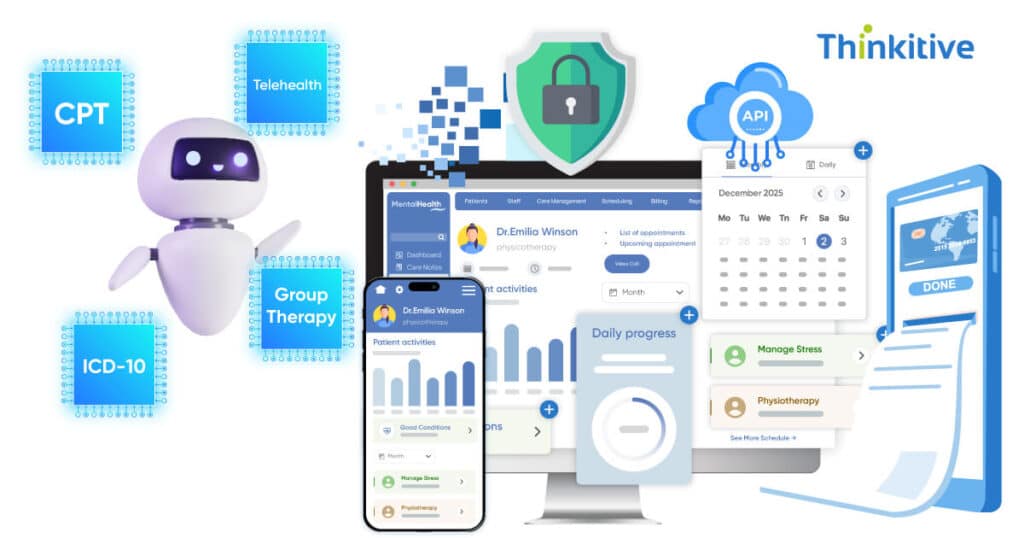
In behavioral health, billing is like a minefield with complex CPT codes, documentation, and strict insurer rules. One wrong code, modifier, or incorrect documentation can get your claim rejected.
But what if every claim is auto-checked and validated before submission?
That’s exactly what automated claim scrubbing does. It identifies errors, misplaced codes, and catches issues before insurers do. This way, clinicians no longer have to fix issues after the rejection and have to face frequent denials.
However, generic claim scrubbing tools can only catch basic errors and often stumble when it comes to more complex codes. These tools are not designed to spot errors in psychiatric codes, group therapy codes, or psychiatric evaluation modifiers.
That’s why a mental health practice needs automated claim scrubbing with behavioral health-specific claim scrubbing rules. And here, custom behavioral health software solutions, such as a tailored mental health EHR with automated claim validation, help you get there.
Moreover, with these EHR claim scrubbing tools, clinics specific to delivering mental healthcare services can submit much cleaner insurance and get faster approvals. So, with a claim scrubber, it’s not only reducing your workload but also improving your healthcare revenue cycle for behavioral health.
So, in this blog, we will explore how automated claim scrubbing reduces denials in behavioral health and why a behavioral health-specific claim scrubbing software is important.
Let’s get started without further ado!
The Hidden Cost of Claim Denials in Mental Health
For mental health clinics, claim denials are more than just an inconvenience or resubmission; they are a silent financial drain. With each claim denial, extra work hours are added, reimbursements are slower, and administrative burdens are higher. Let’s see what the common behavioral health billing errors cause denials:
- Missing diagnosis codes for psychotherapy sessions: Without accurate diagnosis codes, the claims are not considered valid, and it becomes one of the top reasons for denials.
- Incorrect CPT modifiers for teletherapy: Telehealth services require specific modifiers. Using outdated or incorrect ones can instantly take your claim towards rejection.
- Overlapping service dates for group and individual therapy: When billing multiple sessions on the same day, missing documentation or timing errors can cause insurers to mark claims as duplicates.
- Incomplete or mismatched provider credentials: Behavioral health claims often fail when the rendering provider’s credentials don’t match payer requirements or NPI listings.
- Inconsistent documentation across sessions: Notes that don’t align with billed codes, for instance, missing session duration or treatment type, raise red flags during claim review.
These are some of the many reasons for claim denials. With just the reasons mentioned above, clinics can lose thousands of dollars annually without even realizing it. Moreover, because of these frequent claim denials, clinics are most likely to face audits, leading to fines and penalties.
However, generic claim scrubbing can’t solve these issues. So, you need a claims management automation and automated claim scrubbing with behavioral health-specific claim scrubbing rules.
What Makes Behavioral Health Claim Scrubbing Unique
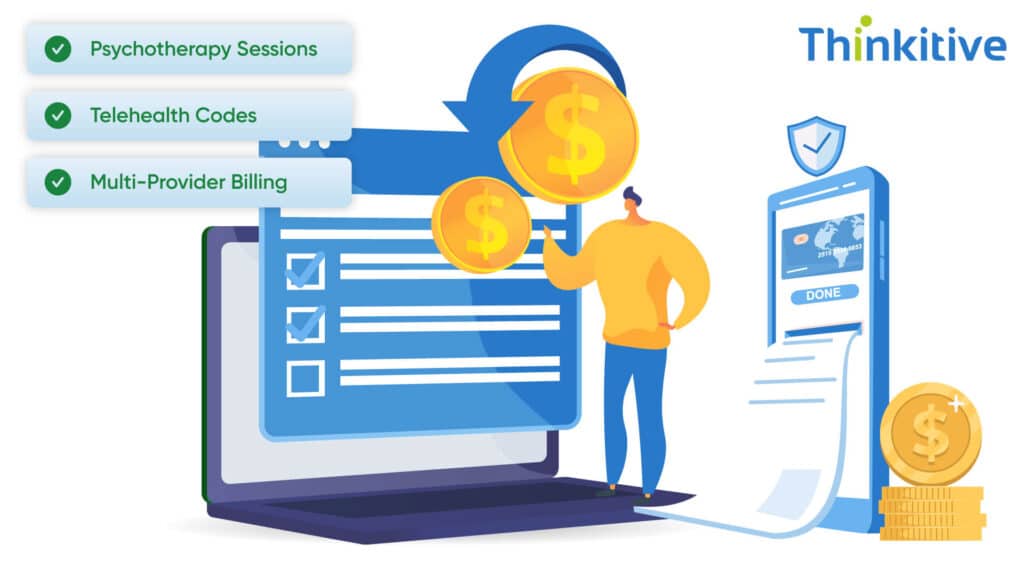
Unlike physical health billing, mental health billing is much more complex with its multiple session types and variety of CPT codes. For group sessions, the codes are different, and in psychotherapy sessions, the codes differ.
That’s why behavioral health claim scrubbing needs specialized intelligence that can handle all these behavioral health-specific claim scrubbing rules. Standard EHR claim scrubbing tools often fail to account for the detailed rules that make or break a clean submission. For instance:
- Psychotherapy add-on codes must be paired correctly with primary therapy codes to ensure reimbursement for extended sessions.
- Telehealth billing codes require specific place-of-service and modifier combinations, unique to mental health virtual care.
- Multi-provider service billing (psychiatrist + therapist) demands coordinated documentation to prevent duplicate or overlapping claims.
With a generic EHR, all of these rules are often overlooked, causing behavioral health billing errors to go unnoticed. However, automated claim scrubbing is built with behavioral health in mind, ensuring that not a single error goes to the insurer when a claim is submitted.
How Automated Claim Scrubbing Works
Now you might have understood what an automated claim scrubbing does, it identifies errors and streamlines mental health billing procedures. However, here is how it works and completes the whole process for behavioral health:
- Step 1 – Claim Data Extraction From the EHR: Here, the system pulls all the relevant data, such as insurance company details, patient profile, and service data, directly from the EHR, ensuring nothing is overlooked.
- Step 2 – Automated Validation Using Payer-Specific Rules: In this step, each filed claim is checked against the payer requirement, ICD-10, and CPT codes, along with the behavioral health-specific claim scrubbing rules.
- Step 3 – Detection of Missing Fields or Mismatched Codes: With the help of the embedded rules, the software identifies missing, incorrect, or mismatched codes that can trigger denials.
- Step 4 – Auto-Corrections or Recommendations Before Submission: Here, the small errors are fixed automatically, while the major errors are submitted to be refixed by administrative and clinical staff, reducing manual work.
- Step 5 – Integration with Clearinghouses or Payer Portals: With seamless integration, the clean claims are automatically submitted to payers, minimizing delays in the healthcare revenue cycle for behavioral health.
- Step 6 – Real-Time Feedback Loops that Prevent Future Errors: The system improves with the past rejections and updates the validation rules continuously, making the denial prevention in mental health billing much easier.
So, these are the steps that automate the claim scrubbing and make it much more effective and efficient in reducing claim denials.
Benefits of Automated Claim Scrubbing for Behavioral Health Providers
After a clinic implements automated claim scrubbing, it brings multiple measurable benefits to the practice. These benefits go beyond just fixing errors; they significantly impact the ROI and ensure compliance with payer and regulatory requirements. Here are the benefits of adopting claim scrubbing:
| Benefit | How It Helps Behavioral Health Providers |
| Fewer claim denials and resubmissions | Automated validation catches errors before submission, reducing rejected claims and minimizing repetitive corrections. |
| Faster reimbursements and improved cash flow | Clean claims reach payers quickly, accelerating payments, stabilizing revenue cycles, and recovering the lost revenue. |
| Reduced manual labor and staff burnout | Less time spent reviewing claims manually allows staff to focus on patient care and high-value tasks. |
| Increased payer compliance | Ensures adherence to HIPAA, CMS guidelines, and behavioral health billing rules, protecting practices from audits and penalties. |
By leveraging these benefits, behavioral health practices not only save time and money but also create a smoother, more efficient claims management automation process. Automated claim scrubbing transforms mental health billing from a reactive, error-prone task into a proactive, revenue-protecting workflow.
Key Features to Look for in a Behavioral Health-Specific Claim Scrubber
When it comes to choosing or developing a behavioral health-specific claim scrubber, it is important to understand what features to look for. You need features that are designed to handle the complexity of behavioral health billing and its CPT codes. Let’s understand what features can manage it:
- Custom Rule Engine for Behavioral Health Billing Codes: With this, you can easily ensure all the sessions from psychotherapy, telehealth, and group therapies follow correct ICD-10 and CPT codes along with modifier rules.
- Real-Time Alerts for Missing or Invalid Data: Instantly identifies possible errors and alerts providers while helping them correct the issue before claims are submitted.
- Multi-Payer Compatibility: Connect seamlessly with Medicaid, Medicare, and any private insurer, simplifying claims for a diverse patient population.
- Dashboard Visibility for Tracking Scrubbing Accuracy: A unified platform that provides a clear visibility into claim quality, recurring errors, and team performance metrics.
- AI/ML Learning Models: Continuously improve and learn from past rejection, developing better validation workflows, reducing future denials, and keeping rules updated.
With these features included in your automated claim scrubbing mental health billing software, it becomes much easier to streamline your claims management automation. This leads to a faster and more reliable healthcare revenue cycle for behavioral health.
Implementation: Adding Automated Scrubbing to Your EHR Workflows
Implementing automated claim scrubbing into your EHR may seem daunting, but breaking it down into clear steps can simplify the process and ensure a smooth transition.
1. Integration process overview: Determine whether your EHR supports built-in claim scrubbing modules or requires API-based integration with third-party tools.
2. Data mapping and rule configuration: Align your patient, provider, and service data with the claim scrubber’s rule engine. Configure behavioral health–specific rules for CPT, ICD-10, and modifiers.
3. Staff training and workflow adaptation: Train billing and administrative staff on alerts, validation reports, and corrections. Adjust workflows to incorporate automated checks seamlessly.
4. Common pitfalls to avoid: Watch for incomplete data mapping, ignoring multi-payer requirements, or skipping regular updates to scrubbing rules. Addressing these early prevents delays and ensures cleaner claims.
Following these steps ensures that automated claim scrubbing is fully integrated, reducing denials, improving compliance, and streamlining the behavioral health claims management workflow.
Conclusion
Claim denials and payment delays cost behavioral health practices time, money, and resources, and generic scrubbing tools simply aren’t enough to prevent them. Implementing automated claim scrubbing designed specifically for mental health ensures that errors are caught before submission, reducing denials and speeding reimbursements.
Behavioral health–focused EHR systems not only validate claims in real time but also streamline workflows, improve compliance, and provide actionable insights to prevent recurring errors. For practices struggling with complex CPT codes, telehealth modifiers, and multi-provider sessions, this level of automation is no longer optional, but it’s essential.
See how Thinkitive’s Behavioral Health EHR helps you prevent claim denials before they happen and transform your claims process into a smooth, efficient, and revenue-protecting workflow.
Frequently Asked Questions
Generic claims scrubbing detects basic coding errors but often misses mental health–specific nuances. Behavioral health claim scrubbing applies specialized rules for psychotherapy, telehealth, multi-provider sessions, and complex CPT/ICD-10 codes, reducing denials and ensuring accurate reimbursements.
Automated claim scrubbing validates claims in real time, flags missing or incorrect codes, and provides corrections before submission. Catching errors early prevents common causes of rejection, accelerates payment, and reduces repetitive administrative work.
Most modern claim scrubbing tools support integration via APIs or built-in modules. While compatibility depends on the EHR, behavioral health–specific solutions are designed to work seamlessly with common systems to streamline workflows and maintain accurate billing.
Yes. Behavioral health claim scrubbing tools include payer-specific rules for Medicaid, Medicare, private insurers, and telehealth services, ensuring all claims meet regulatory and reimbursement requirements while minimizing the risk of denials.
Claim rules should be updated regularly, ideally quarterly or whenever CPT, ICD-10, or payer guidelines change. Frequent updates maintain accuracy, prevent denials, and ensure that automated claim scrubbing remains compliant with evolving behavioral health billing standards.


