Which Healthcare Entities Can Benefit from Custom EHR Software?

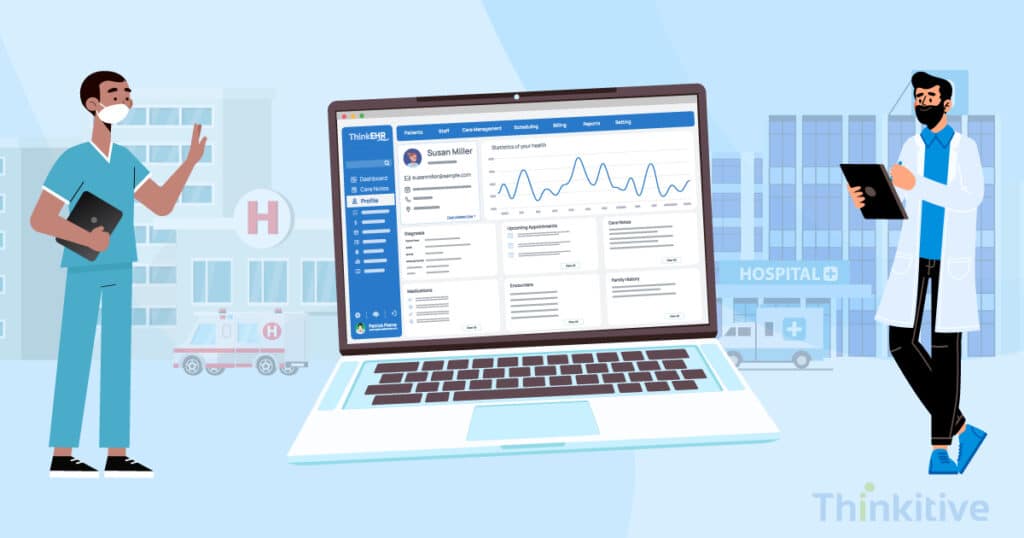
Did you know that, according to PCM, the adoption rate of the EHR system in 1991 was under 1%?
Now, with the adoption rate of physician-based clinicians going as high as 88.2% out of which 77.8% use certified EHRs in 2021, the number should have been nearly about 90%.
The situation is quite similar in the major healthcare facilities as well, with more than 96% of adoption rate of certified EHRs in US hospitals; it can be said that EHR systems have become the epicenter of care delivery.
If you’re counting the benefits of using an EHR system, then from efficiency to data-backed or evidence-backed care has been provided. Furthermore, the higher adoption rate of EHRs is also helping the healthcare industry to transition from service-based to value-based, and that’s a huge advantage for both providers and patients alike.
However, as there always is, an interesting stat forced me to think otherwise. You see, I came across this survey that said 8 in 10 non-federal acute care hospitals are facing at least one challenge in submitting public health data via EHRs.
Which got me thinking, we’re going through more surveys, research papers, and studies on the efficiencies of the EHR system for healthcare providers. And not so surprisingly, there are a lot.
Trying to find a connecting dot in them, I realised most of those who encountered problems with EHR systems have been using a generic or off-the-shelf EHR system. This alone thread got me into writing this blog.
With EHRs being so essential for modern-day healthcare practices, they have indeed made a difference in improving healthcare delivery. However, the full potential of their EHR systems is often left untapped.
So, what can be done? Well, the solution is – a custom EHR.
In this blog, let’s try to find which are those healthcare entities that benefit from custom EHR and what are the benefits of custom EHR for healthcare organizations.
Without further ado, let’s get started!
Assess My EHR Alignment with My Practice
Get Free ConsultationDefining the Ideal Candidate for Customization
Before getting into the intricacies of the healthcare entities that benefit from custom EHR, let’s first try to understand if a healthcare practice does actually need a custom EHR. It is important because, if an off-the-shelf software can get the work done, then shifting to a custom EHR would surely be a costly affair.
On that note, let this section be your guide to decide if you actually need custom EHR software or not.
- Highly Specialized or Unique Clinical Workflows: If you are a specialty practice, then you do need a customized EHR for smooth administration and care delivery. Other than that, if your practice has unique clinical workflows, then shifting to a custom EHR can help your practice with both workflows.
- Seamless Integration Needs with Legacy Systems: legacy systems are still being used in the healthcare space, and while most healthcare practices are shifting to a modern system, to integrate your system with their legacy system, a custom EHR would be a smarter choice.
- Large Patient Data Volumes: Depending on your patient base, your analytical requirements differ. For a practice with a larger patient base, a custom EHR becomes a necessity to manage huge amounts of data and make sense of it.
Who Can Benefit from Custom EHR Software?
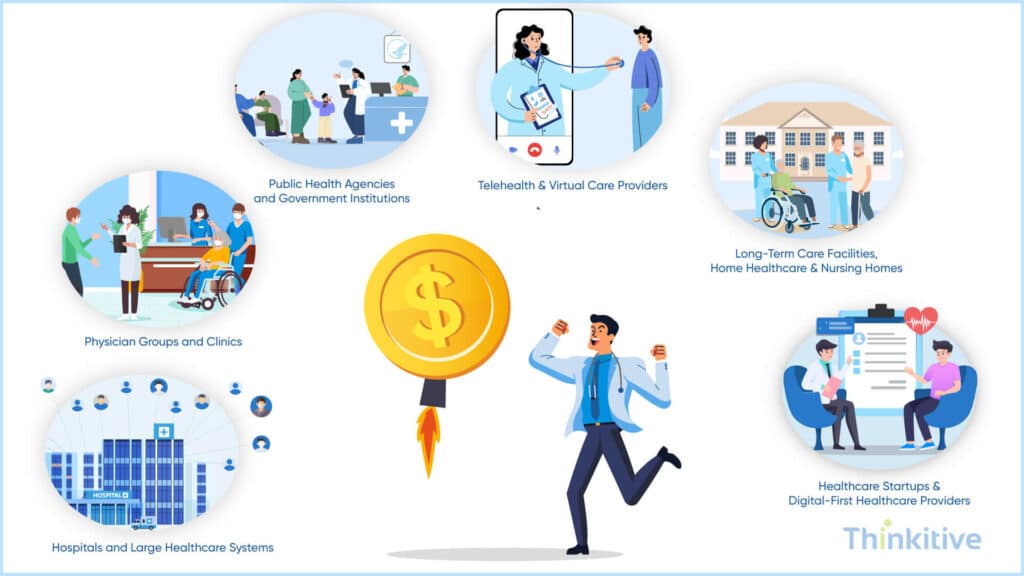
Technically, every healthcare practice can benefit from custom EHR software development. However, if you are just starting out in the digital landscape of the healthcare industry, then generic EHR software can be the way for you to go. So, making the choices simpler for you, here are some of the healthcare entities that can benefit from the custom EHR software development approach:
Hospitals and Large Healthcare Systems
Large healthcare systems, like hospitals with patient populations of, let’s say, more than 1000, have different departments and complex workflows that suit particular hospitals only. This is where a custom EHR software development approach can be advantageous. It can be easily integrated with the existing system and technical infrastructure and support specific clinical and non-clinical needs. Along with that, specialty EHR solutions can specifically address specialties needs, and needs of the patient population can be easily addressed. This is the reason why custom EHR software development makes an ideal choice for large hospitals.
Physician Groups and Clinics
Generic off-the-shelf EHR software systems are designed to carry out both the clinical and administrative needs of a hospital. In this case, where a clinic of physician groups is providing healthcare services, meeting their specific needs becomes difficult. Furthermore, there can be gaps in coordination, which can affect collaboration.
However, with custom EHR software with enhanced communication features like telehealth, secure messaging, SOAP notes, etc., communication and collaboration can be enhanced by creating a comprehensive and interactive network for all the members.
Along with that, administrative tasks can also be streamlined to improve the clinic’s overall efficiency. Having said that, if the clinic physicians cater to specific groups, then with custom EHR for healthcare providers, they can cater to their specific niches and easily adopt their unique practice models.
Public Health Agencies and Government Institutions
For public health agencies and government institutions, managing huge patient health data is often difficult, and given the high data volumes, the off-the-shelf software simply doesn’t meet half of their needs. However, with a custom EHR software development approach, these agencies can easily manage huge patient health data volumes and track disease outbreaks with features like EHR data analytics.
On the other hand, by making the system interoperable, data exchange can be easily facilitated with other healthcare organizations, and reporting for public health initiatives can be done easily. Since it will be developed for a specific purpose, the specific needs of the healthcare institute will be easily met while abiding by the regulatory requirements and compliance needs.
Telehealth & Virtual Care Providers
With virtual care delivery being one of the growing trends for providers and patients, providing care with generic software systems will simply make your ecosystem incapable of providing accurate care.
In such cases, designing specific remote care workflows with automated virtual scheduling options and seamless integration with RPM devices becomes necessary. With a custom EHR system development, you can build the architecture the way you want and completely shift your practice from physical to virtual.
Long-Term Care Facilities, Home Healthcare & Nursing Homes
Managing detailed care plans for patients who require long-term care can be difficult. On top of that, if you are a home healthcare service provider or a nursing home, then addressing your unique workflows, while keeping a record, can be extremely challenging with an off-the-shelf EHR software.
However, with a custom EHR, you can not only manage detailed care plans and implement complex medication management across shifts. Furthermore, the software being curated as per your requirements, you can promote collaboration between providers and patients to provide quality care.
Healthcare Startups & Digital-First Healthcare Providers
Digital-first healthcare startups are some of the emerging trends in the healthcare domain. For this, there is a constant requirement for iteration of features from providers. Along with that, to connect with different systems and to offer unique digital care experiences, they need a flexible architecture for growth.
Here, the only option that is available for them is a custom EHR software. It meets their unique needs and helps pave the way for their future growth.
Does Your Healthcare Practice Need a Custom EHR: A Checklist
If you made it till here, then one question might still linger in your mind – Do I actually need a custom EHR?
Let’s see it this way: every healthcare facility needs to rely on EHR for data. While most of the providers don’t really know the full potential of EHR software, they just align themselves around the software, though it should be the other way around, right?
On that note, let this section be your checklist for deciding if you need a custom EHR or not. For this, all you have to do is a simple exercise. Ask yourself these five questions, and if your answer matches the answer, then you might get your decision. Refer to the table below:
| Checklist Question | Why This Indicates You Need a Custom EHR |
| Do you have unique clinical workflows that off-the-shelf EHRs can’t accommodate? | Standard EHRs force you to adapt to generic workflows, while custom EHRs are built around your exact care processes to reduce friction and improve care delivery. |
| Are you struggling with poor productivity due to system limitations? | A custom EHR eliminates unnecessary clicks and redundant steps, improving provider efficiency, documentation speed, and overall patient throughput. |
| Do you need deep integrations with specific legacy systems (labs, imaging, billing)? | Custom systems support tailored APIs and data connections, ensuring seamless interoperability without expensive workarounds or vendor-locking. |
| Are you in a compliance-heavy or niche regulatory environment? | Custom EHRs are adaptable to evolving compliance needs such as HIPAA, ONC, specialty-specific reporting, and state-level mandates without waiting for vendor updates. |
| Do you require highly specialized templates or diagnostic tools? | Custom EHRs let you design templates, forms, and decision support tools specific to your specialty, reducing documentation time and improving clinical accuracy. |
Key Advantages of Custom EHR Software
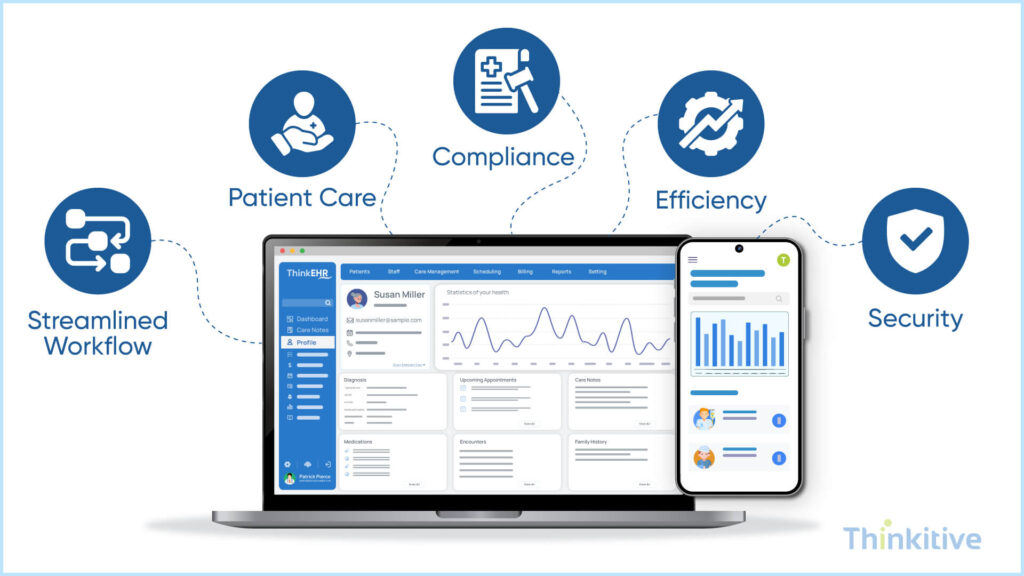
If your healthcare practice falls under any of the three categories mentioned above, then custom EHR software development is the way to go. And if you are opting for a custom EHR software development approach, there are the key advantages that you must know:
- Tailored Functionality: The specific clinical needs like specialty customizations and workflows unique to your healthcare organization can be easily achieved with custom EHR software development. Along with that, you can also add some additional features that are unique to your practice, which can also be added to the software to make it much easier.
- Scalability and Future-Proofing: It is natural for your practice to grow with time. Here, addressing its growing needs can be difficult. However, with cloud-based custom EHR software development, you can make your software future-proof and scalable. This means that it can be easily adapted to the evolving needs and requirements of the practice. Furthermore, with evolving technology, custom EHR software is more likely to adapt to such technological advancements than any other software.
- Improved Data Security and Privacy: Data security and privacy considerations are dependent on a lot of factors. With off-the-shelf EHR software, they are often difficult to comply with. On the other hand, with custom EHR software, you can address specific security concerns and compliance regulations to ensure improved data security and privacy practices.
- Enhanced User Experience: Give your users, from patients to providers, an enhanced workflow when working on their software rather than the same old interface. Along with the design part, you can also keep the software workflow at your convenience to streamline it and encourage users to use the software more for healthcare delivery.
- Integration with Existing Systems: Custom EHR software offers seamless integration options with customizations to other healthcare IT systems.
Get Your Practice Assessment for Custom EHR
Get Free ConsultationConsiderations Before Choosing Custom EHR Software
Though custom EHR software solutions come with lucrative benefits, they can still be a complex affair to implement for your practice. With respect to that, here are some considerations that you must know before moving ahead with custom EHR software development:
- Cost and Development Time: Custom EHR software is a costly venture as compared to off-the-shelf software. Since it is developed from scratch and is specific to your use only, it is natural to have a higher development cost than off-the-shelf software. Along with that, custom EHR software also takes 3-6 months to develop and even more, depending on the complexity of the software. The development cost is something that one must consider before moving ahead.
- Internal Resources and Expertise: Implementing and maintaining custom EHR software is an ongoing process that requires dedicated IT resources or vendor expertise. So, having the ongoing maintenance and support terms beforehand is something that you should consider before moving ahead with a customized EHR approach.
- Long-term Commitment: Custom EHR software, unlike generic EHR software, cannot be discontinued whenever you face a problem. It is a long-term commitment, and problems are bound to come since it will be dealing with different types of data from various sources. Being prepared for ongoing maintenance, updates, and potential upgrades to your custom software system is something that you must consider.
Note: Read this ultimate guide to EHR software development to know the intricacies and other aspects that you need to consider during development.
Conclusion
Custom EHR software development is one of the most lucrative options of healthcare IT available in the market for healthcare professionals. However, it is not meant for all, off-the-shelf EHR software offers quick and economical solutions for getting started with the practice.
But if you are looking for healthcare IT solutions that can meet your specific needs and help your practice be more efficient, then custom EHR software development. On that note, let this blog be your guide to choose if the custom EHR software is the right choice for you or not. And if you’re still confused then click here to get your free consultation on it.
Frequently Asked Questions
Custom EHR software is tailored to a specific healthcare provider’s needs and workflows, providing a personalized solution. It offers flexibility, integration, and scalability. On the other hand, generic EHR software is a standardized product designed for various healthcare settings. It is often more affordable but may lack the customization options of custom software.
Custom EHR software offers several advantages:
- Tailored to specific needs: It’s designed to fit your unique workflows and processes, improving efficiency.
- Enhanced data management: It provides better data organization and accessibility for improved decision-making.
- Improved patient care: It can help deliver personalized care plans and enhance patient outcomes.
- Scalability: It can grow with your practice, accommodating future needs and changes.
- Increased security: Custom software can offer stronger security measures to protect sensitive patient data.
Custom EHR solutions offer a high degree of flexibility, allowing you to tailor various features to your specific needs. These can include:
- Workflows: Design workflows that align with your practice’s unique processes and improve efficiency.
- Templates: Create custom templates for patient charts, progress notes, and other documentation.
- Reporting: Generate tailored reports and analytics to track key performance indicators and identify trends.
- Integrations: Seamlessly integrate with other healthcare systems and devices to streamline data exchange.
- User interface: Customize the user interface to match your branding and preferences, enhancing usability.
- Security: Implement robust security measures to protect patient data and comply with regulations.
Custom EHR software can significantly improve patient care by:
- Tailoring to specific needs: It’s designed to fit your practice’s unique workflow, ensuring efficiency and accuracy.
- Enhanced data management: It provides a centralized platform for storing and accessing patient records, facilitating better decision-making.
- Improved communication: It streamlines communication between healthcare providers, reducing errors and improving patient outcomes.
- Increased efficiency: Automation of tasks, such as scheduling and billing, frees up time for providers to focus on patient care.
- Better patient engagement: It enables personalized care plans and facilitates patient-provider communication, leading to better health outcomes.
While custom EHR software can be tailored to specific needs, it often requires higher upfront costs and ongoing maintenance compared to off-the-shelf solutions. Smaller healthcare entities might find it more cost-effective to explore cloud-based EHR options or consider partnering with other organizations to share resources.
Custom EHR software can ensure compliance with industry regulations like HIPAA and GDPR through:
- Built-in security features: Encryption, access controls, and audit trails.
- Regular updates: Keeping the software aligned with the latest regulatory requirements.
- Risk assessments: Identifying and mitigating potential compliance risks.
- Vendor oversight: Ensuring your software provider adheres to regulatory standards.
- Comprehensive training: Educating staff on data privacy and security practices.
The timeline for implementing custom EHR software varies depending on factors like the size of your practice, the complexity of your workflows, and the customization level required. It can typically take anywhere from 6 months to 12 months to complete the implementation process, including setup, data migration, training, and go-live.
The cost of custom EHR software can vary significantly depending on the size of your practice, the features you need, and the complexity of the development.
Here’s a breakdown of the factors that affect the cost:
- Size of your practice: The number of users and patients you have will affect the cost of the software.
- Features: The features you need will also affect the cost. Basic features like patient charting and scheduling will be less expensive than more complex features like billing and insurance integration.
- Complexity of the development: The complexity of the development will also affect the cost. If you need a highly customized system, it will be more expensive than a system that is based on a template.
Overall, you can expect to pay anywhere from $10,000 to $100,000 for custom EHR software. However, it is important to get quotes from several vendors before making a decision.


