How Does EHR Software Help to Improve Patient Care?

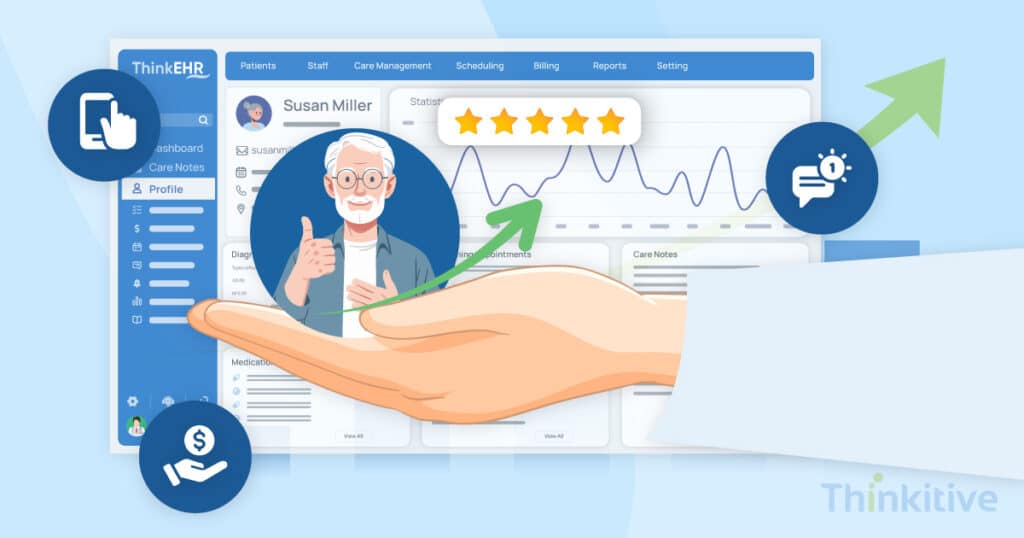
EHRs were introduced in healthcare to help practices, keep their records better and enhance day-to-day operations. However, over the last few years, it has gone beyond that and has helped providers in providing better care.
Being a healthcare provider, you must already be knowing it. In fact, a review of 23 hospital-based studies found that almost 78% of hospitals have reported improvement in the quality of care they provide to their patients. And out of those 23 hospitals, none of them reported a negative impact on the quality of care that is being provided, interesting isn’t it?
Well, that’s not all, a meta-analysis and large reviews reported that the use of EHRs have reduced medications errors by roughly 25-30%. Almost all the aspects of patient care have been streamlined and have become data-oriented due to EHRs.
And this is one of the major reasons why many hospitals and healthcare practices have been actively looking for custom EHR and EMR software development. Now, while you might get yourself a custom EHR in your quest of improving your patient care activities, there are certain intricacies that you need to know before that.
In this blog, let’s try to cover those intricacies of EHR software development and see how a custom EHR software can help you in improving patient care.
So, without further ado, let’s get started!
Patient Care Features List That You Need in Custom EHR
Download Feature ListNecessary Technology Integration
The EHR system gives you access to patient health records, but here it is important to understand that with a custom EHR software, you somewhere want to create a complete digital care practice, right?
Well, for that, you need integrations, and that is the missing piece of the puzzle to improve patient care.
Here are some necessary integrations that you must have in your custom EHR software system:
- Mobile App: By bringing your custom EHR software to mobile devices, you bridge the connectivity gaps between patients and providers. The accessibility both your patients and providers can have with a custom EHR mobile app ensures timeliness in care delivery, improving the quality of care, and at times can even be useful for timely interventions.
- Patient Portal: Other than mobile, you must include the patient portal in your custom EHR software system. It not only acts as a primary point of reference for the patient’s care journey but also for your providers to easily access patients.
- Wearable Integration: Other than the patient portal, most of the patients are using remote technology to not only monitor their health, but also with wearable integration, your custom EHR system can easily collect data from the patients in real-time and enhance their care journey. This way, proactive care practices can be initiated, and better preventive care can be provided.
- Telehealth: Adding a touch of digital consultations with telehealth integration, you can offer complete healthcare services, including consultation using your custom EHR software.
If you’re considering building your own EHR system, then these are some of the must-have integrations that you must have.
Enhanced Accuracy & Accessibility
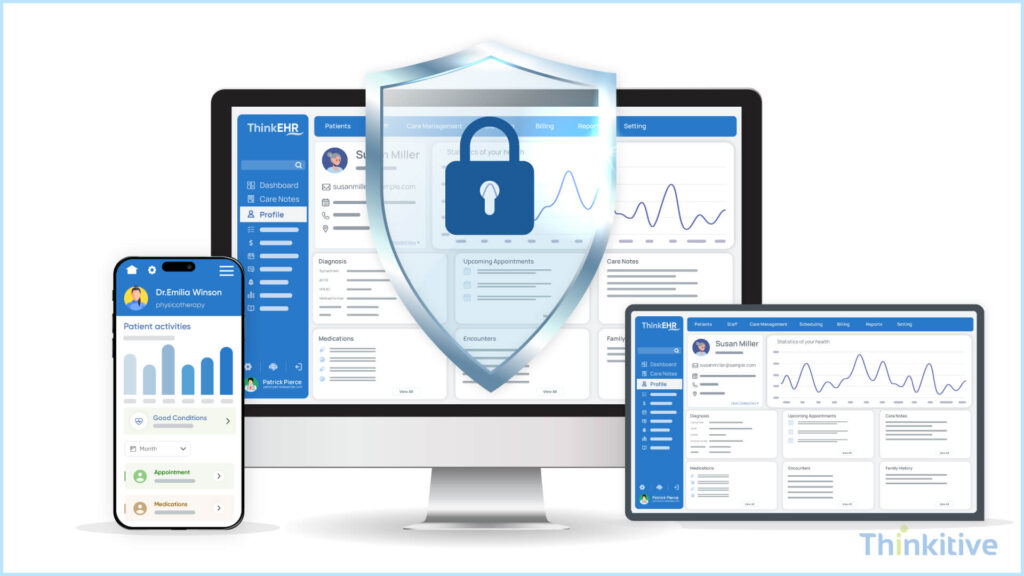
As discussed earlier, the EHR systems improved the accessibility to patient health data. You see, EHR and patient care improvement go hand-in-hand. In a custom EHR software system, you create a centralized platform for storing patient data and eliminate the risk of lost or misplaced records.
In short, you can easily cover each and every aspect of patient care from those records, which also act like clinical decision-support tools. Apart from that, digital storage ensures clear and legible information compared to traditional practices of handwritten notes and reduces the chances of human errors.
However, the chances of unauthorized access increase with this. But the EHR implementation strategies ensure that you instill encryption and role-based access authentication to ensure secure access to data.
And the transition of data processes coupled with the feature of real-time updates proves to be clinical for improving care coordination. In this way, EHR alone, by streamlining one single factor of data storage, impacts the core of healthcare delivery.
On top of that, with real-time point-of-care access to providers or authorized clinicians, the ability to make better decisions can be enhanced. For instance, if a patient reports sudden pain during an ongoing treatment, then with EHR’s point-of-care, the data can reveal what has been the missing link and the clinician can provide effective care immediately, so that better preventive care can be provided.
Smart EHR Features for Better Accuracy
Get Free ConsultationStreamlined Communication & Collaboration
Moving on to the next benefits of EHR for patients and providers alike, communication and collaboration. Improved communication in healthcare is something that fosters core aspects of care, such as continuity of care or preventive care.
To streamline this, custom EHR software solutions come with secure messaging features within the system, which allow patients to connect with providers such as doctors, nurses, and specialists almost instantly. This eliminates the need for long wait hours and, in cases of emergency, can be as useful as an ambulance.
Though custom EHR software cannot completely replace the element of physical interaction for certain diagnoses or care delivery, for minor aspects of care, it allows healthcare providers to make informed decisions and ensure that the best possible preventative care is provided.
Furthermore, a streamlined workflow with EHR ensures that everyone in the patient’s care journey is on the same page and working towards the same goal to provide the best possible care. This coupling with real-time access to patient history allows for informed decision-making during consultation and emergency situations.
Improving Quality of Care with Clinical Intelligence
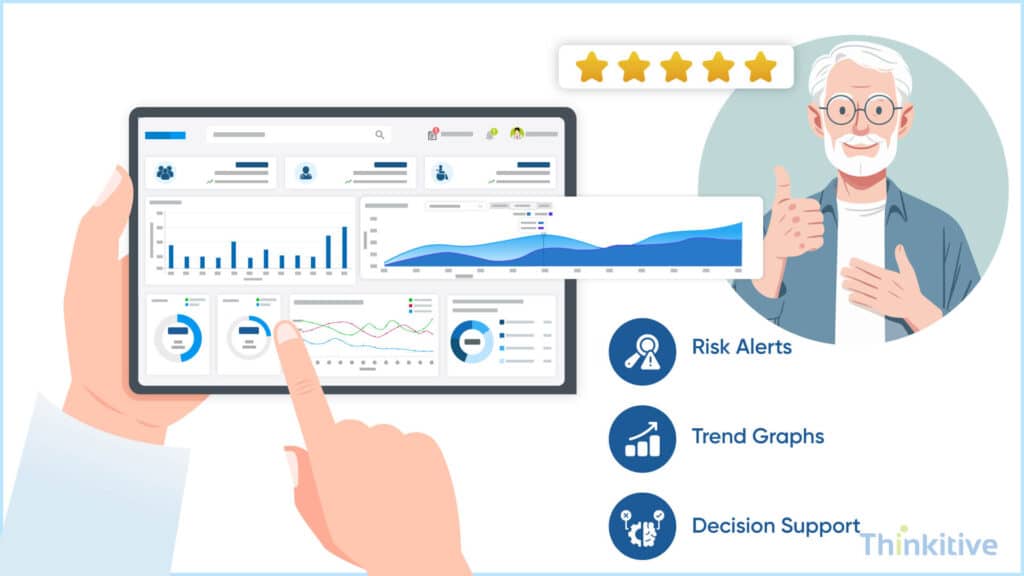
With access to data, different facets of healthcare can be easily uncovered. However, finding the missing link to the pool of data can be difficult. This is where the advanced technology in custom EHR systems can be used. By optimizing EHR for patient-centered care, decision support tools can be instilled for potential drug interactions or care plan curation.
Along with that, automated alert options can effectively identify patients with potential health risks. This way, medication errors can be easily eliminated, and preventive care through EHR will be delivered effectively.
Furthermore, with EHR data analysis, trends and patterns in patient health can be easily identified, aiding population health management and prevention of diseases. Given the contagious nature of many diseases, data analysis in EHR can change the face of the practice and can turn out to be life-saving in times like the COVID-19 pandemic.
Given the advancements that AI has brought with itself, you can instill AI-driven analytics into your EHR system. These systems are extremely powerful and can be revolutionary for your practice. In practical terms it can help you in providing better preventive care. Let me explain how. Since your system will be data oriented, the system will automatically analyze all the data and give you a near estimation about the risks that a patient might have. This way timely interventions can be done and better preventive care can be provided. Moreover, it is also a great tool to support population health.
Patient Empowerment & Engagement
During our journey as a healthcare IT service provider, we have encountered many healthcare providers who insist on having a dedicated feature of a patient portal in their software. You see, with patient portals, important aspects such as patient empowerment and engagement get simplified.
Moreover, it acts as a unified platform for the patients to view their medical history and lab results and schedule their upcoming appointments. Along with this, the features of secure messaging allow patients to directly communicate with their healthcare providers and empower them to proactively take part in their care journey. This has a psychological effect on the patients, where their involvement allows them to have better engagement in their journey and make effective decisions with a better adherence rate.
Along with that, with integrated patient portals, educational resources have become easier for patients to access, and that is also true within the EHR systems. This empowers patients to make informed decisions about their health and healthcare providers to deliver the best possible care. Patient engagement with EHR tries to create a win-win situation in custom EHR systems, and you can even promote it as a benefit of EHR for patients in care delivery.
When we talk about patient portals, we sometimes talk about self-service. Some of the integral self-service features include online intake forms, symptom checkers and medication trackers. These tools are great in encouraging patients to actively participate in their care journey and play a proactive role in care planning.
In this, giving your patients mobile access can be extremely useful. It not only enables patients to manage their care on the go, but also gives them the liberty to always stay in touch with their care providers.
Download Feature List that Promotes Better Engagement
Download Feature ListSeamless Care Coordination Beyond the Clinic Walls
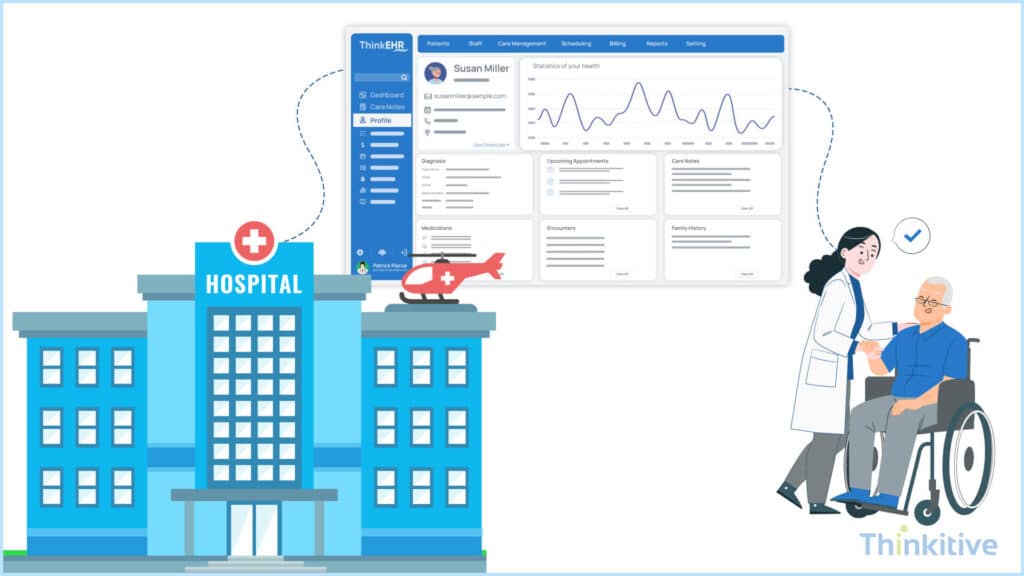
Another important aspect of patient care is care coordination and it should be there not only inside the clinic but also when the patient moves out of the facility. In this your EHR system needs to be connected with other healthcare systems that are outside your network as well. And for this your EHR system needs to be interoperable, to explain in short, it is the ability of the system to connect and communicate with each other on demand effectively.
Once your system is interoperable, it can be easily connected with other healthcare systems like hospitals, laboratories, pharmacies and even specialists. With this you can easily coordinate care activities between everyone and a smooth transitional care can be ensured with connected workflows, like from hospitals to the patient’s home and then to specialist.
Also, with an interoperable EHR system duplication of tests can be reduced and continuity of care can be ensured with ease. In this way you can ensure seamless care coordination even when the patient leaves your clinic.
Reduced Costs & Increased Efficiency
The challenges and solutions in EHR adoption have been the cost of custom EHR software systems. Though the venture seems a costly affair at first, it can significantly change the face of the practice and even help you reduce significant operational costs in the long run.
By eliminating the need for paper charts and healthcare storage concerns, the administrative burden is effectively reduced. This increases the efficiency of both staff and providers and allows them to focus more on patient care activities. Along with this, streamlined workflows and improved data accessibility can lead to faster diagnoses and treatment plans, and faster and better care delivery.
Furthermore, a reduction in duplication of tests and procedures due to readily available patient data promotes collaboration and allows for proper utilization of resources. And if you are looking to build a feature-rich EHR software, then here is a quick must-have EHR feature guide to help you build your holistic EHR software.
Know the Features You Need for Better Patient Care
Get Free ConsultationConclusion
In conclusion, EHRs have revolutionized patient care by enhancing accuracy, streamlining communication, and empowering patients. With centralized data storage, real-time updates, and seamless collaboration, EHRs ensure efficient healthcare delivery and informed decision-making. As technology continues to evolve, the potential of EHRs in improving outcomes and reducing costs remains promising.
Let’s embrace this transformation and explore the boundless possibilities of EHRs in shaping the future of healthcare. Take the next step in understanding EHRs and their impact on healthcare by delving deeper into this transformative technology, get a free demo with our custom EHR expert today.
Frequently Asked Questions
EHRs improve communication by providing a central repository for patient data, facilitating better information sharing between providers, reducing medical errors, and enabling more coordinated care.
EHR systems employ a variety of security measures to protect patient data, including access controls, encryption, and regular security audits. Access controls ensure that only authorized personnel can access patient information, while encryption safeguards data both at rest and in transit. Regular security audits help identify and address potential vulnerabilities.
Healthcare organizations can address EHR implementation challenges by:
- Thorough planning: Defining clear goals, selecting the right system, and allocating sufficient resources.
- User training: Providing comprehensive training to all staff on EHR usage and workflows.
- Data migration: Ensuring accurate and timely data migration from legacy systems.
- Change management: Addressing staff concerns and resistance to change through effective communication and support.
- Ongoing maintenance: Regularly updating and maintaining the EHR system to ensure optimal performance and security.
EHRs improve data accuracy by reducing manual data entry errors, standardizing data formats, and enabling automated data checks. They improve access by providing real-time, secure access to patient information from anywhere with an internet connection, facilitating better coordination of care among providers.
EHRs facilitate care coordination by providing a central repository of patient information accessible to all involved healthcare teams. This enables seamless information sharing, reduces medical errors, improves communication, and ensures consistent care across the continuum.
EHRs empower patients by providing them with easy access to their health records, facilitating better communication with healthcare providers, and enabling them to actively participate in their care decisions.
EHRs support data-driven decisions by:
- Centralizing patient data: Providing a comprehensive view of patient history, enabling better diagnoses and treatment plans.
- Generating reports and analytics: Identifying trends, predicting risks, and optimizing resource allocation.
- Facilitating population health management: Monitoring disease outbreaks, targeting interventions, and improving overall public health.
- Supporting clinical decision support: Providing evidence-based recommendations, alerting providers to potential issues, and improving care quality.
Key challenges include high costs, resistance to change, data security concerns, and interoperability issues. Addressing these requires adequate funding, comprehensive training, robust security measures, and collaborative efforts to improve data sharing standards.
Healthcare organizations can measure the impact of EHRs on patient care quality and efficiency by tracking key metrics such as:
- Reduced medication errors and adverse drug events: EHRs can help reduce these errors through features like automated alerts and reminders.
- Improved care coordination: EHRs facilitate communication between providers, leading to better care transitions and reduced readmissions.
- Increased patient satisfaction: EHRs can improve patient engagement and communication, leading to higher satisfaction scores.
- Enhanced clinical decision-making: EHRs provide access to evidence-based guidelines and support clinical decision-making.
- Increased efficiency: EHRs can streamline administrative tasks, freeing up staff time for patient care.
- Improved population health management: EHRs can help identify and manage high-risk patient populations.


