EHR Integration Use Cases: Real-World Applications in Modern Healthcare

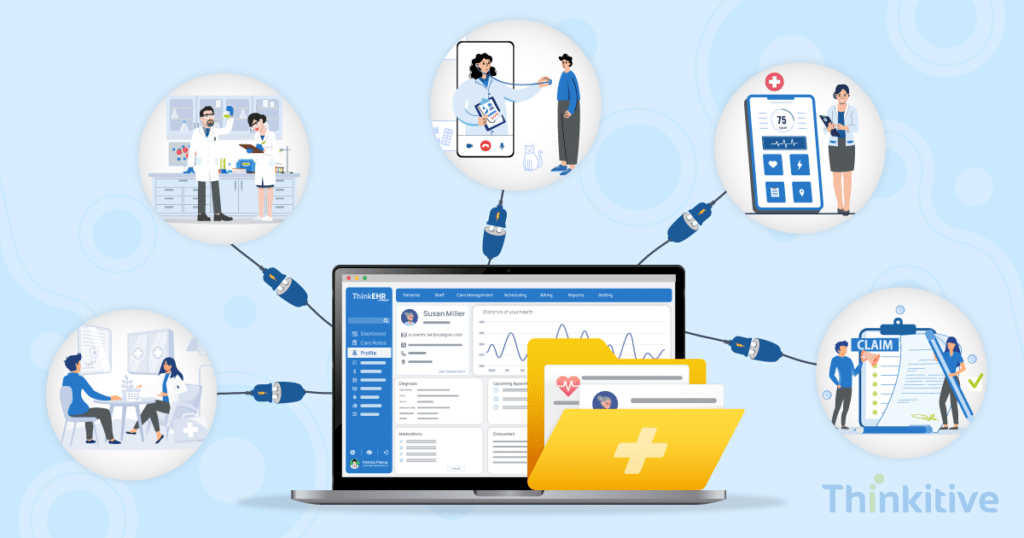
The healthcare industry generates 30% of the world’s entire data volume, according to Science Direct. The number must be quite huge and surprising to many, right?
Well, have a look at this, according to the World Economic Forum, almost 97% of healthcare data goes unused. And if you are able to connect the dots, this explains the problem with the healthcare – disconnected systems.
This might tell you why there has been such a huge demand for EHR integration lately. You see, EHR data integration in healthcare can give providers a comprehensive overview of the patient’s health, which can lead to better care delivery. On top of that, it can streamline your administrative workflows, giving you an edge and ease in managing practice effectively.
To understand the foundational concepts behind how these systems connect and exchange information, you can refer to EHR Integration Guide: Complete Overview for Healthcare Organizations .
However, is this EHR integration just limited to these benefits?
Well, NO!
EHR integration use cases go beyond clinical overview and administrative efficiency.
Having said that, as the world is turning its head towards a modern healthcare landscape, EHR integration will sooner or later be the pivot that determines how care is delivered and practices are run.
But before, you need to understand the different EHR integration scenarios in which it can be useful.
On that note, let’s discuss some of the most sought-after EHR integration use cases and how they can improve care delivery, bring administrative efficiency, and revitalize your practice’s finances.
So, without further ado, let’s get started!
Assess Your System for Advanced & Complex EHR Integration:
Get System Assessment
Patient Identity & Data Synchronization
The first EHR integration use case is pretty obvious. Managing patient data across multiple systems. Still, let’s briefly understand this, so that we don’t leave any stone unturned.
So, typically in a healthcare practice, the patient data is spread across multiple systems. Right from the administrator’s system for appointments and reminders to the biller’s system for claim processing. However, in between the appointment and billing, a lot of systems are missed.
For instance, from the administrator, the physician system has the entire patient’s details and care information. Now, if the physicians order a lab test or an X-ray, then the details of that particular report sit in the respective care provider’s system. And shifting that data from there to another system can be a tiring process.
This is where EHR integration kicks in. You see, with you successfully integrating your EHR system with the other system, your system can easily navigate the required data. Along with that, it will also synchronize the demographics and eliminate the chances of duplication.
This mechanism will ensure that your patient records are accurate and that your centralized system will act as the single source of truth. Aftermath, accurate data, accurate diagnosis, fewer errors, improved patient safety.
Clinical Data Exchange Across Care Settings
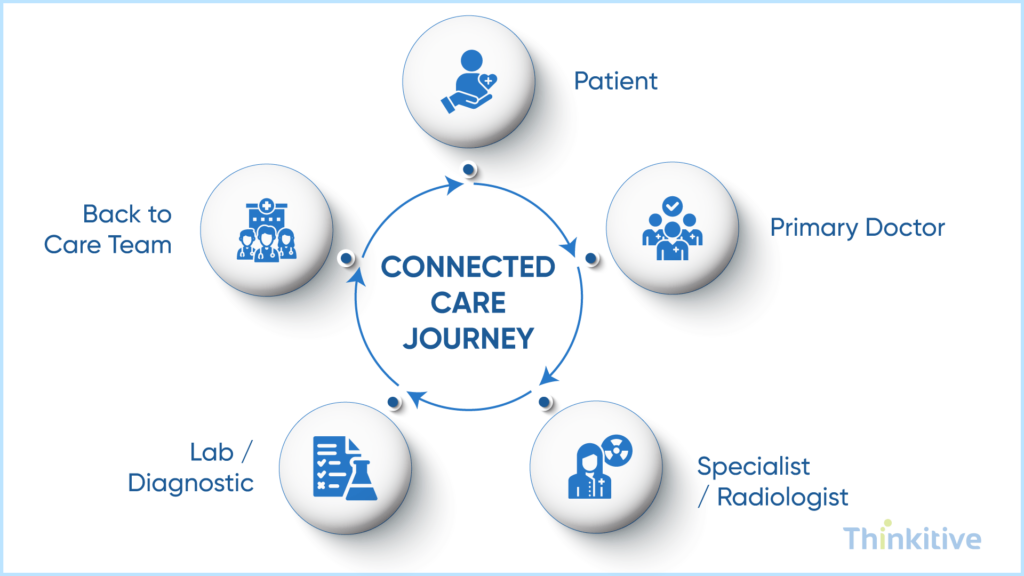
Coming to the second use case. Interestingly, this also deals with care delivery but in a different context. You see, in your patient’s care journey, their care will be a byproduct of many healthcare providers. Confusing? Let me explain.
During the patient’s care journey, at times they have to consult different care team members, right from the physicians to nurses, radiologists, etc. Furthermore, there are instances where they might need to see a specialist or another provider, for that matter.
Healthcare system integration use cases are meant for scenarios. You see, with custom EHR integration, your system can become a part of the connected healthcare ecosystem. Due to this, sharing patient records from your system to the specialist or the other way around is much easier.
Furthermore, it is not just limited to health information; providers can even send referrals and summaries of each consultation. This way, the entire process of diagnosis and trials can be skipped. On top of that, clinicians’ decisions can be made by providers at a much faster pace with accuracy.
Telehealth & Virtual Care Integration
After the COVID-19 pandemic, the trends in the healthcare industry have been shifting from traditional healthcare delivery to hybrid. In simple terms, patients have been preferring online consultation over in-person visits, and in enabling this transition, telehealth platforms have a huge role to play.
Having said that, for a practice, managing these hybrid care models can be quite daunting. And the administrative mess it can create is simply unimaginable. To streamline this management without worrying about synchronization of data integration makes it happen, and this is one of the coolest EHR integration use cases.
Moreover, EHR data integration in healthcare in these care models becomes extremely useful as you can synchronize the data from virtual consultation directly into the EHR system. Furthermore, if you are monitoring, then the RPM devices can also be integrated into your system, and seamless data sharing can be done in real-time to ensure accurate care.
With seamless patient care across multiple channels, you can ensure consistency without many errors to deliver the best care possible.
Laboratory & Diagnostic Integration
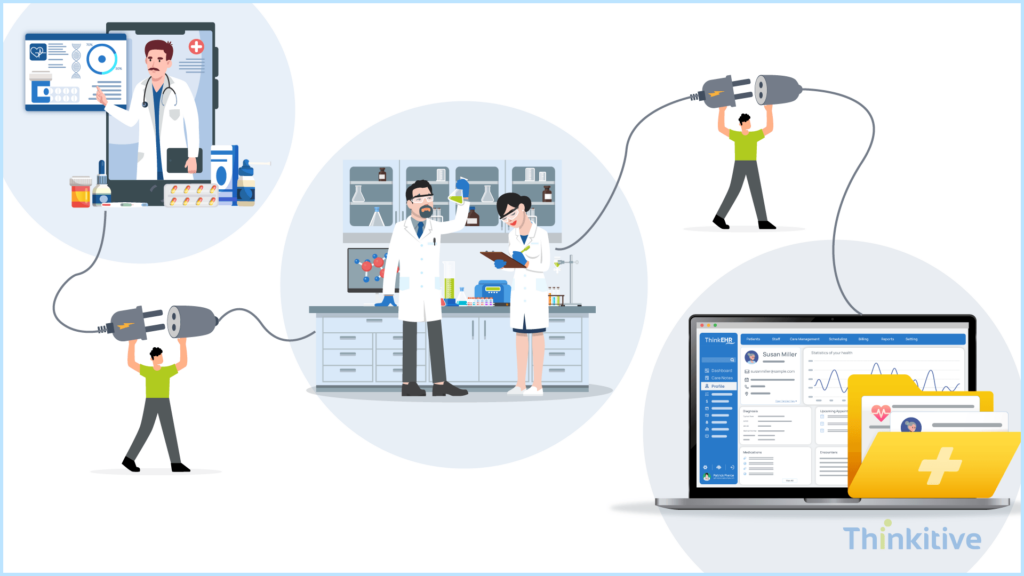
Currently, the most pressing problem for healthcare practices has been delays in receiving lab and diagnostic results. The aftermath of this is that, oftentimes, providers miss out on important procedures, and care delivery expands.
However, one of the finest examples of EHR integration here is that you don’t have to wait for the diagnostic results to be sent to your system manually. In fact, by automating the lab orders and result integration, once the results are generated, they can be directly sent to your system.
In this way, you can not only diagnose your patients faster but also reduce the possibility of manual errors by a significant margin.
Patient Engagement & Remote Monitoring
If you have a larger patient population consisting of chronically ill patients, then oftentimes, these patients must be taking most of your appointments. While it is not bad, the time duration spent on their health monitoring can be reduced by adopting a hybrid model of care.
You see, these patients need to be cared for continuously on a day-to-day basis, and this usually happens outside clinical settings. Allowing them to use telehealth platforms and use RPM devices for collecting vital information can be transformative. And in this scenario, EHR integration changes the game.
As it allows you to collect notes directly from the consultation to the EHRs. On top of that, the vitals collected by the RPM devices by the patient can be directly transmitted to your system.
In this way, you create a win-win situation where you keep the patient engaged in their care journey, and as data sharing becomes streamlined, automated, and easier, you are able to treat patients more effectively.
Revenue Cycle Integration
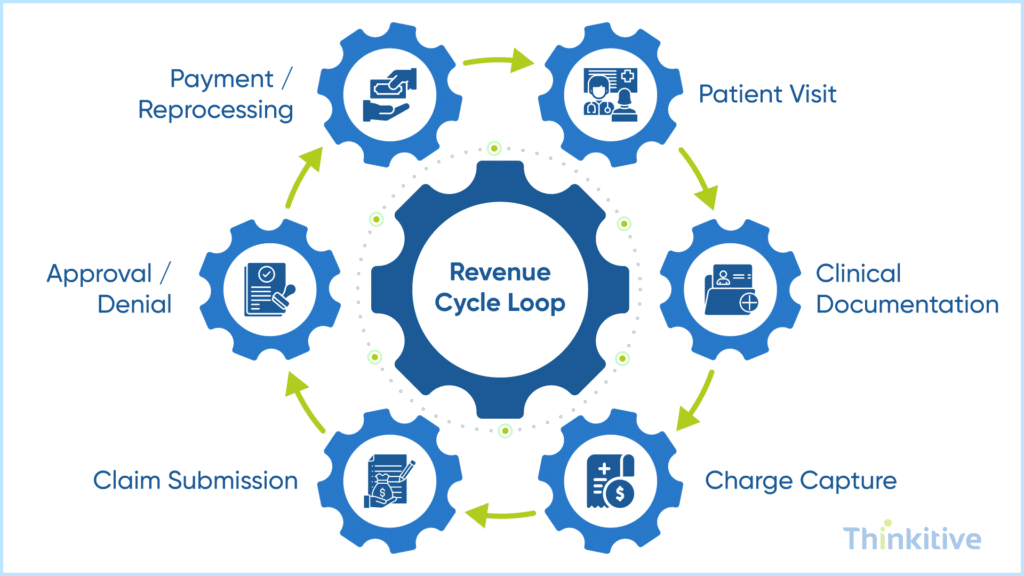
Coming to the last part of the patient’s care journey, billing, EHR integration has the 2nd most crucial role to play here after clinical data sharing. Most of the providers have to deal with billing inefficiencies and claims denials. The entire financial condition of the practice seems to be in a mess.
And in this, the accessibility of data becomes crucial. If the right data is available at the right time, the claims can be submitted early, and you would be reimbursed early. In case of any denials, early claim filing can give you an edge where you can use your system to check for mistakes and file the claims again, streamlining your process effectively.
Furthermore, by linking clinical data with billing systems, you can draw parallels, and that changes the entire game of finances for your practice. In this way, you can improve the financial performance of your practice and streamline revenue cycle management with enhanced performance.
Common Use Cases of EHR Integration for Your Practice:
Get Free AssessmentConclusion: The Impact of EHR Integration Use Cases
If you have made it till here, then as I had promised you at the start, we have covered almost all the use cases of EHR integration from appointment scheduling to billing. And this is how EHR integration has become the link that is connecting healthcare systems with each other and creating an ecosystem that thrives on shared data to provide the best possible care.
And as healthcare practices are becoming more personalized, it is the perfect time for your practice to future-proof your system for connectivity with EHR integration.
On that note, I hope this article will help you understand why you need EHR integration and how it is the first step you will take to future-proof your healthcare practice. So, what are you waiting for? Get your first consultation and discuss the integration process with experts.
Frequently Asked Questions
Mid-sized healthcare organizations typically adopt common EHR integration use cases in healthcare that directly improve operational efficiency and patient care coordination. Some of the most relevant EHR integration use cases include:
- Lab and diagnostic integration for real-time test result access
- Telehealth integration to support hybrid care delivery
- Revenue cycle management (RCM) integration for billing and claims processing
- Patient portal integration to enhance patient engagement
- Health Information Exchange (HIE) connectivity for cross-provider data sharing
These healthcare system integration use cases help reduce manual data entry, improve interoperability, and ensure that clinicians have timely access to accurate patient information.
Telehealth is one of the most impactful EHR integration scenarios in modern care delivery. By integrating telehealth platforms directly with EHR systems, providers can automatically capture consultation data, reducing the risk of incomplete or delayed documentation.In such EHR integration use cases, patient interactions, notes, prescriptions, and follow-ups are recorded in real time within the EHR. This eliminates duplicate data entry and minimizes human error.
These EHR integration examples demonstrate how seamless data flow improves documentation accuracy, ensures compliance, and supports better clinical decision-making in hybrid care environments.
Yes, AI-driven patient matching is a critical advancement in EHR data integration in healthcare. Duplicate patient records are a common challenge in fragmented systems, especially during large-scale data synchronization.
AI algorithms analyze multiple data points—such as demographics, medical history, and identifiers—to accurately match patient records across systems. This is one of the most practical EHR integration use cases for improving data integrity.
Real-world EHR integration examples show that implementing AI-based matching significantly reduces duplication, enhances patient safety, and improves the reliability of clinical data across systems.
HL7 FHIR plays a foundational role in enabling standardized and scalable EHR data integration in healthcare. It allows different healthcare systems to exchange structured data in real time using APIs.
In real-world examples of EHR integration in hospitals, FHIR enables seamless sharing of patient records, lab results, medications, and care plans across different providers and systems.
These EHR integration scenarios highlight how FHIR improves interoperability, accelerates data exchange, and supports coordinated care delivery in modern healthcare systems.
Remote Patient Monitoring (RPM) is one of the most valuable EHR integration use cases for chronic care management. By integrating RPM devices with EHR systems, providers can continuously track patient health data such as vitals and symptoms.
In such healthcare system integration use cases, real-time alerts help clinicians identify early warning signs and intervene before conditions worsen.
These EHR integration examples demonstrate how RPM integration reduces hospital readmissions, improves patient outcomes, and enables proactive care management—showcasing how EHR integration is used in modern healthcare systems.
Revenue Cycle Management (RCM) integration is one of the most impactful EHR integration use cases for financial performance. By integrating EHR systems with billing, coding, and claims platforms, organizations can automate workflows and reduce errors.
Key EHR integration examples include:
- Automated charge capture from clinical documentation
- Real-time eligibility verification
- Claims scrubbing and validation before submission
- Integration with clearinghouses for faster processing
These EHR integration scenarios help reduce claim denials, accelerate reimbursements, and improve overall revenue cycle efficiency.
Laboratory and diagnostic integration is a core component of EHR data integration in healthcare. It ensures that test orders and results are seamlessly exchanged between labs and EHR systems.
In these common EHR integration use cases in healthcare, clinicians receive real-time access to diagnostic data directly within the patient record. This eliminates delays caused by manual reporting or disconnected systems.
Such real-world examples of EHR integration in hospitals show that faster access to accurate data enables quicker diagnoses, timely treatment decisions, and improved patient outcomes.
Patient portal integration is a key EHR integration scenario that enhances patient engagement and accessibility. It serves as the primary interface through which patients interact with healthcare providers digitally.
In these EHR integration use cases, patients can:
- Schedule appointments
- Access medical records
- View test results
- Communicate with providers
- Manage billing and payments
These EHR integration examples highlight how portals act as the “Digital Front Door,” improving patient experience and streamlining administrative workflows—demonstrating how EHR integration is used in modern healthcare systems to deliver more connected and patient-centric care.


