7 Signs It’s Time to Outsource Your Medical Billing


In recent years, a unique trend has been observed in healthcare practices. You see, practices are concerned about their numbers, especially their billing processes. After consulting with some of the finest medical institutions in the country, I started scrubbing the internet to find the whys.
In that quest, I came across this State of Claims research by Experian Health; it stated that 41% of providers reported that more than 10% of their claims are denied. This shows a significant gap in revenue that these healthcare practices are losing on a yearly basis.
Having said that, if you look at the bigger picture, as years have passed, even the claims environment has become quite toxic. That is why 68% of providers said that submitting clean claims had become more difficult than the previous year.
And to make matters worse, 43% of the providers reported that they are being understaffed, which is turning a few unpaid claims into a growing accounts receivable balance and recurring denials consuming most of the staff time.
Now, as these issues are becoming persistent, it is becoming increasingly difficult for practice to manage their revenue cycle in-house. This not only puts your administrative staff under immense pressure but also increases the operational risk. And the worst part is, you need to do this before it’s too late.
This is why I decided to pen this blog. You see, to avoid such risks and mitigate their risk factors, practices are looking to outsource their medical billing. But when the right time to make the shift is something that most practices fail to understand.
Fortunately, there are some signs that you can see that show when it is time to outsource medical billing.
On that note, let’s discuss why outsourcing your medical billing is a viable option for healthcare practices and when to outsource medical billing.
So, without further ado, let’s look at the signs your medical practice needs to outsource billing.
Sign #1: Your Claim Denials and Rejections Are Increasing
Remember the unpaid claims that we talked about earlier? Well, initially they may not seem like a major problem with a few denials and rejected claims; it’s common in the healthcare landscape.
But if it is not identified and addressed in time, then it becomes a pattern, and this is where it becomes a problem. And the very first sign of this is that your team starts spending more time investigating denials, correcting the errors in them, following up with the payers, and resubmitting the claims, again!
What this creates is a revenue blockage where claims remain stuck in the revenue cycle. And this problem is a reality, with nearly 10% of the industry’s claims being denied and a 54% increase in claim errors.
Now, when you start looking for a problem here, it will show the weakness in your billing process, right from inaccurate patient information and authorization issues to coding and claim submission errors.
Here are some of the signs that you are dealing with a greater problem:
- Your denial rate is steadily increasing.
- The same denial reasons keep appearing.
- Your staff spends significant time reworking rejected claims.
- Claims are sitting unpaid for longer than expected.
- Denial follow-up is taking time away from other billing tasks.
Sign #2: Your Accounts Receivable Is Consistently Aging
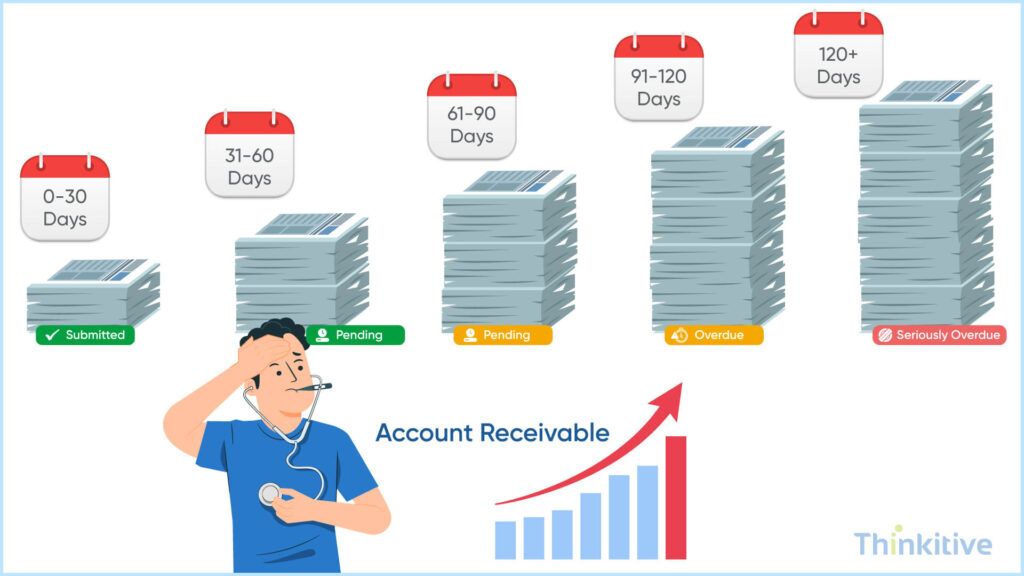
This is one of the most common signs that you will find in medical practice. For instance, many practices file and submit claims regularly and at regular intervals, but the payments have a time of their own to come. From weeks to months, which feels like forever, makes your accounts receivable older.
This quietly drains your practice’s cash flow, and the longer this deficit remains, the more effort your team needs to spend on tracking it, contacting it, correcting it, and following up with the payments.
Here are some of the signs to outsource medical billing that indicate that you have an A/R problem:
- Your A/R balance keeps growing month after month.
- More claims are moving into the 60-, 90-, or 120-day buckets.
- Your team struggles to follow up on aging claims consistently.
- Older balances are being carried forward without a clear resolution.
Now, A/R problems are quite normal, but they become a problem when they become consistent. If your internal team doesn’t have the time or resources to stay on top of the follow-ups and collections, then take the hint and know that it’s time to outsource your medical billing.
Sign #3: You Are Struggling to Hire and Keep Billing Staff
The signs we have discussed so far are purely based on the process that you follow in your practice, and it can be seen clearly in numbers. But sometimes, the problem isn’t your billing process but the people you need to keep it running.
Let’s take an example and try to understand it. So, one experienced biller leaves and suddenly the rest of the team is being handed the extra workload. Due to this, claims take longer to submit, payment posting gets pushed back, and the A/R follow-ups become harder to maintain.
And by the time you fill the position, the backlog list simply grows, making it a permanent place in your cycle.
Here are some of the signs that you are facing a medical billing staffing problem:
- Billing positions remain vacant for weeks or months.
- Your team is regularly working overtime to keep up.
- Billing tasks are delayed when an employee is absent.
- Experienced billers are leaving and taking their knowledge with them.
- Hiring qualified billing staff has become increasingly difficult.
The main culprit in this problem is inconsistency. Your revenue cycle should not depend on whether you have enough people on the payroll. This is why hiring and retaining skilled employees is a challenge in the medical claims environment.
But with medical billing outsourcing, you strengthen your billing with an additional push from the outside.
Sign #4: Billing Work is Taking Away From Patient Care

At some point, billing stops being just a back-office problem. It soon starts showing up in the clinical corridors of your practice.
For instance, a physician checking on a claim, a nurse helping resolve documentation issues, or a staff member spending time filling out codes. This might not feel like a big deal from the outside, but it soon becomes a routine, and that’s when administrative work leaves your office and starts giving your physicians a visit.
Here are some of the signs that you look out for:
- Clinical staff is regularly helping with billing-related tasks.
- Physicians are spending time dealing with claim or coding issues.
- Administrative work is cutting into patient-facing time.
- Your team is constantly switching between clinical and billing responsibilities.
Now, outsourcing your billing processes can make a meaningful difference. Moving your routine billing and coding responsibilities to a specialized team can give your clinical staff more time with your patients, rather than correcting your biller’s mistakes.
Your clinical team should be focused on the patient in front of them, not the claim sitting in the payer’s system.
Sign #5: Patient Billing Questions Are Overwhelming Your Front Desk
This sign is the clear indicator that you have a serious problem in your billing department. You see, a phone rings, and a patient wants to know why their bill is higher than expected. Another patient wants to understand an EOB, or someone calls to ask whether an insurance payment has been received.
Now, these tasks again appear very normal on the surface, but when they keep coming every now and then, your front desk quickly becomes an unofficial billing department.
Here are some signs that you have to keep an eye out for:
- Your front-desk staff regularly handle billing and insurance questions.
- Patients frequently call about unexpected balances or payments.
- Billing questions are slowing down check-ins and other office tasks.
- Staff struggle to respond to patient financial concerns promptly.
This situation makes three parties suffer: your billing department, front desk, and the patients who came to your practice for a visit.
With dedicated billing support, you can take more of these financial decisions from your front desk. This allows your staff to focus on keeping the practice running smoothly while giving patients a clearer path to resolving their billing concerns.
Sign #6: Your Team Is Struggling to Keep Up With Billing and Payer Rules
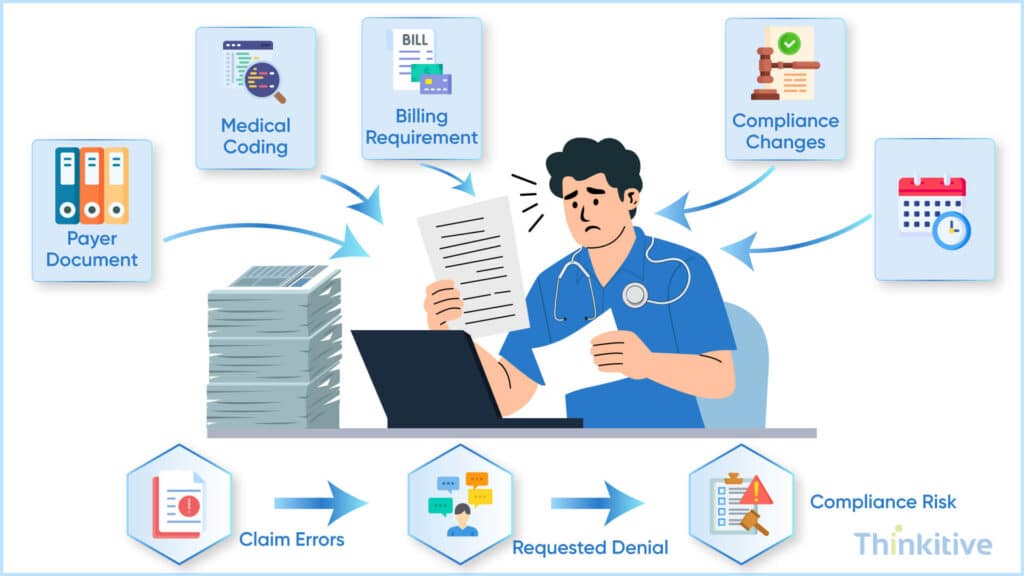
Billing rules and payer rules are constantly changing, and interestingly, the change often happens when your billing team gets comfortable with one particular set of rules and requirements.
For instance, a payer updates its rules, coding guidelines are revised, or a new billing requirement enters the picture. This changes everything, and keeping up with all these changes can be quite troublesome.
Here are some of your team’s signs of struggle that might point to this:
- Your team frequently has to adjust to new payer requirements.
- Keeping billing and coding knowledge up to date is becoming difficult.
- The same errors appear after rule or guideline changes.
- Staff isn’t confident about whether current processes meet requirements.
When outdated knowledge leads to incorrect coding, claim errors, or compliance concerns, the cost can go well beyond the rejected claims. That is why many practices believe that specialized billing support can be a better option for them.
An experienced billing team can not only bring in ongoing billing and coding expertise but also help your internal staff avoid keeping up with every change.
Sign #7: Your Revenue Isn’t Growing as Your Practice Grows
This is the clear sign that you need to outsource your billing processes. You see your practice growing as the slots fill fast and the clinic becomes crowded, but the revenue doesn’t seem to budge.
Upon diagnosis, you find that missed charges, underpayments, recurring denials, and unpaid balances can quietly prevent your practice from collecting everything that it has earned.
Here are some signs that this might be a problem:
- Patient volume is increasing, but revenue isn’t keeping pace.
- Your practice is seeing more underpayments or missed charges.
- Denials and unpaid balances continue to eat into collections.
- Your revenue growth is consistently falling behind your practice growth.
Your practice’s growth must be reflected in your revenue, not at the start, but at least over the course of time. Trust me, it’s worth looking beyond patient volume and examining what’s happening inside your revenue cycle.
A billing process that worked for a smaller practice may not be enough as your organization grows. At that point, strengthening your billing operation—or bringing in specialized support—can help ensure that the revenue you’re earning actually makes its way back to your practice.
Conclusion
In a nutshell, the unpaid claims, growing A/R, staffing issues, and the increasing pressure on your practice may seem normal and something that you manage.
But when they come at once or appear in a pattern, the script completely flips.
Claims keep getting denied, A/R continues to age, and your team starts spending more time on billing, payer rules, and patient financial questions, drying out your finances and stalling the growth of your practice.
This is the time you need to take a closer look and take it as a sign that it’s time to outsource your medical billing processes. On that note, let this blog be your guide to knowing when it is time to outsource your medical billing, and here is a medical billing services company that might guide you in finding the right solution for all your problems.
Frequently Asked Questions
Yes, outsourcing medical billing can be a good idea when an in-house team is struggling with claim denials, aging A/R, staffing shortages, or changing payer requirements. The key is knowing when to outsource medical billing. If billing problems are consistently affecting cash flow, staff productivity, or revenue collection, working with a specialized billing partner may help.
The main benefits of medical billing outsourcing include reducing administrative workload, improving claim follow-up, accessing specialized billing expertise, and providing more consistent revenue cycle support. It can also allow clinical and administrative staff to spend more time on their primary responsibilities.
Healthcare companies outsource billing to address challenges such as staffing shortages, increasing claim denials, complex payer requirements, and growing administrative workloads. For many practices, why outsource medical billing comes down to one goal: improving billing performance without having to build and maintain a larger in-house team.
An outsourced billing service can manage various parts of the revenue cycle, including claim submission, payment posting, denial management, A/R follow-up, insurance verification, and patient billing support. The exact services depend on the provider and the practice’s needs.
Medical coder salaries can sometimes be higher than medical biller salaries, but compensation varies based on experience, certifications, specialty, location, and employer. Billing and coding are also closely connected functions, and professionals with expertise in both may have broader career opportunities.
The commonly cited golden rule of medical billing is “If it wasn’t documented, it wasn’t done.” Proper and complete documentation is essential for accurate coding, compliant claim submission, and appropriate reimbursement.
Potential downsides include reduced direct control over billing operations, communication challenges, transition time, and the need to carefully evaluate a billing partner. Practices should also review contracts, security measures, reporting capabilities, and service levels before choosing billing and coding outsourcing.
Companies typically outsource when an outside provider can perform a function more efficiently, consistently, or cost-effectively than maintaining it internally. In healthcare, outsourcing can also provide access to specialized expertise and additional capacity without requiring the practice to recruit and manage a larger team.
A medical practice hiring an external company to manage its claims, payment posting, denial management, and A/R follow-up is a good example of outsourcing. Instead of handling the entire billing operation internally, the practice relies on a specialized third-party team.
No. Outsourcing remains widely used across industries, including healthcare. As organizations look for specialized expertise, flexible staffing, and ways to manage administrative workloads, outsourcing continues to be a practical operating model. The more important question for a practice is when is it time to outsource medical billing based on its specific needs.
Healthcare outsourcing is the practice of hiring an external company to manage selected administrative, clinical-support, or operational functions. Medical billing outsourcing is one example, where a third-party team handles some or all of a practice’s revenue cycle management activities.
Three major healthcare trends include increased use of artificial intelligence and automation, greater adoption of digital health technologies, and continued focus on value-based care and cost efficiency. These changes are also encouraging practices to reassess how they manage administrative functions such as billing and revenue cycle management.


