How Healthcare Practices Benefit When They Build Their Own EHR

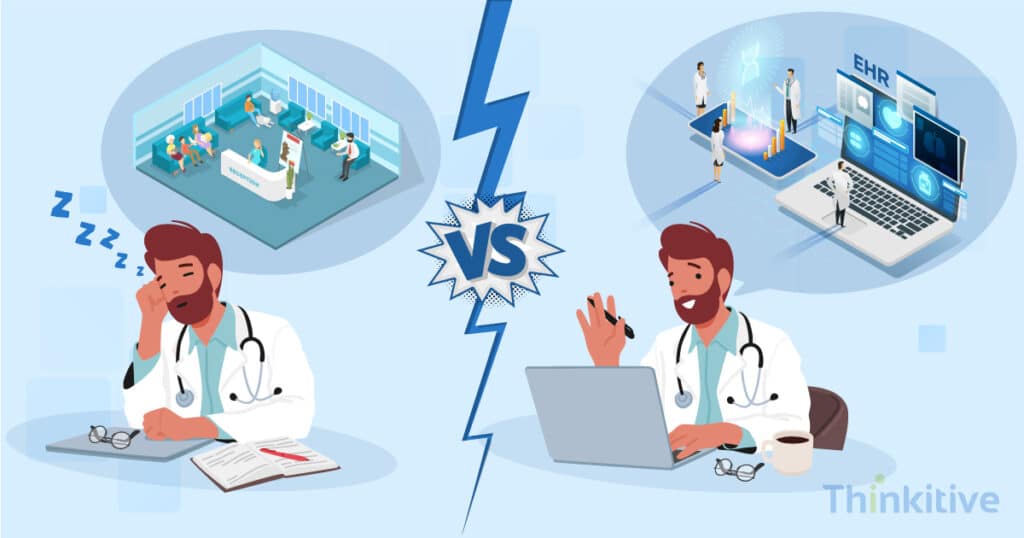
There are several claims on the internet that talk about the benefits of having an EHR system for the growth of your practice.
Though most of these claims are true, due to the huge market pull and demand, these claims are often exaggerated by these vendors. On top of that, the benefits of building your own EHR are often overshadowed by the technical depth and other generic benefits.
And the problem that you should be addressing when building your own EHR is physician burnout. You see, almost 41.9% of physicians experienced one symptom of burnout in 2025, according to the American Medical Association.
While many claim that EHR can reduce workload, this whitepaper suggests that EHR-related administrative tasks add 1-2 hours extra to a physician’s workday, and that’s huge.
Reading these stats, you might think that how custom EHR software improves patient care or the financial advantage of building a custom EHR are just talk, right?
Well, here’s the catch, custom EHR advantages for practices can only work if you have the right implementation. You see, 97% of clinicians reported reduced documentation burden with integrated AI workflow tools, according to a research paper published by Cornell University.
Having said that, in this blog, let’s see how your practice can benefit from building its own EHR and what the best roadmap is for you to make the most out of it.
So, without further ado, let’s get started!
Step-by-Step Guide to Build Your EHR System –
Get Free Guidance
Key Benefits of Building Your Own EHR
| Benefit | Concrete Result for Your Practice |
| Clinical workflow optimization | Reduces unnecessary clicks and shortens documentation time per patient encounter. |
| Lower physician burnout | Automates repetitive documentation and administrative tasks, allowing providers to spend more time with patients. |
| Higher operational efficiency | Streamlines scheduling, billing, charting, and care coordination across departments. |
| Better financial ROI | Eliminates recurring licensing costs while reducing billing errors and administrative overhead. |
| Improved patient care | Gives providers faster access to complete patient records, improving clinical decision-making and care coordination. |
| Scalability | Supports practice expansion, multi-location operations, and new service lines without replacing the system. |
| Interoperability | Enables secure data exchange with laboratories, pharmacies, hospitals, and third-party healthcare applications. |
| Stronger security & compliance | Improves data governance through encryption, role-based access controls, and audit trails. |
| AI readiness | Supports AI-powered documentation, predictive analytics, workflow automation, and future healthcare technologies. |
Improving Clinical Workflow Optimization Across Healthcare Operations
Clinical workflow optimization is one of the major benefits why healthcare providers are choosing to build their own EHR system. As the approach is completely customized and specifically caters to your unique clinical and administrative prepositions, you can use this approach to curate the workflows for your practice.
The aftermath of this approach can eliminate unnecessary clicks and repetitive documentation processes, reducing physician burnout with tailored medical software.
Along with that, if you are a specialty practice, then you can design specialty-specific workflows for providers and staff separately. This gives two distinct advantages where providers don’t have to waste time navigating through complex workflows, and staff members can get the data at their fingertips, almost instantly.
A customized EHR development approach also opens a window of opportunities, where you can streamline certain aspects of your practice like appointment scheduling, patient charting, billing prospects, and care coordination processes.
Furthermore, as your practice grows, the operational needs, documentation requirements, care delivery models, and compliance expectations also grow. Here, the benefit of building own EHR allows you to continuously refine workflows, automate repetitive tasks, and improve coordination between departments. These are some of the advantages of custom EHR that support long-term clinical workflows and help in reducing inefficiencies, improving productivity, while creating a sustainable and scalable environment.
Increasing Financial ROI & Operational Efficiency
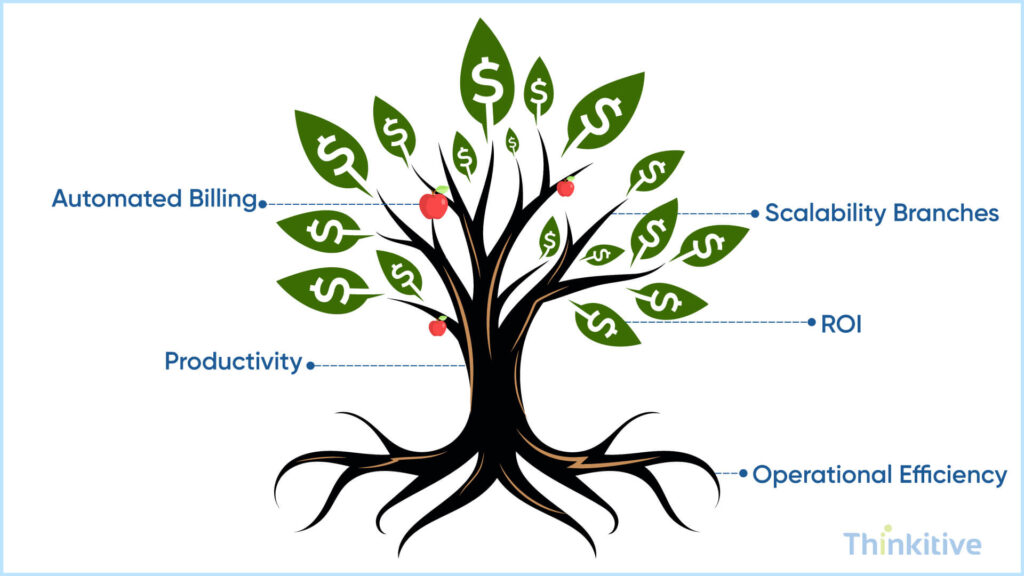
It is common knowledge that building your own EHR is slightly more expensive than off-the-shelf software systems. But given all its benefits, can the ROI of custom medical software be justified?
Well, let’s clear some common misconceptions, shall we?
When I say that building your own EHR is slightly more expensive than generic EHRs, what I mean by this is that a custom EHR requires a significant upfront investment. Due to this, you are required to pay recurring fees monthly or yearly to continue using these software systems.
However, the benefits of building your own EHR reduce the dependency on recurring third-party licensing costs and other hidden fees, if not eliminated. Also, due to automated processes, it contributes to improving your revenue cycle and reducing manual billing errors. You see, as data workflows are automated, data is mostly readily available for staff members to bill. On top of that, by eliminating manual data entry, the billing errors can be reduced to a minimum.
- Understanding the ROI of Custom Medical Software
While most people consider ROI as only financial gains, the true ROI of custom medical software goes beyond initial investment. You see, with a well-designed healthcare system, you can reduce the administrative workload, improve workflow efficiency, and minimize documentation errors.
Over time, these improvements help your practice to save staff hours, eliminate bottlenecks, and improve patient throughput to enhance your overall care delivery. Now, take a step back and see in a broader perspective, the returns are often seen in the long-term through higher productivity, better scalability, and improved clinical and financial performances.
- The Financial Advantage of Building Custom Electronic Health Records
In the long run, building your own EHR system can give you a significant financial advantage for your practice. You don’t have to worry about recurring licensing fees or costly customization. In fact, a custom EHR gives you more control over your features, integrations, and scalability.
Furthermore, if you feel like you are not using all the features in your EHR system, then when building your own EHR, you can only choose the features that you need. Choose features that specifically support your workflows and revenue cycle processes. This way, you can skip unnecessary expenses and improve billing, bring operational efficiency, and long-term technology ownership.
Watch For Building Your Own EHR Can Fit Your Practice Needs –
Book a DemoReducing Physician Burnout & Improving Provider Experience
EHR systems are often associated with reducing physician burnout, but they are specifically curated for their specific workflows. By simplifying clinical documentation and administrative tasks with automated workflows and streamlined data flows, most manual data entry is automated. Due to this, physicians are only needed to review and manually enter data into the system.
However, this only works if the EHR system is aligned with the clinical and administrative workflows of your practice. Also, with the rise of newer technologies like Natural Language Processing and AI-powered workflows, data and workflows can be automated, further reducing physician burnout.
One of the finest examples of this can be seen in AI-powered SOAP notes. You see, these technologies can proactively listen to the conversations and translate them in real-time. This can simplify the process of note-taking, requiring physicians to only review these notes.
But these advantages can only be enjoyed if you build your own EHR. As that is the only way to customize your software infrastructure and curate workflows that actually reduce physician burnout.
Improving Patient Care & Engagement
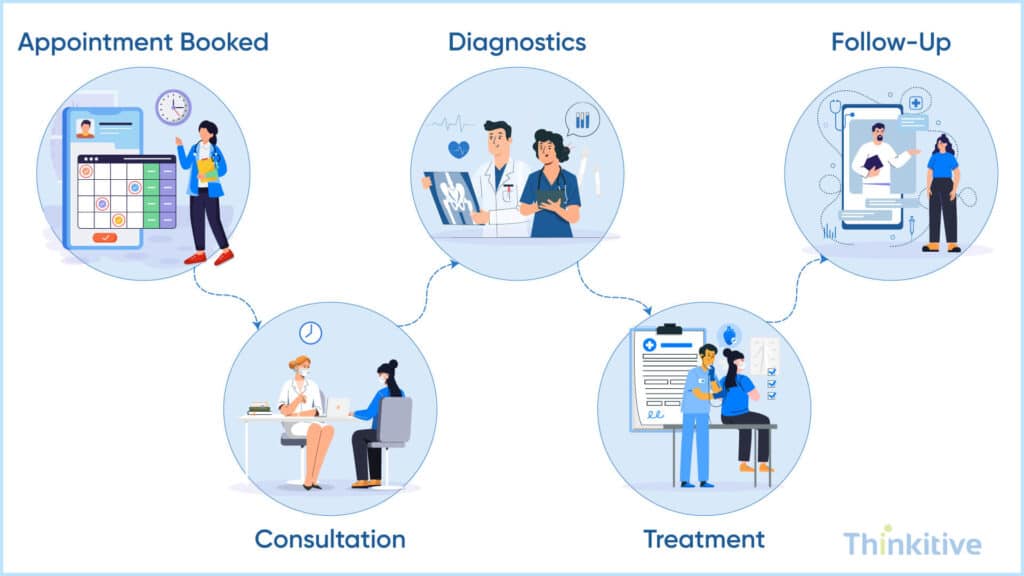
EHR systems are often associated with administrative tasks and improving efficiency in that aspect. However, the underlying benefit of building an EHR can be quite subtle when it actually starts doing its real purpose, which is to improve patient care processes and engagement prospects.
Let’s try to understand this with an example. You see, with integrations and instant data accessibility, providers can instantly access data, and the best part is that the data is accurate and updated across the system to bring the entire care team on the same page.
Due to this, physicians have a comprehensive overview of the patient’s health history, which allows them to take data-backed decisions and coordinate care better. In this process, the patient can also be proactively involved, and the care plan and journey can be curated in a way that considers the patient’s preferences.
Also, with the entire care team on the same page, communication can be improved. Along with that, patient portals act as a centralized platform providing digital communication tools that allow instant communication between care team members. This eliminates unnecessary retests, etc., and follow-up care prospects can be solved effectively.
In this way, with a well-curated EHR software, you can improve patient care efficiently and effectively.
Supporting Scalability & Long-Term Practice Growth
Most of the practices have plans to expand their practice, and with time, it is bound to happen. However, when this happens, your software must be able to handle this growth prospect, right from increasing volume to adding a few functionalities.
The inability of off-the-shelf software systems to support scalability is also one of the major reasons why many established practices are looking to build their own EHR. You see, when you plan to expand your workflows and infrastructure across multiple locations, building your own EHR can make certain processes easier, such as standardized workflows, managing patient data, and coordinating operations. This way, consistency and smoother organizational expansion can be ensured.
Also, with highly customizable capabilities, adapting to changing healthcare regulations and operational needs can be done easily. For instance, if you have a modular architecture, then quick modifications in documentation processes, workflows, reporting systems, and compliance features can be done without disrupting other things.
On top of that, with the ever-changing technological landscape in mind, your custom EHR can support future integrations such as telehealth, RPM, AI tools, wearable devices, and interoperability frameworks like FHIR APIs, which help organizations stay prepared for modern digital healthcare demands.
However, one of the core aspects that you need to address here is the evolution of your software when your practice grows. As the practice grows, many things change, right from the workflows to staffing structure and even operational processes. And interestingly, they become highly complex, which requires your system to be flexible enough to add new modules, automate tasks, and optimize workflows to align with the new structure.
Now, the benefits of building your own EHR in this way are that it allows you to build a scalable digital foundation that makes your system highly customizable and flexible in nature. This supports long-term modernization strategies by enabling continuous workflow improvement, better data management, and technology-driven patient care initiatives.
Enabling Better Interoperability & Connected Care Delivery
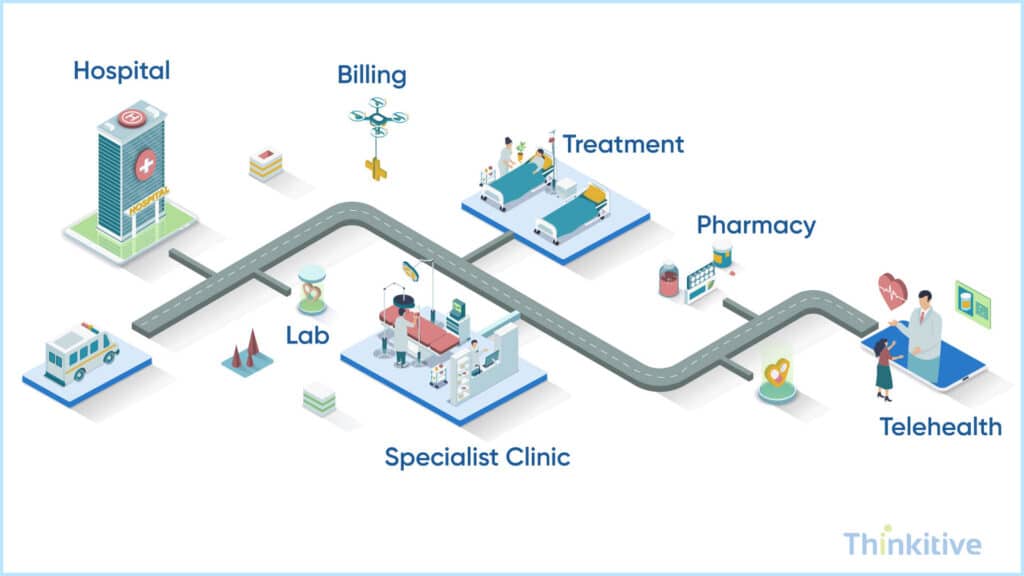
Any aspect of EHR software that you can think of can be enhanced and made better when you build your own EHR, and the same can be said about interoperability and being a part of the connected healthcare ecosystem. In recent years, being a part of the connected healthcare ecosystem has become a necessity for many healthcare practices.
For instance, by connecting different departments, clinical systems, and operational platforms, you can centralize patient information in your EHR system. This improves data accessibility and allows care teams to make better decisions faster and in an informed manner.
Also, when you build your own EHR, you will naturally use modern or the latest technology and structure your EHR to be built around interoperability standards like HL7 and FHIR. This makes secure data exchange possible across the connected healthcare ecosystem.
With the use of standard interoperability standards like HL7 and FHIR, your software system will support seamless integration with external healthcare systems such as laboratories, pharmacies, billing software, telehealth platforms, etc. This significantly reduces manual work and improves the operational efficiency of your healthcare staff and providers.
With a connected healthcare ecosystem, access to accurate patient information becomes really easy for providers, specialists, and care team members. These prospects improve communication between care team members, reduce delays, and enhance overall patient care coordination.
Since you are building an architecture that is driven by APIs, it allows your practice to connect with other digital health tools and third-party applications easily, giving your system greater flexibility and a greater scope for future expansion and innovation.
Strengthening Security, Compliance & Operational Control
In the quest to build your own EHR for exclusive benefits, certain aspects of security and compliance must not be ignored. In fact, with a customized approach, you can indeed strengthen the security of your EHR system while staying compliant with regulatory bodies and gaining more control over operations.
For instance, when you build your own EHR system, you completely own the data and the system as well. This gives you greater control over how your patient data is accessed, shared, and managed. This improves visibility across the system and helps your practice to monitor information sharing more effectively.
Furthermore, design your EHR software in such a way that it aligns with the regulatory frameworks such as HIPAA, HITECH, and ONC compliance standards. This is crucial as it helps you to maintain secure data handling practices and reduce compliance risks. Also, you can skip hefty penalties and navigate the regulatory landscape more effectively.
To further strengthen the security aspect of your EHR system, you can implement role-based access controls to ensure that only authorized personnel can access the relevant information as per their role. Along with this, audit trails must also be implemented so that you can track system activity more effectively, monitor changes proactively, and improve accountability across systems.
However, the major benefits of building your own EHR are that it allows you to implement stronger cybersecurity strategies like encryption standards and tailor governance policies that match your operational needs. This helps you to reduce vulnerabilities and secure your system as a whole.
Checklist You Need to Build Your EHR System –
Download ChecklistPreparing Healthcare Practices for AI-Driven Innovation
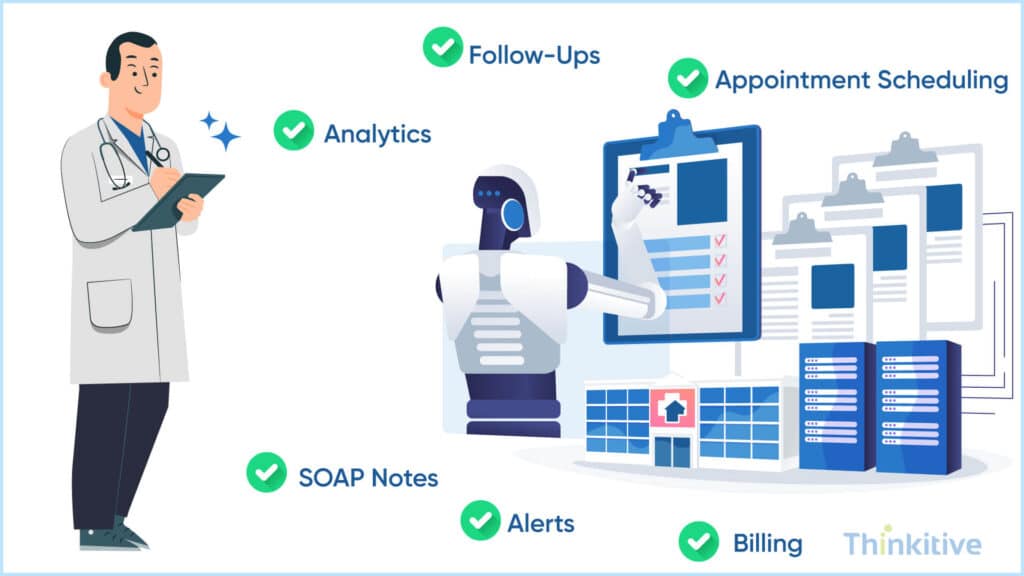
Given the impact of AI on different facets of healthcare, building your own EHR is the best way to prepare your healthcare practice for AI-driven innovation. You see, it allows you to curate workflows that specifically support AI-powered documentation tools that can reduce manual charting, improve clinical efficiency, and minimize documentation burden.
Furthermore, AI-driven analytics can also help you identify operational trends inside your system and practice. Its use cases can help predict patient risks, optimize resource utilization, and improve decision-making by a margin.
AI-driven automation is increasingly being used to streamline front-desk operations such as appointment scheduling, billing, follow-ups, and data entry. This has been a huge help for front-desk tasks like appointment scheduling, data entry, billing workflows, follow-ups, etc.
A flexible custom EHR architecture also allows your practice to integrate future technologies like generative AI, intelligent assistants, ambient scribe, and advanced workflow automation tools.
Conclusion
The benefits of building your own EHR gives healthcare practices greater control over workflows, data, interoperability, scalability, and long-term innovation. And many practices across the globe are shifting to custom EHR to improve their workflow efficiency, scalability aspects of their EHR software, and patient care practices.
Apart from that, it is good to have operational flexibility, an interoperable software, and an AI-ready infrastructure that can help you lead the trends and have a competitive edge over your competitors.
So, what are you waiting for? Click here to connect with our EHR development expert and learn how we can build your own EHR or EMR Till then, go through this Build Your Own EHR software guide to know the intricacies and the benefits that it can help your practice.
Frequently Asked Questions
The biggest benefits building own EHR for healthcare practices include better workflow customization, improved interoperability, stronger operational control, enhanced scalability, and reduced dependency on rigid third-party systems. Custom EHR platforms allow healthcare organizations to design workflows around their clinical and administrative processes, helping improve efficiency, productivity, and long-term digital transformation capabilities.
Understanding how custom EHR software improves patient care starts with workflow efficiency and better access to patient information. Custom EHR systems help providers reduce documentation delays, improve care coordination, support faster clinical decision-making, and streamline communication between departments. This creates a more connected and patient-centered healthcare experience.
Yes, reducing physician burnout with tailored medical software is one of the major advantages of custom EHR development. Custom systems can automate repetitive administrative tasks, simplify clinical documentation workflows, and reduce unnecessary clicks and manual data entry. This helps providers spend less time managing software and more time focusing on patient care.
The ROI of custom medical software is often seen through long-term operational efficiency, workflow automation, improved billing processes, and reduced administrative burden. While the initial investment may be higher, custom healthcare platforms can help organizations lower recurring licensing costs, improve productivity, and create scalable digital infrastructure that supports future growth.
Custom EHR systems support clinical workflow optimization by allowing healthcare organizations to build workflows around their specialty requirements and operational processes. Features such as customized templates, automated task management, AI-assisted documentation, and role-based dashboards help improve provider productivity and reduce workflow inefficiencies across the organization.
In many cases, yes. Custom EHR systems are designed to adapt as healthcare organizations grow. Unlike rigid off-the-shelf platforms, custom solutions can support expanding workflows, multi-location operations, future integrations, and evolving operational requirements. This flexibility makes them more suitable for long-term scalability and healthcare expansion.
Healthcare organizations maintain compliance with custom EHR software by implementing security and governance features such as role-based access controls, audit trails, encryption protocols, and HIPAA-compliant data management practices. Custom systems can also be updated more easily to align with evolving healthcare regulations and compliance standards.
The timeline for seeing ROI from a custom EHR system depends on factors such as implementation scope, workflow complexity, user adoption, and operational goals. However, many healthcare organizations begin seeing measurable improvements in workflow efficiency, documentation speed, and administrative productivity within the first year of implementation.
Some of the biggest custom EHR advantages for practices include workflow flexibility, interoperability support, operational scalability, stronger data control, and the ability to adapt the system according to specialty-specific requirements. The financial advantages of building custom electronic health records also include reduced long-term vendor dependency, better customization capabilities, and improved control over future healthcare innovation strategies.


