The Ultimate Guide to Build Your Own EHR Software (2026)

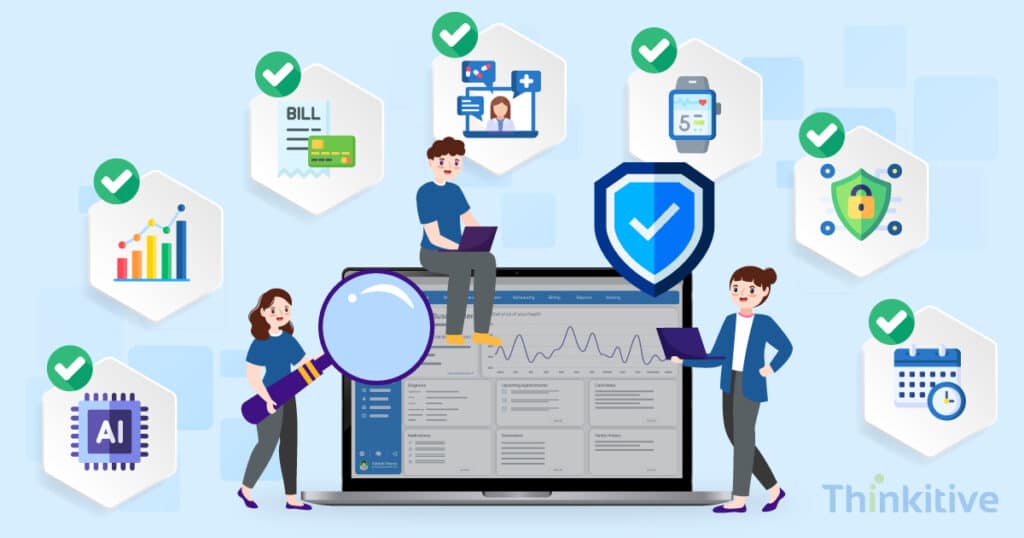
It’s 2026, and the entire healthcare industry is on the verge of a silent revolution that is brewing in its digital landscape. You see, the digital transition is nearly completing its arc, and AI is already making headlines all over the industry.
The introduction of AI has enabled healthcare providers to shift to a system that is specially curated for them and how their practice actually functions. And for this demand to come into the mainstream, the rigidity of off-the-shelf EHR solutions has a role to play.
Furthermore, the over-dependency on legacy EHR systems is again proving to be a growing concern for many practices. This is the reason why most healthcare providers are moving away from legacy EHR systems to a system that has been built for them.
In this, the specific demands are about AI-powered systems with seamless integration, an interoperable nature, and automated workflows. These unique prepositions allow them to move away from traditional off-the-shelf systems and build their own EHR system.
However, building an EHR system is a long and quite complicated process, where almost every aspect needs to be accurate, precise, and watertight. And this is exactly where most of the practices fail.
On that note, let this blog be your build your own EHR software guide and help you understand the intricacies of EHR software development requirements, and everything that comes under it.
So, without further ado, let’s help you build your own electronic health records software!
Get Free Consultation to Build Your Own EHR –
Book Free Call
What Does It Mean to Build Your Own EHR Software?
Buying an off-the-shelf EHR is quite simple; when it comes to building, the technicalities start to get on our nerves. You see, building your own EHR system means custom-developing an EHR system that is specifically designed to address your unique needs and requirements.
Furthermore, this is what basically sums up the custom EHR software development. But there are some striking differences between a custom-built system and off-the-shelf software. Refer to this table to know in depth and gain a better understanding:
| Feature | Custom-Built EHR System | Off-the-Shelf EHR System |
| Customization | Fully tailored to your workflow | Limited customization options |
| Cost | Higher upfront cost | Lower initial cost |
| Implementation Time | Takes longer to develop | Faster to deploy |
| Scalability | Easily scalable as you grow | May have scalability limits |
| Integration | Built for seamless integrations | Integration options may be restricted |
| Ownership | Full control and ownership | Vendor controls the platform |
| Maintenance | Managed by your development team | Managed by the vendor |
| User Experience | Designed for your staff’s needs | Generic interface for broad users |
Now, given the flexibility of customization, complete ownership of the product, and elevated user experience, healthcare practices have solved the build vs buy EHR question and have chosen the benefits of a custom EHR.
But these healthcare organizations have not just blindly chosen the benefits of custom EHR; they have made this decision to achieve some key goals like:
- Improving patient care
- Data-driven care delivery
- Streamline clinical and administrative workflows
- Data security and regulatory compliance
- Automed tasks using AI and other technologies
- Real-time information access to patients
- Improve decision-making with analytics and reporting
- Reduce cost and increase efficiency
The Business Case Behind Custom EHR Adoption
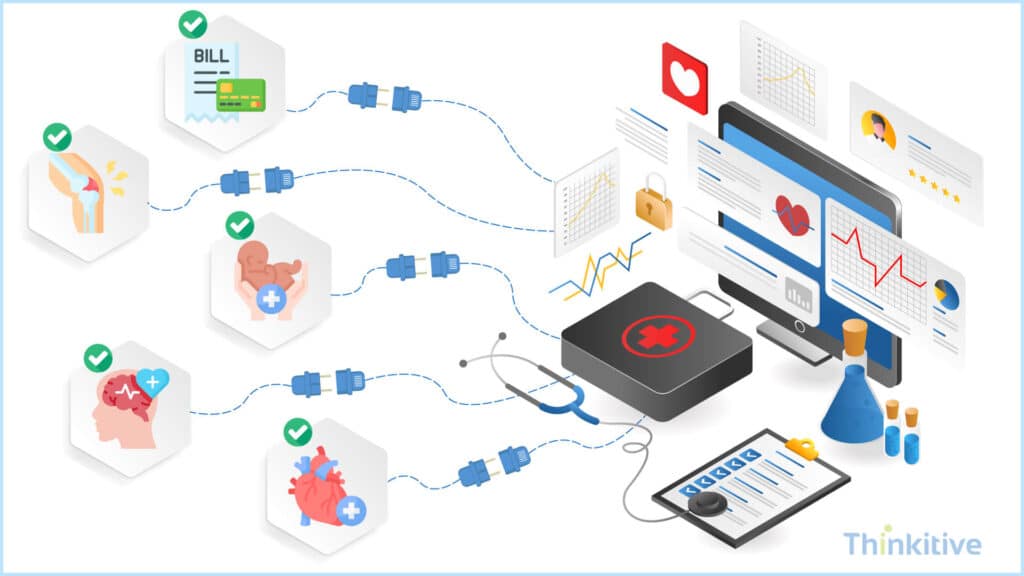
The benefits of custom EHR can be quite lucrative in nature. However, behind the shiny benefits, there are some reasons why healthcare providers are actively choosing to build their own EHR.
Let’s have a look at some of these reasons:
- Workflow Flexibility & Specialty-Specific Customization: Every specialty is unique in nature, and its care and administrative workflows also depend on the practice. These practices not only require flexible workflows but also customization that is quite specific to the practice, addressing their unique needs and requirements.
- Scalability & Operational Control: As your practice grows, the system also needs to grow. Custom EHRs here give you enough flexibility in scaling your system. Moreover, since you own the software and its data, it enables you to have better operational control.
- Improved Provider & Patient Experience: Customization is the major advantage that you can get by building your own EHR. This advantage can be clearly seen in improving the provider and patient experience when using the application. This improves usability and ensures that your users, irrespective of patients or providers, will have a delightful experience while using the software.
- AI-Powered Healthcare Automation Benefits: Given the recent demands in AI-powered EHR development, the benefits it can provide to a clinic can be quite immense. You see, most of the manual data updating tasks can be automated, which removes the data availability aspect, and access to data at the point of care can be enhanced.
These are some of the major reasons why healthcare providers are actively pushing for building their own EHR system.
Weighing Custom Development Against a SaaS Platform
Choosing between building a custom EHR and purchasing an off-the-shelf solution depends on your organization’s long-term goals, operational complexity, and growth plans. While commercial EHR platforms offer faster deployment and lower upfront investment, they often require practices to adapt their workflows to the software rather than the other way around.
A custom-built EHR gives healthcare organizations complete ownership of the platform, greater flexibility to customize clinical and administrative workflows, easier integration with existing healthcare systems, and the ability to scale as the organization grows. For practices with unique specialties, complex workflows, or long-term digital transformation goals, these advantages often outweigh the higher initial development investment.
Every healthcare organization has different priorities, so there isn’t a universal answer to the build vs buy decision. Evaluating factors such as customization requirements, interoperability needs, regulatory compliance, implementation timelines, and total cost of ownership is essential before making a decision.
If you’re evaluating both approaches, read our detailed guide on Build vs Buy EHR to compare costs, implementation timelines, ownership, scalability, and long-term ROI before deciding.
Laying the Groundwork Before Development Begins
If you have made your decision to build your own EHR, then you need to read this. Here, let’s have a look at all the things that you need to build your own EHR system. So, without further ado, let’s get started:
- Defining Healthcare Workflows & Business Goals: Start by mapping your clinical and administrative workflows and aligning them with measurable business objectives to ensure the EHR supports how your organization operates.
- Understanding Compliance & Security Requirements: Plan for regulatory compliance, data privacy, and security controls from the outset to build a secure and compliant EHR platform.
- Planning Interoperability & Integrations: Identify the external systems your EHR must connect with, including labs, pharmacies, billing platforms, and other healthcare applications, to enable seamless data exchange.
- Budgeting & Infrastructure Considerations: Establish a realistic budget and choose a scalable technology infrastructure that supports your current requirements and future growth.
However, the list of your needs for building your EHR system can be quite lengthy and overwhelming. But you can indeed curate it for your needs. Read this blog – What Do You Need Before You Build Your Own EHR?, to know how to do that.
Core EHR Software Development Requirements
Every successful EHR project is built on a clear set of functional, technical, and regulatory requirements. These requirements typically cover patient management, clinical documentation, scheduling, billing, interoperability, security, patient engagement, reporting, and role-based access controls. Establishing these requirements early helps prioritize development, streamline implementation, and ensure the final solution aligns with both clinical workflows and compliance standards.
Before moving into design and development, it’s important to document these requirements thoroughly and validate them with key stakeholders. A well-defined requirements framework minimizes costly changes later in the project and lays the foundation for a scalable, future-ready EHR platform.
Know When You Should Build Your EHR –
Get Free ConsultationMapping the Functionalities Your System Needs
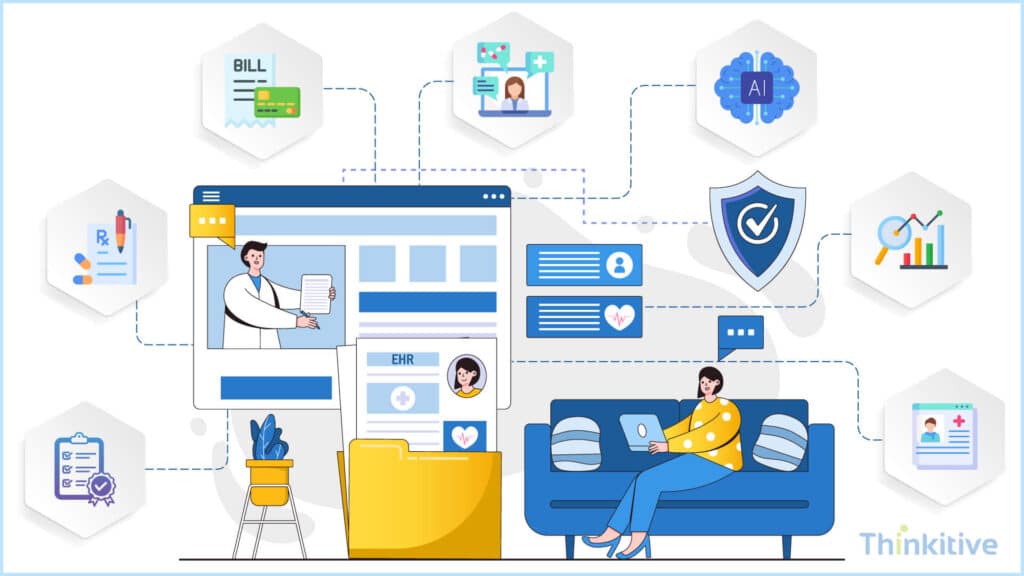
If you have looked at some of the modern EHR systems, then you must have noticed that EHRs are today more than just a digital patient record. You see, it has slowly turned into a complete practice management software. And as you know, features define the functionality of your EHR system. Here are some of the core features that you must consider for building your own EHR:
- Clinical Documentation & Patient Records: The foundation of every EHR system revolves around clinical documentation. On top of that, it should allow providers to quickly capture patient histories, diagnoses, treatment plans, lab results, etc., in a structured and easily accessible format. However, your EHR system must act as a centralized patient record, which not only improves care coordination but also helps in quick decision-making.
- ePrescribing & Medication Tracking: Another functionality of the EHR system that has proved to be one of the most useful features is ePrescribing and medication tracking. You see, these features allow providers to send prescriptions electronically to pharmacies while reducing medication errors. On top of that, with more advanced features, it also supports medication history tracking, refill management, allergy checks, and drug integration alerts to improve patient safety.
- Scheduling, Billing & Patient Portal Functionality: The EHR system should help clinics in streamlining their workflows. And in this, the scheduling and patient portal play a huge role. You see, with integrated appointment scheduling, managing calendars and patient visits can be efficiently planned, and billing and claims management become simplified for your revenue cycle operations.
- Telehealth & Remote Patient Monitoring Support: Virtual care is continuously growing, and in that quest, telehealth has become an essential part of the EHR system. With built-in video consultations, secure messaging, and report patient monitoring integrations, you can deliver continuous care beyond the typical in-clinic setting. These features can help you in managing chronic disease management and post-discharge care.
- AI-Assisted Documentation & Workflow Automation: AI features in enterprise EHR systems have been transforming EHR usability and efficiency. AI-powered documentation tools can automate features like clinical note generation, reduce manual data entry, and assist providers during encounters. Furthermore, workflow automation can support appointment reminders, task management, coding suggestions, and clinical decision support, significantly reducing administrative burden and clinical burnout.
- Analytics & Reporting Capabilities: Data can prove to be the point of difference to improve clinical and operational performance. This is the reason why modern EHR systems must have core features like advanced analytics and reporting tools for tracking patient outcomes, financial performance, and compliance metrics. Moreover, with real-time dashboards and customizable reporting, leadership makes faster and more informed decisions.
Healthcare practices who are developing their own EHR system know that features define the functionality of their system and they are responsible for the benefits the healthcare practice enjoy. To know how your practice can benefit from it, read our blog – How Healthcare Practices Benefit When They Build Their Own EHR.
From Discovery to Go-Live: How a Build Progresses
When building your own EHR, there are certain EHR implementation steps that you need to follow so that you can develop the software the way you want. On that note, here are some key steps in the EHR development lifecycle that you must be aware of:
- Planning & Workflow Analysis: Every successful EHR project begins with understanding clinical workflows, defining project goals, and documenting functional requirements before development starts.
- UI/UX Design for Clinicians & Healthcare Staff: The user interface should be designed around clinicians’ daily workflows to improve usability, reduce clicks, and encourage user adoption.
- EHR System Architecture & Development: Selecting the right architecture and technology stack ensures the EHR is scalable, secure, and capable of supporting future integrations.
- Integration, Testing & Compliance Validation: Before deployment, the system should be integrated with external healthcare platforms and thoroughly tested for functionality, security, and regulatory compliance.
- Deployment, Training & Ongoing Optimization: Launching the EHR is only the beginning, with continuous user training, performance monitoring, and system enhancements ensuring long-term success.
While every organization follows a different implementation roadmap, these phases form the foundation of a successful EHR development project. Understanding each stage helps healthcare organizations plan effectively, reduce implementation risks, and deliver a system that supports both current operations and future growth.
If you want read about this section in detail then read our blog – Key Steps Required to Build Your Own EHR System, for in depth explanation.
AI Features Transforming Enterprise EHR Systems
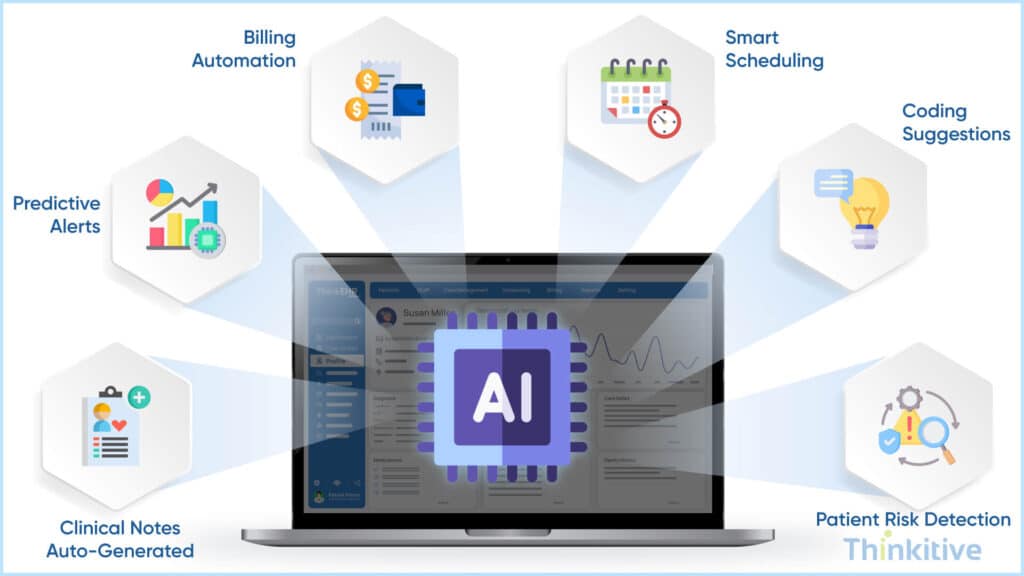
The year is 2026, and not talking about AI is like ignoring the inevitable. AI features in enterprise EHR systems are expected to transform hospitals and clinics to a great extent. On that note, here are some of the benefits of an AI-powered custom EHR that you must know and even consider:
- AI-Powered Clinical Documentation: One of the core and widely popular uses of AI in healthcare systems is for clinical documentation. It can perform some of the crucial and time-consuming tasks like SOAP notes generation, reporting, data updating, etc. AI in these instances can not only simplify clinical and administrative processes but also reduce the administrative burden of both providers and staff to a huge extent.
- Predictive Analytics & Decision Support: Another feature is that of predictive analytics and providing real-time decision support. The feature of predictive analytics can be seen in a few modern systems that hospitals are using for population health management. On the other hand, with decision support, clinicians are using the data to support their care journey and imbibe value-based care practices.
- Intelligent Workflow Automation: Intelligent workflow automation is also one of the most anticipated use cases of AI, and many practices have already implemented this in their system. One of the major advantages of intelligent automated workflows is that you don’t have to rely on manual data entries, and care coordination can be ensured, bringing the entire care team on the same page and working towards the same goal.
- AI-Assisted Billing & Coding Optimization: AI can also be used in billing processes, especially for submitting claims and medical billing coding. They can ensure accuracy in coding and even speed up the process, improving the cycle of your reimbursement and overall your practice’s financial health.
AI is still in the development phase, or you can say that it is still evolving. This is why, every day, the news of new AI-powered features being added to the custom EHR system is making headlines.
Assess Your System for AI Capabilities –
Get Free AssessmentWhere Compliance Shapes the Technical Design
When developing your own EHR, you must ensure that your system is secure, interoperable, and compliant. However, when it comes to compliance, the landscape is ever evolving, changing the regulations and data exchange standards with every update. On that note, here are some of the essential elements of a HIPAA and FHIR-compliant EHR architecture that form the foundation of your EHR system:
| Component | Purpose in EHR Architecture |
| HIPAA Compliance | Protect patient health information through secure data handling and privacy controls |
| Patient Data Security | Safeguard records using encryption, authentication, and secure access management |
| FHIR APIs | Enable modern, standardized healthcare data exchange between systems and applications |
| HL7 Integrations | Support communication between EHRs, labs, pharmacies, and healthcare platforms |
| ONC Certification | Ensure the EHR system meets national usability, interoperability, and compliance standards |
| 21st Century Cures Act Compliance | Prevent information blocking and promote patient access to healthcare data |
| Role-Based Access Control (RBAC) | Restrict data access based on user roles and responsibilities |
| Audit Trails | Track system activities and user actions for compliance and security monitoring |
| Healthcare Interoperability Solutions | Enable seamless data sharing across connected healthcare ecosystems |
Now, remember that a well-designed EHR architecture not only supports regulatory compliance but also improves care coordination, operational efficiency, and ensures scalability for long-term use.
Budgeting and Scheduling Your EHR Investment
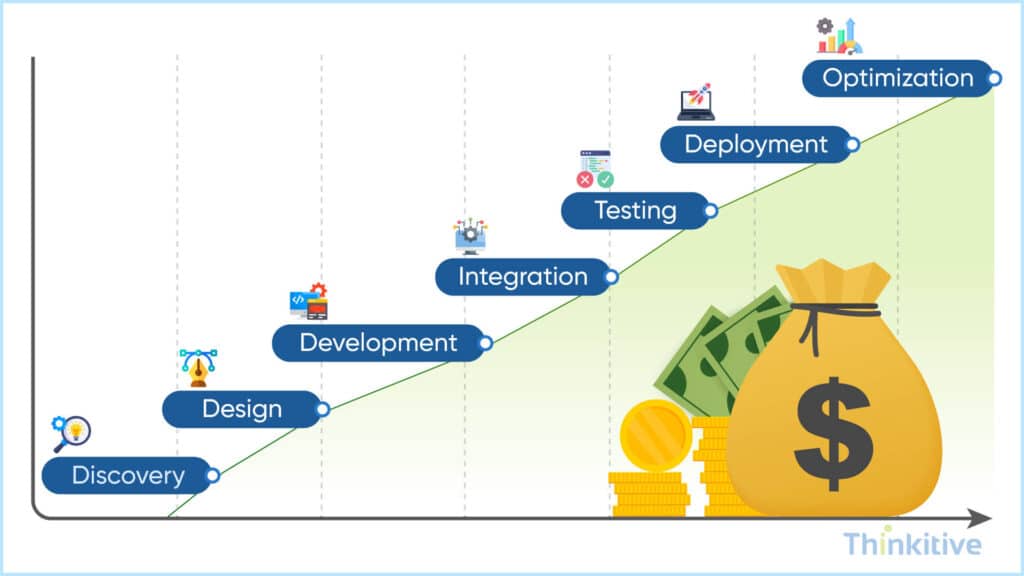
The timeline and cost of building a custom EHR depend on factors such as feature complexity, interoperability requirements, regulatory compliance, AI capabilities, and the number of third-party integrations. While every project is unique, having realistic expectations helps healthcare organizations plan budgets, allocate resources, and define implementation milestones.
As a general benchmark, a basic MVP EHR typically takes 4–6 months to develop and may cost between $80,000 and $150,000. A fully customized enterprise-grade EHR with advanced workflows, AI-powered automation, interoperability, and analytics can require 12–18 months or more, with development costs ranging from $400,000 to over $1 million, depending on the project’s scope and complexity.
Beyond the initial investment, organizations should also budget for infrastructure, ongoing maintenance, security updates, compliance changes, user training, and future enhancements to ensure the platform remains scalable and aligned with evolving healthcare requirements.
To know more about the development timeline and all the intricacies that can help you in building, read our blog – Realistic Timeline to Build an EHR System.
Common Challenges in Custom EHR Development
Building your own EHR system comes with several challenges that can span from technical to operational to compliance-related. Furthermore, healthcare organizations must address these issues carefully so that the implementation is successful and it can be reflected in user adoption and long-term performance of the system. On that note, here are some of the common challenges that you must overcome:
| Challenge | Description |
| Compliance & Regulatory Complexity | Ensuring compliance with HIPAA, FHIR, HL7, ONC, and other healthcare regulations can increase development complexity. |
| Legacy System Integration | Integrating with outdated healthcare systems may create compatibility and interoperability challenges. |
| User Adoption & Workflow Adaptation | Providers and staff may resist workflow changes if the system is difficult to use or requires extensive training. |
| Cybersecurity & Data Protection | Protecting sensitive patient data requires strong encryption, access controls, and continuous security monitoring. |
| Balancing Usability with Innovation | Adding advanced features while maintaining a simple and intuitive user experience can be challenging. |
Best Practices for Successful EHR Development in 2026
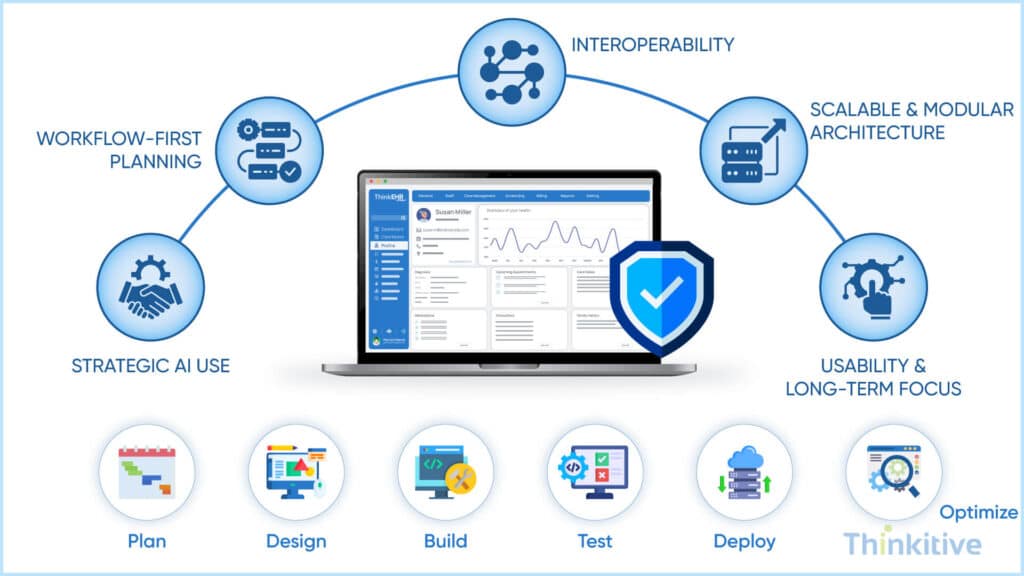
The question, ‘how to build an EHR system in 2026,’ is not relevant anymore; in fact, what the best practices for building an EHR system are is what people should be asking. And for good reasons, you see, with the best practices in place, you can build and deploy the custom EHR system catering to your unique needs. So, here are some best practices that you can follow:
- Start with Workflow-First Planning: The best way to kickstart your development or design stage, in this case, is by understanding the workflows and reshaping them for the new system. Workflow-first planning helps you understand intricacies better and know what the possible gaps that you might potentially encounter are.
- Prioritize Interoperability from the Beginning: Being a part of the connected healthcare ecosystem is the need of the hour. Furthermore, given the ever-evolving nature of the regulatory landscape, prioritizing interoperability is one of the best practices that you can adopt for scalability and integration of your system.
- Scalable & Modular Architecture: Ask your vendor to choose a scalable and modular architecture, so that your system is flexible enough to adopt changes without disrupting other functionalities of your system.
- Use AI Strategically: Think and implement AI modules strategically so that they do not interfere with processes where manual intervention is required. Also, strategic implementation can result in enhanced efficiency and improved productivity.
Despite all these best practices, one of the best things that you can adopt is to focus on usability and long-term optimization of the software. This is crucially important because usability is what determines the success of your EHR software.
Watch How Building Your Own EHR Can be Beneficial for Your Practice –
Get DemoConclusion
EHR development journey does not start when you start coding; in fact, it starts with the idea when you decide to build your own EHR. And given the rapid evolution of technology, healthcare, and compliance, building your own EHR at this moment can turn out to be a strategic investment for the growth of your practice.
And if you are considering development, then you must not ignore certain aspects like AI, the compliance landscape, and interoperability as well. On that note, I hope this guide will help you understand the end-to-end processes of building your EHR, and if you are looking for a consultation from EHR software development company before making the right decision, then book your consultation with our EHR expert today.
Frequently Asked Questions
To understand how to build an EHR system in 2026, healthcare organizations should begin with workflow analysis, compliance planning, and feature prioritization. The process typically includes UI/UX design, architecture planning, development, interoperability integration, testing, deployment, and long-term support. Following structured EHR implementation steps helps ensure scalability, security, and regulatory compliance throughout the development process.
Modern electronic health record software should include clinical documentation, patient records, ePrescribing, scheduling, billing, patient portals, telehealth support, analytics, and interoperability capabilities. Many organizations are also adopting AI-powered automation and workflow optimization features to improve operational efficiency and patient care outcomes.
The cost to develop a custom electronic health record system depends on feature complexity, integrations, compliance requirements, scalability, and development approach. Basic MVP platforms may cost significantly less than enterprise-scale EHR systems that include AI, interoperability, and advanced analytics capabilities.
The average EHR development lifecycle can range from a few months for a basic MVP to more than a year for a fully customized enterprise solution. Development timelines are influenced by platform complexity, interoperability requirements, security implementation, testing, and customization needs.
The decision between build vs buy EHR depends on organizational goals, workflows, budget, and scalability requirements. Custom EHR systems offer greater flexibility, ownership, and customization, while off-the-shelf platforms provide faster deployment and lower upfront costs.
A secure EHR platform should follow HIPAA and FHIR compliant EHR architecture standards to protect patient health information. Key compliance requirements include encryption, secure authentication, access controls, audit trails, data backups, and secure healthcare data exchange practices.
ONC certification ensures that EHR systems meet national standards for security, interoperability, usability, and healthcare data exchange. While not every organization is required to use ONC-certified software, certification is often important for healthcare providers participating in government healthcare programs.
FHIR enables standardized healthcare data exchange between providers, labs, pharmacies, and third-party applications. It plays a major role in modern healthcare interoperability solutions by improving data accessibility, care coordination, and integration across connected healthcare ecosystems.
Common AI features in enterprise EHR systems include AI-assisted clinical documentation, predictive analytics, clinical decision support, workflow automation, appointment reminders, coding assistance, and intelligent reporting tools. These capabilities help reduce administrative burden and improve provider efficiency.
Common EHR implementation challenges include regulatory compliance, user adoption, legacy system integration, cybersecurity concerns, workflow adaptation, and interoperability management. Following structured EHR implementation steps and proper change management strategies can help reduce implementation risks.
Yes, small healthcare practices can build custom EHR platforms by starting with a focused MVP approach. The benefits of custom EHR systems for smaller practices include workflow customization, scalability, improved operational efficiency, and better long-term flexibility compared to generic software platforms.
In-house EHR development provides greater internal control but requires significant technical expertise, infrastructure, and long-term resource investment. Outsourcing to an experienced development partner can accelerate the EHR development lifecycle, reduce operational burden, and provide access to specialized healthcare technology expertise.
Interoperability allows electronic health record software to securely exchange data across healthcare providers, labs, pharmacies, and external systems. Strong healthcare interoperability solutions improve care coordination, reduce duplicate records, support faster decision-making, and enhance patient outcomes.


