AI-Driven Feature Prioritization for Modern EHRs

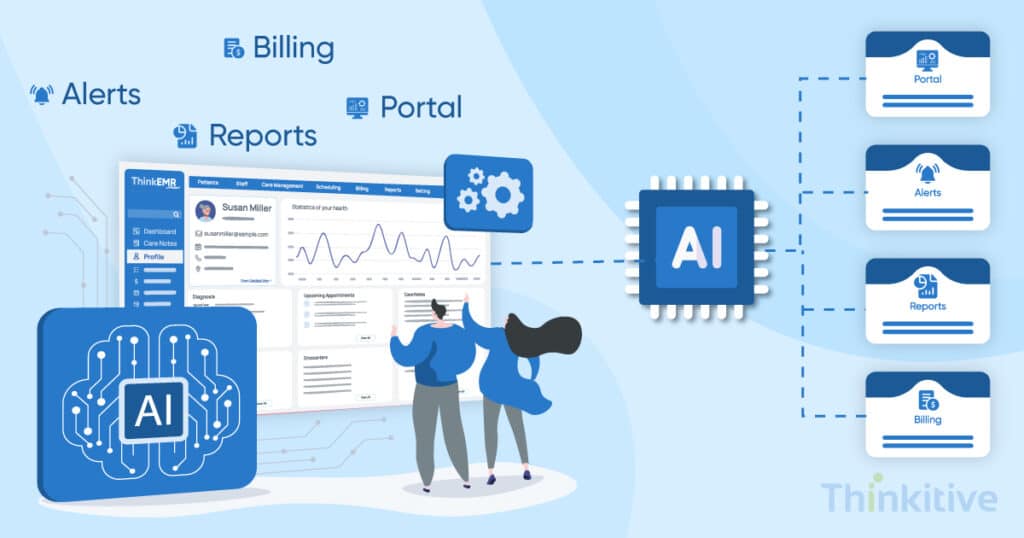
Just a year or so ago, AI was one of the most anticipated technologies in the healthcare industry. Cut to 2025, the use of AI in and around healthcare systems, and especially EHRs, has now become mainstream.
Every healthcare provider looking to modernize their EHR system is demanding AI-powered custom EHR development, and the adoption statistics are proof that AI, which started as a trend, has become the trendsetter in the healthcare industry.
For instance, in 2024 alone, almost 71% of US hospitals reported using AI tools integrated with their EHR, which had a staggering increase of 5% since 2023. And in 2026, some numbers even suggest that the use would be nearly 100%.
But these stats are not something that makes the day-to-day lives of healthcare providers easy, right?
Well, have a look at this: a survey of 43 health systems found that ‘Ambient Notes,’ which is a type of generative AI used for clinical documentation embedded in EHR workflows, had an adoption rate of 100% in organizations. Furthermore, 53% of these organizations reported a high degree of success, while others reported success in some form or another.
And if you are a healthcare provider planning an AI-enabled EHR, then let this blog be your guide to AI-driven feature prioritization in EHR. This is because the applications of AI in EHR systems are coming up every passing day.
But it is important for you to know which AI features you should prioritize in your EHR system and how AI can help you in making better decisions and improving clinical and administrative aspects of your clinic.
So, without further ado, let’s get started!
AI Features Checklist for in Custom EHR
Download ChecklistHow Do You Prioritize EHR Features Using AI?
AI-powered EHR feature prioritization is not about adding every AI capability to your system. Instead, it helps healthcare organizations identify the features that deliver the greatest clinical, operational, and financial value based on real-world data. The process below outlines how AI helps prioritize EHR features effectively.
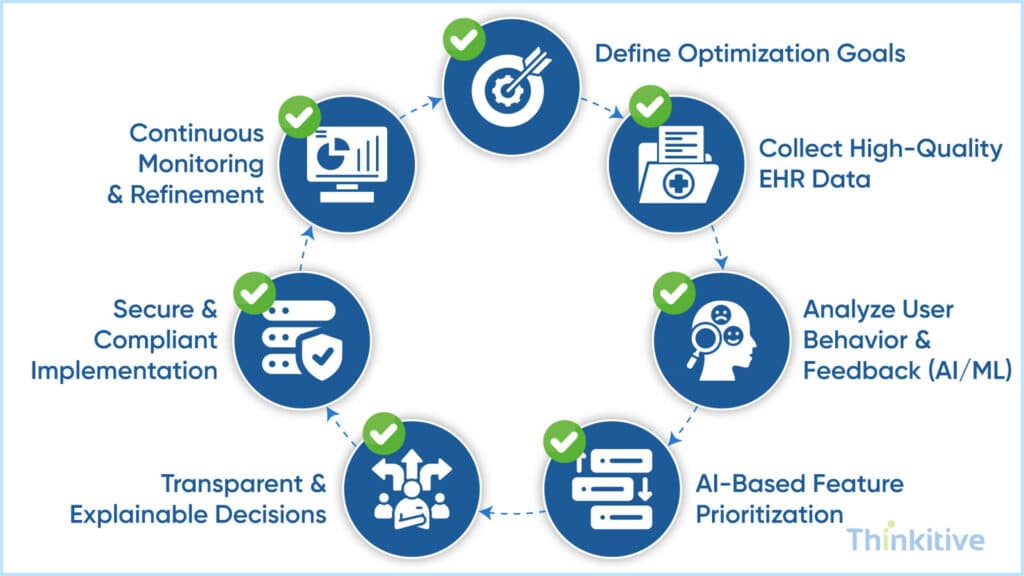
- Define Your Clinical and Operational Goals: Start by identifying the biggest challenges within your practice. Determine whether documentation, scheduling, billing, patient engagement, or clinical decision support requires the most attention. Having clear objectives ensures AI focuses on solving the problems that matter most.
- Analyze User Behavior and Clinical Workflows: AI analyzes clinician interactions, workflow patterns, documentation habits, and feature usage to identify bottlenecks and inefficiencies. This helps uncover where providers spend the most time and which processes require improvement.
- Use AI to Identify Feature Gaps: Machine learning and natural language processing evaluate clinical notes, user feedback, support tickets, and operational data to identify missing capabilities and opportunities for optimization. This eliminates guesswork and ensures decisions are based on actual usage patterns.
- Prioritize Features Based on Impact: Once the data has been analyzed, AI ranks feature requests according to their potential impact on patient care, provider productivity, operational efficiency, and financial performance. This enables healthcare organizations to focus on high-value enhancements instead of low-priority requests.
- Validate Priorities with Clinical Teams: While AI provides valuable recommendations, clinicians and administrative staff should validate whether the prioritized features align with real-world workflows, specialty requirements, and organizational goals before implementation.
- Implement High-Priority Features Incrementally: Rather than introducing every enhancement at once, begin with high-impact modules such as clinical documentation, scheduling, billing, or clinical decision support. A phased rollout minimizes disruption while allowing teams to measure measurable improvements.
- Continuously Monitor and Refine Priorities: AI-driven feature prioritization is an ongoing process. Monitor feature adoption, clinician feedback, workflow improvements, and patient outcomes to continuously refine future feature priorities as your practice evolves.
Now that you understand how AI helps prioritize EHR features, let’s explore the clinical and administrative AI capabilities that healthcare organizations most commonly prioritize.
Refer to the tables below for AI in EHR feature prioritization for clinical needs:
| AI Feature | What It Does | Why It Should Be Prioritized |
| AI-Driven Clinical Decision Support (CDSS) | Analyzes labs, vitals, medications, and history to guide decisions. | Improves diagnostic accuracy and patient safety. |
| Predictive Risk Analytics | Identifies early signs of deterioration or complications. | Enables proactive intervention and better outcomes. |
| Smart Clinical Alerts | Prioritizes high-risk alerts (drug interactions, allergies, abnormal labs). | Reduces alert fatigue while improving safety. |
| Ambient Clinical Documentation | Captures and structures visit notes automatically using AI. | Saves clinician time and reduces documentation burden. |
| Personalized Care Recommendations | Suggests evidence-based treatment paths based on patient profiles. | Supports consistent, high-quality, personalized care. |
Now, that you’ve got a brief idea about the AI-powered features for your clinical needs, here are some features that you can prioritize for your administrative needs:
| AI Feature | What It Does | Why It Should Be Prioritized |
| Intelligent Scheduling & Resource Optimization | Predicts appointment durations and optimizes provider schedules. | Reduces wait times and improves clinic throughput. |
| Automated Coding & Billing Assistance | Suggests accurate CPT/ICD codes based on clinical data. | Lowers claim denials and speeds up reimbursements. |
| AI-Based Eligibility & Prior Authorization | Automates eligibility checks and authorization workflows. | Cuts administrative delays and manual effort. |
| Revenue Cycle Analytics | Identifies revenue leakage and payment risks. | Improves financial performance and cash flow. |
| Predictive Staffing & Capacity Planning | Forecasts patient volume and staffing needs. | Prevents burnout and optimizes operational efficiency. |
Real Examples of AI-Driven EHR Prioritization
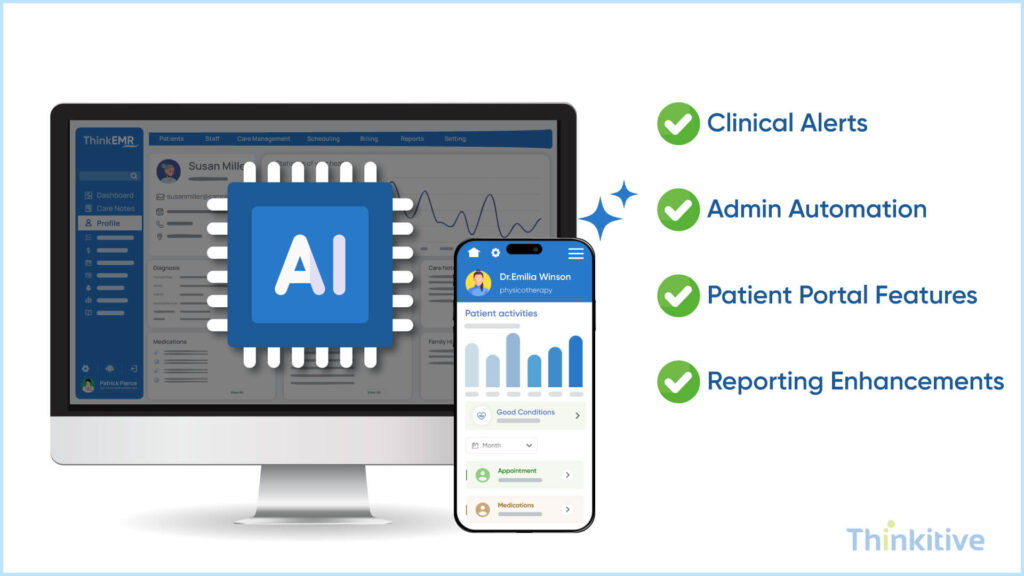
Let’s try to understand how these AI-powered features in your custom EHR can help you in your day-to-day activities. Before getting into the intricacies, let’s try to understand the clinical aspect of your practice:
For instance, for your practice, you have curated safety checks for each patient, and at times, you might skip some of the safety checks. This is the problem that usually happens in a traditional EHR. Now, with AI-powered clinical decision support tools, your system will identify the missed safety checks and trigger an alert to prioritize the patient or the care journey with the respective aspect that has been missed.
Coming to the administrative aspects, there are numerous examples. Let’s try to understand two specific use cases, one for your administrative staff and the other from the patient perspective.
So, the first use case for your staff members is pretty simple. It is often seen that during manual entry, the chances of overlooking something or a data strand are possible. In such cases, the margin of error on both ends is quite high. This can create a different set of problems, from claims submission to denials, etc. However, with AI-powered EHR systems, the data flow can be streamlined with accuracy and synchronization. In such cases, once the data is entered by the provider, the same can be synchronized across the system, reducing the margin of error, and your administrative staff can focus on more important aspects.
This other use case of AI-powered features is quite different. For instance, you have embedded AI into your entire system, and its sole purpose is to help you give your patients a more delightful experience. While the usual process is quite tiresome and mostly guesswork, with AI, it can analyze and provide an overview of the system at all times. For instance, if AI sees that most of your patients use scheduling features more than messaging features, then during the audits, it can raise this finding. This will act as your feedback based on data, which will help you in redesigning your system with high-use areas as a priority in your portal.
Know About the AI-Powered Features in EHR We Developed
View Case StudyModern EHR Features Most Often Prioritized by AI
Up until here, we’ve just covered the use cases and how AI can help you enhance your features. On top of that, you must have an idea about what features you should prioritize for your EHR, right?
Having said that, in our recent ventures into AI-powered EHR development, here are some of the modern EHR features that are mostly prioritized by providers.
- Predictive Analytics Dashboard: Many of the providers have asked for a predictive analytics dashboard in their system. For this, they wanted a system that could score the patients on the basis of their risks and, on their analysis, pinpoint the care gaps that are missing from their care plan.
- Automated Billing/Coding Suggestions: After predictive analytics, automated billing and coding suggestions are something that many healthcare providers have asked for. This is an application of machine learning and has been extremely useful for many practices. With this feature, administrators can quickly assign codes like CPT, ICD, etc., and have a smoother experience in billing and coding practices.
- Intelligent Workflow Optimization: Too many clicks are one of the most irritating problems with traditional EHRs. To reduce the number of practices, they have embedded AI into their system to optimize their workflows intelligently. These workflows can not only reduce clicks but also enable faster documentation.
Best Practices for Implementing AI-Driven EHR Optimization
Implementing an AI-driven EHR software system is easier said than done. And many healthcare practices, looking to build their AI-powered EHR system, often fail because they either rush or prioritize the wrong features. To help you with that, here are some of the best practices for implementation:
- Start with a Clean Slate: Start fresh and as something new. Since your system will be based on data, starting with clean and well-structured data is the key. Since your AI depends on this, having clean and well-structured data is very important.
- Take One Module at a Time: Go module by module, and if you are able to choose a high-impact module, then even better. Some of these high-impact modules are billing, documentation, scheduling, etc. These modules have a high flow of data, and streamlining them can do most of the work in developing an AI-powered EHR system.
- Collaborate & Comply: Collaborate with your developers and help them understand how you want the AI-powered EHR feature to be developed. This will help you in accurate development and help you in adhering to the necessary compliance as well.Collaborate with your developers and help them understand how you want the AI-powered EHR feature to be developed. This will help you in accurate development and help you in adhering to the necessary compliance as well.
Or you can read about the modern features of AI-powered EHR systems in this blog: AI Scribe, AI Coder & AI Clinical Decision Support — Modern EHR Features.
Know The AI-Powered Features Your Practice Needs
Get Free ConsultationConclusion
If you’ve made it this far, then I am assured that you have a brief idea about what AI-powered features to prioritize in your EHR system. And sticking to your instincts here can be of greater advantage as it will make your system smarter, faster, and more accurate.
On that note, let this blog be your guide to AI-driven feature prioritization in EHR, and if you want to get started, then get your free consultation with an EHR AI expert and get started with your custom EHR development.
AI-Powered Feature Checklist
Free DownloadFrequently Asked Questions
AI-driven feature prioritization in EHR is the process of using artificial intelligence to evaluate user behavior, workflows, operational data, and clinical outcomes to determine which EHR features should be implemented or enhanced first.
AI-driven feature prioritization in EHR refers to using artificial intelligence to systematically determine which EHR features deliver the highest clinical, operational, and financial value. Instead of relying on assumptions or generic roadmaps, AI analyzes real-world usage, workflow inefficiencies, and outcomes to guide smarter EHR investment decisions. For healthcare providers, this means faster improvements in areas that directly impact care quality, efficiency, and compliance.
AI helps prioritize EHR features by analyzing patterns across user behavior, clinical workflows, error rates, and system bottlenecks. Machine learning models identify which features are underperforming, overused, or causing delays, and then rank enhancements based on impact and urgency. This approach ensures that EHR development efforts focus on high-value improvements rather than subjective preferences.
AI-powered EHR feature selection relies on a wide range of structured and unstructured data, including clinician interaction logs, documentation time, patient outcomes, billing errors, compliance reports, and support tickets. It may also analyze external benchmarks and regulatory requirements. This comprehensive data foundation allows AI-driven EHR optimization to be both clinically relevant and operationally sound.
Traditional EHR development often depends on stakeholder feedback, static requirements, and periodic reviews. In contrast, AI in EHR feature prioritization is continuous, data-driven, and predictive. AI adapts in real time as workflows evolve, enabling faster decision-making and reducing the risk of investing in low-impact features.
The role of AI in modern EHR decision-making is to identify friction points within clinical workflows and recommend targeted enhancements. AI can highlight where documentation slows clinicians down, where alerts cause fatigue, or where handoffs fail. By prioritizing workflow-centric features, AI-driven EHR optimization improves efficiency, reduces burnout, and supports better clinical outcomes.
Yes, reputable AI-driven EHR optimization tools are designed with healthcare-grade security and compliance in mind. They follow HIPAA guidelines, use encryption, role-based access control, audit logs, and often support FHIR/HL7 standards. AI tools for prioritizing EHR enhancements operate on de-identified or permission-based data, ensuring regulatory compliance while delivering insights.
AI commonly prioritizes features that improve clinical efficiency and decision-making, such as advanced clinical decision support, intelligent documentation assistance, workflow automation, interoperability enhancements, predictive analytics, and patient engagement tools. These modern EHR features enabled by AI consistently show measurable improvements in productivity, quality of care, and ROI.
Small and mid-size practices can adopt AI-driven feature prioritization in EHR by starting with modular AI tools, analytics add-ons, or custom EHR optimization services rather than full-scale AI platforms. Many vendors offer scalable pricing and phased implementations, allowing practices to leverage AI in EHR feature prioritization without significant upfront costs.


