The ROI of Investing in Custom EHR Development


Unless and until you’re a non-profit organization, everything comes down to money, don’t you agree?
This has been the case with the healthcare industry lately, as the digital transformation is demanding significant investment from all sides. Though off-the-shelf software solutions have appeared to be an economical solution, their inability to meet the specific demands of healthcare practices has given rise to a new trend of custom healthcare software solutions.
In these custom healthcare IT solutions, EHR software development is the most in demand. This is because of the evolving nature of electronic health records. Today, EHR software systems have become the epicenter of healthcare practices, serving as a one-stop solution for both clinical and administrative purposes.
However, the cost for custom EHR software development is high, and that has become a pivotal point for healthcare organizations not going ahead with the approach of personalized electronic health records.
But what if I said that the ROI of custom EHR development can enhance the financial performance of your practice and accelerate its growth?
On that note, let’s uncover the investment returns of tailored EHR development and know how it changes the face of your healthcare practice and operations.
Assess Your EHR System for AI Readiness
Get Free AssessmentImproved Efficiency & Productivity
While we get into the financial aspects of the ROI of EHR investment, first let’s have a look at some of the benefits of custom EHR development for your practice, and how it sets the base to give you a financial advantage.
- Streamlined Workflows: With the success of custom EHR projects, you get to streamline your workflows to the specific practice needs and requirements. While they consume most of your staff and providers’ time, they can shift the focus on patient care activities from documentation to other administrative tasks. By reducing the burden on your staff members, custom EHR software unknowingly increases the productivity of your practice.
- Automated Tasks: A study revealed that providers spent 34% of their time on documentation and sharing data with the care team. Now imagine all these things, from data sharing to appointment scheduling, alerts, etc., being automated. Wouldn’t it increase the productivity of your providers? Well, yes, and bringing that into the billing and coding aspects of your practice can further enhance the financial performance.
- Enhanced Collaboration: Features like ‘Patient Portal’ and integration allow real-time communication not only between patients and providers but also between the whole care team. It basically brings the entire care team on the same page and works towards the same goal, which is to provide better and more enhanced care. This improves collaboration, leading to better patient outcomes. Now, why am I talking about this? Well, efficiency gains through these multiple smaller improvements contribute to your business value of custom EHR systems. And this can be counted as a custom EHR ROI for your practice.
Custom EHR indeed improved the productivity and efficiency of your practice; you need to include the right features in this. And in the quest to make your custom EHR software feature-rich, it can increase the cost of your software. But here’s the catch: read this blog about balancing the features with your budget for cost-effective custom EHR.
Enhanced Patient Care & Clinical Outcomes
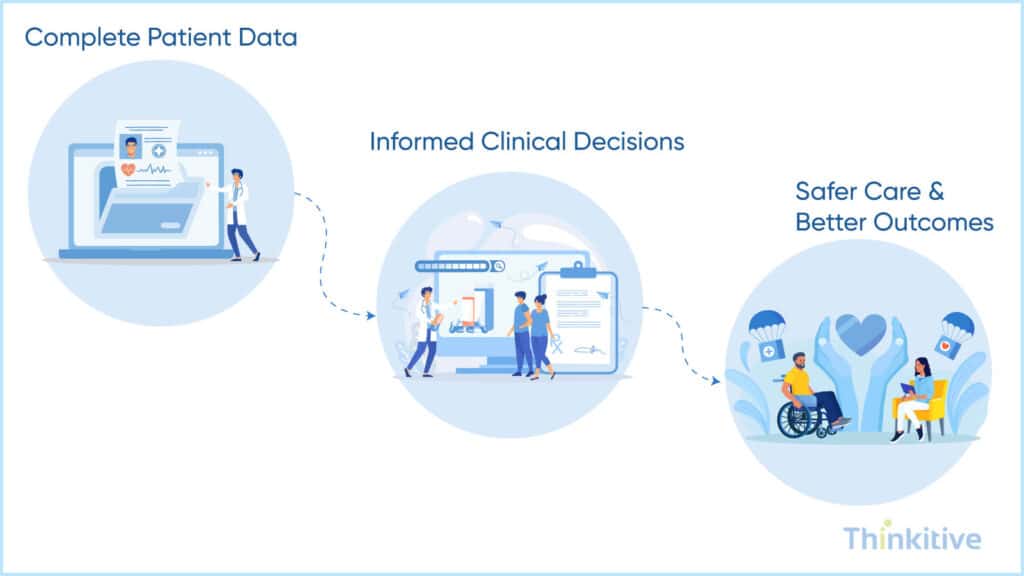
The goal of any healthcare practice is to provide the best possible care to its patients and achieve the desired outcomes. This has been one of the major reasons why many healthcare providers are choosing custom EHR development
- Improved Patient Outcomes: With a custom EHR development approach, you can prioritize better access to patient information to make data-backed decisions. This will not only enhance the decision-making capabilities of your healthcare practice but also directly or indirectly contribute to improving patient outcomes.
- Enhanced Patient Experience: Personalized electronic health records with a patient portal increase the convenience of accessing patient health records. With these personalized patient portals, patients are empowered to take control of their health and proactively involve themselves in their care journey, becoming active members in decision-making.
- Reduced Medical Errors: Did you know medical errors cost the entire healthcare industry somewhere around $42 billion? Costly, isn’t it? Well, with custom EHR software development in healthcare, medical errors can be significantly reduced, if not eliminated completely. For this, clinical decision support tools and the feature of automated drug interaction checks come in handy.
EHR contributes in a great way to improving patient care outcomes, and when you finally deliver on the ultimate goal of your practice, it directly or indirectly increases the value of your EHR investment. However, to measure this, you can have a look at the patient retention rate and the quality metrics of your software.
How Custom EHR can Improve Your Practice Revenue
Get Free ConsultationsIncreased Revenue & Reduced Operational Costs
Now that we’ve covered the benefits of EHR software development, let’s see how healthcare practices can enjoy the financial advantages of customizable EHR:
- Improved Revenue Cycle Management: You can include the feature of automatic claims submission in your custom EHR, which would result in faster claims processing and setting the reimbursement plans in motion. Moreover, since this process is automated and human intervention is required for a final check, it reduces the chances of claims denials. In this way, with EHR software development, you can improve the revenue cycle for your practice.
- Reduced Operational Costs: Since the clinical, administrative, and other workflows are streamlined, administrative costs are lower. Furthermore, if you are a small-scale practice, then it can reduce the overhead expenses, which will save a significant amount of money, reducing the overall expenditure for your practice.
- Increased Practice Efficiency: Since your custom EHR software will function mainly on data, it will allow you to optimize your resources to their fullest extent. Furthermore, shifting the focus to patient care activities will improve staff productivity as well. This will lead to better patient satisfaction and retention rate, indirectly creating a loyal patient base for your practice. Also, if you can, then try to quantify the burnout reduction rate of your providers. This can be easily addressed by the reduction in pajama times. Apart from that, measure productive gains so that you know if the changes you’ve made have an effect on practice or not. This will give you a brief idea about your healthcare software ROI.
If you’re still reading this, then the cost factor of custom EHR can sometimes feel too good to be true. On that note, read this article about navigating the cost of custom EMR for building your ideal software at minimal cost.
How to Calculate ROI for Custom EHR Development
How to calculate ROI for custom EHR is something that every practice developing a custom EHR must know. However, unlike other industries, getting measured insights for healthcare delivery is something quite difficult. On that note, let this section be your guide to how to calculate ROI for your custom EHR.
- Hard ROI vs Soft ROI: On a base level, there are two types of ROIs, hard and soft. Now, hard ROI is something that is direct and measurable. This can be clearly highlighted in your financial reports with increased revenue from improved documentation, or reduced costs by eliminating licensing fees, streamlined financial processes, and reduced manual tasks. On the other hand, soft ROI is indirect yet has an unavoidable impact. For instance, time saved per clinician per day, reduced pajama time, higher satisfaction, faster onboarding, reduced risk in care delivery, etc. To put it in simpler words, hard ROI justifies your investment while soft ROI sustains it.
- One-Time Development Cost vs Recurring Cost: This is where most ROI calculation falls apart. You see, with the custom EHR model, you have to pay one time development cost, and later ongoing maintenance and enhancement costs. However, the most important aspect in this is that the cost scales with usage and not users. On the other hand, with a SaaS EHR model, the costing comes in per-provider or per-user licensing, then comes paid upgrades or new modules implementation. Furthermore, the cost of software increases with time, and the cost continues to rise as your practice grows.
- Break-Even Timelines: Short-term and long-term ROI expectations vary with a significant margin. Let’s have a look at short-term expectations. Here development of the software is completed with its implementation and training of staff. Due to the friction in the development process, the productivity might dip, but as it gains momentum in the long-run compounding effects can be observed. For instance, in long-term ROI, workflow efficiency is gained with consistency, with reduced manual work and rework. Also, billing accuracy is increased, and costing is stable with scalable workflows and faster adaptation to newer care models.
Now, there are some practical and credible ways to calculate ROI for a custom EHR using operational and financial benchmarks. Here, the very first thing that you need to do is define the baseline metrics like average documentation time, claims denial rate, revenue per provider, turnover rate, etc.
Then estimate the improvements you are expecting once the system is fully implemented. For instance, let’s say you expect a 10-20% reduction in documentation time, with 15-30% fewer billing errors, etc.
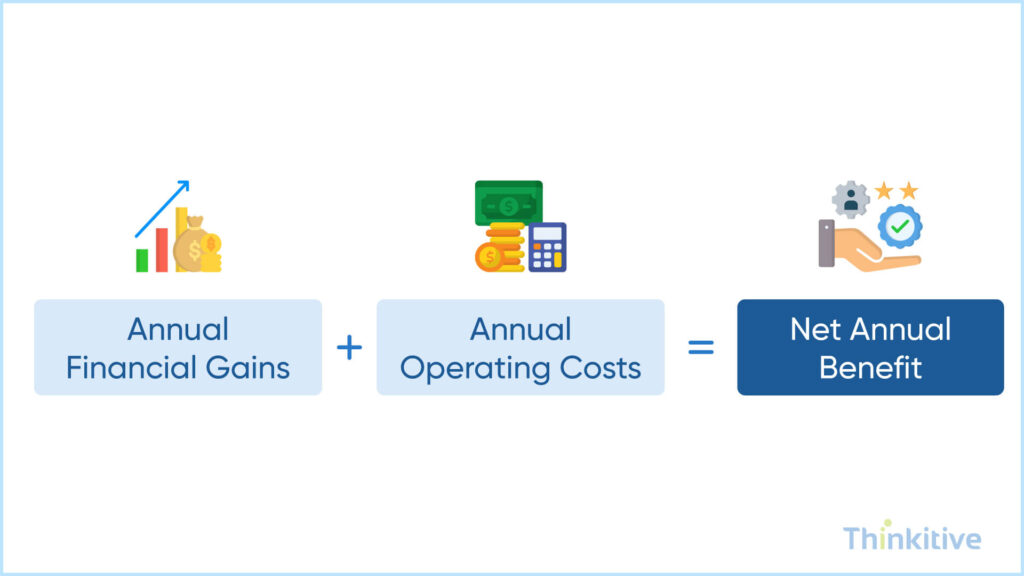
Last but not least, convert these improvements into dollars, for instance, time saved multiplied by hourly cost, or denials reduced by recovered revenue, etc. Now, conceptually, ROI can be calculated by annual financial gains minus annual operating costs, which will be divided by the initial investment.
However, to calculate an accurate ROI, you need to combine operational metrics with financial outcomes and nothing in between.
Guide to HIPAA-Compliant EHR Development
Download GuideEnhanced Security & Compliance
Custom EHR enhances patient outcomes, for sure, but with compliances with customized EHR is easier to achieve. This will not only enhance the security of your healthcare system. Here are some of the ways in which that is achieved:
- Robust Security Measures: Data encryption and access controls are some of the best ways in which your custom EHR system can ensure the privacy and security of private patient data. However, since it is an ever-increasing process, conducting regular security audits and vulnerability assessments is necessary to ensure that your system is always secure and that no stone is left unturned.
- HIPAA Compliance: HIPAA regulations have proved to be one of the cornerstones in ensuring data privacy and security in EHR software development. It is not only easier to ensure compliance with customized EHR but also minimizes the risks of data breaches and fines in case a breach occurs. This can be advantageous for your practice as a significant amount can be saved with HIPAA compliance.
Long-Term Scalability & Flexibility
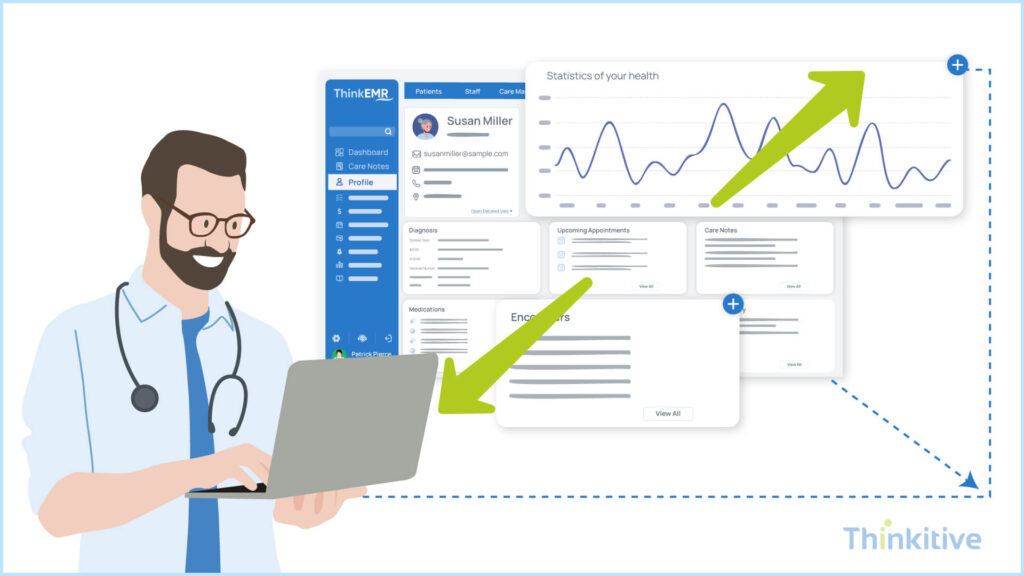
ROI of custom EHR implementation can be seen even in the long term, as the technological landscape shaping the healthcare industry is ever-changing, and adapting to those changing regulations and technology trends is easier with a customized EHR approach. Furthermore, you can easily accommodate the future growth of your practice with little customization and other scalability features.
Having said that, the ROI of tailored EHR development can be easily felt by aligning your custom EHR with the practice’s unique needs and requirements. This gives the software the ability to evolve with the practice’s needs.
One of the major factors in this is the technology stack you choose for your custom EHR. And it also gives you enough opportunity to cut down on the development cost of custom EHR software development. Read this blog about choosing the right technology stack to make the right decision that not only saves cost but also makes your software future-ready.
Scalability is directly related to the long-term ROI of custom EHR investment. How? Well, you see, as your practice grows, you need to scale your software. And since you don’t have to invest again in scalability aspects, it is most likely that you’ll get a positive ROI in the long-run.
The Role of AI in Maximizing Custom EHR ROI
The role of AI in almost every aspect of your healthcare practice is impactful, and the story is quite the same for maximizing your custom EHR ROI. Let’s see how:
With AI-assisted documentation, you significantly reduce the clinician time per encounter. Due to this, you not only save valuable time for your providers but also give your staff members enough time to rectify the mistakes that might be present.
Furthermore, with automation features of repetitive administrative and clinical tasks, additional time can be saved, and the focus can be brought back to care delivery and other important tasks.
Another feature of AI that can help you in increasing your custom EHR ROI is predictive analytics for resource utilization and care optimization. Meaning with the predictive analytics feature, you can not only deliver better care, but also optimize care processes.
However, one important thing to note here is that AI acts as an ROI multiplier layered in your custom EHR, whereas using it as a standalone solution might not have the same impact.
Step-by-Step Custom EHR Development Roadmap Guide
Download GuideConclusion
In conclusion, the main components that drive the ROI of custom EHR development are efficiency, revenue enhancement, risk reduction, and scalability aspects. And if you had paid attention to the blog, then ROI is realized or felt over time and not instantly.
Custom EHR development emerges as the strategic choice for healthcare organizations seeking lasting financial gains and operational excellence. The upfront investment pales in comparison to the potential ROI, unlocking improved efficiency, enhanced patient care, increased revenue, a competitive advantage, and reduced long-term costs. Embrace the tailored future of healthcare technology for sustained success.
Ready to revolutionize your practice? Explore the transformative possibilities of custom EHR development today, start by getting your free consultation.
Frequently Asked Questions
The ROI of custom EHR development is typically higher over time than off-the-shelf systems because custom solutions are built around real clinical workflows—not generic assumptions. While commercial EHRs may have lower upfront costs, they often introduce hidden expenses through unused features, productivity loss, customization limitations, and ongoing per-user licensing fees.
A custom EHR delivers stronger EHR return on investment by eliminating workflow friction, reducing manual work, and scaling without steep recurring costs. Over several years, the EHR investment value of a custom platform often surpasses packaged software, especially for growing or specialty-focused healthcare organizations.
Understanding how to calculate ROI for custom EHR starts with comparing total costs against measurable gains over time. Organizations typically evaluate:
- One-time development and implementation costs
- Ongoing maintenance and enhancement expenses
- Savings from reduced licensing, support, and integration fees
These costs are then measured against financial and operational improvements such as productivity gains, reduced staffing overhead, improved billing accuracy, and faster reimbursement cycles. This approach provides a realistic picture of custom EHR ROI and overall healthcare software ROI.
Several high-impact factors determine the business value of custom EHR systems:
- Reduced documentation time and fewer administrative tasks
- Lower error rates in coding, billing, and clinical data
- Improved clinician adoption and reduced burnout-related turnover
- Faster patient throughput and optimized scheduling
From a financial standpoint, fewer integrations, better reporting, and lower long-term ownership costs significantly enhance EHR investment value. Operational efficiency often becomes the biggest driver of sustained ROI.
Most healthcare organizations begin seeing positive returns within 12 to 24 months of implementation. Early gains usually come from efficiency improvements and cost savings, while revenue-focused benefits—such as better billing performance and scalability—compound over time.
The long-term ROI of custom EHR investment is where custom systems truly outperform standard solutions. As workflows evolve, a custom EHR adapts without expensive vendor upgrades, preserving and increasing ROI year after year.
AI significantly accelerates the ROI of custom EHR development by automating tasks that traditionally consume clinical and administrative time. Features such as intelligent documentation, predictive analytics, clinical decision support, and automated coding reduce labor costs and improve care quality.
By embedding AI directly into tailored workflows, organizations increase their EHR return on investment while unlocking new EHR investment value—from better population health insights to proactive revenue optimization. AI-driven efficiency often becomes a key multiplier in overall healthcare software ROI.


