Build an EHR That Gives Full Ownership of Your Data

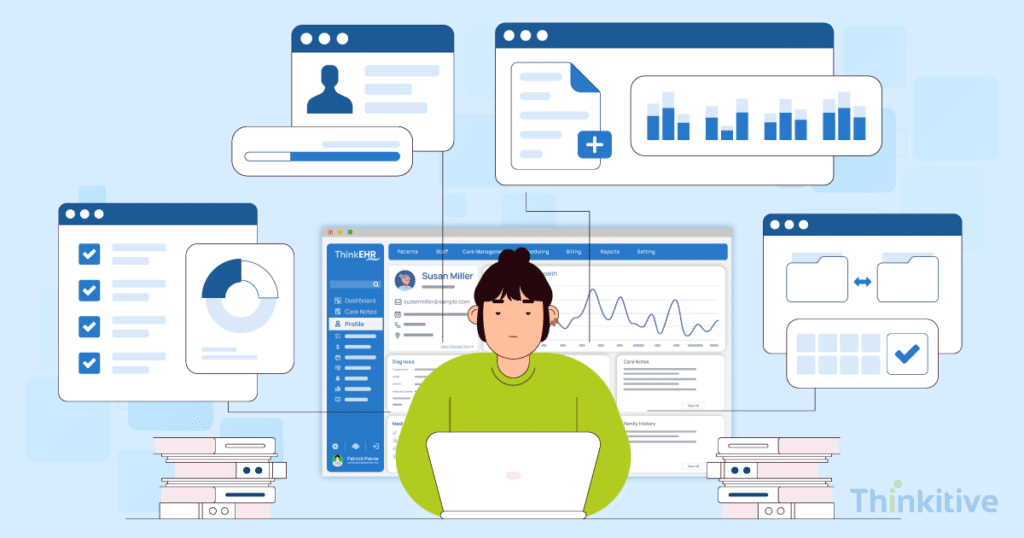
The healthcare industry is generating almost 36% of the world’s total data, according to the RBC Capital Markets.
And this has given rise to new problems for healthcare organizations across the globe. You see, protecting such huge volumes of data and managing it effectively is becoming challenging day-by-day. This is also one of the reasons why healthcare is considered as a goldmine for cyber attackers.
According to IBM’s Cost of Data Breach Report, the average healthcare data breach cost almost $10.93 million, this number is by far the highest for any industry. On top of that, the healthcare breaches take an average of 213 days to identify and contain. During this time, what should healthcare organizations do? Be exposed to significant financial, operational and reputational risks.
Also, the most surprising thing is that many healthcare organizations assume they fully own their data until they try to migrate to another platform, build custom integrations, or deploy AI solutions. That’s when they discover that ownership on paper doesn’t always translate into ownership in practice. Limited export capabilities, vendor-controlled infrastructure, and proprietary platforms can significantly restrict how their data is accessed, moved, or used.
Having said that, as healthcare is adopting AI faster than ever before and expanding to multiple locations, the number of digital solutions for healthcare has exponentially increased. That is why, when healthcare practices are looking for solutions that allow them to not only own the data but also control it.
When you build your own EHR, the customized system gives you the flexibility to decide where your data would reside, how it is secured, its accessibility and how it connects every system in its ecosystem.
On that note, let this blog be your guide to why full ownership of your healthcare data would give you the strategic advantage to unlock your practice’s full potential.
So, without further ado, let’s get started!
Know How to Avoid Data Lock-In When Building an EHR –
Read GuideWhat Does EHR Data Ownership Mean When You Build Your Own EHR?
EHR data ownership is nothing but your healthcare organization having complete authority over how the data is stored, accessed, secured, exported, integrated and governed without depending on any third-party vendor.
The misconception that many healthcare practices have is about their ownership where they assume that they own the data because they are the one generating it. However, true ownership is not just limited to patient records. It also involves how you use it, right from building an AI-powered solution to creating custom integration and everything that comes with it.
Now, when you build your own EHR, the ownership of data includes every layer of your data ecosystem. This might still confuse you with ownership and control, right? Well, have a look at this comparison table that you help you understand the relation and difference between EHR data ownership and EHR data controls:
| Capability Area | You Only Have Access When… | You Have Full Ownership When… |
| Source Data | Patient records reside in the vendor’s database, with limited visibility into the underlying infrastructure. | Patient records reside in a database your organization owns and manages. |
| Data Export | Exporting data requires submitting a support request or following vendor-defined processes. | Data can be exported instantly through APIs or standard formats whenever needed. |
| Schema & Structure | The database schema and data model are proprietary or undocumented. | You own the database schema, data dictionary, and underlying data model. |
| Backups | Backups are created, stored, and restored only by the vendor. | You can create, manage, and restore backups independently whenever required. |
| Audit Trails | Access history and audit logs are available only through vendor-provided reports. | Audit logs and access history are fully retained and managed by your organization. |
| Exit Rights | Migrating to another platform depends on vendor cooperation and export policies. | You can migrate your data at any time without relying on the vendor. |
| Integrations | APIs, interfaces, and third-party integrations are limited by vendor capabilities. | You control API keys, integration credentials, and can connect with any compatible system. |
| Infrastructure | The vendor determines where and how your data is hosted. | You choose your hosting environment—AWS, Azure, GCP, private cloud, or on-premises. |
| AI & Analytics | AI features and reporting are limited to vendor-supported capabilities. | You can build custom AI models, dashboards, and analytics using your own data. |
Why EHR Data Ownership Has Become a Strategic Priority
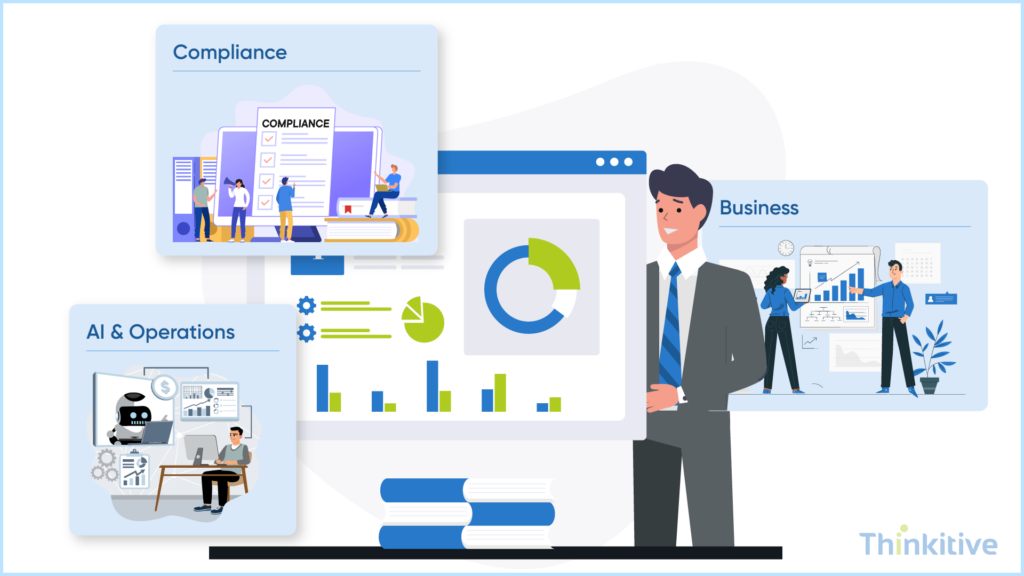
The adoption of the EHR system is one of the major factors that has led to the evolution of healthcare data from being a clinical record to becoming the organization’s most valuable asset. You see, as healthcare practices are actively adopting AI and expanding to multiple locations, it is important for practices to own the data for long-term growth.
Let’s see from three major aspects of your practice why switching from legacy EHR and getting complete EHR data ownership can be beneficial for your practices.
- Business Aspect: When you own the data, you basically get an upper hand while negotiating with technology vendors. On top of that, it can reduce the vendor lock-in cost by a huge margin and simplifies future migrations. This way, transitioning to a newer platform can be much easier.
- Operational Aspect: Full ownership enables unrestricted analytics, custom reporting, AI training and seamless integration with third-party applications. Your practice can use their own data to improve clinical outcomes, automate workflows, and make informed decisions without any limitations.
- Regulatory Aspect: With the introduction of 21st Century Cures Act, healthcare organizations are required to secure data access, interoperability, and information sharing. On top of that, this act encourages practice to maintain greater control over how the data is accessed, exchanged and used.
With these advantages at your bay, EHR data ownership becomes a strategic investment rather than just a technology decision.
Witness How Building Your Own EHR Gives You Control Of Your Data –
Get Free Demo
How Ownership Erodes: The Lock-In Question
Do you when healthcare practices realize that they don’t control or own the data?
Typically, it comes to practice’s attention when they try to migrate to another EHR system or integrate new applications or adopt AI-powered solutions. EHR vendor lock-in often develops gradually through proprietary storage formats, undocumented database schemas, restricted APIs and limited export capabilities.
Now, you as a practice can access patient records through the EHR interface, however, you may not have unrestricted access to the underlying data or the control to move it without the interference of the vendor.
Due to this, migration, integration or even exporting data can become costly and time-consuming. So, here the question arises, ‘How can you know the EHR data ownership?’
Well, the trick is to simply ask your vendor, ‘How difficult is it to leave?’
Here, if migrating your data requires vendor approval, paid extraction services or complex data conversion, then simply take the hint that you don’t fully own your data. True ownership on the other hand, gives you the freedom to move the data without relying on any vendor.
One of the best ways to do that is to switch from legacy systems to building an EHR system that suits your practice. Read this guide on Legacy EHR Migration Process for detailed understanding.
Why Organizations Outgrow Their Platform
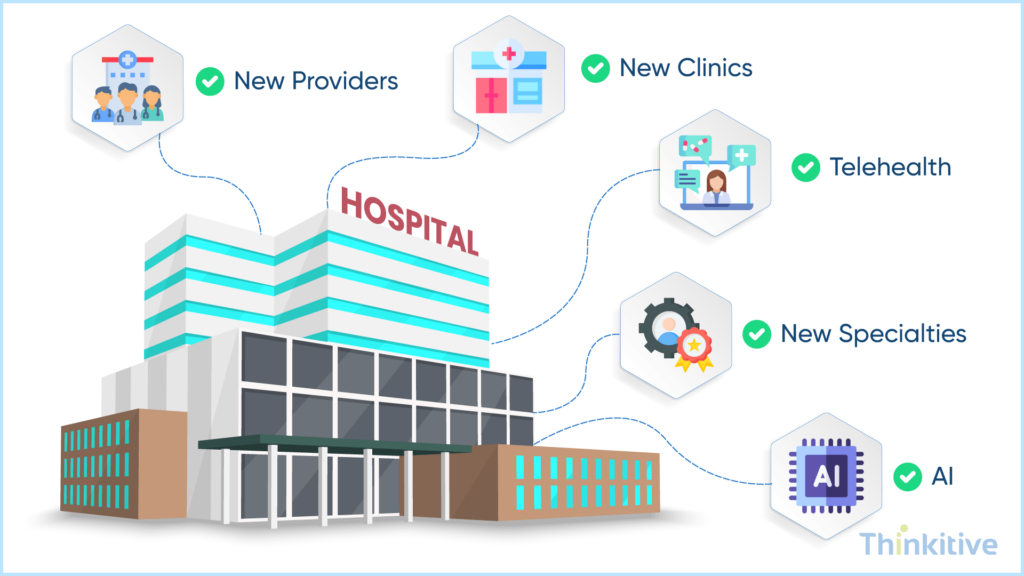
It is natural that your practice will grow with time, you will have to add new specialties, providers, and maybe even expand to a new location. Due to this, and unique needs of any healthcare organization, it can be said that no EHR system is built to meet every organization’s needs and requirements.
As practice grows, the practice’s operational requirements become far more complex than what the system was initially designed to do. This is why practices using legacy or off-the-shelf EHR systems often struggle to keep pace with these changing demands because of the limited customization, rigid workflows, and integration constraints that slows innovation and create operational bottlenecks.
Given the limited growth aspect of these systems, healthcare organizations have to transition to a more flexible platform, not because of their existing system’s incapability but because of the growing demands of your practice.
Here building your own EHR gives your organization the freedom to scale, adapt workflows, and support new services without being constrained by the limitations of a generic EHR system.
Designing for Movement, Not Just Storage
As a part of EHR data ownership, you might consider that ownership is about where the healthcare data is being stored, right?
Well, you’re partially right. EHR data ownership isn’t just about storage but about easily it can move with respect to your organization’s needs. That is why EHR data portability should be one of the major checks while making any decision, as it can save time, money and efforts during migration or integration with newer technologies.
Typically, a well-designed EHR uses standards like FHIR and HL7 v2. These standards ensure that the data can be exchanged securely and consistently across healthcare systems. These standards make it easier to connect with laboratories, pharmacies, billing platforms and other third-party applications while reducing your dependency on proprietary formats.
Learn How Data Should Revolve Around in Your System –
Get ConsultationCompliance & Governance for EHR Data Ownership
When you take complete EHR data ownership, you also have to take the responsibility to protect, govern, and manage with respect to the healthcare regulations. It goes beyond reducing the vendor dependency and enables you to meet evolving compliance requirements while maintaining greater control over data access, security, interoperability and long-term governance.
Here is a table that will help you understand how EHR data ownership supports key regulatory and governance requirements.
| Compliance Area | What It Requires | How Full EHR Data Ownership Helps |
| 21st Century Cures Act | Prevent information blocking and enable secure access to electronic health information. | Supports timely data sharing and eliminates dependence on vendor-controlled exports. |
| HIPAA | Protect PHI through administrative, technical, and physical safeguards. | Enables direct control over security policies, encryption, user access, and data storage. |
| HITECH Act | Strengthen electronic health information security and breach notification. | Improves monitoring, auditing, and incident response with complete visibility into your data. |
| ONC Certification | Support standardized data export, interoperability, and patient access. | Makes it easier to exchange and migrate data using standards like FHIR and HL7. |
| Data Governance | Establish policies for data access, retention, accountability, and auditability. | Enables role-based access controls, comprehensive audit trails, retention policies, and governance across the EHR ecosystem. |
Compliance isn’t achieved by owning your data, in fact it is achieved by governing it effectively. This is why building your own EHR gives healthcare organizations the flexibility to meet these evolving regulatory requirements while maintaining complete visibility and control over your healthcare data.
Assessing Your Current Data Ownership Position
Before investing directly into a new EHR system or evening upgrading your existing system, it is important to understand how much control you actually have over your healthcare data.
As mentioned earlier, by asking a few simple questions, you can actually know if you own the data or not. On that note, here are some of the questions that you must ask your vendor to assess your current EHR system for data ownership.
| Ask Your EHR Vendor | If the Answer Is Yes | If the Answer Is No |
| Can we export all our healthcare data at any time without additional fees? | Your organization maintains control over its data. | Your data is dependent on vendor processes or contracts. |
| Is the database schema and data model fully documented? | Data can be migrated and integrated more easily. | Future migrations may become costly and complex. |
| Can we create and restore backups independently? | Business continuity remains under your control. | Disaster recovery depends on the vendor. |
| Do we have unrestricted API and integration access? | You can connect any compatible healthcare application. | Integrations are limited by vendor capabilities. |
| Can we migrate to another EHR without proprietary tools? | You can switch platforms whenever business needs change. | Vendor lock-in increases migration costs and timelines. |
| Do we control where our data is hosted? | You determine infrastructure, security, and compliance. | Your hosting strategy is dictated by the vendor. |
Note:If you answered “No” to more than two of these questions, your organization may have access to its data—but not full ownership of it.
Conclusion
Healthcare organizations are actively adopting newer AI technologies and trying to make an effort to be a part of the healthcare’s ever-growing ecosystem of digital healthcare solutions. In this EHR data ownership is becoming a strategic necessity rather than being a technology preference.
While many practices assume that they own their healthcare data, true ownership means having the freedom to access, secure, export, integrate and govern that data without anyone’s restriction or limitation. You also read this guide on portability principles to ensure you own the data.
Building your own EHR gives your organization complete ownership and that puts you in control of your data, infrastructure, security, interoperability and future innovations. This gives you a strategic advantage where your technology evolves as your practices need it.
So, if you’re planning to modernize your practice, then it is the right time to invest in building your own EHR system that is designed around your practice and aligns with your practice’s goal. Get your system assessment from our EHR expert and get started.
Frequently Asked Questions
EHR data ownership refers to an organization’s authority to store, access, secure, export, integrate, and govern its healthcare data without depending on a third-party vendor. Full EHR data ownership reduces vendor dependency, supports interoperability, improves security, and enables long-term innovation through AI and advanced analytics.
Healthcare organizations can maintain EHR data control by building a custom EHR, using open interoperability standards like FHIR and HL7, retaining ownership of database schemas and backups, and ensuring data can be exported at any time without vendor approval.
Accessing healthcare data means you can view and use information within your EHR. Owning it means your organization controls where the data is stored, how it is secured, how it is integrated, and when it can be exported or migrated without restrictions.
EHR vendor lock-in can lead to expensive migrations, limited interoperability, restricted data exports, and dependence on proprietary technologies. These limitations often increase operational costs and reduce an organization’s ability to adopt new technologies or switch platforms.
FHIR enables standardized and secure data exchange between healthcare applications. Building an EHR with FHIR supports EHR data ownership by improving interoperability, simplifying integrations, and making data more portable across systems.
EHR data portability allows organizations to migrate between systems, integrate third-party applications, and expand their digital health ecosystem without losing access to critical healthcare data. It also reduces long-term vendor dependency.
To understand how to avoid vendor lock-in when building EHR, organizations should prioritize open standards, documented database schemas, unrestricted APIs, independent backups, and standardized data exports. These practices make future migrations and integrations significantly easier.
When switching from legacy EHR systems, organizations should evaluate data export capabilities, migration complexity, interoperability standards, backup ownership, and API accessibility. Choosing a platform that supports long-term scalability can reduce future migration challenges.
Interoperability enables healthcare organizations to securely exchange data with laboratories, pharmacies, payers, and third-party applications. This improves EHR data control by reducing reliance on proprietary integrations and supporting seamless information sharing.
Organizations with full EHR data ownership can leverage AI for clinical decision support, predictive analytics, workflow automation, population health management, and personalized patient care. Complete data access provides the high-quality datasets AI models require.
Some of the best practices for EHR data portability include adopting FHIR and HL7 standards, maintaining documented database schemas, using standardized export formats, implementing open APIs, and regularly testing backup restoration and migration processes.
Strong EHR data governance should align with HIPAA, HITECH, the 21st Century Cures Act, and ONC interoperability requirements. Organizations should implement role-based access controls, audit trails, encryption, retention policies, and secure data-sharing practices.
Full EHR data ownership enables organizations to adopt AI, integrate emerging technologies, expand across multiple locations, and build new digital health services without being constrained by vendor limitations. It creates a flexible foundation for continuous innovation and future growth.


