Building EHR with Real-Time Clinical Alerts & Notifications

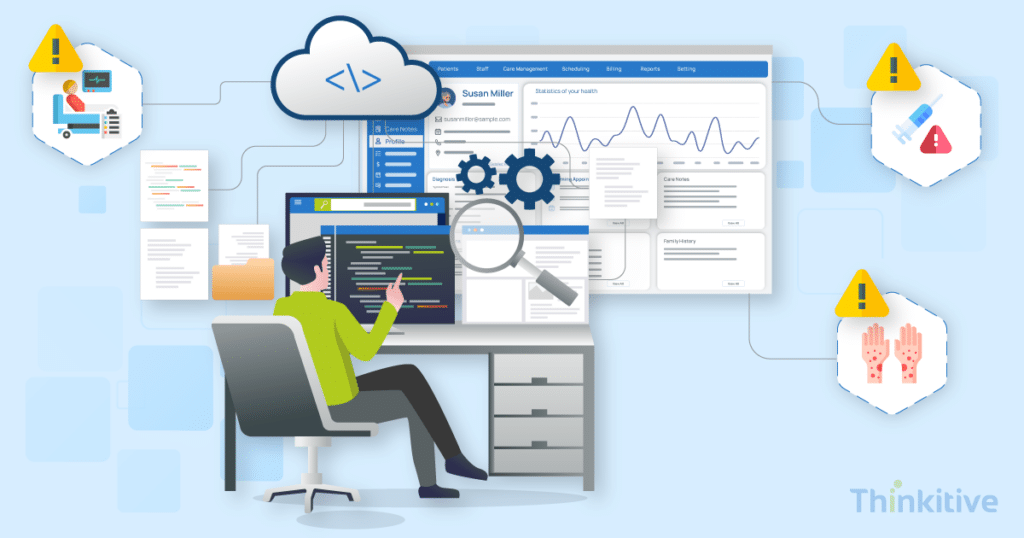
If you ask me, then healthcare providers are the ones making hundreds of time-sensitive decisions on a daily basis.
Right from prescribing medications and reviewing lab results to responding to deteriorating patient conditions, their decisions dictate the roadmap for patients’ care. Now, in these moments, receiving and sending timely information can be the differentiating factor for proactive intervention and a missed opportunity.
This is why healthcare providers are building a custom EHR with real-time alerting capabilities to rely on real-time clinical alerts and notification to access critical information exactly when it is needed.
Having said that, do you really think that building EHR clinical alerts is all about sending more notifications?
You see, a 2024 systematic review found that nearly 90% of drug-drug interaction alerts are overridden or ignored by clinicians. Even you must have felt it: most of the EHR notification systems send alerts that are repetitive, low priority, or lack clinical context, right?
These poorly designed alert systems, rather than improving patient safety, contribute to creating alert fatigue in the EHR system, which forces providers to ignore notifications. And the worst part is that even if the notifications are important, they get ignored.
Now, the challenge for today’s healthcare practices is to build an EHR clinical alert system that is intelligent, context-aware, and delivers the right information to the right person at the right time.
On that note, in this blog, let’s explore how to build clinical decision support alerts in EHR, the technologies that power these workflows, the essential features that you must have, and the best practices for reducing alert fatigue, while improving clinical decision-making.
Assess Your System for AI-Readiness –
Get Free Assessment
What Are Real-Time Clinical Alerts in an EHR?
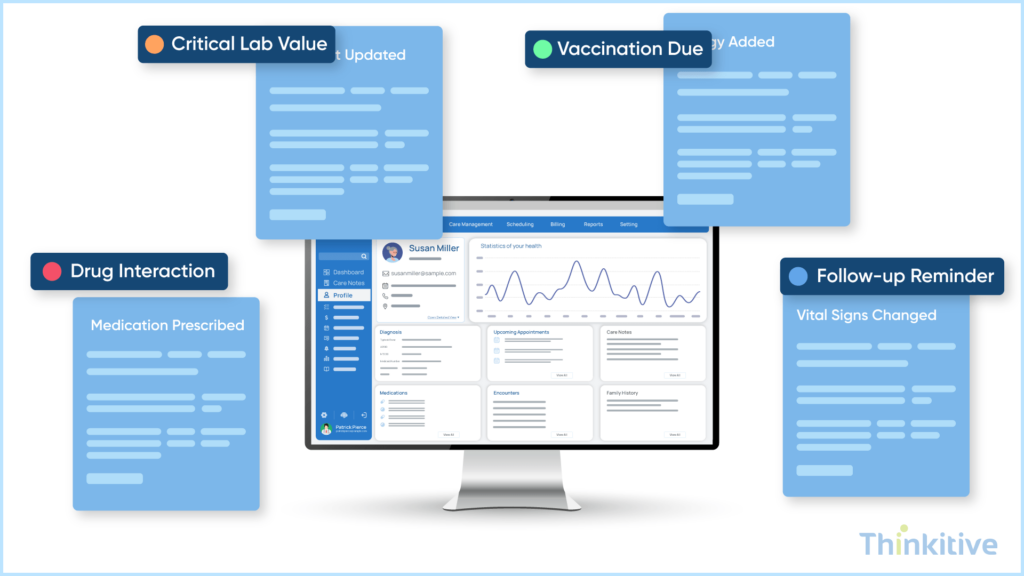
Real-time clinical alerts are automated, context-aware notifications that immediately notify healthcare providers of clinically significant events, enabling timely and informed decision-making during patient care.
Now, the value of clinical alerts depends entirely on when they are delivered to the end user. For instance, an alert that is received while the clinician is prescribing medication, reviewing lab results, or documenting an encounter can prevent errors and support better decision-making.
On the contrary, if the same alert is received minutes or even seconds after the decision is made, then the alert simply loses its clinical value. This is why event-driven workflows generate alerts instantly as patient data changes, rather than relying on delayed batch processing.
Real-time clinical alerts EHR can support safe, efficient, and proactive care. However, for this, your EHR system needs to be capable of generating several types of real-time clinical alerts. Here are some that must be included:
- Drug Interaction Alerts: Automatically notify providers when a newly prescribed medication may interact with an active medication. These notifications can prevent adverse drug events before the prescription is finalized.
- Allergy Contraindication Alerts: These alerts warn clinicians when an ordered medication matches a documented patient allergy. This helps them in selecting a safer alternative before any treatment begins.
- Critical Results Alerts: These alerts are generated immediately to notify the care team when a LOINC-coded laboratory result falls outside predefined critical thresholds, enabling rapid clinical intervention for time-sensitive conditions.
- Care Gap Alerts: Identify patients who are overdue for preventive services such as vaccinations, cancer screenings, annual wellness visits, or chronic disease follow-ups to improve care quality and compliance.
- Deterioration Risk Alerts: Continuously monitor vital signs and clinical data to detect worsening patient conditions, alerting providers when trends indicate a predefined clinical risk threshold has been reached.
- Duplicate Order Alerts: Notify clinicians when an identical medication, laboratory test, imaging study, or procedure has already been ordered during the current encounter, reducing unnecessary testing, duplicate treatments, and healthcare costs.
Best Practice: Effective clinical alerts should be actionable, clinically relevant, and delivered within the provider’s workflow. The objective isn’t to generate more notifications—it’s to surface the right information at the precise moment it can influence patient care.
How Do You Build a Clinical Alerts Engine?
Building a clinical alerts engine involves designing a rule-based workflow that continuously evaluates patient data and delivers clinically relevant notifications at the right point in the care process.
The rule-based workflow might confuse you, but it’s more than just a collection of rules. In fact, it is a coordinated system that combines structured clinical data, decision logic, and workflow-aware notification delivery.
To ensure that your real-time clinical alerts EHR is improving patient safety without overwhelming providers, here are the six stages that you should follow:
| Stage | What You Need to Do | Why It Matters |
| 1. Define Clinical Rules | Identify the clinical scenarios that require alerts (drug interactions, allergies, abnormal labs, care gaps, etc.) and establish clinical ownership for maintaining these rules. | Ensures alerts align with evidence-based guidelines and organizational policies. |
| 2. Capture Structured Clinical Data | Record medications, allergies, diagnoses, lab results, vital signs, and other patient data using structured formats and standardized terminologies such as SNOMED CT, LOINC, RxNorm, and ICD-10. | Accurate, standardized data enables reliable alert generation and minimizes false positives. |
| 3. Build the Rules Engine | Configure the rules engine to evaluate clinical data whenever key events occur, such as medication ordering, laboratory result updates, documentation, or patient admission. | Real-time evaluation ensures alerts appear while clinicians can still take action. |
| 4. Assign Severity Levels | Classify alerts into informational, warning, high-priority, and critical categories based on their clinical impact. | Prioritization reduces unnecessary interruptions and helps clinicians focus on the most urgent events. |
| 5. Build the Delivery & Routing Layer | Deliver alerts through the appropriate channels (EHR, mobile app, secure messaging, email, or SMS) and route them to the appropriate care team members. | Ensures the right person receives the right alert through the most effective communication channel. |
| 6. Monitor Override Rates | Track which alerts are accepted, dismissed, or overridden, and continuously refine alert logic based on clinician feedback and usage data. | Continuous optimization reduces alert fatigue and improves clinician trust in the system. |
Note: A successful clinical alerts engine is not defined by the number of notifications it generates but by its ability to deliver accurate, actionable, and context-aware alerts that support clinical decisions without disrupting provider workflows.
Designing Alerts Providers Will Actually Act on
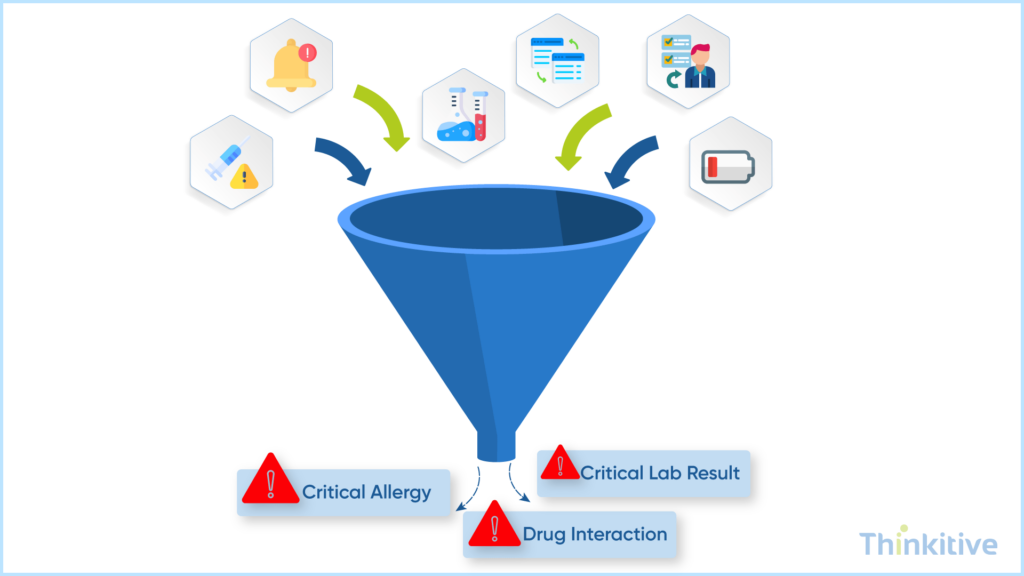
The success or effectiveness of your real-time clinical alerts EHR system is measured by clinical response and not by the number of alerts it generates.
Higher alert volumes don’t necessarily improve patient safety, as a large inpatient study highlighted that 73% of medication-related alerts, which include drug interactions, allergies, and duplicate medication, were overridden or ignored by clinicians.
This shows how alert fatigue in EHR can be brought by low-value or excessive notifications.
But worry not, here is how you can improve adoption and ensure higher clinical impact:
- Assign Severity Tiers: These tiers can filter the alerts on the basis of severity, and only high-risk events will be generated as interruptive alerts. On the other hand, routine reminders will remain non-disruptive.
- Reduce Repeated Notifications: You must have observed that most of the notifications are repetitive in nature, which can be reduced through suppression rules, snoozing options, or role-based filtering. This can help you prevent clinicians from seeing the same low-value alerts repeatedly.
- Continuously Tune Alert Threshold: Use override rates, clinician feedback, and real-world usage data rather than relying solely on assumptions made during implementation.
With these tried and tested methods of how to reduce alert fatigue in EHR systems, you can create an EHR notification system that providers are more likely to trust and act on alerts that are timely, clinically relevant, and delivered when they are actually needed.
Watch Real-Time Alerts & Notifications Workflows in Real-Time –
Book Free DemoDelivering Alerts Across the Clinical Workflow
Clinical alerts are most effective when they reach the right person at the right time and through the right communication channel. Simply generating alerts will always go in vain; these alerts that are being generated must be delivered at the right time when the clinician can act on them.
Here are real-time clinical notification workflows that are followed by most modern EHR systems:
| Workflow Component | Best Practice |
| Choose the Right Interruption Point | Trigger alerts during key workflow events such as order entry, chart review, or medication prescribing. Less urgent notifications can be delivered asynchronously without interrupting care. |
| Route Alerts by Role | Send alerts to the team member responsible for taking action—for example, physicians for prescribing decisions, nurses for vital sign abnormalities, and care coordinators for follow-up care gaps. |
| Define Escalation Paths | Automatically escalate critical alerts to another provider or supervisor if they remain unacknowledged within a predefined timeframe. |
| Support Multiple Notification Channels | Deliver alerts through in-EHR notifications, mobile push notifications, secure messaging, or other approved communication channels based on urgency and workflow. |
By delivering alerts intelligently instead of universally, healthcare organizations can improve response times, reduce unnecessary interruptions, and ensure clinically significant events receive timely attention.
Regulatory Requirements for Clinical Decision Support
Clinical alert systems must be designed to comply with healthcare regulations that promote patient safety, transparency, data privacy, and accountability, since they deal with information that is sensitive and private in nature.
Beyond delivering these alerts and notifications at the right time, you must ensure that the clinical decision support functions meet applicable regulatory and compliance requirements.
On that note, here are some of the regulatory requirements that you must adhere to:
| Requirement | What It Means for Your EHR |
| ONC Decision Support Interventions (DSI) | Clinical alerts should clearly identify the source of the recommendation and provide sufficient transparency so clinicians understand the basis of the alert and can exercise independent clinical judgment. |
| FDA Clinical Decision Support Guidance | Most rule-based clinical alerts are not regulated as medical devices if they allow clinicians to independently review the underlying information. However, AI-driven alerts that directly drive diagnosis or treatment recommendations may fall under FDA oversight depending on their intended use. |
| HIPAA Compliance | Alerts and notifications containing Protected Health Information (PHI) must be secured during transmission and storage. Role-based access controls, encryption, and secure messaging help ensure only authorized users receive sensitive patient information. |
| Comprehensive Audit Trails | Every alert should be logged, including when it was triggered, who received it, whether it was acknowledged, overridden, or ignored, and any subsequent clinical actions. Audit logs support compliance, investigations, and continuous improvement of alert performance. |
Meeting these regulatory requirements helps healthcare organizations build clinical alert systems that are secure, compliant, and trusted by both providers and regulators.
Learn More about Building an EHR with AI Scribe Integration –
Free GuideConclusion
Real-time clinical alerts and notifications are part of the healthcare digital ecosystem. In fact, they contribute significantly to improving patient safety, support clinical decision-making, and streamline care delivery.
However, their effectiveness clearly depends on more than simply generating notifications. They must be able to generate the right notification, at the right time, and deliver it to the right person. That is why building an EHR clinical alert system requires structured clinical data, intelligent rules, workflow-aware delivery, thoughtful alert prioritization, and compliance with healthcare regulations.
By designing alerts that are timely, relevant, and actionable, healthcare organizations can reduce alert fatigue, improve clinician adoption, and deliver safer, more efficient patient care through a truly intelligent EHR platform.
On that note, consult with the right person who can answer your question about how to build an EHR system with real-time clinical alert capabilities.
Frequently Asked Questions
Real-time clinical alerts in an EHR are automated notifications that immediately inform healthcare providers about clinically significant events, such as drug interactions, allergy conflicts, critical lab results, or deteriorating patient conditions. Unlike delayed notifications, real-time clinical alerts EHR workflows deliver information while clinicians are making care decisions, enabling faster interventions and improving patient safety.
To build EHR clinical alerts, healthcare organizations begin by defining evidence-based clinical rules, capturing structured patient data, and implementing a rules engine that evaluates information during key workflow events. They also configure severity levels, notification routing, and audit trails to ensure alerts are timely, relevant, and compliant. An effective EHR notification system continuously monitors patient data and triggers alerts only when clinical action is required.
A modern EHR should support a wide range of alerts, including drug interaction alerts, allergy contraindication alerts, critical laboratory result alerts, duplicate order alerts, care gap reminders, preventive screening notifications, and deterioration risk alerts. These clinical decision support alerts help providers identify potential risks early and improve the quality and safety of patient care.
Clinical Decision Support (CDS) is a set of technologies that analyze patient data and provide clinicians with evidence-based recommendations during care delivery. Clinical decision support alerts are one component of CDS, delivering real-time notifications about medication safety, abnormal results, preventive care, and other clinical events. When organizations build clinical decision support alerts in EHR platforms, they enable providers to make informed decisions without disrupting clinical workflows.
Alert fatigue in EHR systems occurs when clinicians receive too many low-value or repetitive notifications, causing them to ignore or override alerts—including important ones. Organizations can reduce alert fatigue in EHR systems by prioritizing alerts based on severity, suppressing duplicate notifications, implementing role-based routing, and continuously refining alert rules using clinician feedback and override data.
The severity of a clinical alert should be determined by the potential risk to patient safety and the urgency of clinical action required. Informational reminders can be displayed without interrupting workflows, while high-priority or critical alerts—such as severe drug allergies or life-threatening laboratory values—should require immediate acknowledgment. Well-designed real-time clinical notification workflows ensure only the most urgent alerts interrupt clinicians.
Critical alerts should be routed to the healthcare professional responsible for taking immediate action, such as the ordering physician, attending nurse, or on-call specialist. If an alert remains unacknowledged within a predefined timeframe, the EHR notification system should automatically escalate it to another qualified provider or supervisor. Effective real-time clinical notification workflows help ensure that time-sensitive events are never missed.
Clinical decision support software may become an FDA-regulated device when it performs functions that directly drive diagnosis or treatment decisions without allowing clinicians to independently review the basis of its recommendations. Rule-based clinical decision support alerts that provide transparent recommendations are generally not regulated as medical devices, but AI-powered decision support may be subject to FDA oversight depending on its intended use.
EHR clinical alerts must comply with healthcare regulations related to patient privacy, transparency, and clinical safety. This includes HIPAA requirements for protecting patient information, ONC requirements for transparent clinical decision support interventions, and comprehensive audit trails that record every alert generated, acknowledged, dismissed, or overridden. These compliance measures help ensure EHR clinical alerts initiatives remain secure, accountable, and trustworthy.


