Realistic Timeline to Build an EHR System

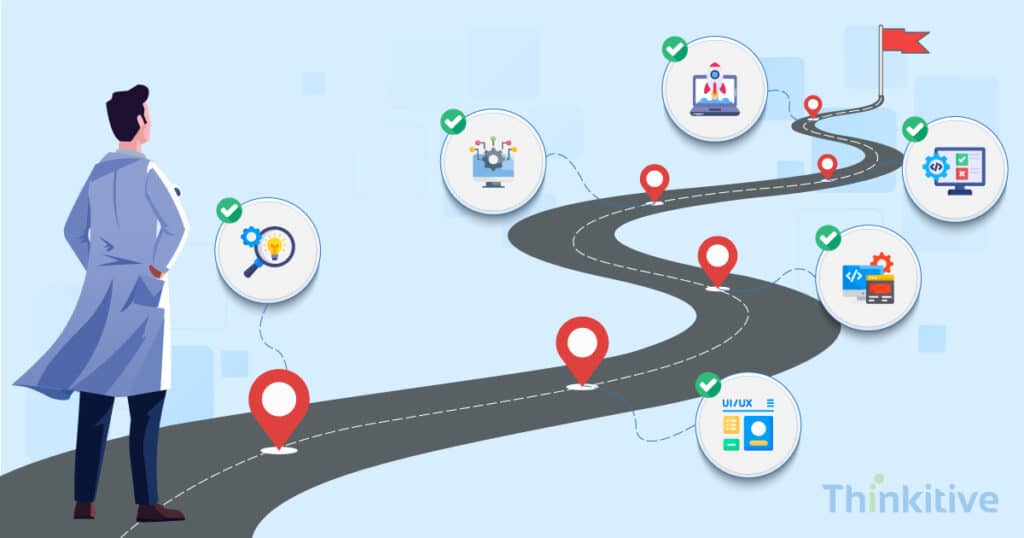
Many healthcare organizations underestimate how long it takes to build a custom EHR because they compare it with the rapid deployment of off-the-shelf systems. While commercial EHR platforms can be implemented relatively quickly, building a custom EHR requires careful planning, workflow design, interoperability, compliance, and testing.
As a result, the EHR project timeline often surprises healthcare providers when they decide to create a system tailored to their clinical and operational needs.
Having developed more than 50 EHR systems across ambulatory care, hospitals, and specialty care practices, we have curated a time breakdown for custom medical software engineering.
On that note, let’s try to understand the key factors that influence the EHR development lifecycle and help you build a realistic EHR project timeline for your EHR development lifecycle, to know the realistic timeline to build a custom EHR system.
So without further ado, let’s get started!
Outsource or In-house Team for Your EHR System –
Get Free Consultation
Understanding a Realistic EHR Project Timeline
When you want a realistic timeline to build an EHR system, you need to understand what kind of EHR system we are trying to build. You see, depending on this, the timeline can hugely vary.
For instance, if you’re developing a basic MVP EHR, the project typically takes 4–6 months, depending on feature complexity, integrations, and compliance requirements. On the other hand, building an enterprise-grade EHR platform generally takes 12–24 months, as it involves advanced clinical workflows, interoperability, scalability, and regulatory compliance.
This difference in the EHR project timeline is dependent on feature complexity, integrations required, and compliance requirements. Since MVP EHR would naturally need fewer features, integrations, and compliance adherence, the timeline shortens. On the contrary, for an enterprise EHR system, not only does the feature complexity increase, but also the integration landscape can be complicated as the system itself.
This is the reason why to find a realistic timeline for building an EHR system, you need to know the feature complexity, integrations, and compliance requirements clearly. On that note, here are some of the common factors that extend or delay the healthcare software delivery schedules:
- Changing requirements during development
- Complex clinical workflows
- EHR and third-party integrations
- HIPAA and compliance requirements
- Poor requirement gathering
- Stakeholder approval delays
- Data migration complexity
- Extensive QA and testing
- Scope creep
- Unrealistic delivery expectations
Here is a clear table that would help you understand why EHR project timelines are long, with a comparison between MVP EHR and enterprise EHR:
| Development Phase | MVP Timeline | Enterprise Timeline | Why It Takes Time |
| Discovery & Planning | 2–4 Weeks | 1–2 Months | Workflow mapping, requirement gathering, compliance planning |
| UI/UX & Architecture | 3–6 Weeks | 2–3 Months | Clinical workflow design, user roles, scalable system architecture |
| Core Development | 3–6 Months | 6–12 Months | EHR modules, patient records, billing, scheduling, APIs |
| Integrations & Interoperability | 1–2 Months | 3–6 Months | HL7/FHIR integration, labs, pharmacies, third-party systems |
| Testing & Compliance Validation | 1 Month | 2–4 Months | Security testing, QA, HIPAA validation, workflow testing |
| Deployment & Optimization | Ongoing | Ongoing | User training, monitoring, performance improvements |
Discovery, Planning & UI/UX Design Phase
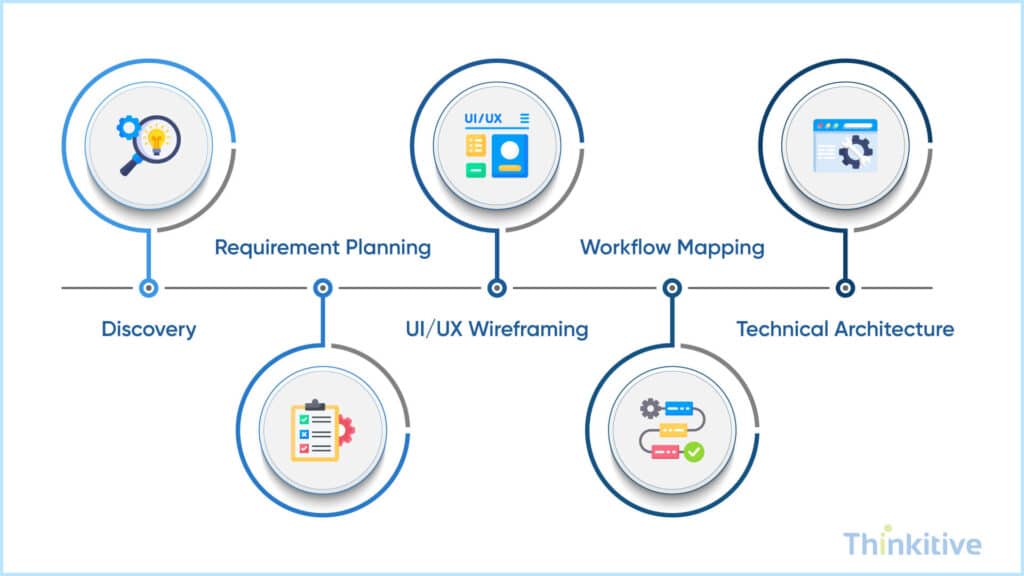
The discovery and planning phase establishes the most realistic project timeline because it defines workflows, requirements, integrations, and compliance needs. That is why it is considered the most important phase in the EHR development lifecycle, placing it higher than the coding or development phase.
Additionally, it is this phase that clearly gives you a realistic EHR project timeline. On that note, let’s try to find out why this phase is so important when it comes to the timeline.
- Defining Workflows, Goals & Compliance Requirements: The very first activity that you do in the discovery phase is defining the clinical and administrative workflows. This is not only crucial for managing the day-to-day operations of your practice, but also defines what features you need. Apart from that, you also have to align the development as per your business goals and compliance requirements.
- Gathering Input from Stakeholders: Since you will not be the primary user or the only user using this software, you need to gather crucial inputs from clinicians, administrators, and technical stakeholders. This is the only way to curate software that actually addresses the problems faced by them while using it and makes it more usable.
- Designing Clinician-Friendly Workflows & Healthcare Interfaces: Designing wireframes, workflows that are friendly to all your staff, and the interfaces of your software is where the look and feel of the software is determined. And bringing this to reality can again be time-consuming, which can be estimated at this stage.
- Planning Infrastructure, Interoperability & Cloud Architecture Early: During the discovery phase, only you will have a clear understanding of the infrastructure you will be needing, the interoperability requirements, and the need for cloud architecture. This will allow you to plan early and can prove to be crucial for shortening the timeline by a significant margin.
Understanding these aspects early can help you make quick decisions and not only give you a realistic timeline to build your EHR system but also open the door to different possibilities by which you can reduce the development time.
Core EHR Development & Engineering Phase
After the discovery and design phase, the most important phase in the EHR development lifecycle starts. This is where you actually code your software and bring it to life. So, here are a few things that you need to know about this phase and the role it plays in influencing the timeline, and why this phase is marked as a major healthcare software project milestone.
- Developing Administrative Modules: First things that are developed in this phase are the administrative modules that enable you to conduct day-to-day clinical and administrative tasks. Some of the core tasks included in this are patient records, scheduling modules, billing screens, and system and clinical documentation modules.
- Building Clinical Modules: Once the administrative modules are developed, the next step in development is the clinical modules. Some of the prominent modules that are developed here are ePrescription, telehealth platforms, and care coordination functionalities that bind the entire practice together. Moreover, with intricacies and feature complexity, this phase can take the most time to develop.
- Integrating HL7, FHIR, APIs & Interoperability Capabilities: After both clinical and administrative modules are developed, your EHR development lifecycle moves to the integration phase. Here, you integrate your system with the necessary systems using HL7 FHIR standards and APIs.
- Structuring Modular Healthcare Systems for Scalability & Expansion: After integration and making your system interoperable, you structure your modular healthcare system with respect to the scalability prospects and future expansion.
This is the longest phase of your EHR development lifecycle, and managing it is one of the most important healthcare software project milestones. This is where it becomes quite clear when the software will be completely developed and ready for deployment.
However, real-world EHR development often follows a phased approach. Many healthcare organizations launch an MVP within 4–6 months to begin using the platform sooner, then continue expanding it into a full enterprise-grade EHR by adding advanced features, integrations, and scalability over subsequent development phases.
Assess Your System to Decide EHR Building Timeline –
Get AssessmentTesting, Compliance Validation & Deployment Phase
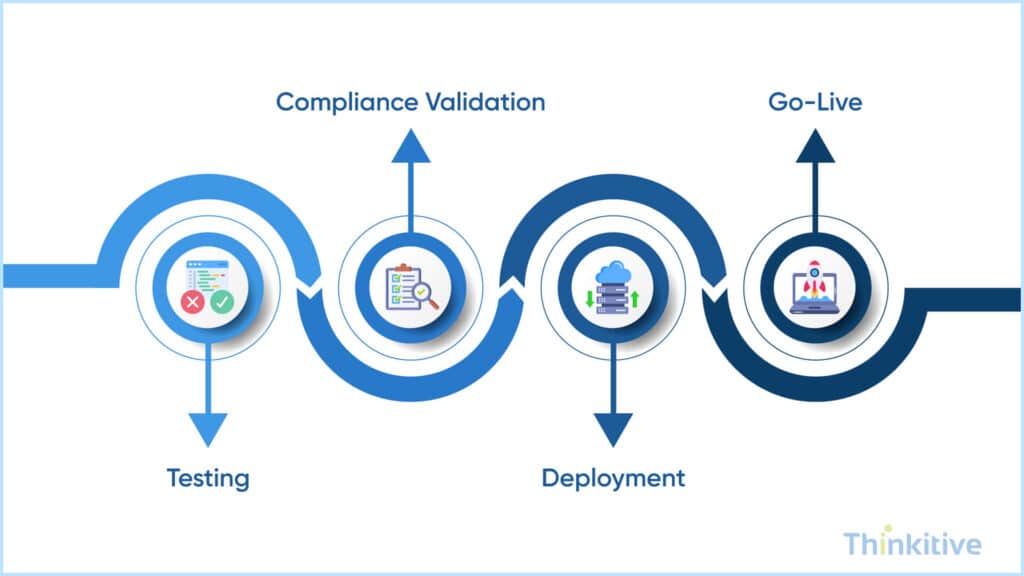
Once the core development phase is completed, the next phase that your system enters is the testing, compliance, and deployment phase, and this is by far the most critical stage of your EHR development lifecycle.
The reason why this phase is important is that it ensures that the custom platform you are developing is secure, reliable, compliant, and ready for real-world clinical use. Moreover, rigorous validation and testing are required here as even a minor issue can impact patient care, data security, and operational workflows of your practice.
Some of the key things done in this phase are:
- Functional testing to validate system behavior
- Usability testing for clinicians and staff
- Performance testing for scalability and reliability
- Interoperability testing for the connected healthcare ecosystem
Along with that, some of the compliance validations that you need to align your platform with are HIPAA, HITECH, ONC compliance, and local regulations. A few activities included in this are role-based access control, audit log verification, encryption testing, data protection reviews, cybersecurity, and penetration testing.
Other than all these aspects, you must also participate in User Acceptance Testing (UAT), where physicians, administrators, and the operational team validate the workflows in your EHR system with real clinical settings.
After this is completed, you enter the deployment phase, which typically includes:
- Cloud infrastructure setup
- Production environment validation
- Monitoring configuration
- Backup and disaster recovery setup
- Go-live readiness checks
- Performance optimization
Now, the impact it can have on your EHR project timeline can be huge. You see, for an enterprise EHR project, this phase can take several months to complete, given the complexity of compliance, security, and operational validation requirements.
Time Breakdown for Custom Medical Software Engineering
If you have made it this far, then I can assume that you know about the EHR development lifecycle well. On the basis of that, let’s try a time breakdown for custom medical software engineering.
First things first, engineering time is distributed across the EHR development lifecycle. This means that the moment you give a green light to the discovery, the time is distributed till the deployment.
Given the time-sensitive nature of each phase, it can be fair to say that discovery and design take the least amount of time, varying from 10-15% of the total time allocated to these phases, respectively. And the most time-consuming phase is obviously the development phase.
During this entire EHR development lifecycle, you have to balance architecture design, interoperability implementation, and compliance validation. These things can be time-consuming.
Also, during development, you might have to make a few changes in the design or development, which also need to be made. However, a core aspect that you need to focus on is post-launch optimization, staff training, and maintenance activities. And these aspects cannot be ignored as they determine the success and usability aspects of your software.
Here is a timeline distribution table for you to briefly know about the development timeline:
| Activity | Estimated Project Time Allocation | Activities in Each Phase |
| Discovery & Planning | 10–15% | Requirement gathering, workflow analysis, compliance planning |
| UI/UX Design | 10–15% | Wireframing, clinician workflow design, interface prototyping |
| Core Development | 40–50% | Patient records, scheduling, billing, clinical modules, APIs |
| Integrations & APIs | 10–15% | HL7/FHIR integrations, labs, pharmacies, third-party systems |
| Testing & Compliance | 10–15% | QA testing, HIPAA validation, security testing, UAT |
Factors that Can Delay EHR Development Timelines
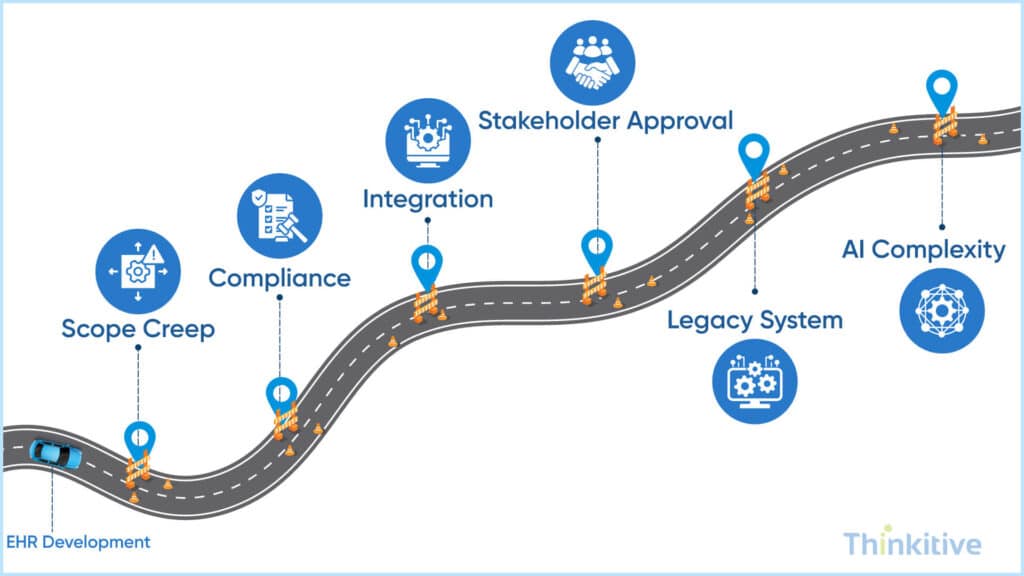
Even if you try to define a foolproof development plan for your EHR system, the timeline is bound to be influenced by the factors that only make your system better. Here are some of the factors that are most likely to impact your EHR project timeline:
- Expanding Project Scope: It is a very common scenario where, during development, you try to expand the scope of your project. This is a recurring pattern across development projects, and this is one of the leading factors that influences the EHR development timeline.
- Delays Due to Interoperability & Legacy System Challenges: Making your EHR software interoperable is a challenge, and it can be even more difficult if you have a legacy system on the other end. This is another factor that influences the EHR project timeline by a margin.
- Compliance Review & Certification Bottlenecks: You are bound to get certified by ONC. Now, this process can be a time-consuming process, and it mainly depends on the other systems.
- Resource Limitation & Stakeholder Approval Delays: Development being stopped or delayed due to limited resources available for your project is also one of the most common factors in delays. Other than that, stakeholders’ approval for designs, workflows, etc., is also a contributing factor to delays in EHR development projects.
Every other day, AI is making headlines in some sector or another. Having said that, if you are looking to include AI-assisted workflows and automation features in your EHR software, then it can not only increase the development complexity but also increase the timeline by a significant margin. Also, it is best practice to plan for it from the start, as it can require making major changes to your software workflow, infrastructure, etc.
How to Reduce Delays & Improve Delivery Speed
At the start, I told you about finding a way to help you reduce the delivery time or speed up the development process. On that note, let’s see how you can reduce delays and improve the speed of your EHR project.
First things first, start with a clear project requirement and realistic milestones. This is the cornerstone of any project that you will undertake. With a clear project requirement, achieving them becomes easier, and the risk of unexpected factors coming in between can be reduced.
Other than that, use agile healthcare development methodology, as it develops the software in phases, and in case you forget anything in the earlier stages of development, it can be easily covered or included in the later development stages.
Apart from that, try to prioritize MVP-based implementation strategies. This will help you in reducing the timeline by a huge margin so that your day-to-day activities won’t stop.
The key to quick development is seamless collaboration and coordination between clinical staff, operational staff, and engineering stakeholders. This makes things much clearer and sets the pace of development.
Watch How Custom Built EHR Fits Your Practice Perfectly –
Book a DemoConclusion
From discovery to deployment, every stage is a major step in development, and all of them have intricacies that can impact your EHR development lifecycle in ways that you cannot even imagine.
However, realistic planning and knowing the intricacies of each stage can help you in the successful implementation of your EHR software. However, the key to quick development lies in balancing scalability, interoperability, compliance, and delivery timelines. And for all these things, you need to know your system well and the intricacies that are involved in the EHR project timeline.
On that note, let this blog be your build your own EHR software guide to EHR development lifecycle. And I hope this guide helps you plan a more realistic EHR development timeline and avoid unnecessary delays throughout the project lifecycle.
But one thing is clear, that you need your partner to be reliable and an expert to deliver the software quickly. So, let’s start with system assessment from our custom EHR experts and know how to create EHR software in a defined timeline.
Frequently Asked Questions
A typical EHR development lifecycle includes discovery and planning, UI/UX design, architecture setup, core development, integrations, testing, compliance validation, deployment, and post-launch optimization. The timeline and complexity depend on the size of the healthcare organization, required features, interoperability needs, and compliance requirements.
A small MVP-based EHR platform typically takes 4–6 months, while enterprise-grade systems generally require 12–24 months, depending on integrations, compliance, and customization requirements.
Several factors influence an EHR project timeline, including:
- Clinical workflow complexity
- HL7/FHIR integrations
- HIPAA compliance requirements
- Data migration
- Specialty-specific customization
- Stakeholder approvals
- Testing and interoperability validation
Projects with extensive third-party integrations and custom workflows typically require longer development cycles.
A basic EHR MVP typically takes 4–6 months, while enterprise healthcare ecosystems generally require 12–24 months because of additional compliance, interoperability, scalability, and testing requirements.
Key healthcare software project milestones during EHR development usually include:
- Requirement gathering
- Workflow analysis
- UI/UX approval
- Core module completion
- Interoperability integration
- QA and compliance testing
- User acceptance testing (UAT)
- Production deployment
Each milestone helps reduce project risks and ensures the system aligns with clinical and operational requirements.
Healthcare interoperability integrations often extend development timelines because different systems use varying data formats, APIs, and standards. Integrations involving HL7, FHIR, labs, pharmacies, billing platforms, or third-party EHR vendors require additional testing, validation, security checks, and workflow mapping to ensure reliable data exchange.
Testing and compliance validation can take anywhere from several weeks to several months during EHR implementation. This phase includes functional testing, performance testing, HIPAA validation, penetration testing, interoperability testing, and user acceptance testing with healthcare teams to ensure the platform is secure and clinically reliable.
The time breakdown for custom medical software engineering typically allocates:
- 10–15% for discovery and planning
- 10–15% for UI/UX design
- 40–50% for core development
- 10–15% for integrations
- 10–15% for testing and compliance validation
The exact distribution depends on the project size, feature complexity, and interoperability requirements.
MVP EHR systems focus on essential functionality and faster deployment, while enterprise EHR platforms require broader feature sets, scalability, interoperability, analytics, and compliance capabilities. As a result, MVP systems typically take 4–6 months, whereas enterprise implementations generally require 12–24 months.
Organizations following a build your own EHR software guide often start with an MVP approach before expanding into enterprise-grade functionality. This phased strategy supports a more realistic timeline to build an ehr system while reducing development risk and accelerating initial deployment.


