Long-Term Maintenance Costs of EHR Integration Solutions

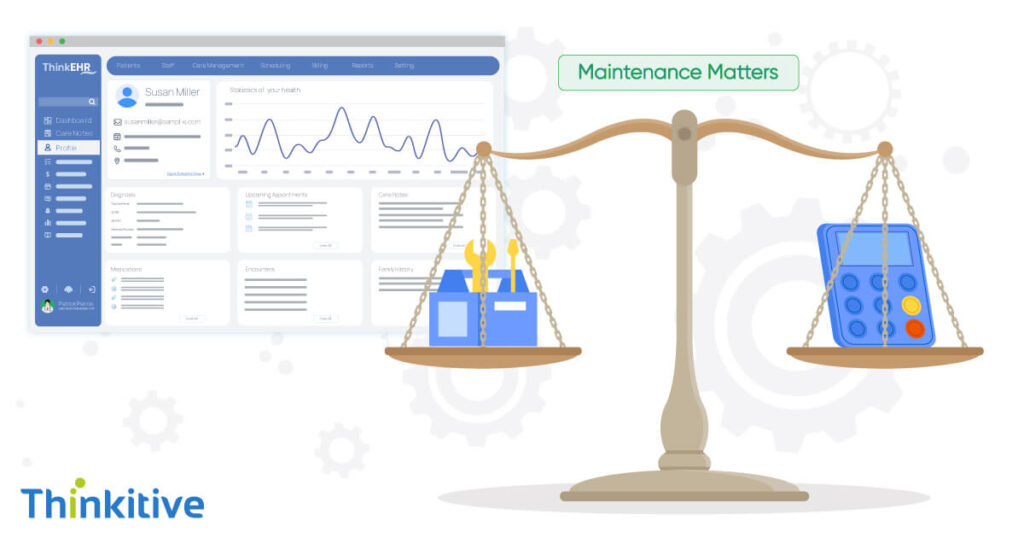
Imagine what would happen if your EHR software system stopped working smoothly.
Appointments will be delayed, care details won’t be accessible, and care teams can’t coordinate. This is not just a worst-case scenario; it becomes a reality if long-term EHR integration maintenance is ignored.
Many organizations assume their work ends with a successful implementation. However, the real work begins after integration goes live, requiring ongoing maintenance to ensure seamless connectivity.
Moreover, as interoperability standards evolve, such as HL7 and FHIR upgrades, your systems need to adopt these upgrades to keep up. And as your practice grows, patient volume will also increase. Rising cybersecurity threats also push maintenance costs up, with security patches, monitoring, and auditing becoming essential.
So, successful maintenance is not only necessary for smooth functioning but also for continuity of care, and especially for avoiding penalties and legal actions. That’s why, if the systems are not maintained properly, the solution that brings efficiency can quickly become a liability that slowly bleeds money.
This is why this blog will act as a guide to help you understand the costs of long-term maintenance and the best ways to reduce these costs.
The Hidden Iceberg: Understanding Total Cost of Ownership (TCO) for EHR Integration
When it comes to the costs of complete EHR integration, you can imagine an iceberg, where only the tip is visible. Implementation costs are the visible part of the iceberg, whereas maintenance costs become the hidden part that is not noticed quickly enough.
But why is maintenance so important? The answer is the need to keep integrated systems seamless and up to date with the tech and regulatory changes. These costs can stack up if not addressed on time; moreover, upgrading software is not the only part.
These maintenance costs can stack up with licence renewals, hardware updates every three to five years for on-prem integration software, and security and compliance upgrades. With staff training added to this list, the costs can go into thousands of dollars compared to the initial implementation costs.
On average, healthcare organizations spend 15-25% of their initial implementation cost on annual maintenance. However, this number can change with the integrated EHR, as Epic is more expensive than Cerner. However, these high costs can be managed with smart financial planning.
The smartest organizations treat maintenance as an investment in stability and perform it on time and regularly. Proactive maintenance and allocating budgets across departments bring more benefits than reactive maintenance. In short, plan for the icenberg, not just the tip.
Get the 5-Year TCO Calculator for Healthcare Integration
Download nowBreaking Down Annual Maintenance Expenses: Where Your Budget Really Goes
The annual maintenance costs of a healthcare organization are not just tech-related; they are spread across many fronts. They include many things from technical maintenance and compliance to integration and desk support. So, understanding where you are spending your dollars is the first step to smarter financial planning.
| Expense Category | Examples | Typical Budget Share / Cost |
| Technical Maintenance | System monitoring, bug fixes, FHIR/HL7 API version updates, database optimization | ~20–25% of the budget |
| Compliance & Security | HIPAA audits, compliance updates, security patches, encryption upgrades, and regulatory documentation | $50K–$200K annually |
| Integration-Specific | Vendor API changes, new data field mappings, transformation rules, performance tuning, post-update validation | Variable, spikes during vendor updates |
| Support & Services | Help desk & user support (≈30% of budget), vendor SLAs, emergency response, staff training for new features | Largest recurring share |
To break it down, the technical side alone includes performance monitoring, bug fixes, and database upkeep, and takes nearly a quarter of the budget. Compliance and security add another hefty but needed expense to the list, with HIPAA audits alone running anywhere from $50,000 to $200,000 annually.
Then come the integration-specific expenses, which are often underestimated. Every time an API is upgraded or a data standard is modified, custom healthcare interface and mapping rules must be adjusted, tested, and validated.
Finally, support and service take up the largest recurring share, often around 30% of annual maintenance costs. Help desk support, emergency coverage, and training for new workflows ensure that providers and staff actually get value from the system.
Long story short, annual EHR system integration is more than just salaries; it can vary per system.
The True Cost of Neglecting Maintenance: Risk Analysis & Impact
When EHR integration maintenance is not given the attention it deserves, the consequences can be devastating to say the least. This neglect can quickly turn into high-stakes risks that affect finances, compliance, and patient safety.
- Operational & Financial Risks
System downtime is one of the most immediate threats. For hospitals, the average cost of downtime is estimated at $5,600 per minute, with delayed appointments, stalled care coordination, and revenue cycle disruptions. Beyond lost income, neglected systems create data integrity issues, which can trigger clinical errors and undermine care quality.
- Compliance & Legal Risks
By skipping maintenance, more than just operations, finances are affected, as it also invites regulatory trouble. If the systems are not configured per HIPAA regulations, then penalties range from $100 to $50,000 per violation, and even small oversights in encryption, access control, or audit logs can lead to legal actions. The worst-case scenario is a malpractice lawsuit, which adds audit failures to the picture, and the long-term reputational damage, and the financial hit multiplies.
- The Technical Debt
Every year, without a maintenance system, performance can go down by 30% and when it breaks down, system failure can cost way more than the maintenance costs. This also makes future upgrades costly and complex. Outdated APIs hinder new FHIR or HL7 requirements, and older code opens cracks in the system’s security, inviting possibilities of breach.
So, the message here is that maintenance costs may seem high; however, recovery costs are much higher.
Assess Your Risks with Our Risk Assessment Checklist for EHR Integration Maintenance
Download nowOptimization Strategies: Reducing Long-Term Maintenance Costs by 40%
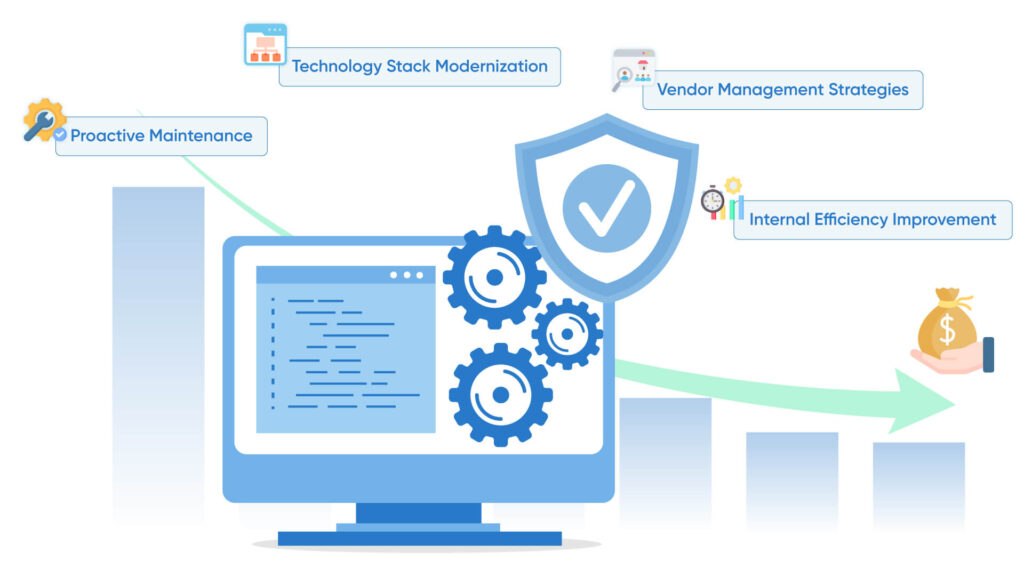
While maintaining the integrated systems can be costly, if planned smartly, reducing the costs is not out of question. If organizations apply some strategies that are tried and tested, then the costs can be reduced up to 40%. However, the cost reduction depends on the system and how well the strategies are implemented.
- Proactive Maintenance Approaches
The first thing that helps is preventive care, or in this case, maintenance. Predicting the need for maintenance and what needs to be done can reduce sudden downtime or emergency fixes that cost more than just regular maintenance. So, doing regular performance checks and auditing the issues keeps them from piling up.
- Technology Stack Modernization
Having infrastructure that can handle integration and the healthcare data that comes with it can save money. For instance, using cloud-based interoperability solutions minimizes the costs of on-prem solutions. The need for constant hardware updates or a big system overhaul is eliminated. Also, microservice architecture makes updates easier and less disruptive.
- Vendor Management Strategies
Effectively managing the vendor can lower maintenance costs significantly. Better negotiation during the contracts can secure on-time and complete maintenance, reduce integration points, and align vendor roadmaps, which helps avoid hidden costs that can break your budget. Moreover, strategic partnerships with experienced EHR integration service providers help in reducing risks and bring long-term stability.
- Internal Efficiency Improvement
Another best practice to reduce costs is to develop reusable components that can be used multiple times in various systems. In addition to this, implementing self-service facilities allows the staff to solve small issues themselves. Finally, if trained well with knowledge sharing and cross-departmental, dependency on external individuals is reduced, making maintenance more cost-effective.
Build vs. Buy vs. Hybrid: Maintenance Cost Implications
Deciding what approach to take is an important yet tough decision to make, because the maintenance costs change depending on the integration approach. So, you need to know how these costs differ before deciding between an in-house, outreach, or hybrid approach.
Here are the pros and cons of each approach to make the decision-making process easier:
| Model | Key Costs | Strengths | Weaknesses |
| In-House | 2–5 full-time staff (FTEs), ongoing training/certifications, tool licensing, 24/7 coverage | Full control, knowledge retention, tailored workflows | High fixed costs, training overhead, overtime expenses |
| Outsourced | $10K–$50K monthly for managed services, SLA contracts | Specialized expertise, predictable costs, scalability without hiring | Less direct control, risk of vendor lock-in |
| Hybrid | Combination of staff salaries + vendor fees | Balance of control and flexibility, tiered support, and knowledge transfer | Coordination overhead, reliance on vendor cooperation |
To give you a quick walk-through, if you are a large organization with a mature IT team that has experience and can hire more HL7 developers, then choosing the in-house approach is best. On the other hand, if you are a small or mid-sized organization, then choosing outreach is the right choice.
Finally, if you want to keep core features and integration under your full control, then you can take a hybrid approach. This gives you control, as you can put your team alongside the EHR integration service that has experience in building the EHR system integration.
In short, the right choice of integration approach depends on your organisation and the capabilities of your IT team.
Conclusion
System maintenance is a crucial part of keeping healthcare integration solutions at their peak performance. It is an investment and not an expense, because if done on time, systems remain stable and maintain their operational excellence.
Moreover, if you do it properly with a plan, then reducing the cost is not just a possibility, but can become a reality. Long-term maintenance also provides a great competitive advantage over competitors that do not keep up with the change.
Thinkitive can help you access the cost of your maintenance and reduce it. Click here to schedule an assessment call right away.
Frequently Asked Questions
A safe benchmark is 15–25% of the initial integration cost annually. This covers routine updates, security patches, compliance changes, and vendor support. Complex environments with multiple EHRs or custom workflows may push costs toward the higher end of that range.
Most EHR vendors push API updates 2–4 times per year, though critical patches may happen more often. While many updates are backward-compatible, larger version changes can require rework. Having proactive monitoring and vendor communication helps avoid costly surprises during these cycles.
Unexpected costs usually come from compliance changes (HIPAA, ONC, CMS rules), API version breaks, downtime troubleshooting, and hidden licensing fees. Another big one is staffing, needing specialized developers on short notice when integrations suddenly break or performance lags.
Yes, consolidating to fewer EHR platforms reduces integration complexity, minimizes duplicate connectors, and simplifies vendor management. Standardization also helps you negotiate stronger support contracts. The fewer moving parts you have, the lower your long-term maintenance and monitoring costs.
Cloud-based solutions usually lower upfront costs and reduce the need for in-house IT support. Vendors handle infrastructure, updates, and scaling. On-premise systems often demand higher ongoing staff, hardware, and compliance overhead. Cloud models shift costs to predictable subscriptions, while on-prem is more resource-heavy.
On average, EHR integrations run smoothly for five to seven years before requiring a major upgrade or redesign. This timeline often coincides with regulatory changes, vendor upgrades, or when legacy workflows start straining under newer interoperability standards like FHIR.
Track avoided downtime, faster recovery from updates, fewer compliance penalties, and reduced emergency IT spend. If preventive maintenance saves 20–30% compared to “break-fix” approaches, that’s clear ROI. Also, measure provider productivity; fewer disruptions mean more patient-facing time and better care outcomes.
Automatable tasks include log monitoring, security patch deployment, API version checks, error alerts, backup validation, and routine data integrity audits. AI-driven monitoring tools can also predict integration failures before they happen, cutting manual intervention and reducing expensive downtime.
HL7 integrations typically demand more manual mapping, custom scripting, and ongoing fixes, leading to higher maintenance costs. FHIR, being modern and API-driven, reduces complexity and is easier to update as standards evolve. In the long term, FHIR integrations are usually cheaper and more scalable to maintain.
Red flags include frequent unplanned downtime, paying for 24/7 emergency developer support, spending over 25% of integration costs annually, or constantly reworking connections after vendor updates. If maintenance feels reactive instead of proactive, you’re likely overspending compared to industry norms.
AI-powered monitoring can reduce maintenance costs by 20–40%. These tools spot anomalies early, automate routine checks, and even self-heal some integration errors. The real savings come from preventing downtime and minimizing emergency developer hours, which are the costliest parts of integration upkeep.
Absolutely. Always request clear breakdowns of maintenance costs in RFPs, including support tiers, update policies, and hidden fees. This ensures apples-to-apples comparisons between vendors and prevents budget shocks down the road. Smart buyers treat maintenance as a core part of the total cost of ownership.


