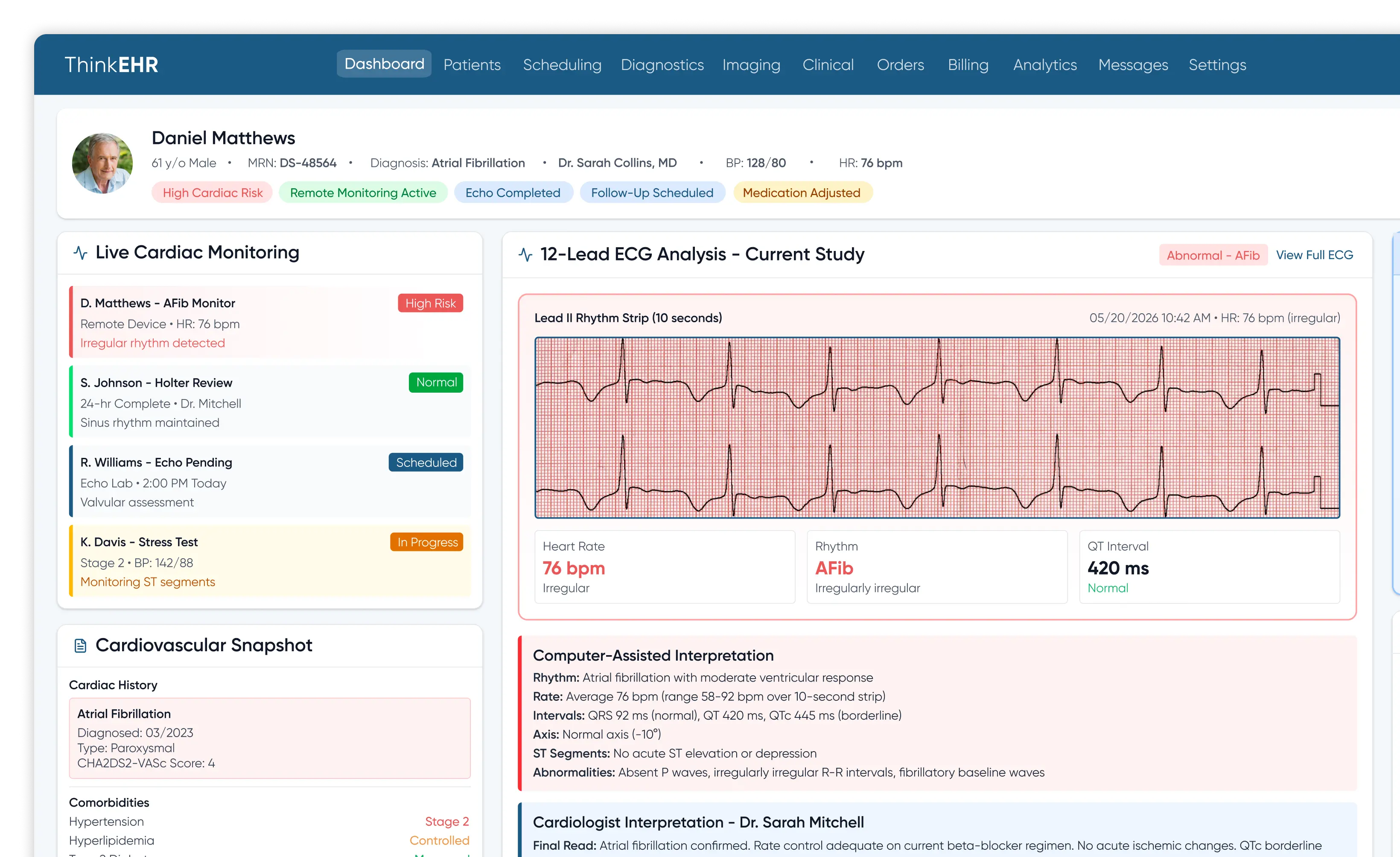
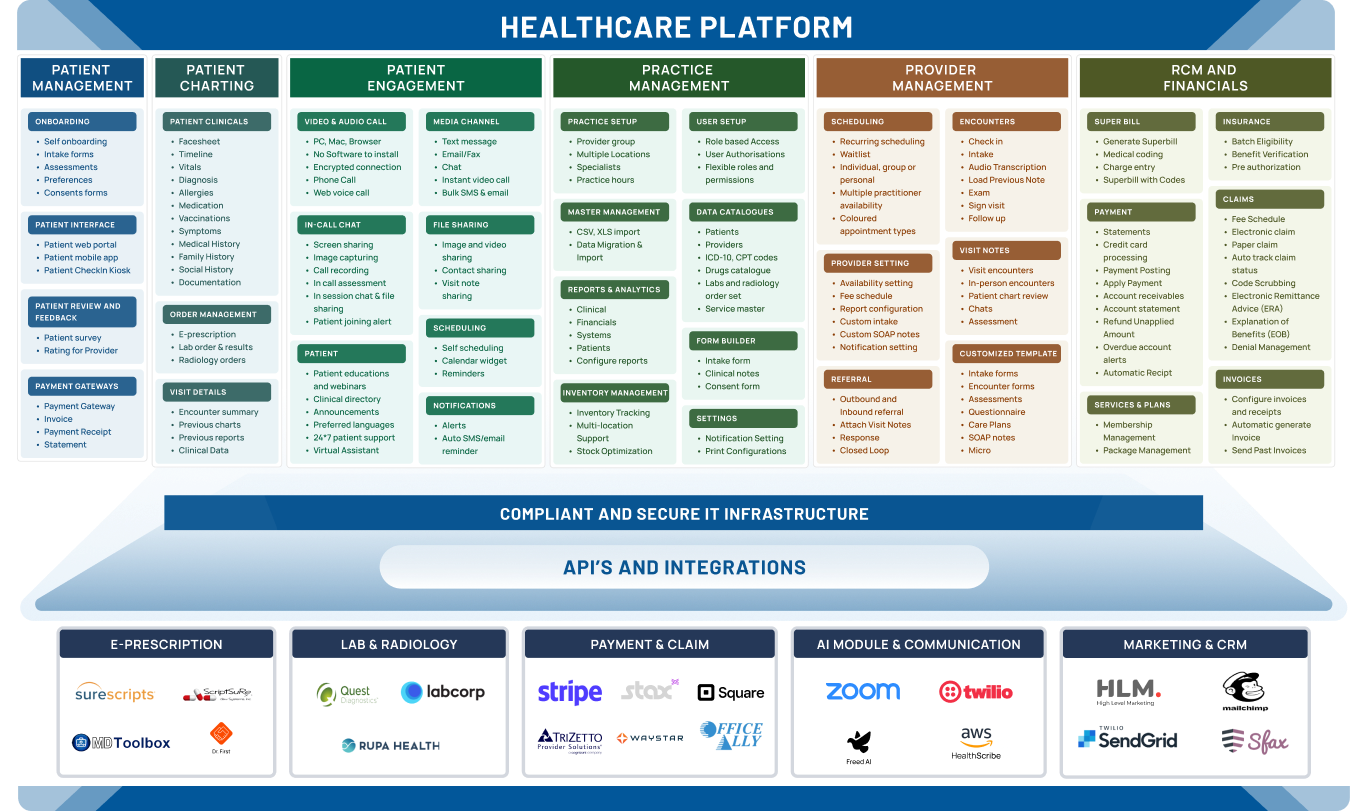
Develop a Cardiology EHR system that prioritizes data security, adheres to healthcare regulations, and meets industry standards for safe and compliant clinical operations.
HIPAA Compliance
Protect patient health information by adhering to strict privacy and security safeguards.
- Civil penalties for unauthorized PHI disclosure
- Tiered violation penalties based on negligence levels
- Maximum annual penalties reaching $1.5 million
- Criminal penalties for intentional PHI misuse
- Reputational damage and legal liabilities for providers
- Secure storage and transmission of patient health information
- Role-based access control for sensitive clinical data
- Encryption standards protecting PHI across systems
- Audit trails for tracking user access activity
- Administrative policies for healthcare data security
- Conduct HIPAA security risk assessment regularly
- Implement technical safeguards for PHI protection
- Establish access control and authentication protocols
- Train staff on healthcare data privacy practices
- Perform continuous monitoring and compliance audits
Our HIPAA Compliance Partners
ONC Certification
Ensures that your healthcare software meets federal standards for safety, usability, and interoperability.
- Certified EHR meets ONC health IT standards
- Supports clinical data exchange and interoperability requirements
- Includes patient access and data transparency capabilities
- Enables standardized clinical quality reporting functionalities
- Meets security, privacy, and usability certification benchmarks
- Compliance with ONC Health IT Certification Program
- Support interoperability using standardized healthcare data formats
- Provide secure patient data access and sharing
- Implement clinical quality measure reporting capabilities
- Maintain privacy, security, and audit control mechanisms
- Evaluate EHR functionality against ONC certification criteria
- Implement interoperability and patient data access features
- Perform testing through ONC authorized certification bodies
- Validate system security, usability, and data standards
- Submit documentation and obtain official certification approval
FHIR/HL7
The modern backbone of real-time, interoperable healthcare data exchange.
- Standardized healthcare data exchange between clinical systems
- Enables interoperability across EHRs, labs, and hospitals
- Supports structured clinical data sharing using HL7 formats
- FHIR APIs enable modern healthcare application integrations
- Facilitates real-time patient data exchange across systems
- Implement HL7 messaging for healthcare data exchange
- Support FHIR APIs for interoperable healthcare applications
- Maintain standardized patient, clinical, and encounter records
- Enable secure data sharing between healthcare systems
- Ensure consistent data formats for clinical interoperability
- Design interoperability architecture using HL7 and FHIR
- Develop APIs for secure healthcare data exchange
- Map clinical data to standardized interoperability formats
- Test integrations with external healthcare systems
- Monitor interoperability performance and data exchange reliability
Our FHIR-HL7 Compliance Partners
21st Century Cures Act
Empowers patients with data access and drives interoperability across systems.
- Prohibits blocking patient access to electronic health information
- Requires transparent and timely health data sharing
- Ensures patients can easily access their medical records
- Prevents unnecessary restrictions on healthcare data exchange
- Promotes interoperability across healthcare information systems
- Provide patients access to their electronic health information
- Enable secure data sharing through standardized APIs
- Avoid practices that intentionally restrict health data access
- Support interoperability between healthcare providers and systems
- Maintain compliance with federal information blocking regulations
- Implement patient data access and sharing capabilities
- Develop APIs supporting secure electronic health information exchange
- Review workflows to eliminate potential information blocking
- Monitor compliance with Cures Act interoperability requirements
- Maintain documentation supporting regulatory compliance efforts
Our 21st Century Cures Act Compliance Partners
Medical Coding Standards
Standardizes clinical language to ensure accurate billing, reporting, and care.
- Use standardized ICD codes for diagnosis documentation
- Apply CPT codes for medical procedure reporting
- Support HCPCS codes for healthcare services billing
- Ensure accurate coding for insurance claim processing
- Maintain standardized clinical documentation for reimbursement
- Implement ICD, CPT, and HCPCS coding support
- Ensure accurate clinical documentation for coding compliance
- Maintain standardized formats for medical coding records
- Enable coding validation during clinical documentation workflows
- Support coding updates aligned with regulatory changes
- Integrate coding libraries within clinical documentation systems
- Map clinical documentation to appropriate coding standards
- Validate coding accuracy during documentation and billing
- Update coding databases based on regulatory revisions
- Monitor coding compliance through audits and reporting
Our Medical Coding Standards Adherence Partners
SOC 2 Type II
Validates your system’s operational security, availability, and data integrity controls.
- Ensures security, availability, and data processing integrity
- Protects sensitive healthcare data through strict controls
- Maintains system availability and operational reliability
- Safeguards confidential patient and organizational information
- Enforces privacy controls for sensitive health data
- Implement strong access control and authentication mechanisms
- Maintain continuous monitoring of system security controls
- Protect sensitive healthcare data through encryption practices
- Establish documented security policies and operational procedures
- Ensure secure infrastructure for healthcare software platforms
- Conduct internal security and compliance readiness assessment
- Implement controls aligned with SOC trust service criteria
- Perform independent third-party SOC 2 Type II audit
- Monitor system controls continuously throughout audit period
- Maintain compliance documentation and regular security reviews
Our SOC 2 Type II Compliance Partners
ISO 27001
Demonstrates a globally recognized commitment to managing healthcare data risks.
- Establish structured framework for information security management
- Identify and manage organizational information security risks
- Implement security controls protecting sensitive healthcare data
- Maintain policies governing data protection and access control
- Continuously improve organizational security management practices
- Implement ISO-compliant information security management framework
- Conduct risk assessments for organizational information assets
- Establish security policies and access control mechanisms
- Protect healthcare data using encryption and security controls
- Maintain documentation supporting information security governance
- Perform organizational information security risk assessment
- Define and implement ISMS security policies and controls
- Train staff on information security management practices
- Conduct internal audits to validate ISO compliance
- Undergo external certification audit for ISO approval
Our ISO 27001 Certification Partners
FDA 510(k) Clearance
Proves your software is safe and effective for clinical use under FDA regulations.
- Demonstrates substantial equivalence to existing approved medical devices
- Required for software classified as medical device
- Ensures safety and effectiveness before market distribution
- Applies to certain clinical decision support systems
- Required before commercial launch of regulated software
- Identify predicate device with similar intended use
- Demonstrate substantial equivalence through technical documentation
- Provide safety and performance validation evidence
- Submit detailed device description and software documentation
- Maintain regulatory documentation for FDA review
- Determine if software qualifies as medical device
- Identify appropriate predicate device for comparison
- Conduct safety testing and performance validation
- Prepare and submit FDA 510(k) premarket notification
- Respond to FDA review and obtain clearance
Our FDA 510 (k) Compliance Partners
 +1 (405) 638-3126
  hello@thinkitive.com