HIPAA-Compliant EHR Development: Complete Regulatory Guide

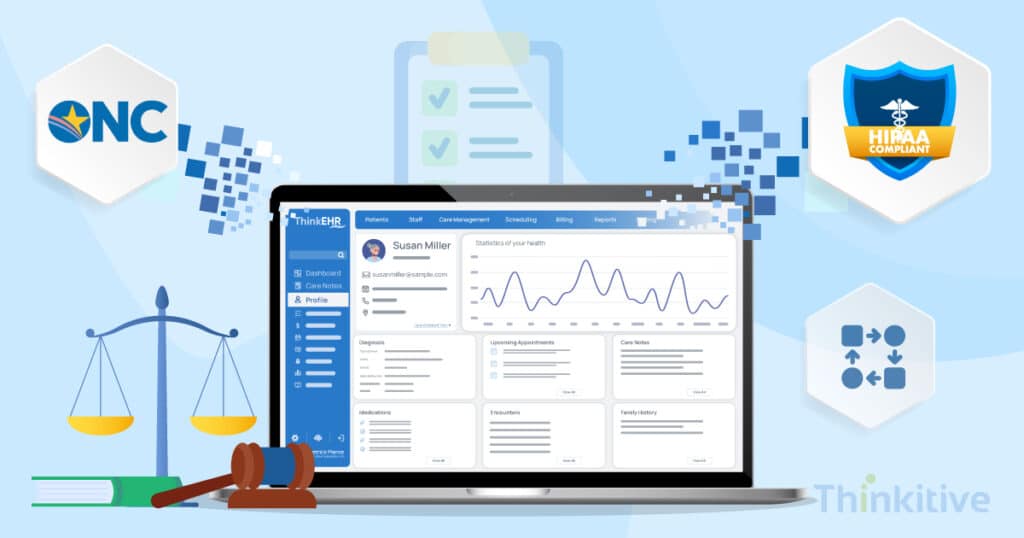
379 large healthcare data breaches were reported in the first half of 2025, which exposed PHI for over 31 million individuals, according to HIPAA Guide.
Data breaches in the healthcare industry seem to be an ongoing thing. Every other day, there is news lurking in a corner of the newspapers, which states the exposure of PHI. To help you understand how bad the situation is, in just September of 2025, the protected health information of 43,078,637 individuals was exposed.
This might make you think that your protected health information or PHI isn’t so protected after all, right?
Well, healthcare information provides a gold mine for hackers, and the complex landscape of EHR compliance requirements and security makes it even more difficult.
After in-depth analysis of the practices affected by these breaches, I realized most of them were using generic or off-the-shelf EHR software systems. And one compliance overview noted that 73% of healthcare practices use an EMR system with hidden HIPAA violations, such as weak encryption, incomplete audit trails, etc., the breach data, at times, makes sense.
This is one of the reasons why healthcare organizations are investing in HIPAA-compliant EHR development to securely connect hospitals, specialty clinics, laboratories, pharmacies, payers, and virtual care platforms while maintaining regulatory compliance.
And it’s good for their practice and patients; however, a few questions like ‘What regulations to apply when building a custom EHR?’ or regulatory considerations before developing an EHR system often go unanswered or, at times, even unaddressed.
Unlike standalone EMR systems that primarily support documentation within a single practice, custom EHR systems operate across multiple providers and connected healthcare organizations. As a result, they must comply with broader interoperability, data-sharing, and patient access regulations in addition to privacy and security requirements.
In this blog, we’ll discuss almost everything that you need to know about regulations for EHR software development. So without further ado, let’s get started!
Guide to Navigate the Regulatory Landscape for EHR Development
Free GuideWhat are the regulatory requirements for custom EHR development?
When building a custom EHR system, you must comply with several regulations governing patient privacy, data security, interoperability, and healthcare information exchange. The following regulatory requirements form the foundation of compliant custom EHR development:
- HIPAA (Health Insurance Portability and Accountability Act): HIPAA requires every custom EHR system to protect Protected Health Information (PHI) through administrative, technical, and physical safeguards. This includes encryption, role-based access controls, audit logging, secure authentication, breach notification procedures, and policies that protect patient privacy throughout the system lifecycle.
- HITECH Act (Health Information Technology for Economic and Clinical Health Act): HITECH strengthens HIPAA by promoting secure EHR adoption, increasing breach notification requirements, and encouraging the meaningful use of healthcare technology. Custom EHR developers must implement stronger security controls while supporting compliant electronic health information exchange.
- ONC Health IT Certification/Meaningful Use Criteria: ONC Health IT Certification establishes the functional, interoperability, and security requirements that modern EHR systems must meet to support standardized healthcare data exchange and patient access. These requirements include FHIR APIs, USCDI support, audit capabilities, and interoperability features required by Promoting Interoperability programs.
- FDA (Food and Drug Administration): FDA regulation applies when a custom EHR includes Software as a Medical Device (SaMD) functionality, such as diagnostic recommendations or advanced clinical decision support. In these cases, developers must validate the software according to FDA requirements before deployment.
At a glance, custom EHR regulatory requirements include:
- HIPAA: Protect patient privacy and secure Protected Health Information (PHI).
- HITECH Act: Strengthen data security and breach notification while promoting EHR adoption.
- ONC Health IT Certification: Meet interoperability, FHIR API, and standardized data exchange requirements.
- 21st Century Cures Act: Prevent information blocking and improve patient access to electronic health information.
- FDA (when applicable): Regulate custom EHR functionality that qualifies as Software as a Medical Device (SaMD).
- TEFCA (optional but growing): Support nationwide health information exchange through standardized interoperability frameworks.
To help in comparing the major healthcare regulatory frameworks for a custom EHR system, here’s a quick sneak peek into the healthcare regulatory frameworks and what you need to know about them:
| Regulatory Framework | Primary Focus | Key Requirements | Implementation Considerations |
| HIPAA (Health Insurance Portability and Accountability Act) | Protects patient health information (PHI) | – Privacy Rule- Security Rule- Breach Notification Rule | – Must implement physical, technical, and administrative safeguards- Requires role-based access and audit logging- Applies to all covered entities and business associates |
| HITECH Act (Health Information Technology for Economic and Clinical Health) | Promotes EHR adoption and meaningful use | – Meaningful Use stages (now Promoting Interoperability)- Increased penalties for HIPAA non-compliance | – Requires certified EHR technology (CEHRT)- Encourages patient engagement and data sharing |
| ONC Health IT Certification | Ensures EHR systems meet standardized functional, security, and interoperability criteria | – Support for USCDI- FHIR API capability- Clinical quality measures- Data export functionality | – Mandatory for CEHRT used in CMS incentive programs- Involves rigorous testing against ONC’s criteria |
| GDPR (General Data Protection Regulation – EU) | Data protection and privacy for EU citizens | – Consent management- Right to access and delete data- Data breach notification | – Applies to US-based providers handling EU patient data- Requires clear consent workflows and cross-border data safeguards |
| TEFCA (Trusted Exchange Framework and Common Agreement) | Nationwide interoperability in the U.S. | – Standardized exchange via QHINs- Common policies for data sharing- Patient access and transparency | – Participation is voluntary, but becoming more influential- Aligns with FHIR and existing ONC rules |
| 21st Century Cures Act (Information Blocking Rule) | Prohibits data blocking and promotes patient access | – APIs for data sharing- Open notes requirement- Defines allowable exceptions to sharing | – Requires a cultural and technical shift for providers- Non-compliance can lead to financial penalties |
Beyond understanding the regulations themselves, custom EHR developers must also implement specific compliance obligations throughout the software development lifecycle.
- HIPAA & HITECH Obligations: Obligations of HIPAA compliance and the HITECH Act are not limited to healthcare providers alone. In fact, these developers are considered business associates during the development process. This makes them equally responsible for implementing technical safeguards such as access controls, encryption, audit logs, and breach notification procedures.
- ONC Health IT Certification: The ONC Health IT certification and promoting interoperability program represent the modern evolution of the former meaningful use initiative. Adhering to these frameworks ensures that your EHR system supports interoperability, standardized data exchange like FHIR or USCDI, security, and patient access.
Another important aspect that you need to look for is the SaMD oversight for your custom EHR software. This is particularly important because most EHR systems are considered non-medical administrative tools. However, some of the functionalities may qualify for the SAMD or Software as a Medical Device under the FDA guidelines.
For instance, functionalities like clinical decision support used for diagnosis, treatment recommendations, or automated clinical judgment, if implemented without significant clinical review, then developers need to evaluate FDA risk classification and ensure they are validated, documented, and regulated as per standards before deployment.
Also, it is important to know the intricacies of your EHR software such as architecture, compliance and scalability. Read our detailed blog – A Deep Dive into Custom EHR Software Architecture, Compliance & Scalability – for better understanding.
2026 ONC HTI-1 Updates Custom EHR Vendors Must Prepare For
The 2026 ONC HTI-1 updates introduced new compliance expectations for EHR systems that are custom-built. These updates reinforced a stronger focus on interoperability, transparency, and responsible AI usage in healthcare technology.
Now, the rules in these updates expand FHIR-based data exchange requirements to improve patient access to electronic health information. Along with that, certain rules also introduce transparency standards for predictive clinical decision support tools and AI-driven functionalities.
This is crucially important for healthcare organizations and EHR vendors as they must be designed with secure APIs, standardized data-sharing capabilities, and clear documentation around AI-supported suggestions. In this way, you stay relevant and compliant with evolving ONC regulations and information blocking rules.
Compliance Checklist for EHR Developers
Free DownloadInteroperability Standards & Regulatory Requirements
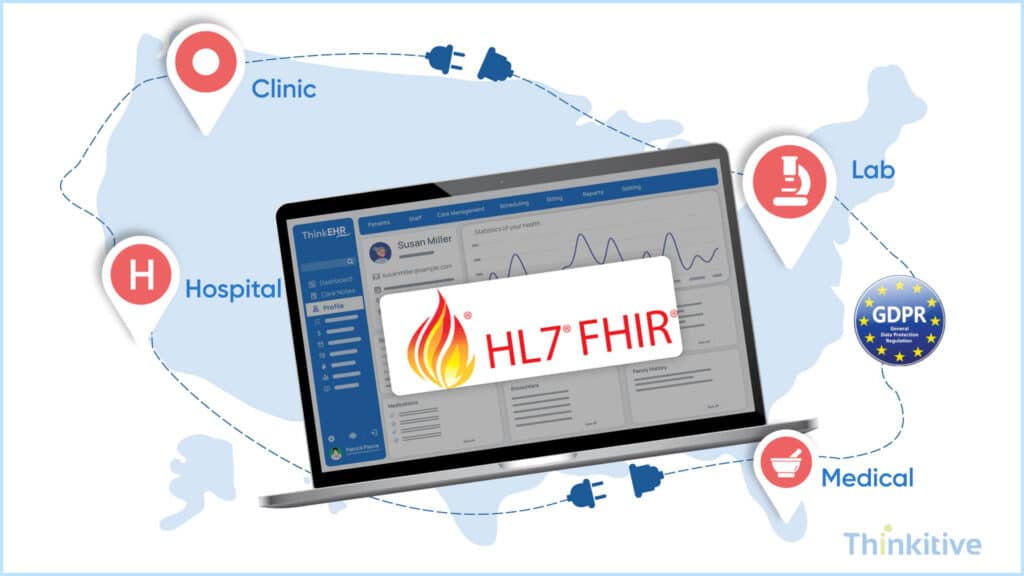
Modern custom EHR systems rarely operate in isolation. They must securely exchange information with laboratories, pharmacies, imaging centers, HIEs, payer systems, and external providers, making interoperability regulations an essential part of EHR compliance.
- Compliance with FHIR (Fast Healthcare Interoperability Resources)
FHIR standards are nothing but a set of standards that allow disparate healthcare systems to seamlessly exchange data between healthcare information systems. HL7 FHIR acts as a common ground for healthcare systems to communicate with each other in an understandable manner and seamlessly share information.
By complying with HL7 and FHIR, you can securely and seamlessly exchange patient data with various healthcare providers and care team members to deliver timely care.
However, the EHR compliance requirement frameworks might change depending on the region you’re practicing in. Here, it becomes necessary to identify those national and international interoperability guidelines to ensure that the data is shared in a safe environment and does not land you or your practice in legal trouble. For instance, if you’re practicing in European Union countries, then GDPR compliance in EHR development is necessary, along with other necessary interoperability.
Or you can just read this guide for a broader understanding of interoperability, compliance and scalability in custom EHR.
Information Blocking Rules & Their Impact
Under the 21st Century Cures Act, there is a huge importance of Information Blocking Rules. These rules were designed to ensure healthcare providers, patients and authorized third parties can securely access and exchange EHR without unnecessary restrictions.
Under evolving ONC regulations, customized EHR systems must support transparent data sharing, interoperability and standardized API access to remain compliant in 2026.
Here are the key information blocking rules that you must know:
- Patients must have timely access to their electronic health information.
- EHR systems should support secure and standardized API-based data exchange.
- Healthcare organizations cannot intentionally restrict authorized data sharing.
- Interoperability features must align with FHIR and ONC compliance standards.
- Data exchange practices should not create unnecessary delays or technical barriers.
- Custom EHR platforms must maintain audit trails and access transparency.
- Exceptions are allowed only for privacy, security, and patient safety concerns under defined regulatory guidelines.
Building a Secure & Compliant Custom EHR System
The sensitive nature of patient data that your EHR system deals with and the healthcare industry being prone to cyberattacks make it necessary for you to build a secure and regulatory-compliant EHR system. Here are some of the compliance strategies for EMR software development that you can use for building a secure EHR system:
- Data Security Best Practices: Data encryption best practices in healthcare IT are widely used for protecting sensitive patient data. Furthermore, role-based access controls for restricting unauthorized access and audit trails for tracking system activity are some of the best practices that you can use to ensure that your data is secure.
- Implementing User Authentication and Authorization Protocols: Implement robust user authentication mechanisms like passwords or multi-factor authentication and authorization protocols to define the roles of users who can access patient data and who require permission from the admin to access that data from the EHR system.
- Ensuring Data Integrity and System Validation: Maintaining data integrity is crucial for care delivery and reimbursement. By implementing a data validation process, you can not only improve the accuracy of the data that is being shared but also ensure the completeness of patient data within the EHR.
- Maintaining Compliance with Ongoing Regulatory Updates: The healthcare landscape is changing with technology, and that is changing the regulatory landscape as well. That is why you need to stay updated with the new regulations and implement the necessary changes every now and then within your custom EHR system to ensure your system is always compliant and in adherence with the regulatory landscape.
Patient Consent & Authorization in Custom EHR Systems

As patient information moves across connected healthcare organizations, obtaining and managing patient consent becomes a core regulatory requirement for custom EHR systems.
Furthermore, for your virtual care delivery program, you need to implement a functional mechanism for obtaining patient consent. Draft a clear patient consent form for data collection, storage, and sharing of patient health data within the custom EHR system for delivering care.
For this, you also need to comply with the legal requirements for patient data sharing. One of the best examples of this can be the HIPAA authorization forms, which provide you with all the necessary guidelines that you need to adhere to for sharing patient data.
Last but not least, make your custom EHR software a one-stop solution for healthcare delivery, where you can incorporate features within your system to effectively manage patient consent and authorization processes. Clearly outline the process of getting consent and align your software in that way to ensure you get patient consent before starting to collect their data and deliver care.
Guide to HIPAA Compliant EHR Software Development
Download GuideTesting Custom EHR Systems for Compliance
In 2023, the US Department of Health and Human Services (HHS) Office for Civil Rights reported more than 725 breaches. These breaches exposed more than 133 million health records. These breaches not only impact your reputation amongst patients but also can lead to hefty penalties. That is why it is important to test your EHR systems for compliance. Let’s see this comprehensive testing process step by step for your custom EHR system:
- Risk Assessment & Security Testing: Conduct a thorough risk assessment to identify vulnerabilities that would put patient data at risk. One of the best ways to identify these vulnerabilities is by performing a penetration test so that you can proactively identify the gaps. Along with that, you can also ensure that the robust security measures implemented by you are functioning properly, like encryption, access controls, and audit trails.
- Define Scope & Objectives: When testing for compliance, you need to very clearly and specifically define the objectives for testing. These objectives might include functionality, errors, assessing performance, and compliance with regulations. Moreover, the testing scope can include the scope to include infrastructure readiness, application configuration, workflow accuracy, and staff training readiness.
- Validate Compliance with Privacy & Security Regulations: There are several regulations for privacy and security. Identify those compliances, such as HIPAA, HITECH, GDPR, or local regulations, and ensure that your EHR system is compliant with them. Review the encryption methods used with secure transmission protocols and data storage practices. And while you’re at it, also test for breach notification if they are in place.
Given the increasing number of cyberattacks on healthcare systems, here is a quick roadmap for you to prepare your system for regulatory audits and inspections:
- Document policies, procedures, and training.
- Conduct internal audits and continuous monitoring.
- Prepare audit-ready documentation and evidence.
- Engage key stakeholders and testing teams in this process.
Partnering with the Right Experts for Compliant EHR Development
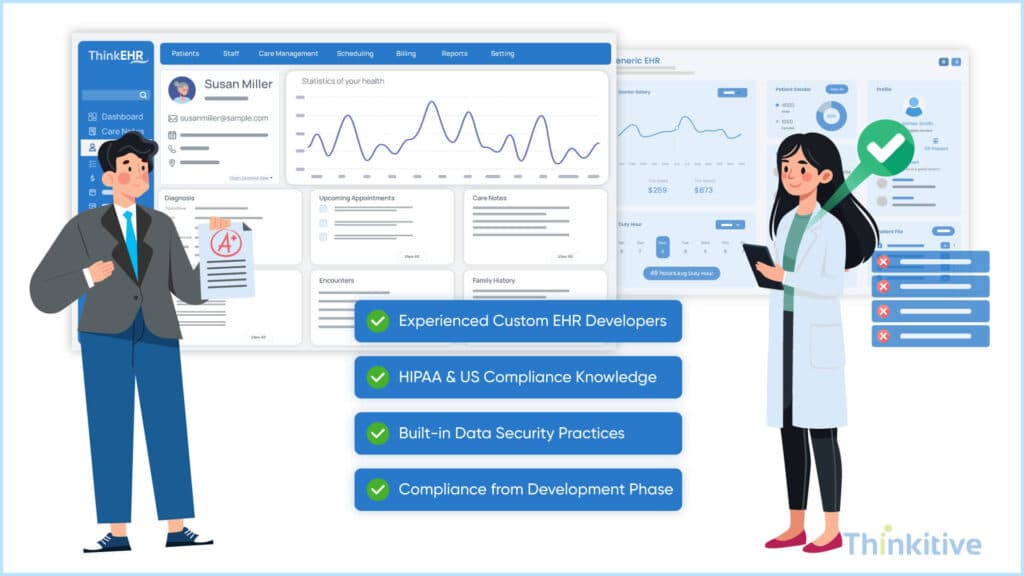
To adhere to the legal requirements for EHR software development, you need to partner with experienced custom EHR developers. Since they already have experience in developing robust custom EHR systems, their deep understanding of the healthcare regulations and data security best practices speeds up the process for you.
Furthermore, you can collaborate with legal and compliance professionals to ensure that your custom EHR software system is in compliance with all the relevant regulations. Though it is hardly a common practice, utilizing it can help you build a secure and compliant EHR system, saving a lot of time and potentially causing trouble for your custom EHR development.
Last but not least, leverage industry-specific resources and guidelines provided by healthcare organizations and regulatory bodies. Your custom EHR system is not only safe and secure but also interoperable and an integral part of the healthcare landscape.
Also, one of the best practices to align your EHR system with regulatory compliance is to begin the compliance process during the development phase. Here’s a quick breakdown that you can ask your EHR software development company to align their compliance practices with:
| Phase | Key Activities | Compliance Focus | Milestones |
| 1. Planning & Requirements | – Market analysis- Define user & system requirements- Identify regulatory needs | – Understand HIPAA, HITECH- Consider ONC Health IT Certification criteria- TEFCA awareness | – Regulatory requirements documented- Security & privacy frameworks selected |
| 2. Design & Architecture | – Design system architecture- Plan for interoperability (FHIR, HL7, APIs)- UX/UI planning | – Plan for data encryption, audit logging- Incorporate access control standards | – Security design review complete- Interoperability standards embedded |
| 3. Development & Integration | – Build core modules (e.g., ePrescribing, charting)- Integrate APIs, health info exchanges | – Apply HIPAA technical safeguards- Ensure data integrity & audit logging | – Unit & integration testing done- Internal security checks passed |
| 4. Testing & Validation | – Perform functional, security, and compliance testing- End-user feedback loop | – ONC Certification test cases- Validate against USCDI data elements- Privacy impact assessment | – Certification-ready build- Privacy and security testing passed |
| 5. Certification & Launch Prep | – Submit for ONC Health IT Certification- Prepare user documentation & training | – ONC 2015 Edition Cures Update- Accessibility & safety standards | – ONC certification obtained- Training materials finalized |
| 6. Post-Market Surveillance & Updates | – Monitor system performance- Respond to user-reported issues- Release periodic updates | – Maintain HIPAA compliance- Adhere to CMS & ONC update guidelines | – Audit logs are reviewed regularly- Annual compliance assessments complete |
Key Takeaways
- HIPAA and HITECH form the foundation of custom EHR compliance by protecting patient privacy, securing PHI, and defining breach notification requirements.
- ONC Health IT Certification, FHIR, and the 21st Century Cures Act establish interoperability, standardized data exchange, and patient access requirements for modern EHR systems.
- Compliance should be built into the EHR development lifecyclefrom planning and architecture through testing, deployment, and ongoing maintenance.
- Patient consent, data governance, and continuous compliance monitoring are essential for maintaining regulatory compliance as healthcare regulations evolve.
- Partnering with experienced custom EHR developers helps organizations navigate complex healthcare regulations while building secure, scalable, and compliant EHR systems.
Conclusion
In the dynamic landscape of healthcare, EHR software development offers tailored solutions to meet diverse institutional needs. However, amidst this flexibility lies a labyrinth of legal and regulatory challenges. Navigating these complexities demands a comprehensive understanding of frameworks like HIPAA, HITECH, and FDA regulations, alongside ensuring interoperability, patient consent, data security, and compliance updates.
Building a compliant custom EHR is no longer limited to securing patient data. Modern EHR systems must also support interoperability, transparent data exchange, patient access, and evolving regulatory requirements across connected healthcare networks.
Unlike standalone medical record systems, modern custom EHR platforms support connected care across hospitals, specialty clinics, laboratories, pharmacies, and virtual care networks. That broader scope makes regulatory compliance a continuous process spanning privacy, interoperability, patient access, cybersecurity, and governance.
On that note, start your healthcare practice’s transformation journey today. Get your free consultation from an EHR expert for custom EHR development .
Frequently Asked Questions
The core custom EHR regulatory requirements focus on data privacy, security, interoperability, and patient safety. At a minimum, custom EHR systems must comply with HIPAA and HITECH for protected health information (PHI), support standardized data exchange under ONC regulations, and address information-blocking provisions from the 21st Century Cures Act. Depending on functionality, additional oversight—such as FDA regulation—may apply. These EHR compliance requirements should be built into the architecture, workflows, and security controls from day one.
When assessing what regulations apply when building a custom EHR, organizations typically need to consider:
- HIPAA and HITECH for privacy, security, and breach notification
- ONC Health IT rules for interoperability, certification, and data access
- Information-blocking regulations under the 21st Century Cures Act
- CMS requirements if the EHR supports Medicare or Medicaid reporting
- FDA oversight if the software performs medical device–like functions
Together, these define the broader healthcare regulations for EHR systems in the U.S.
HIPAA directly shapes how custom EHR software is designed and engineered. Developers—not just healthcare providers—are responsible for implementing administrative, technical, and physical safeguards. This includes encryption, access controls, audit logs, role-based permissions, and secure data transmission. From an EHR software regulations standpoint, HIPAA compliance must be embedded into the development lifecycle, not treated as a post-launch checklist.
Office of the National Coordinator for Health IT (ONC) certification is not legally mandatory for every custom EHR, but it becomes essential if the system is used for Promoting Interoperability programs or needs to meet standardized interoperability expectations. ONC Health IT Certification ensures support for USCDI data sets, FHIR-based APIs, and compliance with information-blocking rules—making it a key regulatory consideration before developing an EHR system intended for scale or payer reporting.
U.S. Food and Drug Administration regulation applies when a custom EHR qualifies as Software as a Medical Device (SaMD). This typically occurs if the EHR provides diagnostic recommendations, clinical decision support that influences treatment decisions, or risk predictions beyond basic data storage and display. In such cases, developers must follow FDA guidelines for validation, risk management, and post-market monitoring—adding another layer to regulations for EHR software development.


