Improving Aesthetic Clinic Efficiency with EMR Integration

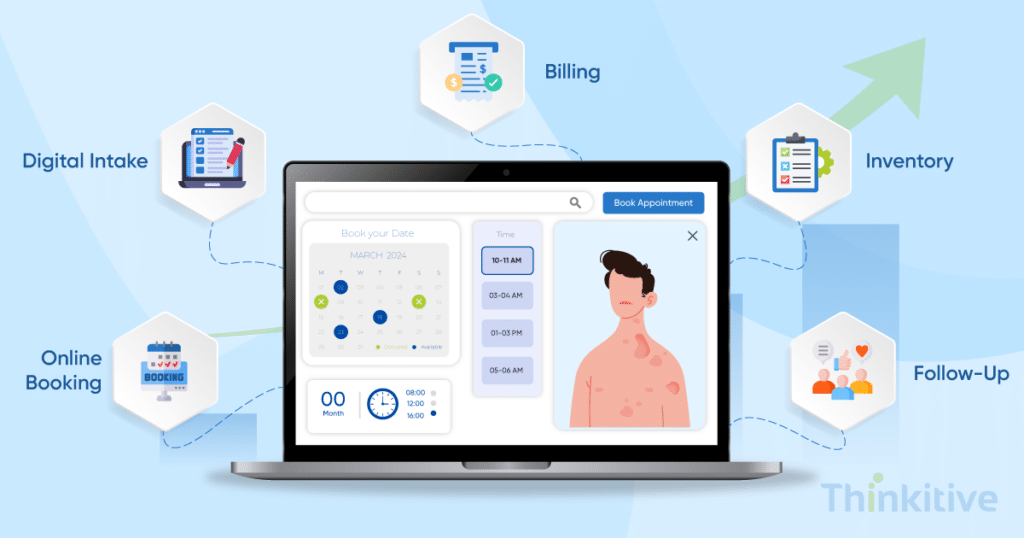
A quiet observation about humans has always been related to beauty since the start, right?
But who would have thought that someday as a part of the healthcare industry it will become a multi-billion dollar industry. This explains why healthcare providers are proactively choosing aesthetics as their specialty.
To give you a context of aesthetics, you see, almost 70% of aesthetic treatments across the globe are non-surgical procedures, which includes Botox, fillers, lasers, etc. While there has been significant advancement in this field on the clinical side, the operational side seems to be under immense pressure just like other healthcare specialty practices.
And right now, the aftermath of this has become much more clearer than ever before. You see, most of the Aesthetic clinics ecosystem is disconnected systems and it is causing delays, burnout and revenue leakage.
However, what has surprised me the most is that the solution to this is quite simple, their EMR systems. The pace of adoption of EMR development says everything about it. You see, a custom EMR system that can also act as an EMR integration solution can change everything about your practice.
You see, by improving aesthetic clinical efficiency with EMR integration, you can focus on care while the system takes care of everything you need to focus on what you do best.
On that note, let’s see how EMR integration improves clinic workflow efficiency and streamlining clinical operations.
So, without further ado, let’s get started!
The Problem: Disconnected Systems in Aesthetic Clinics
Every system claims to be the best system. However, the cracks show up when you use them right? You see, the systems are indeed best but what it does is that it breaks the system into systems and they start to function separately.
So, something that should function like a clinic management system, starts to function like a system dependent on other systems even in its own practice.
For a moment, let’s just say that even that is not a problem. It shows up in your care delivered, duplicate data entries, manual coordinations, multiple unnecessary tests, wrong mediations and what not.
Though this does not happen, there’s a possibility. What it does is that it limits your practice system as a basic clinic management system. This is where you need a true system that is part of the healthcare ecosystem. This way, you will not only have an EMR system that also acts as a practice management software and with healthcare system integrations can also be a part of the vast healthcare ecosystem.
How EMR Integration Improves Clinic Workflow Efficiency
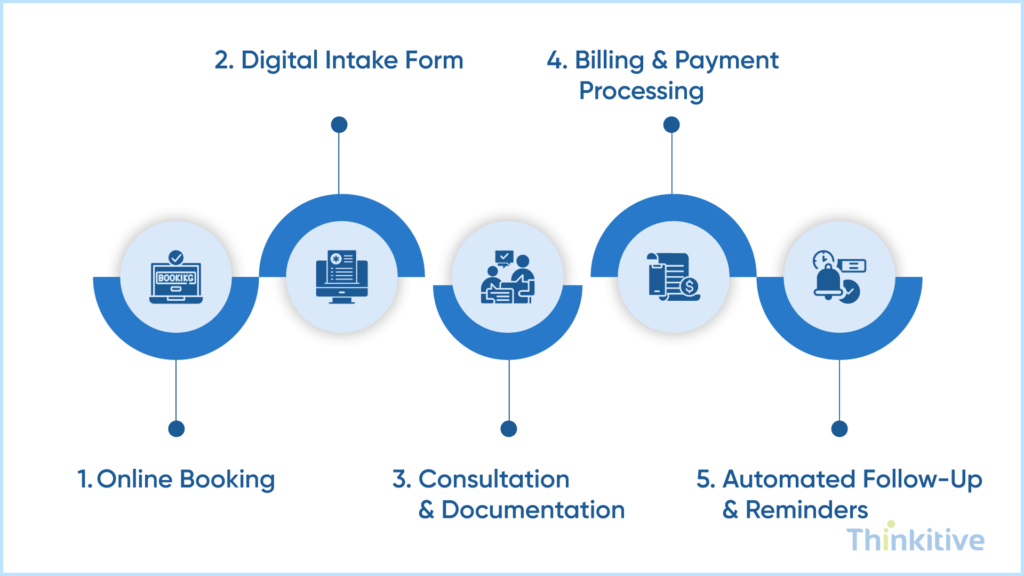
This question is something that keeps troubling even the seasoned practitioners. The secret to keeping an connected ecosystem is to understand how the clinic works. And to this nothing is a better pair than a customizable platform and healthcare system integration solution. Let’s explore how it improves clinical efficiency in an Aesthetic practice:
- Streamlining the Patient Journey
The secret lies in understanding the patient journey and streamlining it as the data flows into your system. For instance, you start with online booking where you control the patient. To add more convenience you also provide them with digital intake, followed by consultation, billing and finally follow-up through automated reminders.
Now, your system and workflows get in a sync that eliminates redundant data entry and centralizes patient records. Smoothening the care delivery and streamlining administrative aspects.
- Faster & Smarter Documentation
Now that your system and practice are aligned with one another, your documentation process becomes much faster. Also, with the use of advanced AI systems, you can further make the system smarter. Predictive analytics, AI scribe, and reporting are some features that it can do.
Having said that, for an aesthetic practice, it can pre-built templates that match your workflow and makes your procedure much more easier. Also, you can send digital consent forms, add in the feature of before and after image integration to get real time insights and completely eliminate the need for manual documentation.
- Billing & Revenue Optimization
After setting the tone of the core aspects of your practice, that is clinical delivery, its time for billing and revenue optimization. You see, as a practice management software, with integrated payment processing it also acts like your billing software.
It can be then used in many instances like real-time insurance verification, automated invoicing and reduced revenue leakage.
- Improved Team Coordination
With shared dashboards and real-time updates provided across the system, your team coordination is improved massively. When everybody on the care team is on the same page and working towards the same goal, clinical and non-clinical processes become much more smoother.
In aesthetic clinics, internal task management becomes much easier and with alerts functionality, coordinating with different aspects of your practice is also in a specific flow.
- Data-Driven Decision Making
The major advantage for any healthcare practice, and especially for aesthetic practices is the access of data with custom EMR systems. You see, with access to data decisions can be enhanced. Appointment can be enhanced with reporting, treatment popularity amongst your patients can be tracked for easier decision-making.
And the business aspects of your practice can be easily tracked and accessed by performance dashboards that make decision making backed by evidence.
The benefits of EMR integration for clinics come in different ways. You see, while the features and functionalities seem to be in one system, they impact different aspects of your practice. Some of the most common benefits of EMR integration for clinics are reduced no-shows, higher patient satisfaction due to convenience, better financial visibility and health, multi-location scalability and accurate resource and inventory management.
AI-Enhanced EMR Integrations (Future-Ready Efficiency)
AI can be used to enhance EMR integration and some of its applications have even set the standards in Aesthetic practices. Let’s explore some:
- AI-Based No-Show Prediction: AI modules are trained on data and since they learn from itself many aesthetic clinics have adopted this to track and improve on their no-shows. With these prediction modules based on AI, popular alerts and reminders can be sent to reduce no-show.
- Smart Inventory Forecasting: Similar to the prediction model is the, some practices have implemented smart inventory forecasting models into their practice. They have practices that can ensure optimum utilization of resources.
- Predictive Patient Retention Insights: Another smart feature that many have implemented is the predictive patient retention dashboard. With the insights and plan developing on the patterns, specific measures can be taken to retain patients.
- Automated Follow-Up Communications: Follow-up communication is one of the boring manual tasks that providers have to do. Especially in aesthetics where follow-ups matter more. However, with AI they can automate these communications and ensure everyone gets personalized messages prior to their appointment.
Turning data into actionable insights is what a custom EMR for aesthetic practices does. Due to this, practices can not only enhance their clinical aspects but also streamline their administrative processes. On top of that, they can even fast-track their marketing efforts to enhance the performance of their practice as a whole.
Why Customization Matters for Aesthetic Practices
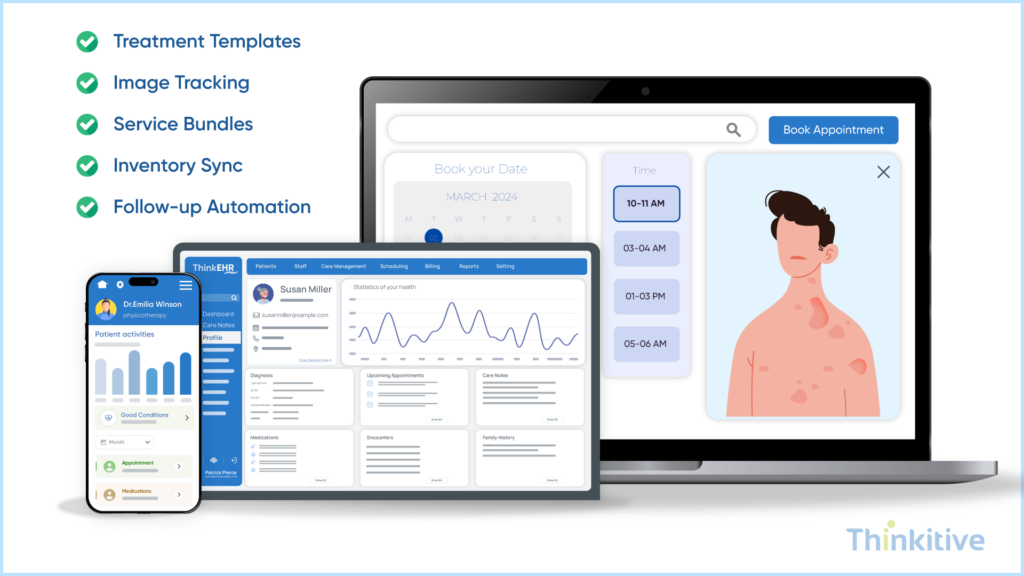
Customization is necessary especially for aesthetic practices, because instead of a generic system, you need a specialized workflow that aligns with the way your practice operates. With a generic system, you have to stick to the workflow and dataflow as per decided by the vendor. This restricts your practice and can even lead to frustrations.
Furthermore, with flexible configuration for service bundles and pricing, you invest at first and save in the long run. In short, instead of buying new software every time there is a major trend, you just update your current software to meet the latest needs and requirements. However, the secret to this flexibility lies in modular architecture.
Modular architecture can be crucial with respect to the growth aspect of your software. You see, it not only gives every feature, functionality and module to operate independently yet stay aligned with the needs of your EMR.
Conclusion
Efficiency, revenue and patient experience are some of the major deal breakers for aesthetic clinics. And this is exactly what a custom EMR system for Aesthetic practice delivers. So, if you have made it till here, then I hope I have covered all the important aspects of custom EMR development for aesthetics and why it has become necessary for you.
On that note, let his blog be your guide and click here to get your first free consultation, and get started.
Frequently Asked Questions
Improving Aesthetic Clinic Efficiency with EMR Integration starts with eliminating disconnected systems and manual data entry. When scheduling, patient records, billing, inventory, and marketing tools operate within a unified environment, clinics experience fewer errors and faster task completion.
Here’s how EMR integration improves clinic workflow efficiency:
- Automated appointment syncing and reminders
- Digital intake forms directly populating patient charts
- Real-time access to treatment history and consent forms
- Integrated billing and claim generation
- Centralized dashboards for clinical and administrative teams
With robust EMR integration solutions, aesthetic clinics can reduce administrative overhead, shorten patient wait times, and allow providers to focus more on care rather than documentation.
The benefits of EMR integration for clinics go far beyond digital recordkeeping. For cosmetic and dermatology practices, integration directly impacts operational speed, patient experience, and revenue outcomes.
Key benefits include:
- Streamlined appointment and treatment coordination
- Reduced data duplication across systems
- Improved patient communication through automated messaging
- Enhanced billing transparency and fewer claim rejections
- Centralized reporting for performance tracking
By streamlining clinic operations with EMR integration, aesthetic clinics gain a clear view of both clinical and financial performance in one unified system.
No-shows and inconsistent follow-ups significantly impact revenue in aesthetic clinics. Integrated systems help solve this by automating patient engagement.
With proper healthcare system integration, clinics can:
- Send automated SMS/email reminders
- Offer online rescheduling options
- Trigger post-treatment follow-up communications
- Track patient engagement history
- Create targeted recall campaigns for maintenance treatments
When EMR systems connect with CRM and communication tools, aesthetic practices improve patient retention and build long-term loyalty—especially important for repeat procedures like Botox, fillers, and laser treatments.
To maximize value, aesthetic clinics should integrate their EMR with:
- Practice management software (appointments, front-desk operations)
- Billing and payment gateways
- Inventory management systems (injectables, skincare products)
- CRM and marketing automation tools
- Accounting platforms
- E-prescription systems
- Patient portals
Connecting these systems ensures comprehensive healthcare system integration, allowing seamless data flow across clinical, administrative, and financial operations.
Disconnected systems often cause coding errors, missing documentation, and delayed claims. EMR integration reduces these risks by synchronizing clinical documentation with billing workflows.
Integrated systems help by:
- Auto-populating billing codes from treatment notes
- Flagging incomplete documentation
- Verifying insurance eligibility in real time
- Tracking outstanding balances and payment status
- Generating financial performance reports
By streamlining clinic operations with EMR integration, aesthetic clinics improve cash flow, reduce revenue leakage, and make informed pricing and service decisions.
Yes. When AI capabilities are layered onto integrated EMR systems, clinics gain predictive and automation advantages.
AI can:
- Automate documentation through voice recognition
- Predict patient no-show risks
- Suggest optimized scheduling slots
- Analyze revenue trends and treatment demand
- Assist with coding accuracy
In the context of EMR integration solutions, AI transforms systems from reactive record-keeping tools into proactive operational intelligence platforms.
Many aesthetic clinics begin with standalone clinic management systems, which typically handle scheduling, billing, and basic patient records. However, these systems often operate in silos.
A fully integrated EMR solution:
- Connects clinical documentation with billing and scheduling
- Enables real-time data sharing across departments
- Supports advanced reporting and analytics
- Integrates with third-party platforms via APIs
- Improves compliance and data security
In short, practice management software manages operations, while integrated EMR systems unify clinical and operational data under a single ecosystem.
Generic EMR systems are designed for broad healthcare settings and often lack specialty-specific workflows required in aesthetic practices.
Custom EMR solutions allow clinics to:
- Design treatment templates for cosmetic procedures
- Track pre- and post-procedure photography
- Manage package-based pricing models
- Integrate skincare inventory tracking
- Automate follow-up schedules for repeat treatments
For clinics focused on Improving Aesthetic Clinic Efficiency with EMR Integration, a tailored system ensures workflows align precisely with aesthetic treatment models—ultimately improving provider productivity and patient satisfaction.


