Security Risks to Consider When You Build an EHR

Do you know what the average cost of a healthcare data breach is?
According to IBM, the cost of a data breach in the healthcare industry is around $10.93 million, which saw a staggering 15% from 2020 to 2023.
Drawing the parallels with its impact on individuals’ lives, it has impacted almost 192.7 million people, according to Reuters. But what makes healthcare systems a major target for cyberattacks and data breaches?
Well, the answer to this lies in the intricacies of the data that these systems deal with. For instance, an EHR system will contain their sensitive healthcare information along with their financial information as well. So, when an EHR system’s security is compromised, it reveals its financial information, which can be used for various kinds of activities.
Given the rising risks of cybersecurity in healthcare systems, healthcare practices are trying to address growing concerns around API vulnerabilities, ransomware, and patient data exposure.
That is the reason why practices that are building their own EHR system address these security risks in EHR development itself. And addressing EHR data security risks and starting to build a HIPAA-compliant EHR as early as the planning stage is one of the best ways to deal with them.
Furthermore, if you are looking to build an FHIR-based EHR, then by law and regulations, you need to align your EHR system with security guidelines and compliance.
On that note, let’s address some of the most important aspects of security risks in EHR development and know how to prevent security vulnerabilities in EHR development. So without further ado, let’s get started!
Step-by-Step Guide to Build FHIR-Based EHR System –
Read GuideCommon Security Risks When Building an EHR System
Let’s begin with some of the most common security risks when building an EHR system that you are most likely to encounter.
Unauthorized Access, Weak Authentication & Insecure Healthcare Workflows
The most common EHR security risks that you must be familiar with are unauthorized access to patient records. The reason behind this can be quite a few, from weak authentication mechanisms to poor password policies or even excessive user permissions.
You see, when the healthcare workflows themselves are insecure with shared user accounts or unrestricted access to sensitive data, you increase the risk of data breaches and HIPAA violations.
Security Risks Introduced Through FHIR APIs & Third-Party Integrations
Modern EHR systems rely heavily on FHIR APIs, and that is the reason why FHIR-based EHR development is on the rise. During these integrations, if your system is deployed without proper authentication, authorization, and API security controls, then it can expose sensitive patient data and create risks of additional attacks for cybercriminals.
Ransomware, Phishing & Insider Healthcare Cybersecurity Threats
Given the sensitive information that healthcare organizations deal with, they are a frequent and favorite target for ransomware and phishing attacks. Along with that, insider threats can also lead to unauthorized data access, record manipulation, or even information disclosure. These insider threats can be intentional or unintentional, but that is the organization’s concern to deal with.
But you need to contain, mitigate, and even eliminate these threats as they can disrupt clinical operations and even compromise patient safety.
Common Security Risks in Interoperable Healthcare Environments
As healthcare systems are becoming more interconnected, EHRs must securely exchange data across multiple platforms and organizations. Here, improper access controls, unsecured data transfers, inconsistent security policies, and vulnerabilities can increase the risk of data exposure and compliance issues in interoperable healthcare environments.
Common Security Risks When Building an EHR System
| Security Risk | Recommended Control |
| Weak authentication | Multi-factor authentication (MFA) and strong password policies |
| Unauthorized access | Role-Based Access Control (RBAC) and least-privilege permissions |
| Unencrypted data | Encrypt data at rest and in transit |
| FHIR API vulnerabilities | OAuth 2.0, OpenID Connect, API gateways, rate limiting |
| Ransomware attacks | Immutable backups, endpoint protection, employee awareness training |
| Phishing attacks | Email security, MFA, continuous staff training |
| Missing audit logs | Comprehensive audit logging and continuous monitoring |
| Third-party integrations | Vendor risk assessment and secure API validation |
| Insider threats | Access reviews, activity monitoring, segregation of duties |
| Cloud misconfiguration | Secure cloud configuration and regular security assessments |
EHR Data Security Risks & HIPAA Compliance Challenges
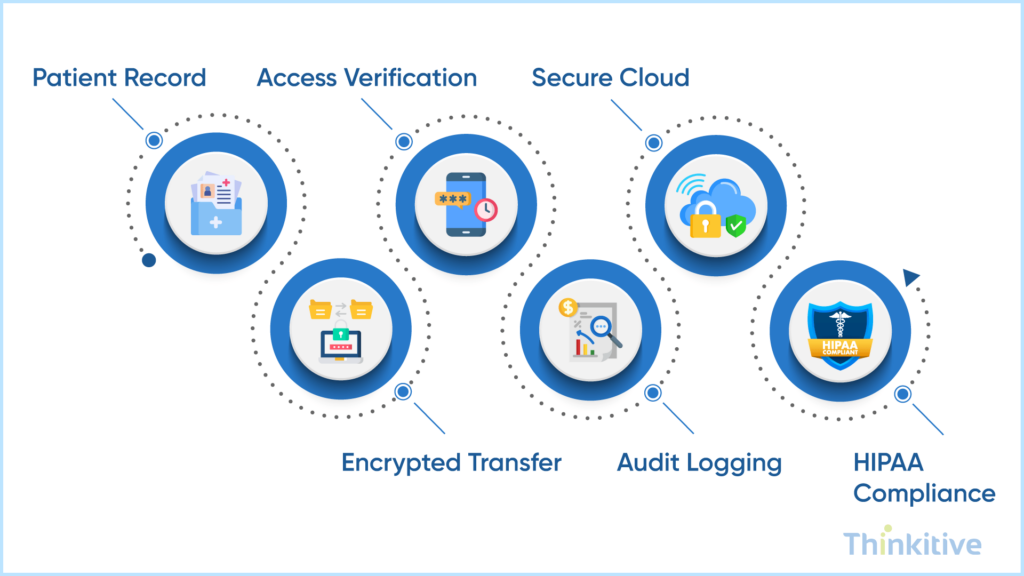
But there are far more risks than just unauthorized access or phishing attacks, especially regarding EHR data security and HIPAA compliance. Let’s discuss them in detail below:
Protecting Patient Records During Healthcare Data Exchange & Cloud Storage
There is a high chance of healthcare data being breached or stolen during data transmission across providers, payers, labs, or healthcare applications. Without secure data transmission protocols, encryption strategies, and configured cloud environments, this data can be exposed and even lead to unauthorized access, data leaks, or cyberattacks.
Missing Audit Logs, Weak Encryption & Insecure Access Control Practices
There are three aspects that form the fundamentals of EHR security, which are audit logs, encryption, and access controls. Now, missing audit trails can make it difficult to detect any suspicious activity. On the other hand, weak encryption and poorly managed user permissions can increase the risk of unauthorized access and data breaches.
Understanding HITECH Breach Notification Obligations & HIPAA Security Risks in EHR Platforms
One of the major risks that many practices fail to comply with is HIPAA and HITECH, which are designed to protect electronic protected health information (ePHI). Now, failure to implement these safeguards or report breaches within the given timeframe can result in regulatory penalties, legal liabilities, and even reputation damage.
HIPAA Security Risks Every EHR Builder Should Consider
Many of these security risks directly impact HIPAA compliance. Identifying them early and incorporating the necessary safeguards throughout development helps strengthen both regulatory compliance and overall platform security.
Free EHR Security Risk Assessment –
Get Assessment
AI & Automation Risks in Modern EHR Development
Healthcare practices are opting for AI-powered healthcare workflows and features in their EHR systems. While they have improved the workflows by a huge margin, there are also certain security risks that can be present. Let’s have a look at this below:
Security Concerns Related to AI-Assisted Healthcare Workflows
AI-powered features such as clinical documentation, medical coding, and virtual assistants often process large volumes of patient data. Now, if your AI model is not trained with proper safeguards, then these systems can introduce risks related to unauthorized access, data leakage, model misuse, and exposure of sensitive healthcare information.
Risks Associated with Automated Clinical Decision Systems & Healthcare Automation
Many practices have implemented automated clinical decision support tools to improve efficiency. However, these practices have also flagged inaccurate recommendations, biased algorithms, or compromised data sources, impacting care quality and patient safety. So, when you are building your own EHR, you must ensure AI-driven decisions remain transparent, reliable, and subject to human oversight.
Monitoring AI-Driven Workflows for Unauthorized Access & Data Exposure
AI systems require continuous monitoring to detect unusual activity, unauthorized access attempts, and potential data exposure. That’s why regular audits, access controls, and security assessments must be conducted to ensure patient information remains protected throughout AI-driven workflows.
Balancing AI Efficiency with Healthcare Cybersecurity Protection
AI can streamline healthcare operations and reduce administrative burdens. However, in attempting this, security cannot be compromised. This is why you must balance innovation with strong cybersecurity practices, including data encryption, access management, compliance control, and ongoing risk assessments.
How to Prevent Security Vulnerabilities in EHR Development
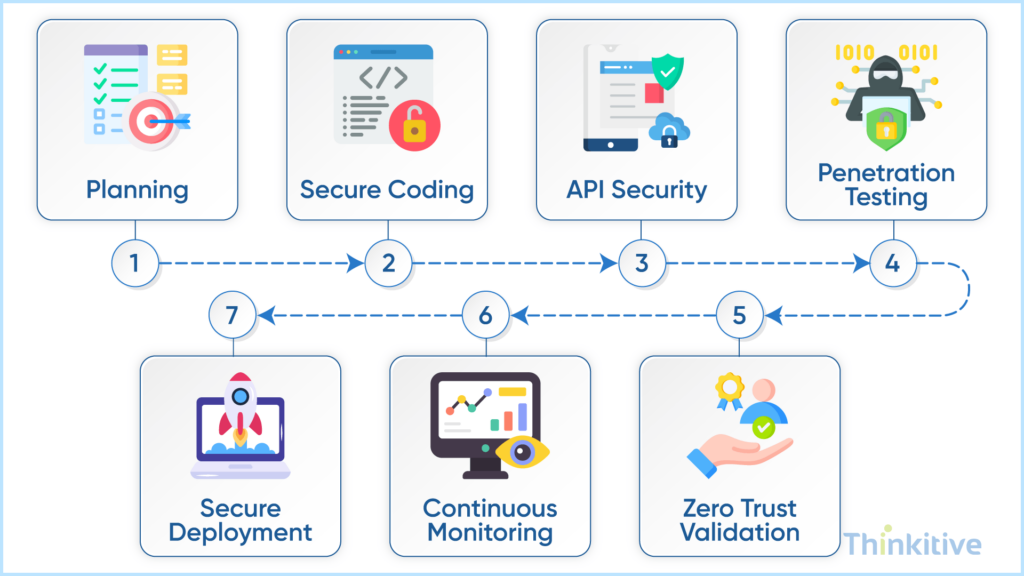
Now, the main part is how to prevent security vulnerabilities in EHR development. So, without further ado, let’s deep dive.
Secure API Development & Encrypted Healthcare Data Exchange
Since modern EHR systems rely heavily on APIs and data interoperability, you need secure data exchange. The best way is to implement strong authentication, authorization controls, and encryption for data both in transit and at rest. It adds another layer of security, protecting patient information from unauthorized access and cyberattacks, which can be strengthened further with OAuth 2.0 and OpenID Connect.
Conducting Penetration Testing & Vulnerability Assessment
Regular penetration testing and vulnerability assessments help in identifying security weaknesses beforehand. That is why it is recommended to conduct these tests at frequent intervals so that you can easily uncover misconfigurations, insecure code, and potential attack vectors throughout your EHR system.
Implementing Zero-Trust Security & Continuous Monitoring Practices
You can also implement a zero-trust security model so that no user or device can be trusted by default. Combining this with continuous monitoring, access verification, and real-time threat detection, you can reduce the risk of unauthorized access and strengthen the overall security of your EHR system.
Understanding How to Prevent Security Vulnerabilities in EHR Development
The best way to prevent any security vulnerabilities is by considering them during the planning and development phases of your EHR development. By incorporating secure coding practices, risk assessments, encryption, access controls, security testing, and compliance requirements from the very start of the project, you can build a resilient and secure EHR platform for your practice.
HIPAA Compliance & EHR Security Checklist –
Get ChecklistBuilding Security Controls That Support Future Compliance
While preventing cyberattacks and data breaches is important, security is not the only concern when building an EHR system. If you want your platform to support interoperability and future certification, you must also align it with security and compliance requirements from the start.
Supporting Auditability, Secure Interoperability & Compliance Monitoring
Modern EHR systems exchange data across multiple healthcare organizations and applications. To support this securely, your platform should include audit trails, secure data exchange mechanisms, and compliance monitoring capabilities. These features help track system activity, detect security incidents, and maintain regulatory compliance.
Prioritizing API Security, Authentication & Compliance Workflows During Development
As APIs become the backbone of healthcare interoperability, securing them is critical. Strong authentication, authorization controls, and API security measures help protect patient information and reduce vulnerabilities. That is why these security controls should be implemented during development rather than after deployment.
Strong security controls not only protect patient information but also create a solid foundation for meeting future regulatory and certification requirements.
Conclusion
Building a secure EHR requires much more than protecting patient data from cyberattacks. Security must be embedded throughout the development lifecycle—from secure APIs and access controls to continuous monitoring, compliance, and risk management. By addressing these risks early, organizations can build resilient healthcare platforms that support interoperability, regulatory compliance, and long-term growth.
That is why, despite taking all the necessary measures to strengthen your system’s security, proactive cybersecurity planning is essential, especially for FHIR-based EHR development.
However, in the quest to improve your security, you must not ignore interoperability, usability of the software, and compliance. These form the base of your EHR system
On that note, let this blog be your guide to identify and address the security gaps in your EHR system and help you build a secure EHR software. And if you don’t know where to start, then let’s start with your system assessment from our expert and gather your EHR software requirements.
Frequently Asked Questions
Some of the biggest security risks in EHR development include unauthorized access, weak authentication, ransomware attacks, insecure APIs, insider threats, poor encryption practices, and compliance violations. Identifying these risks early helps organizations build more secure and resilient healthcare platforms.
The most common security risks when building an EHR system include excessive user permissions, unsecured healthcare workflows, weak password policies, vulnerable third-party integrations, and insecure data exchange. These vulnerabilities can expose sensitive patient information and increase the risk of cyberattacks.
FHIR APIs enable healthcare interoperability by allowing systems to exchange patient data. However, without proper authentication, authorization, and API security controls, they can create EHR data security risks such as unauthorized access, data exposure, and API-based attacks. This is why security is a critical part of FHIR-based EHR development.
Some of the most common healthcare cybersecurity threats targeting EHR systems include ransomware, phishing attacks, credential theft, insider threats, malware, and unauthorized access attempts. These attacks can disrupt clinical operations and compromise sensitive patient information.
The most important HIPAA security risks in EHR platforms include weak user authentication, inadequate access controls, missing audit logs, unencrypted data, and insecure data transmission. These are some of the HIPAA security risks every EHR builder should consider during development.
Organizations can prevent security vulnerabilities in EHR development by implementing secure coding practices, encryption, role-based access controls, penetration testing, continuous monitoring, and regular security assessments. Addressing security requirements during development is often more effective than fixing vulnerabilities after deployment.
Audit logs help organizations track system activity and identify suspicious behavior, while access controls ensure users can only access the information necessary for their roles. Together, they strengthen security, support compliance efforts, and help protect patient data from unauthorized access.
AI-assisted healthcare workflows process large volumes of sensitive patient data, which can create risks related to unauthorized access, data leakage, model misuse, and insufficient oversight. Organizations should implement monitoring, access controls, and security assessments to minimize these risks.
ONC-certified EHR systems typically require secure data exchange, auditability, patient privacy protections, interoperability capabilities, authentication controls, and compliance monitoring. Incorporating these requirements early helps organizations build secure and certification-ready EHR platforms.


