Hidden Costs of EHR Integration Projects


EHR integration has been one of the hottest demands in the healthcare industry lately. Since practices are making an effort to move to a connected healthcare ecosystem, the demands for EHR integration projects have suddenly taken center stage.
However, during conversations with various clients and clinic owners, the factor of EHR integration cost, and especially the hidden costs of EHR integration, proved to be a concern for everyone. As the vendor quotes one price, the actual spend on the project shows a staggering difference.
And they are not wrong, to be very honest!
You see, usually the obvious items like APIs, interfaces, etc., indeed make the costing list. However, the hidden cost nobody talks about typically comes in three layers – Technical, Operational, and Strategic.
And these hidden costs pose a major healthcare integration challenge of workflow disruption, leading to manual workarounds, duplicate data entry, and usability issues.
Something that you need to understand is that interoperability standards are plug-and-play mechanisms. Just adhering to the HL7 and FHIR standards won’t help you in achieving complete integration; there are various factors that need to be done right, which directly or indirectly account for unexpected costs in EHR integration projects.
On that note, let’s try to understand the common EHR integration challenges and costs, and how you can identify, minimize, if not eliminate, the risks of increasing unexpected costs in EHR integration projects.
So, without further ado, let’s get started!
Assess Your System to Calculate My Project Cost –
Calculation Cost
Root Causes Behind Hidden Integration Projects
One of the core factors that contributes to the hidden costs of EHR integration is the incomplete requirements of the project. As this is the start, or you can say the foundation of the project, it needs to be defined clearly. If this is not clear or incomplete, as it is in many cases, the other follow-up aspects slip through the cracks.
You see, planning becomes vague, and most importantly, the workflows are not completely defined or aligned with your clinical or administrative needs. This leads to system complexity and the creation of fragmented environments.
This again leads to more healthcare integration challenges, like medical data migration risks, etc. And all this is due to improper planning.
So, what can be done?
Well, you can’t foresee everything. A few things are bound to happen, but that does not mean you should underestimate the scope of your EHR integration projects and other dependencies related to it. And by covering this major cost factor, you can not only understand the hidden costs better but also have an upper hand in planning and execution.
Hidden EHR Integration Costs: Vendor Connectivity & API Fees
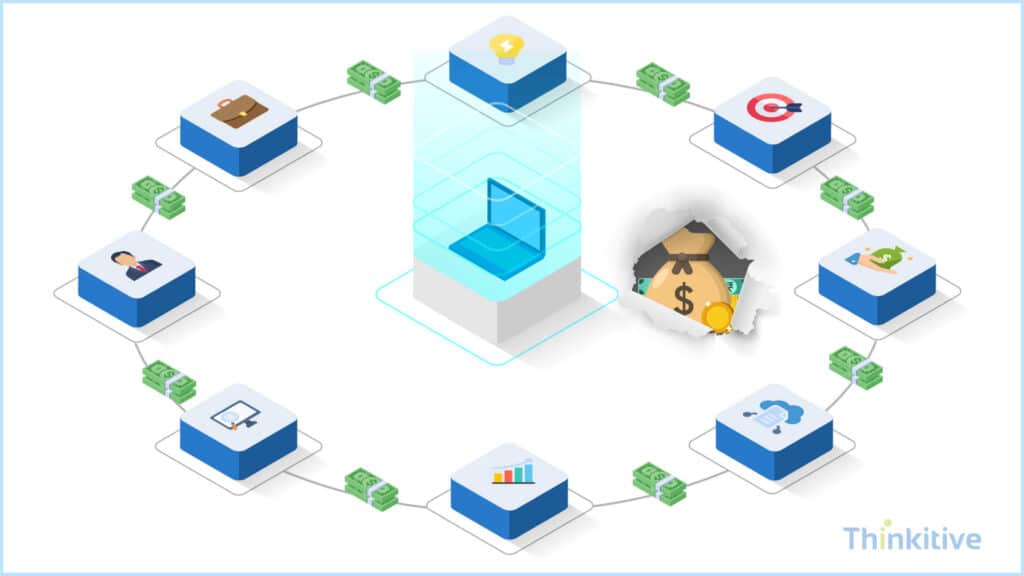
Some of the most common hidden costs of EHR integration that we could discuss with some of the clinicians need to be mentioned here.
- Proprietary Access Charges: The hidden costs are often hiding in plain sight from the vendor’s side. You see, many vendors charge per-user or per-transaction models. While this might appear simple, it can expand quite fast, increasing your cost simultaneously.
- Licensing Escalation: As your system scales or care modules in your practice expand, the EHR integration bridge becomes limited to the prior functionality only. This can again hike up the cost, so having a keen attention to the scalability factor can help you control the cost extensively.
- Integration Fees: APIs or vendor aggregators often charge a certain amount for using their API. This integration fee can be quite expensive, depending on your use.
Other than these, some of the most notable hidden EHR integration fees for clinics come in the form of middleware, connectors, and vendor-specific integration expenses. Knowing about them prior to simply asking the vendor can help you negotiate a better deal or reduce certain costs effectively.
Assess Your System & Know What Will Need in Custom EHR Integration –
Get Free ConsultationData Quality & Medical Data Migration Risks
EHR implementation risks, especially when it comes to connecting with other systems, are data quality. Poor data quality can count as one of the most common EHR integration challenges and costs.
Poor data quality can lead to many factors, some of the most common of which are mapping errors and reworks that, at times, seem never-ending. In this part of the blog, let’s discuss data quality and medical data migration risks.
- Legacy System Incompatibility & Format Inconsistencies: There are many healthcare practices that still rely on legacy systems. Since these systems are built on older systems, there are many format inconsistencies and incompatibility issues with your system. If missed, these inconsistencies can cost tremendously, escalating your EHR integration cost budget, while accounting for hidden costs.
- Data Cleansing, Normalization & Validation Efforts: If you are using legacy systems, then you would naturally have to clean your data. This requires going through certain processes like data cleansing, normalizing data, and validating the data against the data you want. These processes are quite costly in nature and make up a significant portion of the hidden costs of EHR integrations.
However, medical data migration risks are quite often encountered, and this can increase timelines and overall costs of your EHR integration project, because of the rework.
Maintenance, Compliance & Long-Term Costs
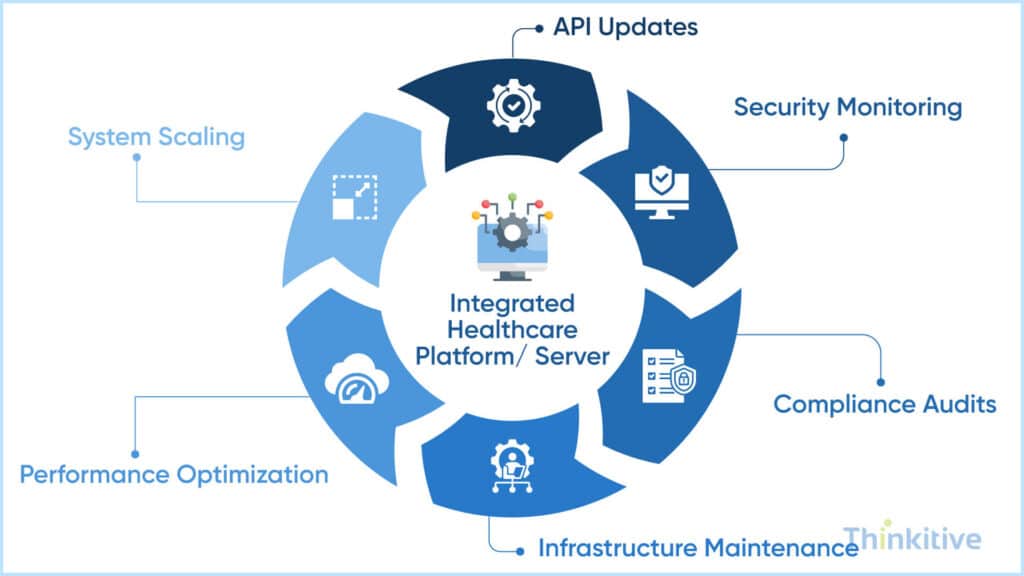
Hidden EHR integration fees for clinics often come in the form of maintenance, compliance, and long-term costs. Let’s have a look at them in short:
First things first, maintenance costs. This typically covers API version updates and system changes that require rework. This can be quite expensive if things are not planned earlier. So, understand the version and plan the process in such a way that it can help you save certain costs in the long run.
Along with that, HIPAA compliance requirements are often changing. That is why you should conduct HIPAA compliance audits and security monitoring. Now, these audits and security monitoring come bearing costs, which many don’t count. And since the landscape is ever-changing, you would need certain updates and changes every now and then.
Other than HIPAA, you also need to adhere to ONC interoperability and regulatory updates. Furthermore, these updates can also be costly, as certain changes can even force you to change the entire system.
Last but not least, continuous monitoring and infrastructure maintenance expenses are bound to be there. This will help you to keep your system running and allow you to deliver care profoundly.
Know the Hidden Costs You Will Have to Pay for Your EHR Integration Project –
Get Free ConsultationOperational & Human Costs
Another cost that many ignore is the operational and human costs that come in association with EHR integration. Let’s discuss this in brief below:
- The Transition Phase: During the initial transition, most of your staff, from clinicians to staff, takes a little longer to adapt to the new system. This leads to fewer patient visits, delayed documentation, and reduced efficiency temporarily. This impacts care delivery and revenue.
- Training & Onboarding Costs: Also, if you are moving towards a new system with EHR integration, then it requires structured training sessions for all your staff members, right from physicians, nurses, and the admin team. Along with training, you also need to spend time onboarding new staff and getting trained in the system.
- Increased IT Support Workload Post-Go-Live: Once you go live, the IT teams will face a surge in support requests. These requests can range from login issues to workflow conduction and even integration errors. Fixing this will require you to get additional staff and extend support hours, adding more to operational overhead.
- Workflow Disruption: During the initial stages of adoption, the workflows for both your clinical and administrative aspects can be disrupted. Misaligned processes, unfamiliar system navigation, and partial automation can lead to workarounds, duplicated tasks, and temporary inefficiencies until users fully adapt.
How to Identify & Minimize Hidden Costs of EHR Integration
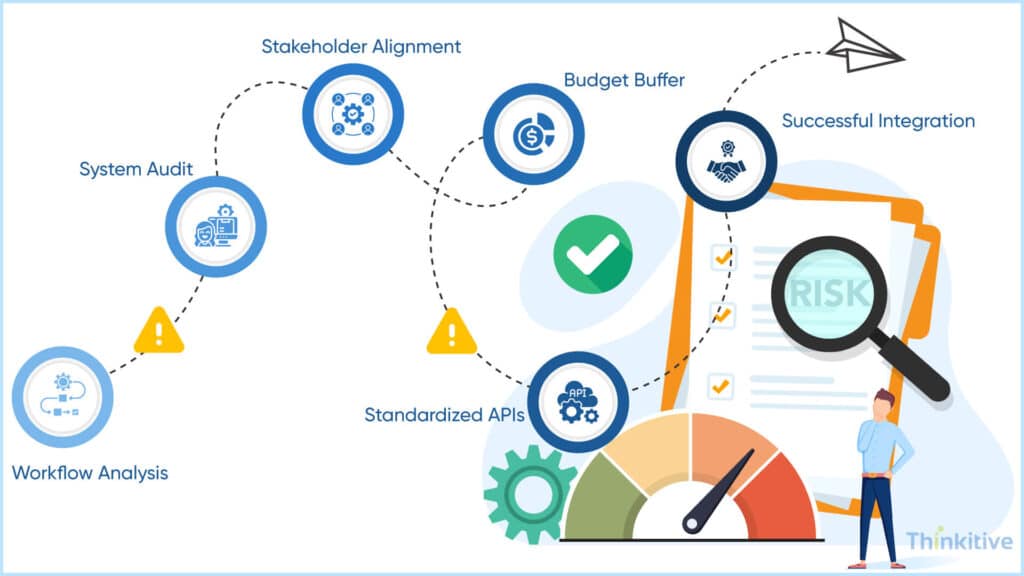
Now, as promised, let’s discuss how to identify and minimize the factor of hidden costs for your EHR integration project.
First things first, conduct a thorough, detailed technical and workflow analysis before starting the project. This has also been discussed earlier in this blog. You see, only when your basics and requirements are clearly defined can you know where your system lacks and what needs to be done to overcome it.
Other than that, build contingency buffers into project budgets, let’s say 10-20%. This will help you support the project, just in case the price shoots up significantly. Also, use standardized APIs and a proven integration framework. This will help you keep the cost minimal and the framework futureproof, so things don’t escalate quickly.
Last but not least, align your technical, operational, and business stakeholders early, so that everything is covered and no leaf is left unturned. This also reduces the chances of rework significantly.
One of the best ways to know the hidden costs and other aspects is by knowing the complete cost breakdown of your EHR integration project. Read our blog – How Much Does EHR Integration Cost? Complete Pricing Breakdown 2026, to learn more about it.
Conclusion: Planning Beyond the Visible Budget
The hidden costs of EHR integration are one of the major risk factors that are interrupting the success rate of these projects. In fact, the hidden costs are also one of the factors that many practices choose to ignore when considering the need for EHR integration.
And the best way to avoid any of the hidden costs that we’ve discussed above you need to plan proactively and with transparency. You need to cover all the needs of the stakeholders so that no stone is left unturned. At least, build a resilient and realistic EHR integration strategy so that your project succeeds and the cost remains under your expectations.
On that note, know where your projects stand, book a call with our integration expert for more details.
Frequently Asked Questions
The hidden costs of EHR integration typically include data migration cleanup, workflow redesign, staff training, and ongoing system maintenance. Many organizations also face costs related to interoperability gaps, testing cycles, and post-go-live support—making these some of the most overlooked EHR integration cost factors.
Some of the most common unexpected costs in EHR integration projects include interface rework, third-party middleware licensing, API usage fees, and extended implementation timelines. These expenses often emerge due to unforeseen healthcare integration challenges such as incompatible systems or incomplete data mapping.
Major medical data migration risks include poor data quality, duplicate records, inconsistent formats, and incomplete patient histories. Addressing these issues requires additional validation, cleansing, and clinician involvement—significantly increasing both time and cost during integration.
Yes, many organizations encounter hidden EHR integration fees for clinics, such as per-interface charges, API call limits, and vendor-specific licensing costs. These fees are often not fully disclosed upfront and can become a major contributor to overall EHR integration cost factors.
Ongoing maintenance, system upgrades, and API version changes add to the hidden costs of EHR integration over time. These long-term expenses are often underestimated, but they play a critical role in ensuring performance, compliance, and system scalability.
Common healthcare integration challenges such as workflow disruption, staff resistance, and temporary productivity loss can significantly increase costs. These common EHR integration challenges and costs often impact patient throughput, billing cycles, and overall operational efficiency.
To uncover hidden costs of EHR integration, organizations should conduct detailed workflow analysis, assess data quality, evaluate vendor pricing models, and plan for long-term maintenance. Proactive risk assessment helps minimize EHR implementation risks and improves budget accuracy.
It is recommended to allocate 15–25% of the total budget for unexpected costs in EHR integration projects. This buffer helps address unforeseen EHR implementation risks, integration complexities, and evolving requirements without disrupting project timelines.


