Medical Billing Outsourcing: The Complete Guide (2026)


Do you know how much healthcare organizations spend on administrative transactions annually?
According to a report by CAQH Index, healthcare organizations spent around $89 billion every year on administration alone. It also estimated that with electronic workflows and outsourcing medical billing services, they can potentially save up to $18.3 billion.
One of the major aspects of the administration is indeed medical billing and with passing time, managing them is becoming increasingly complex for healthcare practices. To give you an example, medical billing workflows include eligibility verification, payer-specific rules, coding, prior authorization, claim denials, and ongoing A/R.
Due to this, managing everything in-house is quite difficult and to access specialized expertise, streamline revenue cycle processes, and reduce administrative burden on internal staff, many practices are turning to outsourcing medical billing services.
While the lucrative medical billing outsourcing benefits can be attractive, it is more than just handling a practice’s billing operations. As a practice you must understand what services can be outsourced, what is the cost, how to prepare for the change and how to choose the right medical billing outsourcing partner.
On that note, let this blog be your guide to the medical billing outsourcing process. In this blog, let’s see what the potential risks and benefits are, common pricing models, and what to know before outsourcing medical billing.
So, without further ado, let’s get started!
What Is Medical Billing Outsourcing?
Let’s start with the basics, medical billing outsourcing is where a healthcare practice hires a third-party billing company or specialized team to manage some or all of their practice’s billing and revenue cycle tasks.
Depending on the needs of the practice, they may even outsource specific services such as medical coding, claim submission, payment posting, denial management, and A/R follow-up.
Unlike in-house models, outsourcing allows healthcare practices to rely on external expertise for billing, staffing, and operational support while overseeing their entire revenue cycle.
Furthermore, with new technologies emerging and advancements in the healthcare sector, many operations rely on technologies such as EHR, practice management integration, electronic claims, automated eligibility verification, claim-scrubbing tools, and reporting dashboards. These tools further contribute in reducing manual work, identifying errors, and providing greater visibility into revenue cycle performance.
How Does Medical Billing Outsourcing Work?
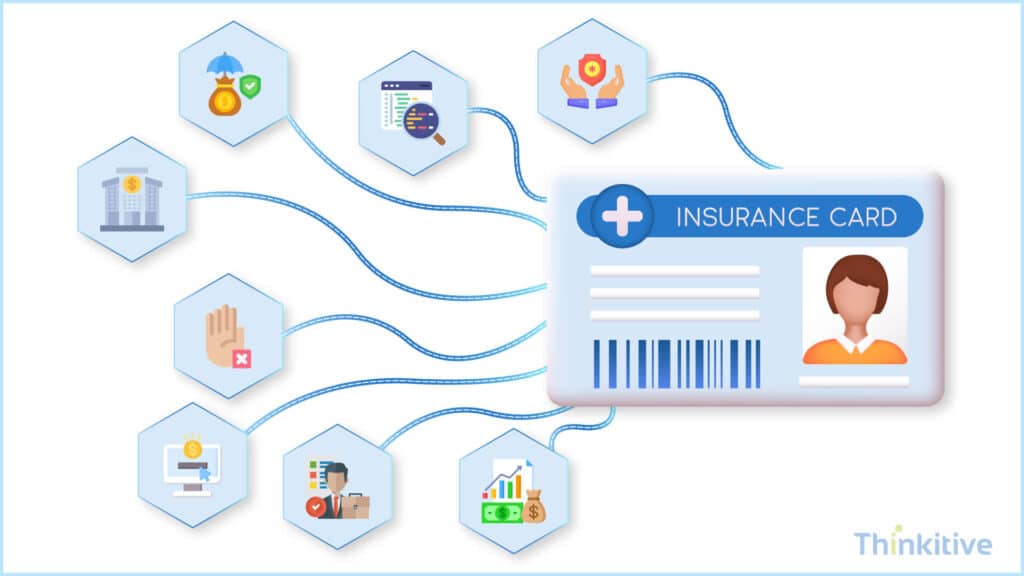
The medical billing outsourcing process is typically the same as that of in-house billing. The process generally moves from patient intake and insurance verification through claims processing, payment collection and A/R follow-up.
Here is the process to help you understand how outsourcing medical billing works:
- Patient Intake & Insurance Verification: The billing team collects and verifies patient information, insurance coverage, eligibility, copays, deductibles, and other benefits. Apart from that, if agreed upon the outsourced team may also help with prior authorizations to prevent avoidable claims issues.
- Coding & Charge Capture: After the patient encounter, clinical documentation is reviewed thoroughly and translated into the appropriate ICD-10-CM, CPT, and HCPCS codes. This helps in accurate charge capture and ensures that the services provided to the patients and properly represented on the claim.
- Claim Preparation & Submission: Here, before submission, claims are reviewed for missing information, coding issues, and other potential errors. The billing team then submits the clean claims electronically to the appropriate payer through a clearinghouse or other approved channels.
- Claims Tracking & Denial Management: The submitted claims are tracked through the payer process. In case a claim is rejected or denied, the billing team identifies the reason and makes the necessary corrections before resubmitting the claims within the given time frame.
- Payment Posting & A/R Management: After this, the payments and adjustments from insurers and patients are posted to the appropriate accounts. The team then starts the follow up process for unpaid or underpaid claims, bringing the focus back on outstanding balances and aging A/R.
- Patient Statements & Financial Reporting: Depending on the outsourcing arrangement, the billing partner then generates patient statements and supports patient billing inquiries. With regular reporting, the practice gets visibility into metrics such as collections, denials, A/R aging, and claim performance.
Why Do Practices Outsource Medical Billing?
While internal in-house teams can manage the medical billing process, the reason why practices are looking for outsourcing medical billing is to save time and resources. You see, practice staff will have to look after coding, claims, payer requirements, denials, payment posting, and A/R follow-up on a regular basis. This makes the billing process more complex, and managing these workflows efficiently internally can become difficult.
Here are some of the most common reasons for medical billing outsourcing benefits due to which practices make a shift:
- Reduce Administrative Workload: With a dedicated team working on the billing processes of your practice, it reduces the administrative workload of your staff and allows your admin staff to focus on other operational tasks.
- Access Specialized Expertise: Outsourced medical billing teams usually consist of professionals experienced in medical coding, claims processing, payer requirements, denial management, and A/R follow-ups. This gives your practice a competitive edge with access to specialized skills.
- Improve Billing Efficiency: The use of standardized workflows and billing technology can make the process consistent.
- Strengthen Revenue Cycle Performance: Consistent claims management, denial follow-up, payment posting, and A/R management will improve the practice’s collection and reduce revenue that is being lost through unresolved claims or errors.
- Focus on Patient Care: The reduced time spent on billing administration by outsourcing medical billing will allow staff members to focus on patient care and other core practice operations.
Long story short, medical billing outsourcing can give practices access to specialized expertise and scalable operational support by reducing the burden of managing complex billing workflows.
In-House vs. Outsourced Medical Billing: Which Model Fits Your Practice?
When it comes to money, you often want to be in control of your finances, right? Well, this is the reason why many practices still hesitate to go ahead with outsourcing medical billing services.
However, this decision should not be made on the basis of keeping in control, instead which models suit your practice best and how it can be more beneficial for your practice. So, the main difference between both these models is the one who manages the billing operations.
With in-house billing, the practice has to recruit and manage its billing and oversee everything. Whereas, with outsourcing billing services a third-party manages your practice’s billing operations up on the agreed terms on the practice’s behalf.
Refer to the table below for better understanding and clear differentiation:
| Factor | In-House Billing | Outsourced Billing |
| Staffing | Practice recruits and manages billing staff | Vendor provides the billing team |
| Expertise | Depends on internal staff | Access to specialized billing expertise |
| Control | Direct control over daily operations | Shared oversight with the vendor |
| Technology | Practice manages billing technology | Vendor may provide or support billing technology |
| Scalability | Growth may require additional hiring | Support can scale with billing volume |
| Management | Practice handles training and performance | Vendor manages day-to-day billing operations |
NOTE: The choice of the right model depends on many factors. Factors like practice size, claim volume, staffing resources, specialty requirements, technology infrastructure, budget, and control must be considered.
Understanding the Cost of Medical Billing Outsourcing
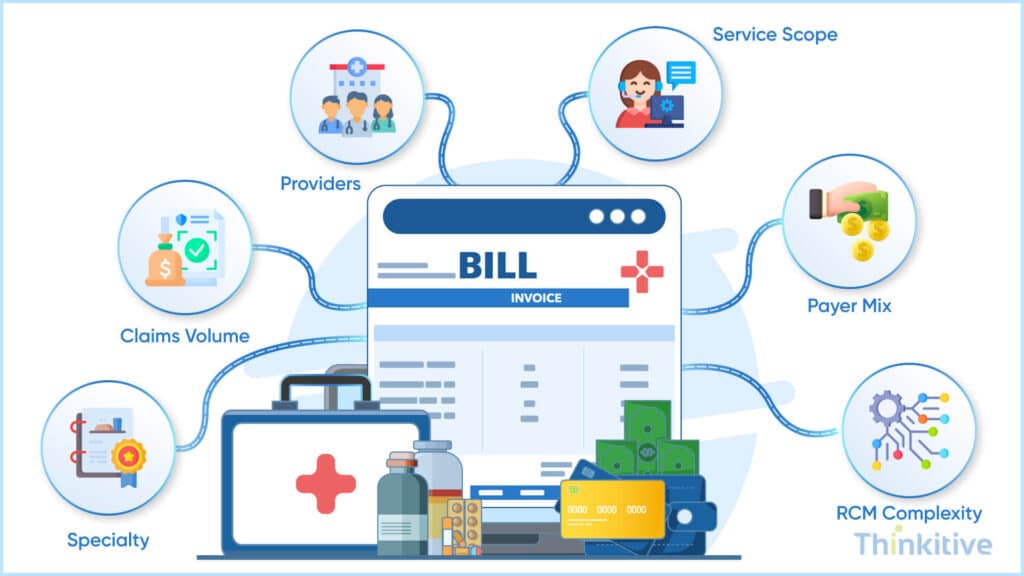
Another factor why many practices hesitate to outsource their medical billing processes is the cost. You see, most practices assume that outsourcing medical billing can be a costly affair. However, the cost of medical billing outsourcing varies from one partner to another.
On top of that, pricing typically depends on factors such as specialty, claims volume, number of providers, service scope, payer mix, and the complexity of the practice’s revenue cycle.
Medical billing companies typically use different pricing models, which typically include a percentage of collections or a flat monthly fee. Some other popular options include per-claim fees or a combination of these approaches.
Here as a practice administrator you need to clarify which is included in the quoted price like coding, claim submission, denial management, A/R follow-up, reporting and patient billing.
Having said that, when evaluating a partner, the cost of their outsourcing medical billing services should not be the only factor. You should look for the overall value of outsourcing, here you should typically check for billing accuracy, collection performance, denial management staff expertise, technology, reporting and time saving.
How Do You Know When It’s Time to Outsource Medical Billing?
If you are thinking that after a certain time, when the internal team is overburdened, you will outsource your medical billing processes, then you might be right, but only partially. The truth is, there is no single point at which you have to move to outsourcing medical billing.
However, there might be signs that you can either strengthen your internal teams or switch to outsourcing medical billing services. Some of the signs are recurring billing and revenue cycle challenges.
Here are some of the common signs that might indicate you might outsource your medical billing processes:
- Growing billing workload that internal staff struggle to keep up with
- Increasing claim rejections or denials
- Rising A/R or aging unpaid balances
- Difficulty hiring or retaining billing staff
- Frequent billing or coding errors
- Limited time for staff to follow up on outstanding claims
- Practice growth that is increasing patient and claim volumes
If these challenges persist despite efforts to improve internal workflows, outsourcing may provide the additional expertise and capacity needed to manage billing more effectively. For growing practices, it can also provide a way to expand billing operations without continuously adding internal staff.
How to Choose Medical Billing Outsourcing Services
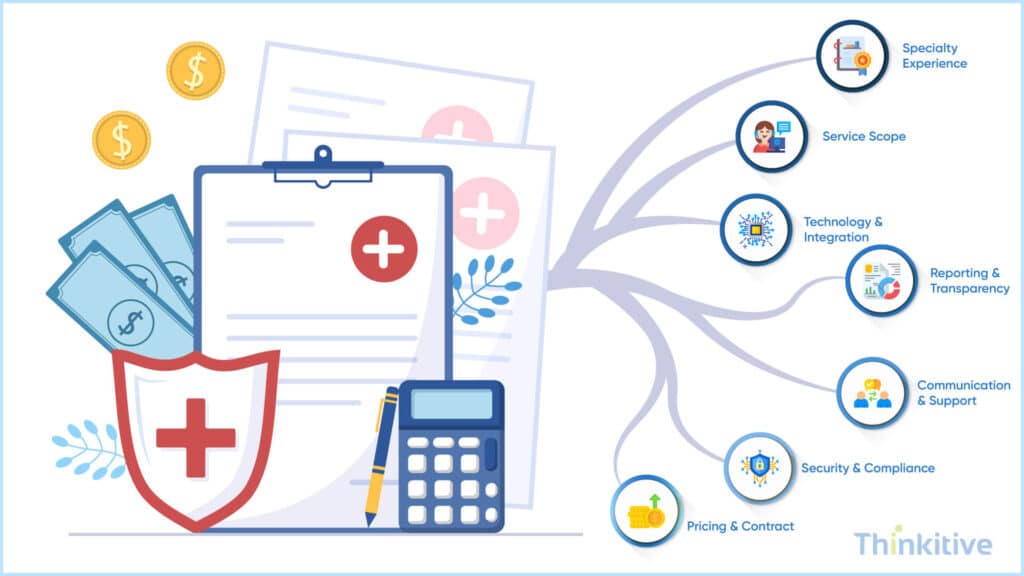
If you have decided to outsource medical billing processes, then choosing the right partner can be quite complicated. You see, it is more than just comparing prices.
On that note, here are some of the key factors that you need to consider when choosing medical billing outsourcing services:
- Industry and Specialty Experience: Look for experience with your specialty, payer mix, and billing complexity.
- Service Scope: Check which services are included in their offering, from coding and claim submission to denial management and A/R follow-up.
- Technology and Integration: Check the compatibility of your vendor working with your systems like EHR, practice management system, clearinghouse, and existing workflows.
- Reporting and Transparency: Ensure that the partner sends regular reports and provides visibility into key revenue cycle metrics.
- Communication and Support: Establish who your primary point of contact and how to escalate issues and along with the frequency of the updates.
- Security and Compliance: Verify that the vendor has appropriate safeguards for protecting patient information and can provide a Business Associate Agreement (BAA) when required.
- Pricing and Contract Terms: Understand the pricing model, including services, additional fees, contract length, and termination terms.
NOTE: The best partner is usually not the one that offers the lowest price. In fact, practice should choose a provider who holds expertise in said services, technology, and support aligned with your operational needs and revenue cycle goals.
Common Myths and Concerns About Medical Billing Outsourcing
If you have scratched the surface for medical billing outsourcing services, then you must have come across some of the common myths about outsourcing billing services. Being a mythbuster for you, here are some of the common myths and realities surrounding outsourcing medical billing services.
| Common Concern | What to Consider |
| It’s too expensive | Compare total costs and value, not just vendor fees. |
| We’ll lose control | Define responsibilities, reporting, and oversight upfront. |
| Patient data won’t be secure | Evaluate security controls, compliance, and data-handling practices. |
| Quality may decline | Assess the vendor’s expertise, processes, and performance metrics. |
| The vendor won’t understand our practice | Look for relevant specialty and payer experience. |
| Outsourcing means giving up everything | Choose which billing functions to outsource based on your needs. |
Conclusion
If you have made it this far, then I can assure that you have majorly covered almost all the aspects of outsourcing medical billing processes and are well aware about what it actually is. For a recap of what it covered, we covered what it actually is and how it can benefit your practice.
Other than that, one of the most important things that you need to consider in this is choosing the right development partner that fits your practice and selecting the right approach for outsourcing your practice’s medical billing processes.
On that note, I consider that this guide will serve its purpose and in fact even help you in choosing the right partner for your medical billing processes. So, what are you waiting for to get your billing process assessed and learn the benefits of outsourcing medical billing for your practice?
Frequently Asked Questions
Medical billing outsourcing is the practice of hiring a third-party company to manage some or all of a healthcare practice’s billing and revenue cycle activities. The medical billing outsourcing process can include patient eligibility verification, coding, claim submission, payment posting, denial management, and A/R follow-up. Understanding how medical billing outsourcing works for healthcare practices helps organizations determine which functions to outsource and how to manage the relationship.
The cost of outsourcing medical billing varies based on factors such as claim volume, specialty, number of providers, service scope, payer mix, and pricing model. Vendors may charge a percentage of collections, a flat fee, a per-claim fee, or a combination of these. Practices should compare the total cost and expected value rather than choosing a provider based on price alone.
Neither model is universally better. Outsourced medical billing can provide access to specialized expertise, technology, and scalable support, while in-house billing gives practices more direct control over daily operations. The right option depends on the practice’s size, billing volume, staffing resources, specialty, budget, and operational requirements.
The key medical billing outsourcing benefits include reducing administrative workload, accessing specialized billing expertise, improving billing workflows, supporting more consistent A/R follow-up, and scaling operations as the practice grows. Outsourcing can also allow providers and staff to spend more time on patient care and other core responsibilities.
Practices can outsource individual billing functions or a broader revenue cycle workflow. Common services include insurance verification, medical coding, charge capture, claim submission, payment posting, denial management, A/R follow-up, patient billing, prior authorization support, and revenue cycle reporting.
The transition timeline depends on the practice’s size, billing volume, system integrations, service scope, and the complexity of its existing workflows. A typical transition may involve vendor selection, contract and BAA completion, workflow planning, data preparation, system integration, staff coordination, testing, and go-live activities. A clearly defined implementation plan can help minimize disruption.
Outsourced medical billing can be managed securely when the vendor has appropriate safeguards for protecting PHI and follows applicable HIPAA requirements. Practices should evaluate the vendor’s security controls, access management, data protection practices, employee training, and incident response procedures. A Business Associate Agreement (BAA) should also be established when required.
When choosing a billing partner, practices should evaluate specialty experience, service capabilities, technology, EHR and practice management integrations, reporting, communication, security, pricing, and contract terms. The vendor should also have a clear process for handling denials, A/R follow-up, escalations, and performance reporting.
Billing teams typically monitor submitted claims, identify rejections and denials, determine the underlying cause, make corrections, and resubmit or appeal claims when appropriate. For A/R management, teams follow up on outstanding balances based on aging and payer requirements while tracking unresolved accounts until they are addressed.
It can, particularly when outsourcing provides access to experienced billing professionals, standardized workflows, effective denial management, and consistent A/R follow-up. However, outsourcing does not automatically improve financial performance. Practices should establish measurable goals and monitor metrics such as denial rate, days in A/R, clean claim rate, and collections.
Practices that experience growing billing workloads, staffing challenges, increasing claim denials, aging A/R, or limited internal billing expertise may benefit from outsourcing. It can also be useful for practices experiencing rapid growth or managing complex billing requirements across multiple providers or locations.
Before outsourcing medical billing, a practice should review its current billing performance, identify which functions it wants to outsource, gather relevant billing and A/R data, document existing workflows, confirm system and integration requirements, and establish performance expectations. It should also evaluate vendors carefully and clarify pricing, responsibilities, reporting, security, and transition requirements.
Common concerns include cost, loss of operational control, communication issues, data security, transition disruptions, and inconsistent service quality. These concerns can be addressed through careful vendor evaluation, clearly defined responsibilities, transparent reporting, appropriate security measures, performance metrics, and regular communication.
This medical billing outsourcing guide highlights several important considerations: understand which functions you need to outsource, compare the total cost and value, evaluate vendor expertise and security, establish clear performance expectations, and prepare your systems and workflows for the transition. The goal is to choose an outsourcing model that fits the practice rather than simply transferring billing responsibilities to a third party.


