Progress Notes That Take 15 Minutes in Mental Health: The Copy-Paste Nightmare

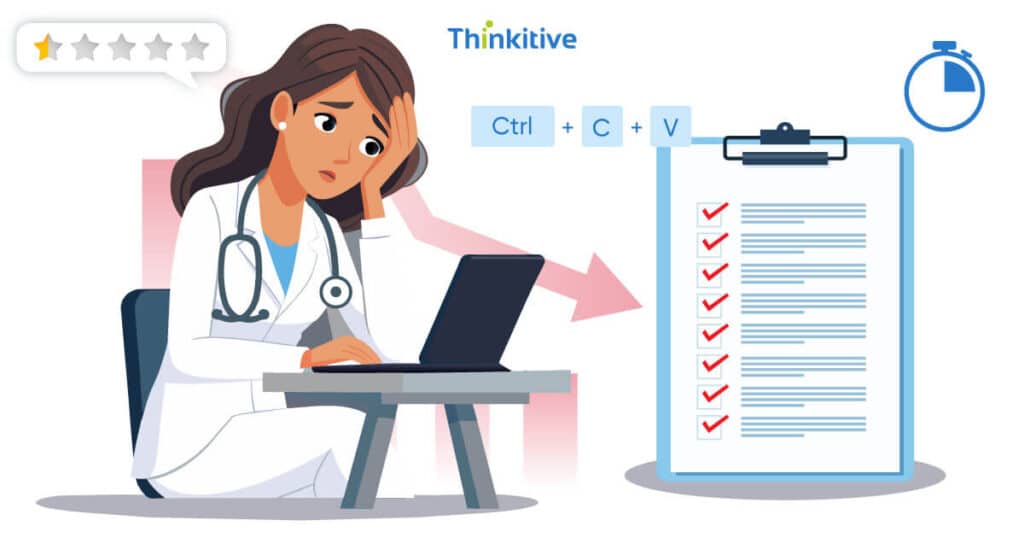
What if completing progress notes doesn’t take 15 minutes or more?
You can easily achieve this with custom EHRs designed specifically for your behavioral health workflows. Rather than using generic templates that don’t understand how your practice works, tailored templates make work much easier.
Taking mental health progress notes becomes faster, more efficient, and accurate, allowing you to focus more on patients and not screens. But for this to happen, you need the right solutions that not only make documentation faster, but also preserve the meaning of each patient story.
Unfortunately, that’s not the reality of most mental health practices today, as many are still stuck using generic EHRs. These EHRs function, but they do not make clinicians’ lives easier and work faster as they are supposed to. When progress notes are forced into the standard format, providers spend more time than necessary on one task.
Here, they use workarounds like copy-pasting, which saves time but increases the risks of repetition and blurs important clinical information. Ultimately, it leads to records that do not show the real progress or lead to something entirely different, risking patient safety and the clinic’s reputation.
This is the copy-paste nightmare where progress notes, when done right, take too long, and become risky when done wrong. This blog is going to explore why mental health progress notes take too long in EHR and how using a custom mental health EHR can help you overcome the EHR copy-paste problem.
Let’s get started without further ado!
Why Generic EHR Templates Increase Documentation Time
Generic EHRs were created for generic medicine or to be used to document physical conditions and not mental ones. So, when a mental health provider uses the templates to document data like emotional changes and triggers, these notes fall short.
Being medical-centric, they bring documentation inefficiency that forces therapists to navigate through irrelevant boxes, dropdowns, and clicks. Most importantly, generic templates don’t capture the nuances of behavioral health; many providers just copy-paste the data to save time. At first, this may seem to help, but later it only increases the clinician’s work as they still have to edit the old notes for accuracy.
Then, the biggest reason the generic templates increase documentation time is a lack of critical fields for mental health care. For instance, these templates do not have patients’ psychosocial histories, therapy process notes, or DSM-5 aligned diagnostic details.
So, to make up for this lack, clinicians either have to fit this data into an unrelated field or type it out manually in the free-text section. In both cases, the quality of notes is impacted, and the risk increases significantly as the data remains incomplete.
In short, the generic templates do not support creating long progress notes and any other mental health care-related documents, increasing the documentation time.
The Copy-Paste Trap: Compliance & Accuracy Risks
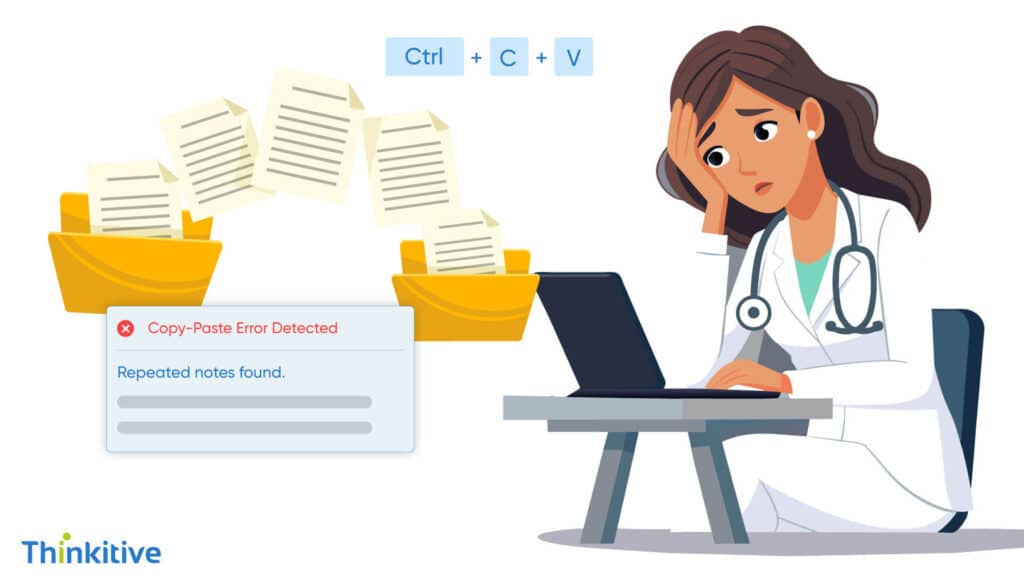
As I said earlier, documentation in generic templates takes too long if done manually. This is where the EHR copy-paste problem really begins. In the rush of completing the notes early, clinicians paste the data from the previous visit into the new note. At first, this seems like a great way to save time, fill the fields, and move to a new session quickly.
However, if this continues, it can have very serious consequences. With each copy-paste, the duplication or incomplete documentation increases, and patients end up with progress notes that repeat the same things. These notes show no changes in condition over time, and crucial details are not even recorded completely.
This poses even greater risks from the compliance standpoint. When an audit happens, the copy-pasted notes often contain outdated data that shows inconsistencies, raising red flags. Furthermore, if the difference is too huge from the data on care provided, it can quickly snowball into billing rejections, penalties, and even legal action.
On the clinical side, the risks are even more significant as this concerns the lives of your patients. If progress notes fail to document the right data, the clinicians lose the ability to track patient progress. This not only impacts continuity of care but can also lead to poor decision-making in the future.
In short, what seemed an easy way to create progress notes quickly can become a trap that can endanger your clinic and patients’ lives. It also undermines the very foundation of accurate, compliant, and patient-centered documentation.
Get our Quick-Note Efficiency Guide Book for Creating Accurate Progress Notes
Download nowImpact on Patient Care & Clinician Productivity
The ripple effect of the long time spent documenting is not limited to just clinicians; patients are also affected. Every extra minute spent creating notes is a minute taken away from a meaningful session with patients. This means, instead of focusing on engaging with patients, your attention is given to screen-ticking unnecessary boxes and typing incomplete data.
It affects patient trust as they feel unheard, and the quality of patient care is impacted by incomplete clinical details. Moreover, if it takes too long to update patient data, care teams may not have the most accurate or timely information to guide interventions when needed. This delay can stall treatment decisions, leaving patients waiting for adjustments in care that could improve outcomes sooner.
Over time, this all piles up, and this documentation inefficiency contributes to clinician burnout. Providers feel like they spend more time on data entry than delivering mental care. This disconnect between the work they trained for and the work they actually do increases job dissatisfaction and staff turnover rates.
In short, with longer documentation time, not only are clinicians burned out, but clinics also face challenges like continuity of care and the high cost of recruitment and training.
How Custom Templates Save Time & Improve Workflow
When it comes to inefficient documentation, it has direct consequences on both patient outcomes and clinicians’ well-being. Every extra minute spent typing or re-editing the long progress notes is time taken away from meaningful patient conversations.
In addition, inefficient tools like generic EHRs make it difficult to retain staff and create care plans on time. That’s why having a more suitable solution or technology is necessary, and that’s where custom mental health EHR steps in.
These EHRs come with features that reduce documentation time, eliminate errors, and align with compliance needs. Most importantly, these EHRs let clinicians focus on patients in ongoing sessions rather than clicking through the inflexible screens. Here’s how they make a difference:
| Feature | Benefit for Clinicians |
| Tailored templates for individual, group, and family therapy | Capture session details without forcing them into generic medical fields |
| Pre-populated fields, dropdowns, and smart suggestions | Reduce manual typing and speed up note completion |
| Automated DSM-5 alignment and compliance checks | Ensure accuracy and reduce audit risk without extra effort |
| Before/After workflow optimization | Cuts progress note time from 15 minutes to just a few, freeing more time for patient care |
Conclusion
In a mental health practice, using generic EHRs makes it difficult to create progress notes accurately and quickly. Most clinicians require more than 15 minutes to just create a single note, impacting the overall session and documentation speed.
To speed the process, they use the copy-paste shortcut. However, although it increases the speed of documentation, it also brings many risks, such as patient safety and compliance risks. That’s why, instead of relying on workarounds like these, building a custom mental health EHR that works around your behavioral health workflows increases accuracy and speed.
So, ready to transform your slow documenting into a faster and more efficient one? Talk to our healthcare software experts and get your free assessment to start the transformation right away.
Frequently Asked Questions
Mental health progress notes drag on in generic EHRs because they weren’t designed for therapy workflows. Clinicians click through rigid medical templates, search for missing fields, and type free-text details. What should be quick documentation turns into a 15-minute chore that steals focus from patient care.
Copy-pasting may feel like a shortcut, but in mental health EHRs, it erases the nuances of each session. Notes become repetitive or outdated, making it harder to track real progress. This risks compliance and disconnects the record from the patient’s actual journey.
Yes, custom EHR templates can significantly reduce the time spent on progress notes. By providing tailored fields, smart suggestions, and DSM-5 alignment, they remove repetitive typing and guesswork. Clinicians spend less time documenting and more time doing what matters most: caring for their patients.
A solid behavioral health progress note template should include space for session type (individual, group, family), psychosocial updates, therapy goals, interventions, patient response, DSM-5 criteria alignment, and risk assessments. It should flow like a real session conversation, not a checklist, so clinicians can capture care accurately without wasting time.
Inefficient progress notes drain clinicians’ energy by stealing time that should go to patients and piling on after-hours work. Spending 15 minutes per note makes providers feel more like clerks than caregivers, fueling frustration, fatigue, and ultimately burnout that pushes many to question staying in the profession.
A generic EHR template can create serious compliance risks for mental health providers. Missing DSM-5 fields, incomplete psychosocial data, or copy-pasted notes often lead to inaccurate records. This weakens patient care and raises red flags during audits, exposing practices to billing rejections and legal trouble.
With custom mental health EHR templates, clinicians can reduce documentation time by more than half. What once took 15 minutes per progress note can now take 5–7 minutes. That saved time translates into more patient care, less burnout, and fewer late-night hours spent editing the notes.


