Key Steps Required to Build Your Own EHR System

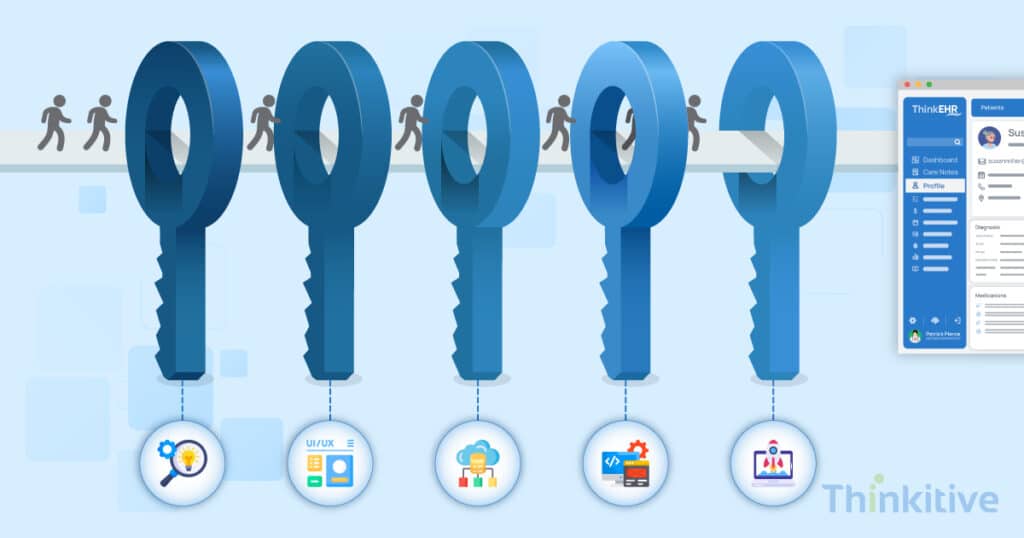
A significant percentage of the healthcare system still uses legacy technologies, and that in itself is a problem. Let me explain.
Over the years, healthcare and technologies have evolved immensely. From the introduction of interoperable standards to AI, the reliance on technology in healthcare has become immense. And for your system to adapt and successfully support these technologies, you need your system to be compatible, which legacy systems fail.
That is why many healthcare practices have chosen to build their own EHR system to make it interoperable and enable it as a platform with AI. However, the development landscape has also changed over the last few years.
But interestingly, the steps to build an EHR have remained the same, well, at least on a broader scale. And being someone who is slightly inclined towards care delivery with little reference to technical aspects of development, you might need a structured roadmap for steps to build your EHR system successfully.
However, before we get into the intricacies of EHR development, you must know that you need to balance usability, compliance adherence, interoperability aspects, and scalability when you’re developing your EHR software.
Having said that, with experience delivering 50+ custom EHR development and implementation projects across ambulatory care, hospitals, and specialty practices, we’ve developed a proven framework that organizations can follow to reduce implementation risks and build scalable healthcare software.
So, let this blog be your step-by-step guide to EHR creation, and without further ado, let’s get started!
Consult an EHR Specialist Before You Can Build Your Own EHR –
Get Free Consultation
The 6 Essential Steps to Build an EHR System
Before diving into each phase, here’s a quick overview of the complete EHR development process:
- Deep Discovery & Market Alignment: Define workflows, business goals, and project requirements.
- User-Centric Healthcare Software Design: Design intuitive experiences for providers, staff, and patients.
- Architecture, Infrastructure & Regulatory Safeguards: Build a secure, scalable, and compliant technical foundation.
- Agile Engineering & Core System Development: Develop core EHR modules, integrations, and clinical workflows.
- AI Integration & Advanced Intelligence Layers: Add automation, clinical intelligence, and AI-powered capabilities.
- Testing, Data Migration, Validation & Deployment: Test, migrate data, validate compliance, and launch the system.
Phase 1: Deep Discovery & Market Alignment
The discovery phase is the very first step in your journey to build your own EHR. To explain this phase in short, it involves identifying your specific needs and defining the scope of your EHR software.
Once you start the discovery phase, the very first thing you do is map the workflows for clinical and administrative use. Depending on your clinic—ambulatory care, hospital, or specialty clinic, etc.—these workflows can widely differ.
After the workflows are mapped, the next step involves identifying the operational gaps in existing healthcare systems. This basically becomes your roadmap for development, telling you the scope of development.
Once these gaps are identified and documented, you actually start talking about software development. Some of the core things that are defined here are technical, compliance adherence, and interoperability requirements.
With these requirements, you know exactly how you want your software to be, what functions it will carry, what features it will have, and everything that comes with it. And on the basis of this, a roadmap is created that aligns with your business and clinical goals.
And with this, the first step to building an EHR system is completed. A keen attention must be given to this step, as most of the things about your EHR system are defined here. On top of that, when planning the development aspects, plan for long-term scalability and AI-readiness, as it is the need of the hour.
Also, if you want to learn about the complete guide to build your own EHR, read our blog – The Ultimate Guide to Build Your Own EHR Software (2026).
Phase 2: User-Centric Healthcare Software Design
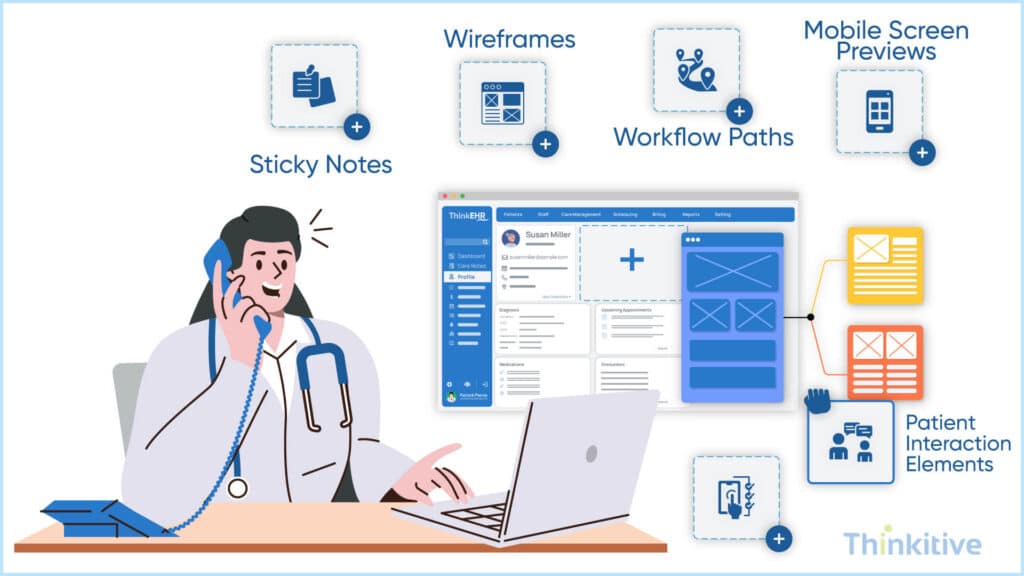
After the completion of discovery, the design phase starts. This is where you define how your EHR software or system will look and feel. Apart from that, one major aspect that is defined in this phase is the usability of the software.
So, first things first, you will design intuitive workflows for the EHR software. This will determine how the clinical and administrative aspects of the EHR software will function. When designing these workflows, design them in such a way that reduces clinical documentation fatigue and provides users with an intuitive and efficient user experience when using the software.
And talking about experiences, structure the UX of the software around provider productivity and patient engagement. This is crucial because provider productivity allows them to focus more on care delivery and patient engagement to allow patients to proactively participate in their care journey.
Given the higher technological advancements and penetration in our day-to-day lives, make sure the software is accessible and usable under different circumstances. For instance, you need to make the EHR software mobile-friendly and design it according to specific mobile-friendly design principles so that the data is not only accessible, but also the gap between care can be reduced.
Moreover, before finalizing any workflow, use iterative prototyping so that workflows would function perfectly in real-world scenarios and when using them would provide a delightful experience.
Tip: Scalability and long-term use of the software must not be ignored. With respect to that, design the medical record software for long-term adoption. This saves rework and makes your software flexible.Phase 3: Architecture, Infrastructure & Regulatory Safeguards
Once the core workflows, feature requirements, and basically the scope of your software are defined, the next step is to build a healthcare data architecture that is secure, scalable, and regulation-ready. The areas of focus in this phase are infrastructure architecture, compliance frameworks, data security, and long-term scalability. On that note, let’s discuss this phase in detail:
- Building Secure & Scalable Healthcare Data Architecture: Modern EHR systems are designed to use scalable cloud-native or hybrid architecture. These architectures enable your system to handle large volumes of patient records, clinical documentation, imaging data, and real-time integrations. You can use structured databases, microservices, and API-first architecture to improve performance, interoperability, and future scalability.
- Designing Infrastructure for High Availability & Multi-Location Scalability: Healthcare requires near-continuous uptime, and with practices expanding their reach, your EHR infrastructure must be planned to balance load, redundancy, distribute storage, and multi-region deployment capabilities to support hospitals, clinics, and remote care environments without interruptions.
- EMR System Compliance Checklist for HIPAA Readiness: Align your platform with key HIPAA security and privacy requirements, including administrative, physical, and technical safeguards. This will not only make your system safe and secure but also make navigating the legal landscape easier. Also, compliance planning should cover secure data storage, controlled access management, patient consent handling, and PHI security.
- HITECH Breach Notification & EHR Compliance Requirement: The HITECH Act introduced stricter data breach reporting and enforcement standards for healthcare software systems. Due to this, EHR platforms must include breach monitoring, incident response mechanisms, and audit capabilities to support regulatory reporting requirements.
- Preparing Systems for ONC Certification & 21st Century Cures Act Compliance: If you are developing an enterprise-grade EHR system, then you must prepare for interoperability and patient-access mandates as directed by the ONC and the 21st Century Cures Act. Some of the notable things in this are FHIR-enabled APIs, patient data accessibility, and information-blocking rules.
- Integrating Role-Based Access Controls, Encryption & Audit Trails: Security architecture should include role-based access controls, multi-factor authentication, end-to-end encryption, session monitoring, and comprehensive audit trails to protect sensitive patient data while ensuring accountability across users.
- Disaster Recovery & Secure Cloud Infrastructure: For healthcare continuity, you need a plan for disaster recovery, just in case. Some of the notable things in this include automated backups, geo-redundant storage, recovery testing, and secure cloud infrastructure capable of minimizing downtime during cyberattacks, hardware failures, or natural disasters.
Phase 4: Agile Engineering & Core System Development
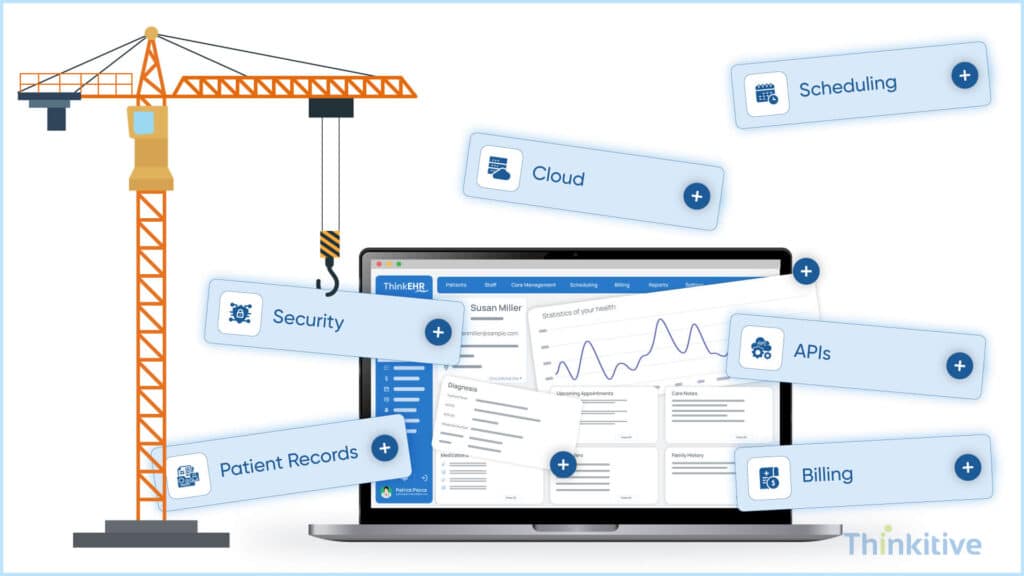
This is where you actually start coding, after discovery, design, and architecture are finalized. Agile development methodology is typically used here so that anything that might be missed during the previous stages can be planned and included in development. This is typically the longest phase, and the first thing you develop in this is foundational EHR modules—basically MVP EHR—and clinical workflows.
After that, core system functionalities are developed, such as appointment scheduling models, charging screens, billing mechanisms, and ePrescribing functionality with pharmacy integrations. While these are just some of the core functionalities for development, they can vary widely depending on your specific needs and requirements.
Also, use modular architecture for your EHR software so that it is flexible in its nature. This makes it easier for you to update or add additional features to the system. The major advantage you get with this approach is that when you are updating a particular feature, the other aspects of your system work fine, so the normal functioning doesn’t stop.
During development, interoperability should be built into the platform by integrating FHIR APIs and HL7 interfaces with laboratories, pharmacies, payer systems, and other healthcare applications. It enables seamless data exchange and future-proofs your system for interoperability.
Some of the core systems that you need to integrate with your EHR system are labs and pharmacies through HL7 and FHIR integrations.
Get a Demo to Know the Process to Build Your Own EHR –
Book a DemoPhase 5: AI Integration & Advanced Intelligence Layers
If you have been following till here, then the basic structure of your EHR software is ready. And now everything that you will do will be to enhance your system and make it better. This is where AI integration comes into the picture, that is, if you want it to be embedded in your system. So here are some intricacies of this step that you must know:
- Embedding AI-Assisted Clinical Documentation Workflows: Documentation is that one thing that consumes most of your providers’ time. However, by embedding AI for documentation, it can not only improve the quality of documentation but also allow providers to focus more on care delivery and not worry about documentation.
- Using NLP Models to Convert Conversations Into Structured Notes: If you want to automate the note-taking process, then you will need to rely on NLP or Natural Language Processing models. These are excellent AI systems that can capture what you naturally speak and convert it into text. However, in the EHR system, it can go even further, as it can pinpoint important information from the conversation and make notes for providers instead of them taking notes during consultations.
- Implementing Predictive Analytics for Patient Risk Identification: You see a lot of patients on a daily basis, but limited time with them allows you to skip any risks that can deteriorate their condition. However, implementing predictive analytics into your EHR system can help you identify patients who are at risk before they show any symptoms. Because patients might lie, but data doesn’t.
- Automating Coding, Billing & Administrative Workflows: The administrative workflow is another aspect of your EHR software that can be immensely improved with the help of AI. For instance, these AI models can fill in the medical codes like CPT, ICD, and, in fact, even submit the claims if curated properly. This way, the accuracy of your billing and administrative activities can be immensely improved.
- Preparing Infrastructure for Future Generative AI Integrations: While these AI models are already making headlines, it is fair to say that they are still in their evolving stage. That is why you should design your infrastructure in such a way that it can adapt and accommodate the future updates of AI and can be integrated with them easily.
Phase 6: Testing, Data Migration, Validation & Deployment
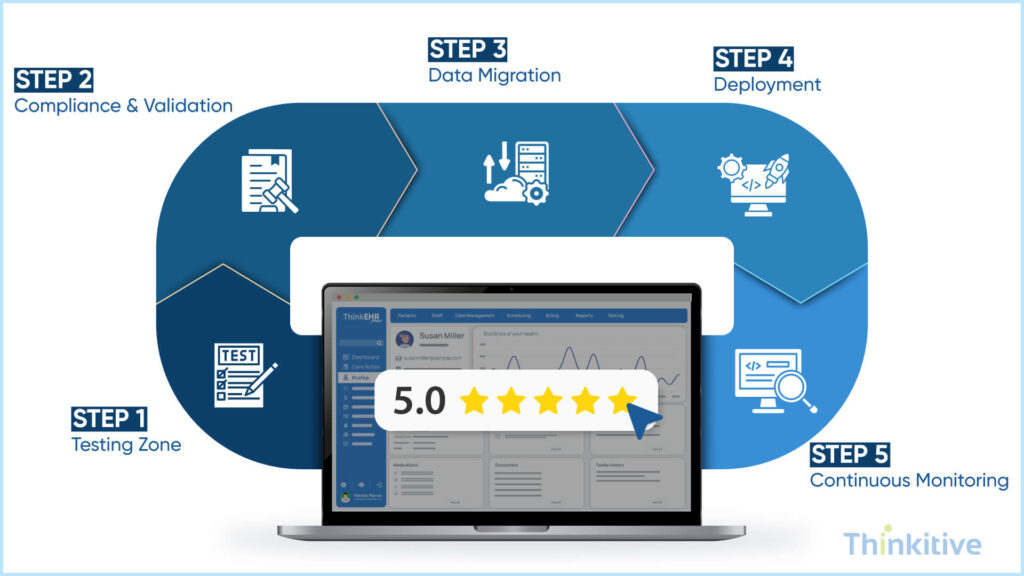
With the completion of AI integration, your development stage can be officially marked as completed. However, as said earlier, everything you do after this is to improve and make your EHR system better, right? Well, this is where everything starts, with testing, data migration, and validation. After this, you deploy your system for real-time use.
Let’s discuss some of the intricacies of this phase in detail below:
- Conducting Functional, Security & Performance Testing: After development, your EHR system enters the testing phase, where it is tested for its core functionality, workflow accuracy, data handling, and overall application stability. Furthermore, with performance testing, you evaluate the system based on its responsiveness under high patient volumes. On the other hand, with security testing, you identify vulnerabilities and fix them, making your system safe and secure to use.
- Running Penetration Testing & Compliance Validation Audits: Then comes penetration testing and compliance assessment, which is to verify alignment with HIPAA security standards and healthcare data protection requirements. These audits are important to identify risks and vulnerabilities and address them before deployment.
- Performing Clinical User Acceptance Testing for Healthcare Workflows: This is one of the most important steps in this process, as it determines if the software is usable for physicians, nurses, and administrative staff in real healthcare workflows. UAT testing ensures that the system can be effectively and efficiently used by its core user groups.
- Planning Secure Migration of Patient Records & Legacy Healthcare Data: If you are updating your existing system, then you need to migrate your data from legacy systems without compromising data integrity or compliance requirements. The data typically includes patient records, billing data, clinical documentation, imaging references, and historical information.
- Validating Interoperability, Scalability & Uptime Performance: Your EHR system should also be tested for interoperability with systems you integrate with, such as labs, pharmacies, payer systems, telehealth platforms, and other third-party applications using standards such as HL7 and FHIR. And while you are at it, test it for scalability and uptime to ensure the system supports growing patient volumes and multi-location operations.
- Deploying Cloud-native Infrastructure Using Docker & Kubernetes: Modern EHR platforms use containerized deployment models with technologies like Docker and Kubernetes. This is done to improve scalability, deployment consistency, system resilience, and infrastructure management.
- Establishing Monitoring & Continuous Optimization Processes: Last but not least, once all the testing is done, the system is finally deployed. However, the process doesn’t stop here. In fact, here you have to establish post-deployment monitoring to ensure that the system is performing at its finest and is secure at all times. Organizations should implement real-time monitoring, error tracking, usage analytics, automated alerts, and continuous optimization processes to support long-term system reliability and user satisfaction.
Step-by-Step Process Assessment to Build Your Own EHR –
Get Free ConsultationConclusion
Building a custom EHR isn’t simply about developing software—it’s about creating a platform that supports better clinical workflows, regulatory compliance, interoperability, and long-term innovation. By following a structured development process, healthcare organizations can reduce implementation risks and build an EHR that evolves alongside their practice.
However, to leave you with a few pointers to remember, you must combine compliance, usability, scalability, and interoperability to futureproof your EHR software in this ever-evolving landscape. Moreover, if you are thinking about embedding AI in your system, then it is the right decision, as it will support long-term use and innovation.
On that note, I hope this blog has answered almost all of your questions and gives you a brief idea about what to expect from each phase or step. And if you still have any questions about how to build an EHR system, then book your consultation call with an EHR expert.
Frequently Asked Questions
The most important steps to building an EHR system successfully include defining clinical workflows, identifying specialty-specific requirements, planning secure infrastructure, ensuring HIPAA compliance, designing intuitive provider experiences, integrating interoperability standards, and conducting extensive testing before deployment. A strong EHR strategy should also include scalability planning, cloud infrastructure, and long-term optimization to support future healthcare operations.
A complete step-by-step guide to EHR creation can take anywhere between 6 months and 24 months, depending on the complexity of the platform. A basic MVP EHR for a small clinic may take 4–6 months, while enterprise-grade healthcare systems with interoperability, AI capabilities, and multi-location scalability may require over a year of development, testing, compliance validation, and deployment.
Integrating FHIR APIs during EHR development is essential because modern healthcare systems rely heavily on interoperability and real-time data exchange. FHIR APIs help EHR systems securely communicate with labs, pharmacies, telehealth platforms, payer systems, wearable devices, and third-party healthcare applications. FHIR-based interoperability also supports patient access requirements and compliance with modern healthcare regulations.
Healthcare organizations can complete an EMR system compliance checklist successfully by implementing HIPAA security safeguards, access controls, encryption standards, audit logging, breach monitoring, disaster recovery planning, and secure patient data management processes. Compliance preparation should also include interoperability standards, user authentication protocols, and documentation practices aligned with healthcare regulations and industry requirements.
Effective healthcare data architecture should focus on scalability, interoperability, security, and high system availability. Best practices include using cloud-native infrastructure, structured databases, API-first architecture, secure data storage, redundancy planning, and standardized interoperability frameworks like HL7 International and FHIR. Organizations should also design systems that can support analytics, AI integration, and growing patient data volumes over time.
Healthcare software design differs significantly from traditional enterprise software because it must support complex clinical workflows, patient safety requirements, regulatory compliance, and high usability under time-sensitive conditions. Unlike standard business software, EHR systems must minimize provider burnout, reduce documentation friction, support specialty-specific workflows, and maintain strict healthcare data security standards.
Artificial intelligence is transforming modern EHR systems by improving clinical documentation, workflow automation, predictive analytics, decision support, and patient engagement. AI-powered capabilities such as ambient documentation, medical coding assistance, clinical recommendations, and risk prediction help reduce administrative burden while improving operational efficiency and care delivery outcomes.
Engineering teams should conduct clinical user acceptance testing (UAT) by involving physicians, nurses, billing staff, and administrative users in real-world workflow simulations. Testing should validate usability, documentation speed, patient chart management, order entry processes, and specialty-specific workflows. Clinical feedback gathered during UAT helps identify workflow inefficiencies before the EHR platform is deployed in production environments.
Data migration during a build-your-own EHR software guide process should involve secure extraction, cleansing, mapping, validation, and transfer of patient records from legacy systems to the new platform. Organizations must ensure data integrity, minimize downtime, maintain HIPAA compliance, and validate migrated records before go-live. A phased migration strategy combined with backup and rollback planning helps reduce operational risks during EHR transition projects.


