Cerner EHR Integration: Connecting Oracle Health with Third-Party Apps

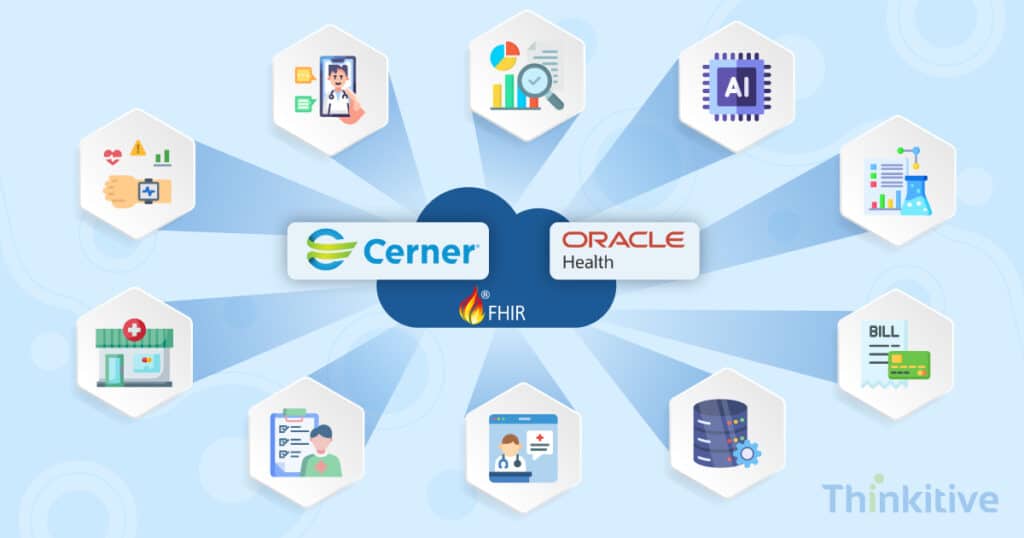
If you are able to look at the healthcare IT landscape a few years ago, one name that rivals some of the industry leaders was Cerner Systems. Moreover, it was one of the dominant providers of EHR platforms with a market share of 25% of US hospital beds, with over 250 million patients globally.
However, in 2022, Oracle acquired Cerner Corporation, becoming Oracle Health, and with it modernized the traditional Cerner Millennium platform into a cloud-connected and API-driven ecosystem.
This improved interoperability, scalability, real-time data exchange prospects, and integration with modern healthcare applications through Oracle Cloud infrastructure. The acquisition of Cerner by Oracle was not the only factor responsible for this, since the 21st Century Cures Act and ONC certification required EHR vendors to improve their interoperability and reduce information blocking by adoption of standardized APIs such as SMART on FHIR.
This enabled customized systems and third-party healthcare apps to securely access and exchange patient information more easily. Now, many large healthcare networks, government programs, and federal healthcare organizations rely on Cerner EHR integration to connect multiple systems across their ecosystem, including hospitals, labs, pharmacies, and patient platforms.
Having said that, due to this acquisition, a major shift from legacy HL7 interface to API-first healthcare connectivity has been seen. And this process can be complex and difficult to scale. Hence, the growing demand for scalable Oracle Health integration for reliable data exchange, operational efficiency, and consistent patient care across ecosystems.
Now, rather than looking at it as a simple Cerner Millennium FHIR API integration, look at it as a strategic approach for Cerner API integration and Cerner health interoperability workflows.
On that note, let’s see how to integrate with Cerner EHR for third-party apps and try to understand why Cerner EHR integration is so crucial now, while looking at some of the Oracle Health integration best practices.
Assess Your System for Cerner or Oracle EHR Integration –
Get Free Assessment
Navigating the Cerner Code Console & Developer Portal
For building third-party integration and managing them, the Cerner Code Console and Oracle Health developers provide the foundation. Here, developers can register applications, configure authentication settings, manage client credentials, and access APIs for interoperability workflows.
Along with that, for testing these integrations without affecting your live clinical systems, the platform also provides secure sandbox environments. It also provides SMART on FHIR validation tools so that developers can verify API connectivity, authenticate workflows, and manage interoperability compliance development.
This is what the Cerner Code Console and Developer Portal are all about. It provides you with an entire ecosystem that allows you to develop and manage your Cerner EHR integration with other third-party apps and test them in a closed, independent, and secure environment with synthetic data.
Core Connectivity: Cerner Millennium FHIR API & Ignite APIs
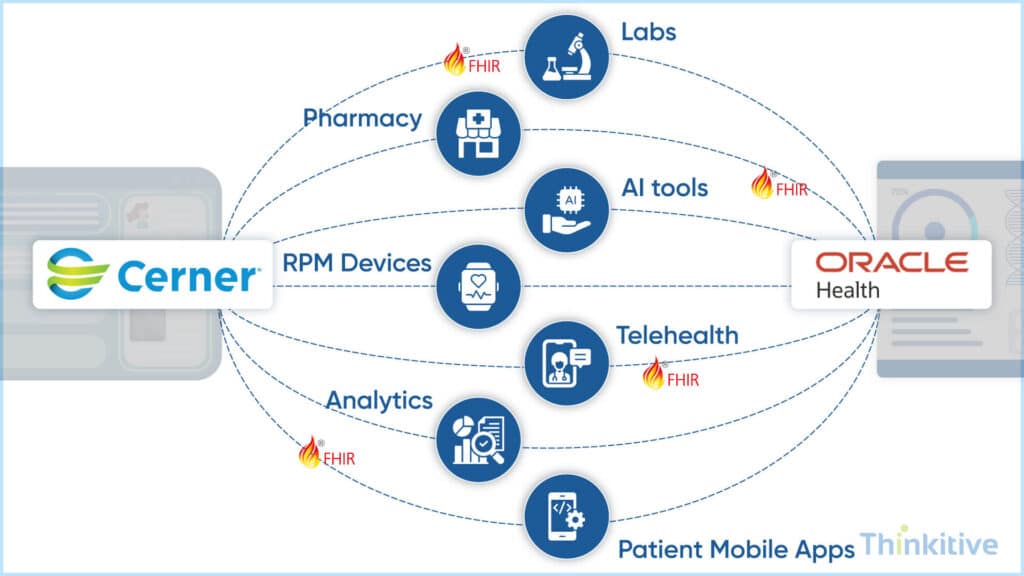
To understand the core connectivity capabilities of Cerner or Oracle Health integration, we first need to understand the Cerner Millennium FHIR API architecture and resources it supports.
So, first things first, the Cerner Millennium FHIR API basically provides a standardized framework for exchanging data between Oracle Health systems and third-party applications. Under this, it commonly supports FHIR resources like patient, observation, encounter, medication, condition, and appointments to ensure your healthcare workflow for all the necessary activities, including clinical and administrative, is interoperable.
Furthermore, the interoperability standards commonly used for Cerner FHIR API integrations are FHIR R4 and legacy DSTU2 versions, so that structured healthcare data exchange can be done. The major advantage of using these standards is that they allow developers to build scalable integrations while maintaining compatibility across different healthcare systems and applications.
To be a part of this connected ecosystem, you need to have interoperable workflows and one of the best Oracle Health integration best practices to leverage Oracle Health Ignite APIs. These APIs are designed to support modern cloud-native healthcare interoperability and API-driven integration workflows. It helps you in enabling real-time connectivity between Cerner systems and external applications.
The reason why you need this is because traditional Cerner Millennium integrations relied majorly on HL7 messaging and interface engines for system connectivity. On the contrary, Modern Ignite API connectivity uses RESTful APIs, FHIR standards, and cloud-native interoperability models. This makes your system or integration more flexible and scalable.
Know the Best Approach for Cerner EHR Integration –
Get Free ConsultationPractical Cerner EHR Integration: Connecting Third-Party Applications
Modern Cerner EHR integration enables healthcare organizations to securely connect third-party applications using Oracle Health clinical workflows. On that note, let’s look at some of the intricacies of practical Cerner EHR integrations:
- SMART on FHIR Workflows: The best part about SMART on FHIR workflows is that they allow third-party applications to launch directly within Cerner PowerChart interfaces. Due to this, clinicians can access external tools and patient data seamlessly without leaving their existing EHR workflows.
- Support Read, Write-Back & Clinical Workflows: Cerner integrations can support read-only access, write-back functionality and real-time clinical workflow synchronization. These capabilities allow third-party applications to securely retrieve, update, and exchange healthcare data across Oracle Health environments.
- Setting Up OAuth 2.0 Authentication & SMART App Launch Workflows: OAuth 2.0 authentication helps secure communication between Cerner systems and other third-party applications. On top of that, SMART App Launch workflows further enable secure user authentication, context sharing, and role-based access within healthcare interoperability environments.
- Managing Patient-Facing vs System-to-System Access Scopes: Depending on the patient-facing system and system-to-system, Cerner EHR integrations often require different access scopes. That is why proper scope management helps maintain security, compliance, and controlled access to protected healthcare information.
- Handling Millennium-Specific Coding Systems & Mapping to SNOMED ot LOINC Standards: Cerner Millennium FHIR APIs may use proprietary or organization-specific coding systems that require standardization during integration. Developers here can map this data to interoperability standards such as SNOMED CT and LOINC to improve data consistency and cross-platform compatibility.
- Oracle Health Integration Best Practices: Some of the Oracle Health integration best practices for scalability, API optimization, and latency management are caching, asynchronous processing, and rate-limit management, which help improve system performance and reduce latency.
Cerner EHR integration with third-party applications typically involves using FHIR APIs, SMART on FHIR standards, OAuth 2.0 authentication, and secure interoperability workflows. Now, these standardized integration methods help providers build scalable, compliant, and future-ready connected healthcare solutions. And this is how to integrate with Cerner EHR for third-party apps.
Security, Validation & Production Deployment
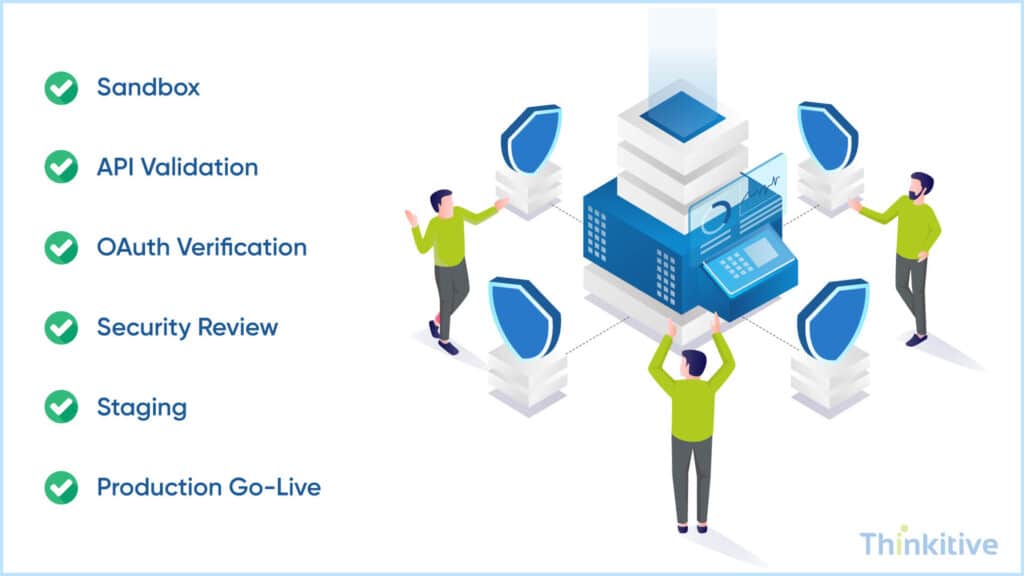
Cerner EHR integration requires more than just API connectivity, and it involves many things like security validation, compliance reviews, and long-term interoperability management. On that note, let’s look at some of the aspects that are related to this:
- Navigating Cerner Code Program Requirements & Validation Processes: For third-party healthcare application integration with Oracle Health Systems, the Cerner Code Program establishes certain technical and interoperability requirements. Developers must complete these validation workflows, testing procedures, and security reviews before production deployment.
- Security Audits, Compliance Checks & Production Readiness Reviews: Your Cerner API integration must undergo security audits and compliance assessments to ensure HIPAA-compliant healthcare data exchanges. With these reviews, you can easily verify authentication workflows, system reliability, and operational stability before go-live deployment.
- Managing API Version Updates & Millennium System Changes After Deployment: Ongoing maintenance to support API updates, FHIR version changes, and Millennium platform modification for Oracle Health integrations. That is why proper version management helps hugely in maintaining interoperability, compatibility, and minimizing integration disruptions over time.
- Detecting Synchronization Failures & Workflow Disruptions Across Enterprise Deployments: Large-scale Cerner EHR integrations often involve multiple connected healthcare systems that require continuous synchronization. Monitoring and alerting systems help in identifying data exchange failures, workflow interruptions, and interoperability issues before they can impact your clinical operations.
Not sure whether to use APIs, FHIR, HL7 interfaces, or vendor-specific integration methods?
Also, you know the complete guide about EHR vendor integration. Read this detailed blog here — EHR Vendor Integration: How to Choose the Right Approach by System.
This guide breaks down the integration options available across leading EHR platforms and helps healthcare organizations choose the most efficient, scalable, and cost-effective approach.
Conclusion: Scaling Oracle Health Interoperability for Enterprise Healthcare
Today, the demand for the connected healthcare ecosystem is at its peak, and Cerner, being one of the major players in the market, plays a crucial role in establishing secure and scalable enterprise healthcare connectivity.
On top of that, Oracle Health integrations help providers connect their EHR systems with third-party applications, patient platforms, AI tools, labs, pharmacies, and operating systems through standardized interoperability frameworks.
Furthermore, as modern interoperability strategies increasingly rely on scalable, API-first integration architecture built around FHIR, SMART on FHIR, and emerging frameworks such as TEFCA.
On that note, let this blog be your guide to adopting standard-driven Oracle Health integration and help you improve data accessibility, streamline clinical workflows, and build a future-ready connected healthcare ecosystem.
So, what are you waiting for? Get your system assessed with our integration expert for Cerner EHR integration.
Frequently Asked Questions
The first step in a successful Cerner EHR integration project is identifying the interoperability requirements, workflows, and third-party applications that need access to Oracle Health systems. Organizations typically begin by registering applications through the Cerner Code Console and defining API access, authentication methods, and compliance requirements.
The Cerner Millennium FHIR API is designed to support standardized healthcare interoperability using FHIR resources and SMART on FHIR workflows. Compared to some EHR vendors, Cerner interoperability environments often combine modern API-based integration with legacy Millennium workflows and enterprise healthcare infrastructure.
The Cerner Code Console is used to register third-party applications and manage API onboarding during Cerner API integration projects. Developers use the platform to configure authentication settings, generate client credentials, access sandbox environments, and validate interoperability workflows.
Organizations typically integrate third-party applications with Cerner EHR systems using FHIR APIs, SMART on FHIR standards, OAuth 2.0 authentication, and secure interoperability workflows. Understanding how to integrate with Cerner EHR for third-party apps also involves configuring access scopes, validating APIs, and ensuring HIPAA-compliant data exchange.
Oracle Health integration best practices include implementing secure OAuth 2.0 authentication, using standardized FHIR APIs, optimizing API performance, and maintaining scalable interoperability architectures. Organizations should also monitor latency, manage API version updates, and perform regular security audits to maintain reliable healthcare connectivity.
Yes, Cerner supports SMART on FHIR implementation for secure and standardized healthcare interoperability. SMART on FHIR enables third-party applications to launch directly within Cerner clinical workflows while securely accessing patient-context data through Cerner FHIR API integration.
Yes, certain Cerner EHR integration workflows support write-back functionality depending on the application permissions and API capabilities. Authorized third-party applications can update clinical information, synchronize workflows, and exchange healthcare data securely within Cerner PowerChart environments.
Common challenges in Cerner API integration projects include managing legacy Millennium workflows, handling interoperability standards, configuring authentication, and mapping healthcare data to standardized terminologies. Organizations may also face issues related to API performance, latency management, version updates, and enterprise-scale interoperability complexity.
The timeline for Cerner EHR integration depends on the complexity of the interoperability requirements, number of connected systems, and compliance validations involved. Simple Cerner FHIR API integration projects may take a few weeks, while enterprise Oracle Health integration initiatives can take several months to complete.
The costs associated with the Cerner Code Program vary depending on the type of integration, development environment, validation requirements, and production deployment scope. Organizations should also consider additional costs related to security reviews, API management, interoperability testing, ongoing maintenance, and infrastructure optimization.


