Building Patient Portals in Your EHR

Over the last few years, especially since the arrival of the COVID-19 pandemic, something peculiar has been happening inside the healthcare industry. You see, the last pandemic made it evident that ignoring a healthy lifestyle can be harmful in many ways.
This is the reason why patient portal usage has nearly doubled since 2019. Furthermore, with the trends of healthcare practices going digital, healthcare providers are exclusively focusing on building patient portals into their EHR development.
In fact, patient portal development has been on the rise as well, and for good reasons. According to an ONC report, as highlighted by Becker’s Hospital Review, nearly 65% of individuals accessed their online medical records through patient portals in 2024.
These trends are a part of giving patients more control of their health. As patient portals enable a digital-first experience for the patients, while allowing self-service facilities. That is why questions like ‘ How to create an EHR with the right patient portal architecture?’ is something very common in every client interaction
However, building a patient portal within your EHR involves much more than adding patient-facing features. Clinical workflows, administrative processes, interoperability, and security must all work together to deliver a seamless patient experience.
And this is the reason why I decided to pen this blog: to help you understand how to build a HIPAA-compliant patient portal.
So, without further ado, let’s get started!
7 Must-Have Features That You Should Have in Your EHR –
Read GuideHow to Build a Patient Portal for Your EHR
Building a patient portal involves more than providing access to health records. Follow these essential steps to create a secure, scalable, and patient-friendly portal for your EHR.
- Define Patient Portal Objectives: Identify core goals and patient needs.
- Plan Essential Portal Features: Prioritize core patient access capabilities.
- Design Portal Architecture: Build a secure and intuitive foundation.
- Enable Secure Patient Communication: Implement HIPAA-compliant messaging workflows.
- Integrate AI-Powered Features: Automate engagement and patient support.
- Implement HIPAA Compliance: Secure data, access, and audit trails.
- Optimize Accessibility & Mobile Experience: Deliver consistent experiences across devices.
- Test Patient Workflows: Validate usability, performance, and security.
- Launch & Continuously Improve: Expand features based on patient feedback.
Core Features Required in Modern Patient Portal Systems
Let’s start with the basic functionalities that define your patient portal, the essential features every modern patient portal should include.
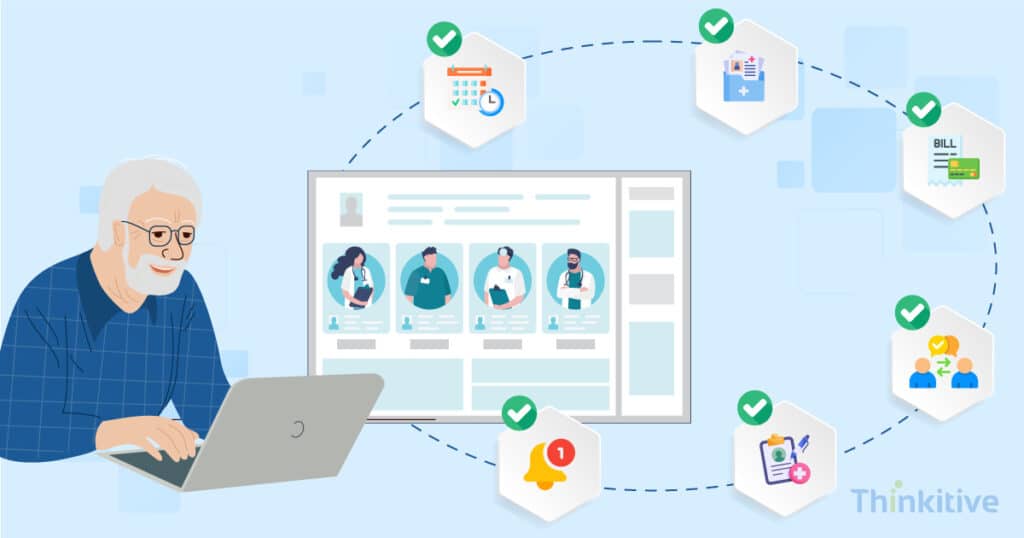
So, first things first, the patient portal should basically allow your patients to access their records, prescriptions, test results, and other data related to their care securely. This is the basic function of the patient portal. Bringing in transparency and giving the patients control of their care journey.
Moving on to the next set of functions, the patient portal should allow patients to schedule their appointments. This is a critical and, in some projects, the most important feature of patient portals. That is why it should be aligned with the digital intake workflows, so that the process of appointment, consultation, and so on is streamlined.
While patients are able to access their healthcare records as a practice, you must bring in the transparency, moving beyond just clinical data. Billing visibility and payment management tools are great features to be included in this. It not only allows the patient to get a complete picture of their care journey but also brings in transparency from both parties.
Here is a checklist for the core or essential EHR patient access tools that you must consider:
| Feature | Description |
| Secure Access to Health Records | Allows patients to securely view medical histories, visit summaries, diagnoses, medications, allergies, immunizations, and lab results directly through the patient portal. |
| Appointment Scheduling and Digital Intake | Enables patients to book, reschedule, or cancel appointments online while completing registration forms and pre-visit questionnaires digitally. |
| Billing and Payment Management | Provides access to billing statements, insurance information, outstanding balances, and secure online payment options. |
| Secure Messaging and Care Communication | Supports HIPAA-compliant communication between patients and care teams for follow-ups, questions, and care coordination. |
| Prescription and Medication Management | Allows patients to request prescription refills, review medication histories, receive reminders, and track prescription statuses. |
Designing Patient Portal Architecture for Better User Experience
Patient portal architecture is another aspect that you must keenly pay attention to, as most of the user experience depends on this. Starting with its basic structure, ensure that the patient portal architecture has a secure and scalable structure that enables seamless access.
One of the best ways to do that is by creating intuitive interfaces that simplify navigation and are patient-friendly in nature. For instance, the patient should not have trouble finding the features and tools in the software. This can impact usability by a huge margin and even elevate the user experience.
Typically, the software systems are built for desktops, whereas a study by Becker’s Hospital Review suggests that almost 57% of patients access health records via mobile. This is why your EHR system must support responsive experiences across mobile and desktop devices. This is a great way to showcase consistency and provide a continuous experience across devices.
Building Tip: When building a patient portal in your EHR system, build it with usability and accessibility features in mind. This is the only way to make your patient portal reliable with elevated usability.
Here is a quick table to help you understand the features in this:
| Architecture Element | Description |
| Intuitive User Interface | Design simple and patient-friendly navigation that allows users to quickly access appointments, records, messages, and billing information without confusion. |
| Responsive Design | Ensure the patient portal delivers a consistent experience across desktops, tablets, and mobile devices to accommodate varying user preferences. |
| Mobile-First Experience | Optimize workflows and screen layouts for smartphones, considering that a significant percentage of patients access healthcare information through mobile devices. |
| Accessibility Features | Incorporate accessibility standards such as screen reader compatibility, keyboard navigation, adjustable text sizes, and sufficient color contrast to support all users. |
| Secure and Scalable Architecture | Build a robust infrastructure that can securely manage growing patient data volumes, user traffic, and future feature expansions without compromising performance. |
| Consistent User Experience | Maintain uniform design patterns, workflows, and functionality across devices to reduce the learning curve and improve patient adoption. |
Building Secure Patient Communication Gateway Features
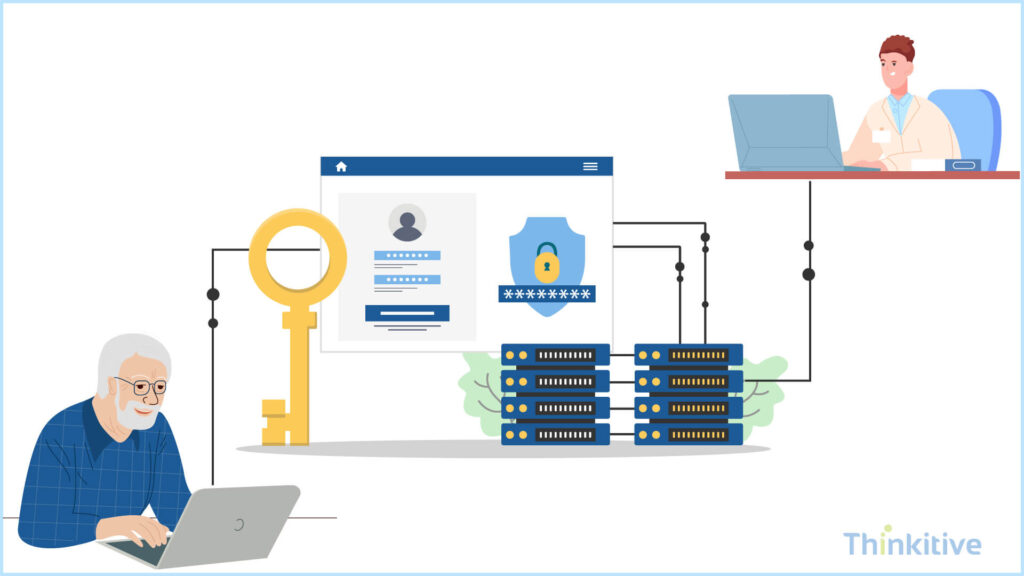
One of the major use cases of patient portals is to allow patients to take control of their health and proactively participate in their care journey. To achieve this, your patient portal should include a secure patient communication gateway.
In simple words, the patient portal should not only allow patients to connect with providers via various communication means like text or call, but also securely. This can be done easily with encrypted messaging workflows between patients and providers. Encryption strategies help in securing the data at rest and during transition, making the process quite inclusive and secure.
On top of that, the system should also support appointment reminders and follow-up communication. This makes it easier for the patient to be up to date with the care journey, but also to communicate and prepare for the visit prior to. This is one of the best ways to improve patient adherence with their care journeys.
While you are talking about communication in healthcare, your patient portal must support file sharing and have digital healthcare communication means. For instance, if a patient has to send a picture or a complete document, they must be able to send it securely in the digital healthcare space.
Designing a secure patient communication gateway is the key to gaining patient trust and even encouraging them to use patient portals to proactively participate in their care journey.
Assess Your System for AI-Readiness –
Read GuideAI-Assisted Features for Modern Patient Portals
The penetration of AI in modern patient portals has already started. Some of the practices have even included these AI-assisted features in their system. On that note, let’s see some of the AI-assisted features that you can consider during your custom patient portal development.
Appointment reminders and automated notification or alert features are something that you can at least have in your patient portal. It can take a significant burden off your admin staff. You see, with this feature, the system itself can customize and personalize messages and send them directly to patients.
Apart from that, conversational AI like chatbots can also be introduced for routine patient support. As most of the patients have usual questions, a well-trained chatbot can answer those in the meantime, assisting patients in the care journey, saving both time and money.
While you are building patient portals in your EHR system, which is powered by AI, try to create personalized healthcare communication experiences. Personalized healthcare communication experience can improve patient adherence and keep them engaged in their care journey on a personal level. It can elevate their experience and encourage them to actively participate in care activities.
AI-assisted workflows can also be included to improve patient portal usability. Here are some features that you must consider having in your AI-powered EHR patient portal:
| AI-Assisted Feature | Description |
| Intelligent Appointment Reminders | Automatically sends personalized appointment reminders, follow-up notifications, and care alerts to patients through their preferred communication channels. |
| AI-Powered Patient Chatbots | Provides instant responses to common patient questions, assists with navigation, and offers basic support outside of office hours. |
| Personalized Health Communications | Delivers tailored health reminders, wellness recommendations, preventive care notifications, and educational content based on patient profiles and medical history. |
| Smart Care Plan Reminders | Encourages patient adherence by sending timely reminders for medications, upcoming tests, follow-up visits, and treatment milestones. |
| Automated Patient Triage | Collects symptoms through conversational interfaces and directs patients to appropriate care pathways, resources, or providers. |
| Predictive Engagement Workflows | Uses patient behavior and health data to identify individuals at risk of disengagement and proactively triggers outreach or intervention campaigns. |
How to Build a HIPAA Compliant Patient Portal
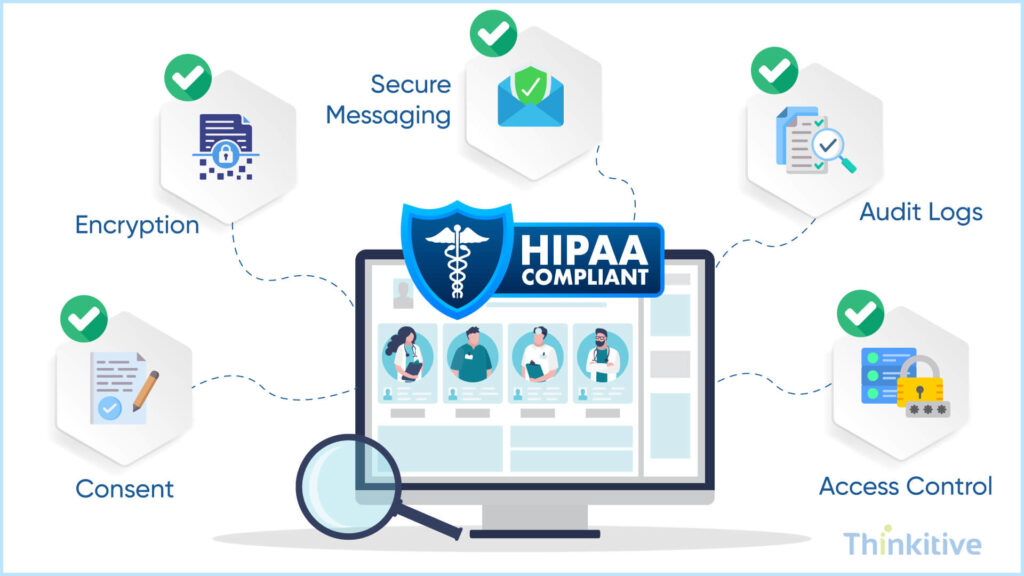
When building a patient portal in your EHR system, it is natural that the patient portal will deal with sensitive patient data. This is why you should build a HIPAA-compliant patient portal, but that is the hard part at times. So, let’s try to answer your question, ‘How to build a HIPAA-compliant patient portal?’
First things first, add the patient authentication and access controls as per the HIPAA rules and regulations. Along with that, built role-based access control modules. This way, you can secure the data storage and access modules, allowing only authorized personnel to access information.
Audit logging is also one of the core requirements of HIPAA. This allows you to track every activity, access, and change done in the systems, one of the best ways to keep track of everything that is happening in your system.
Apart from that, you must also have secure healthcare data storage and communication workflows. This way, you ensure that the data being shared is always safe and the communication workflows don’t overlap or leak information through gaps.
While adhering to HIPAA compliance is a necessity, adhering to the 21st Century Cures Act and ONC certification is necessary. Though quite easy with secure FHIR-based portal access workflows, it must be done carefully, as there are quite a lot of intricacies to follow through.
Security Aspects That You Must Prioritize in Your EHR –
Get Security Assessment
How to Prioritize Features During Custom Patient Portal Development
Prioritizing features during custom patient portal development is quite an inclusive process and must be done carefully. Let’s see how.
So, first things first, identify the MVP features that you must have in your patient portal and start by building them first. After that, plan for the development of advanced patient portal functionality.
When you have this list ready, prioritize features on the basis of usability, communication tools, and accessibility features. Now, align these features with the basic and core functionalities of your portal.
To help you with a kick start, here are the essential EHR patient access tools every modern patient portal should include:
| Feature | Description |
| Secure Patient Authentication | Protects patient information through secure login mechanisms such as multi-factor authentication, password policies, and role-based access controls. |
| Health Records Access | Enables patients to view medical histories, diagnoses, medications, allergies, immunizations, visit summaries, and test results in one place. |
| Appointment Scheduling | Allows patients to book, reschedule, or cancel appointments online without contacting the provider’s office. |
| Secure Messaging | Facilitates HIPAA-compliant communication between patients and care teams for follow-ups, questions, and care coordination. |
| Prescription Management | Supports prescription refill requests, medication history tracking, and medication-related notifications. |
| Billing and Online Payments | Gives patients access to invoices, payment history, insurance information, and secure payment options. |
| Digital Forms and eSignatures | Streamlines patient registration, consent forms, intake questionnaires, and document submissions through digital workflows. |
| Mobile-Responsive Experience | Ensures the portal functions consistently across smartphones, tablets, and desktop devices for improved accessibility and convenience. |
| AI-Powered Appointment Reminders | Automatically sends personalized reminders, alerts, and follow-up notifications to reduce missed appointments and improve engagement. |
| AI-Powered Patient Support Chatbot | Provides instant responses to common patient inquiries, assists with navigation, and offers support outside of regular office hours. |
Conclusion
Building patient portals in your EHR system is no longer just about offering patients access to their medical records. Today, patient portals have evolved into comprehensive engagement platforms that empower patients to actively participate in their care journey while helping providers streamline clinical and administrative workflows.
However, successful patient portal development requires more than simply adding features. From designing intuitive user experiences and secure communication channels to ensuring HIPAA compliance and interoperability, every aspect of the portal must be aligned with both patient expectations and healthcare operational needs.
As AI continues to transform healthcare, modern patient portals are becoming even more intelligent through personalized communications, automated reminders, and conversational support tools. These capabilities not only improve patient engagement but also reduce administrative burdens and enhance care outcomes.
Ultimately, the key is to start with the essentials, prioritize usability and accessibility, and gradually expand functionality based on patient and organizational needs. When built correctly, a patient portal becomes much more than an EHR feature—it becomes a powerful tool for delivering connected, patient-centered healthcare experiences.
So, what are you waiting for? Click here to assess your system readiness for the patient portal from our EHR expert and start to build your own EHR or EMR.
Frequently Asked Questions
The most important features in custom patient portal development include secure access to health records, appointment scheduling, secure messaging, prescription management, billing and payment tools, and digital intake forms. Modern patient portals also incorporate AI-powered reminders and patient support tools to improve engagement and streamline healthcare workflows.
A well-designed patient portal architecture should include secure and scalable infrastructure, intuitive user interfaces, responsive design, accessibility features, and seamless integration with EHR systems. It should also support secure data exchange, patient authentication, and consistent experiences across desktop and mobile devices.
Some of the most effective EHR patient access tools include online appointment scheduling, secure messaging, access to medical records, prescription refill requests, billing management, and personalized health reminders. These tools encourage patients to actively participate in their care while improving convenience and communication.
To understand how to build a HIPAA-compliant patient portal, healthcare organizations should focus on implementing strong authentication controls, role-based access management, encryption for data at rest and in transit, audit logging, secure messaging, and HIPAA-compliant data storage practices. Compliance with interoperability and patient access regulations should also be considered during development.
A secure patient communication gateway enables patients and providers to exchange messages, documents, images, and healthcare information safely. It improves patient engagement, supports care coordination, protects sensitive health data, and helps organizations maintain compliance with healthcare privacy regulations.
A practical features checklist for medical patient portal software should include secure patient authentication, health records access, appointment scheduling, secure messaging, prescription management, billing and payments, digital forms, mobile responsiveness, accessibility features, and AI-assisted engagement tools. These features help create a comprehensive and patient-friendly portal experience.
AI-assisted workflows improve patient portal experiences by automating appointment reminders, personalizing patient communications, supporting conversational chatbots, facilitating patient triage, and encouraging care plan adherence. These capabilities enhance engagement while reducing administrative workloads for healthcare organizations.
Healthcare patient portals should include multi-factor authentication, role-based access controls, encryption, audit trails, secure messaging, session management, and continuous monitoring. These security measures help protect patient information and support regulatory compliance requirements.
Building patient portals in your EHR system improves patient satisfaction by providing convenient access to health records, online scheduling, secure communication, billing transparency, and personalized care interactions. These capabilities create a more connected and patient-centered healthcare experience while encouraging greater engagement in the care journey.


