The $50K Annual Cost of EHR Inefficiency in Mental Health Practices, Most Clinicians Don’t Calculate

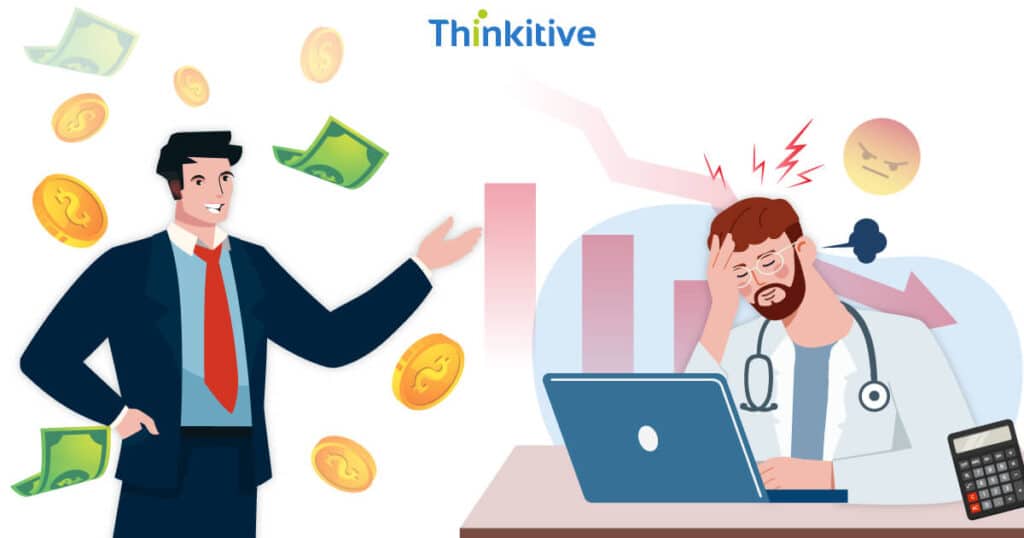
Do you know you might lose $50,000 or more yearly because of your EHR?
Many providers realize this too late. Initially, your generic EHR might seem helpful in streamlining care and keeping patient data organized. But look a little deeper, and you will see the hidden EHR cost draining money silently from your practice.
These costs come with a template that doesn’t match psychiatric workflows, unnecessary clicks slowing down care, and delayed billing due to incomplete notes. All of these may seem small initially, but as your practice grows, it quickly snowballs into costs of tens of thousands of dollars annually.
The issue is not the EHR itself, but its generic nature, as it’s not designed specifically to fit the mental health workflows. Because of the specific psychiatric care needs, these EHRs are inefficient in supporting them.
For instance, the standard SOAP notes can’t adapt to document detailed progress notes, trigger points, and complex treatment plans. That’s why you need to understand the cost of EHR inefficiencies and how big an impact they can have on your mental health practice.
So, in this blog, we will break down the major hidden costs of generic EHR in mental health practices. By the end, you’ll understand how switching to a custom mental health EHR boosts your ROI.
Let’s get started!
Direct Financial Costs in Mental Health Clinic
One of the biggest hidden EHR costs comes from the smallest of inefficiencies. The first is documenting. When mental health providers are forced to navigate the templates designed for primary care or general medicine, they spend extra minutes clicking through unnecessary fields. When added up, these minutes lead to fewer patient visits and eventually lost revenue.
Next comes the complexity of documenting patient information. Mental health documentation is far more detailed and complex. Providers must document detailed progress notes, patients’ emotions, their behavioral changes, and what triggers their conditions.
The generic EHRs lack the needed templates, which leads to providers staying up late or taking the work home just to complete the documentation. These extra hours, if paid, inflate the payroll and, if unpaid, increase the provider burnout and frustration. In both cases, clinics pay the price financially or through turnover.
Finally, mental health’s complicated billing processes bring the largest of drains. With the mix of CPR for services, DSM for diagnoses, and ICD-10 for medical coding, one wrong code filed or incomplete notes means denials. Every denial means extra staff time for resubmission, delayed payments, or even lost revenue if not corrected on time.
In short, when you calculate all three costs, the annual cost of a generic EHR can easily touch thousands of dollars or more, depending on your mental health practice size.
Hidden Operational Costs
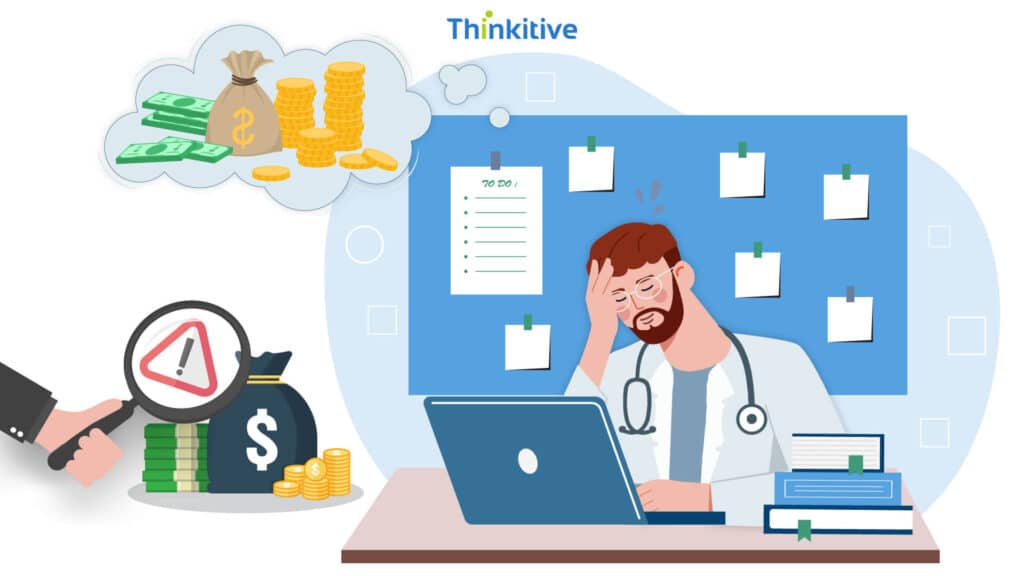
EHR inefficiencies do not end with documentation or billing issues; they go beyond that. With a standard EHR, the workflows do not match the psychiatric needs, and providers can’t operate the system smoothly, getting stuck frequently and slowing down the operations.
Every call to the IT help desk costs you money. Whether it’s a vendor service or time lost during the sessions, now multiply this across your clinic, and the costs of EHR inefficiencies skyrocket.
In addition, if the EHR is not intuitive, then navigating it and using the system efficiently requires staff training. This means extra costs, and with every new update, staff may need to retrain, adding to the increasing costs. Along with financial cost, this also costs you clinicians’ productivity as the staff are pulled away from patients to sit in training sessions.
Then there is the issue of performance. Slow load time or complete system downtime can disrupt therapy sessions, delay appointments, and force clinicians to leave notes incomplete. These disruptions reduce the number of patients, frustrate staff and patients, and silently impact practice revenue.
Even if these operational costs are not visible immediately, they tremendously affect your efficiency and productivity. That’s why you must pay close attention to the EHR operations and where they lag.
Impact on Patient Care, Volume, & Revenue
Patient care is also directly impacted by the EHR inefficiencies. When providers spend too much time documenting the previous appointments, other patients get less time, or the number of patients seen decreases. If a therapist is able to see eight or nine patients daily, it might come down to five or six because of a standard template. Over time, this means less billable time and ultimately low revenue for the clinic.
However, the costs are not just financial; these inefficient systems also cause clinician burnout. The repeated data entries, overtime for completing notes, or time lost in navigating the system can lead to stress and mental strain. This then leads to lower energy in sessions, rushed documentation, or missing details in patient records, affecting the quality of care.
All of this also impacts the patients’ engagement and care. With each delayed appointment, missing or incomplete details, and rushed visit, patients’ trust takes a dip, and their dissatisfaction increases. This increases the risks of no-shows or patients leaving your care facility for another. That’s why each missed session represents not only lost revenue but also a possible loss of a patient.
In short, an inefficient EHR does not just drain money; it also affects patient care, reduces volume, and damages the therapeutic relationships.
The ROI of Switching to a Custom Mental Health EHR
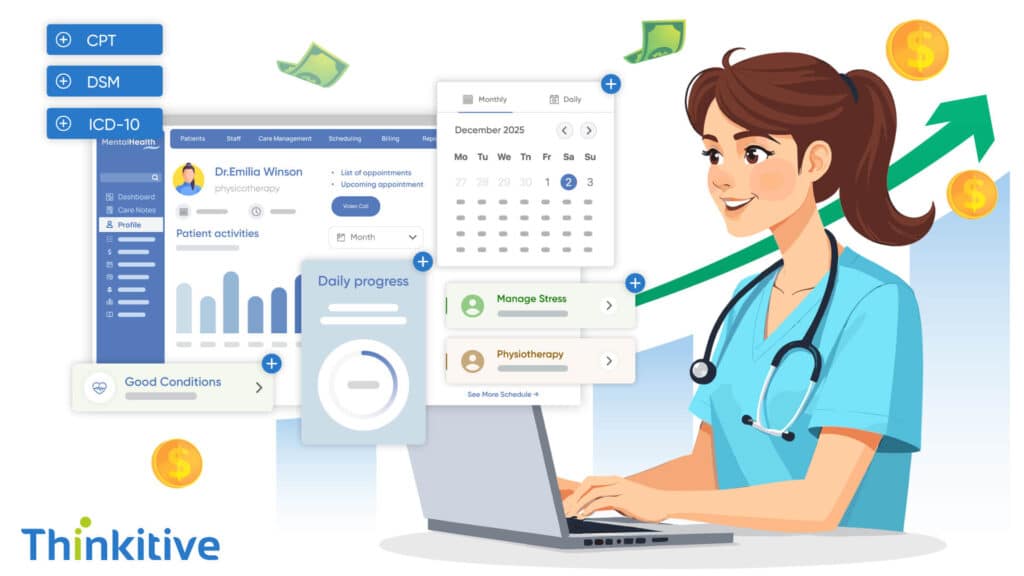
Now that you have seen the inefficiencies and hidden costs of EHR, the question is, how can we change this? The answer is to build a custom mental health EHR solution that fits perfectly with your unique workflows and needs.
Instead of adapting the generic EHRs, designing an EHR around your psychiatry workflows with custom templates brings much more results. Custom templates increase the efficiency and accuracy of documenting progress notes, treatment plans, symptom tracking, and session summaries. This, in the long term, means faster documentation, shorter admin hours, and more cost savings.
As said earlier, mental health billing is complex with CPT, DSM, and ICD-10 codes. But a custom EHR can automate this whole process from recording session time and service to filing and suggesting corrections. This helps reduce errors, prevent denials, and ensure clinics don’t lose revenue.
One of the biggest advantages of custom mental health EHRs, which stand above standard ones, is their ability to improve staff productivity. When clinicians spend less time documenting and creating care plans, they can attend to more patients. Even one or two additional sessions per week can boost clinics’ finances.
Over the year, this has added up to increased ROI, making it easy to pay for the investments for switching and developing the custom mental health EHR. In short, developing a custom EHR is way more profitable than saving a high initial investment with a generic EHR.
Conclusion
With a generic EHR, you might save some money initially; however, over time, it slowly and silently drains your mental health practice. Increased documentation time, inefficient operations, provider burnout, and repeated training can quickly increase the costs both financially and productively.
Instead of using a generic EHR, it would be better to force providers to adapt and develop a custom EHR for better efficiency and productivity. It not only boosts provider productivity and reduces burnout but also brings better ROI and stabilizes your revenue cycles. Addressing EHR inefficiency in mental health is not just about avoiding hidden costs; it’s about improving patient care and provider satisfaction.
So, want to switch and stop the slow drain of EHR inefficiencies? Contact us. Thinkitive has helped many mental health practices, and we can help you, too.
Frequently Asked Questions
The hidden costs of using a generic mental health EHR system include wasted clinician time on irrelevant templates, billing errors leading to claim denials, frequent IT support needs, and clinician burnout. These inefficiencies drain revenue, reduce patient volume, and silently increase the overall cost of care delivery.
EHR inefficiency can quietly drain a mental health practice of $50,000 or more annually. Generic EHRs increase documentation time, cause billing errors, and disrupt workflows. These inefficiencies raise operational costs and reduce patient volume, making the annual cost of generic EHRs a serious financial burden.
Generic EHRs are built for general medicine, not behavioral health’s unique needs. They lack psychiatry-specific templates, force unnecessary clicks, and complicate CPT, DSM, and ICD-10 coding. This leads to inefficiency, burnout, and revenue loss, making custom EHR a far better fit for mental health practices.
Documentation challenges in mental health practices drain clinician time and energy. Generic EHR templates force providers to click through irrelevant fields, re-enter data, and struggle with capturing complex progress notes. Without tailored mental health EHR templates, efficiency drops, burnout rises, and patient care quality suffers.
Yes, a custom mental health EHR can significantly reduce clinician burnout by aligning templates with psychiatric workflows, automating documentation, and streamlining billing. These improvements boost workflow efficiency, cut unnecessary admin time, and allow providers to focus more on patients instead of screens, enhancing both care quality and job satisfaction.
A custom mental health EHR should include features like psychiatry-specific templates, progress note customization, integrated scheduling, automated coding for DSM and CPT, telehealth support, and patient engagement tools. These tailored mental health EHR features streamline documentation, reduce errors, and improve overall patient care quality and provider efficiency.
Hidden EHR inefficiencies, like slow templates, redundant documentation, and billing delays, directly affect patient care. They reduce session time, cause clinician burnout, and disrupt workflows, leading to rushed visits, missed details, and delayed follow-ups. Ultimately, patient satisfaction drops, and clinical outcomes can worsen.
Mental health clinics using generic EHRs face significant compliance risks. Misaligned workflows can lead to incomplete documentation, billing errors, and improper data handling, creating hidden costs and potential HIPAA violations. Ensuring secure, specialty-specific EHRs is crucial to safeguard patient data and maintain regulatory compliance.
Clinics can calculate the true ROI of a custom EHR by comparing time saved on documentation, reduced billing errors, and improved staff efficiency against system costs. Tracking increased patient volume, faster reimbursements, and lower burnout highlights tangible cost savings in mental health EHR and overall financial benefits.
Interoperability in mental health EHR solutions is critical because it enables seamless data exchange across providers, specialists, and care settings. Integrated systems reduce redundant tests, improve care coordination, and ensure clinicians have a complete patient history, enhancing treatment decisions while maintaining compliance and efficiency in mental health practices.


