How to Build EHR Features That Improve Patient Experience

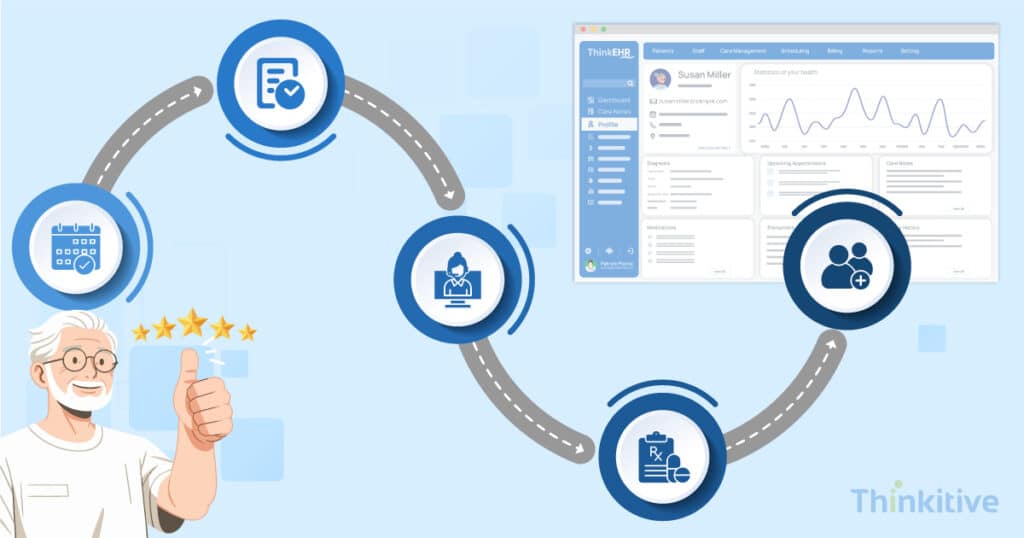
When the healthcare industry was in its initial stages of its digital transformation, one of the major problems that was recurring in this transition was patient engagement or patient experience.
You see, in physical care settings, you can somehow control the experience that you’re providing to the patient. In a digital setting, you need to ensure that your application or software provides a delightful experience while using and keeps the patient engaged during their entire care journey.
And there have been many instances that show that patients are actively demanding delightful or elevated patient experiences on digital healthcare platforms. For instance, 71% of patients consider digital appointment reminders as a sign of modern healthcare practice, according to the New York Post.
Extending their reach in the care journey, the US Department of Health & Human Services stated that over 65% of individuals accessed their online medical records in 2024.
These stats clearly show the growing demand for digital-first and patient-centric healthcare interactions, and this is one of the major reasons why providers are asking for how to build a custom EHR that improves patient experience, while developing their own EHR systems.
But many providers ask one question during their discovery calls, ‘How to design EHR features for better patient experience?’
Well, this is exactly what we’re trying to find out in this blog below.
On that note, let’s try to understand how EHR features improve patient satisfaction and why patient experience is important for the overall success of your custom EHR and practice
Core Patient-Centric EHR Features for Modern Healthcare
Let’s start with the core features that shape the basic structure, look, and feel of your EHR software. Before you get into the discussion, have a look at this table to know what patient-centric features you must have in your EHR:
| Patient-Centric EHR Feature | Benefit / Functionality |
| Health Record Access | Enables patients to securely view records, prescriptions, care plans, and visit summaries. |
| Automated Reminders & Notifications | Sends appointments, medication, and follow-up reminders that help patients stay on track with their care plans. |
| Secure Patient Messaging | Allows patients to communicate directly with providers, ask questions, and receive guidance between visits. |
| Telehealth Integration | Expands access to care by enabling virtual consultations, reducing travel time and improving convenience. |
| Mobile Access & Patient Apps | Provides on-the-go access to health information, appointments, messages, and care resources through smartphones and tablets. |
The patient’s experience often begins before the first consultation. Simple appointment booking, digital check-in, and timely confirmations help reduce friction, making it easier for patients to access care while minimizing administrative effort for providers.
For this, you would need to create secure messaging and communication tools for patients inside the system. It enables two-way communications, and patients can proactively participate in care activities.
Once patients begin their care journey, they should be able to securely access care instructions, communicate with providers, and complete follow-up activities without unnecessary friction. Dedicated patient portals play an important role in enabling these experiences.
The secret to improving patient experience is to develop patient-centric EHR features.
Must Have Features for Your EHR System –
Read GuidePatient Engagement Features in EHR Systems
There is a difference between patient-centric features and patient engagement features. While patient-centric features focus on patient usability, patient engagement focuses on keeping the patient engaged with their care journey.
In the earlier section, we talked about patient-centric features; now, let’s see the intricacies of patient engagement features in EHR systems.
Now, one of the finest examples of this can be seen in the stats mentioned in the introduction. By designing automated reminders for appointments, medication, and follow-ups, you can not only attract more patients but also keep them engaged in their care journey.
However, this must be consistent across modules, right from appointments to medications, etc. If possible, also personalize the notifications or treatment update workflows. This will help you in creating a personal connection with the patient, which would elevate the experience and also contribute to better engagement.
You can also include creating digital forms and self-service tools. These are some of the best ways to keep the patient engaged. These tools help patients in various tasks like completing registration, intake paperwork, consent forms, and insurance information online before their visit.
With this, you kinda bypass the manual paperwork for most processes and reduce administrative delays. So, basically, these features allow you to streamline check-in processes, improve data accuracy, and provide a convenient healthcare experience for patients.
Here are some of the patient engagement features in EHR that you must consider:
| Patient Engagement Feature | Benefit / Functionality |
| Self-Service Healthcare Access | Provides patients with secure access to health records, test results, care plans, and visit summaries, encouraging active participation in their care. |
| Secure Messaging | Enables direct communication between patients and providers, improving accessibility and strengthening patient-provider relationships. |
| Personalized Care Plans | Delivers tailored treatment goals, care instructions, and health recommendations based on individual patient needs. |
| Health Education Resources | Offers condition-specific educational content that helps patients make informed decisions about their health and treatment. |
| Remote Patient Monitoring (RPM) | Allows providers to track patient health data remotely, encouraging continuous engagement and proactive care management. |
For appointment scheduling and reminders, see: how to build a patient portal in your EHR.
EHR Design for Patient Experience & Accessibility
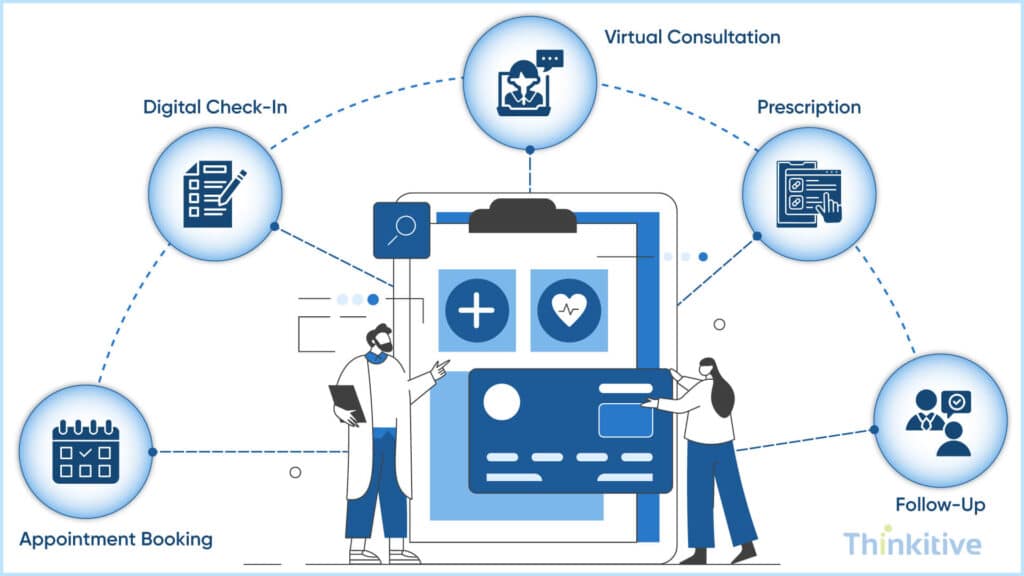
Apart from these features, EHR design for patient experience is also responsible for enhancing the patient’s experience. Let’s discuss some of the intricacies that you need to know about it.
For instance, the design that works best across the digital landscape is simple and intuitive patient-facing interfaces. The simpler the interface, the easier it is for the patient to navigate through the complex workflows, and the experience improves.
Also, you don’t know what device your patients are going to use to access their health data. When you are designing the UI/UX for your EHR system, make sure that it supports responsive patient-facing experiences across devices. This way, you can ensure that the experience is delightful and consistent across devices.
Furthermore, building accessibility support for a diverse patient population can also help you go a long way. In fact, you should even consider this, and it can even be included in your checklist. Accessibility features cater to your patient population on a personalized level. This personalizes their experiences and helps in improving patient experiences and making it easy to use the software system.
Understanding EHR design for patient experience in healthcare systems is crucial. You see, mostly you build the software system for providers, the main users. However, the moment patients enter or use the system, the dynamics change, and you have to focus on a delightful experience and easy navigation to achieve what you are set to achieve with the EHR system.
Patient-Centric EHR Features You Must Have –
Get Checklist
Digital Features That Improve Patient Satisfaction
In a very short span of time, AI has made it to the list of must-have features to build an EHR. AI-powered features are not just in demand, but they have become a need for modern EHR systems.
For instance, many providers ask for building AI-powered appointment reminders and follow-up modules that automate all the processes involved in this. In simple words, providers don’t have to worry about sending reminders and taking follow-up from patients; the system itself will send the necessary message via text, email, and other means.
This saves significant time and allows providers to focus on things that are important. Apart from using a smart chat assistant for routine patient queries, you can put patients in control of their care journey.
This feature gives an explicit feature that allows providers to chat with the system and get instance suggestions until they connect with the provider. Also, by allowing it to communicate with the patients on a personal level, it can be a great tool to personalize the experience and elevate the overall experience during the entire care episode.
Here is a simplified table that tells you the AI-powered features and their best use cases:
| EHR Feature | How It Improves Patient Satisfaction |
| Automated Appointment Reminders | Reduces missed appointments and helps patients stay informed about upcoming visits without relying on manual communication. |
| Digital Forms & Self-Service Check-In | Minimizes paperwork and waiting times by allowing patients to complete registration and intake processes before their visit. |
| 24/7 Digital Access to Health Information | Provides 24/7 access to medical records, test results, prescriptions, and care plans, improving transparency and patient confidence. |
| Mobile Access | Enables patients to manage their healthcare from anywhere using smartphones or tablets, increasing convenience and engagement. |
| Telehealth Integration | Improves accessibility by allowing patients to consult with providers remotely, reducing travel time and barriers to care. |
Security & Trust Features for Better Patient Experience
While you would be focusing on enhancing the patient experience, there is a slight chance that you might compromise the security aspect of your EHR system.
Ensure that secure access to health records and communication tools is being provided to the patients. They must be able to access the records in a secure environment, and the communications must also be secure, given the sensitive nature of the data they deal with.
Apart from that, follow the HIPAA-compliant guidelines so that you follow the best practices related to data handling, and everything related to privacy controls is in your hands. One of the milestones in this is to deploy role-based access and identity verification features.
Last but not least, remember that security builds trust, and in digital healthcare experiences, that plays a major role in making the overall experience of the patients delightful.
How to Prioritize Patient-Friendly Features During EHR Development
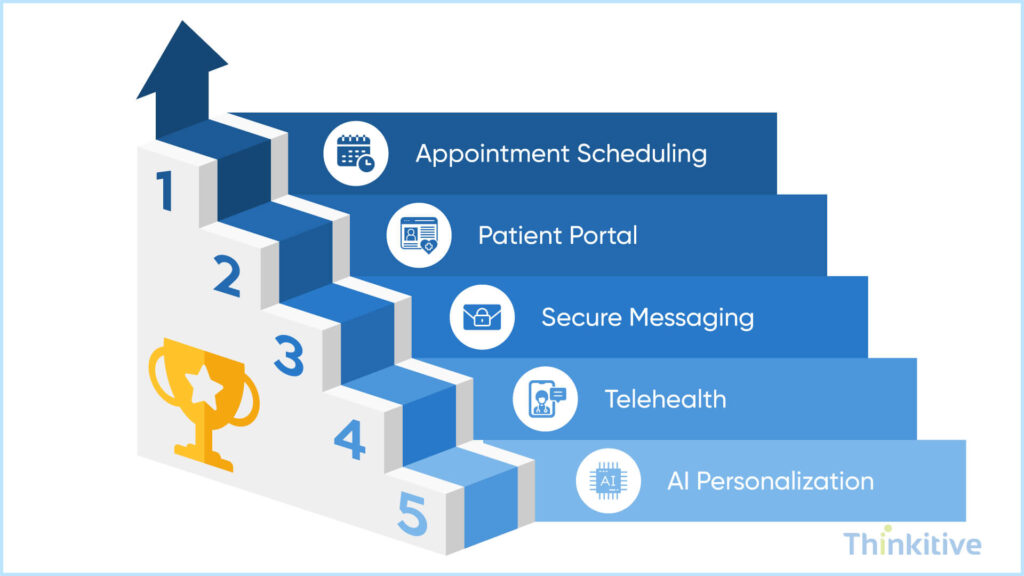
At this point, you might be wondering whether you should implement all these patient-centric, engagement, accessibility, and AI-powered features in your EHR system.
Well, the answer is no.
One of the biggest mistakes providers make during EHR development is trying to build every possible feature in the first version of the software. While all these features contribute to a better patient experience, not all of them are equally important during the initial stages of development.
The best approach is to start by identifying essential patient-facing capabilities and separating them from advanced functionalities. For instance, features like secure health information access, online appointment scheduling, secure messaging, telehealth access, and automated reminders directly influence how patients interact with your healthcare organization on a daily basis. These should generally be treated as foundational features.
Once these core capabilities are established, you can move towards advanced engagement tools such as personalized care plans, AI-powered assistants, remote patient monitoring, and predictive patient outreach workflows. These features certainly elevate the patient experience, but they become more valuable when the fundamental patient journey is already streamlined.
At the same time, remember that features alone do not create great experiences. The way patients interact with those features matters just as much. This is why usability, accessibility, and engagement workflows should be prioritized alongside functionality. Even the most feature-rich patient-facing experience can create frustration if navigation is complicated or workflows are difficult to use.
This is also where many providers learn how to design EHR features for better patient experience. Instead of asking, “What features should we add?” ask, “What tasks should become easier for patients?” The answer often leads to better design decisions and more meaningful patient interactions.
Most importantly, every patient-friendly feature should support a larger operational objective. For example, appointment scheduling reduces administrative workload, automated reminders reduce no-shows, self-service patient tools decrease support requests, and telehealth expands access to care. When patient-facing capabilities align with business goals and must-have features to build an EHR, healthcare organizations can improve both patient satisfaction and operational efficiency without overcomplicating the system.
Conclusion
Improving patient experience isn’t about adding more features—it’s about building an EHR that makes every patient interaction simpler, faster, and more accessible. By prioritizing usability, engagement, accessibility, and secure communication, healthcare organizations can create digital experiences that strengthen long-term patient relationships while improving operational efficiency.
Apart from that, patient experience is responsible and impacts many things, and the top of the list is patient engagement, followed by usability and accessibility. That is why you should be careful when building your own EHR and balancing digital convenience, security, and workflow efficiency when making it patient-centric.
On that note, get your system assessed by our custom EHR expert and learn how your entire system can be enhanced to help your patients have a delightful experience by building your EHR software.
Frequently Asked Questions
Some of the most important EHR features for patient experience include secure health information access, online appointment scheduling, automated reminders, secure messaging, telehealth integration, and mobile access. These patient-centric EHR features simplify healthcare interactions, improve accessibility, and help patients stay engaged throughout their care journey.
The most impactful patient engagement features in EHR systems include automated reminders, secure messaging, personalized care plans, patient portals, and remote patient monitoring. These features encourage active participation in care, improve communication, and help patients feel more connected to their healthcare providers.
Effective EHR design for patient experience should focus on intuitive navigation, responsive interfaces, and accessibility support for diverse patient populations. By balancing usability and accessibility, healthcare organizations can ensure patients can easily access information, complete tasks, and engage with their care regardless of device or individual needs.
Secure messaging and digital communication tools enable patients to communicate directly with healthcare providers between visits. These patient-friendly features to include in EHR systems improve accessibility, support timely care coordination, and strengthen patient-provider relationships through continuous engagement.
AI-assisted workflows improve patient satisfaction by automating appointment reminders, follow-up communications, scheduling processes, and routine patient inquiries. These capabilities reduce administrative delays, provide faster responses, and create more personalized healthcare experiences that keep patients engaged throughout their care journey.
Healthcare organizations should prioritize patient-friendly features to include in EHR systems, such as patient portals, online scheduling, telehealth capabilities, secure messaging, digital forms, automated notifications, and mobile access. These features make healthcare services more convenient, accessible, and patient-centered.
Patient-facing healthcare platforms should include secure access controls, encrypted communication channels, role-based permissions, identity verification, audit trails, and HIPAA-compliant data protection measures. These features protect sensitive health information while building trust and confidence among patients.
Understanding how EHR features improve patient satisfaction starts with focusing on convenience, accessibility, communication, and transparency. Features such as patient portals, automated reminders, telehealth, and secure messaging help patients stay informed and involved in their care, leading to stronger long-term engagement and better healthcare experiences. Additionally, healthcare organizations that understand how to design EHR features for better patient experience can align these capabilities with the must-have features to build an EHR that supports both patient needs and operational goals.


