Effective Behavioral Health Discharge Planning That Prevents Readmission

Being a clinician, you know that mental health discharge planning is not as simple as in generic care. It’s not just patients leaving the care facility; it’s about how they do not relapse once they do. For every behavioral health discharge, there is a risk of readmission, medication lapses, and missed follow-up, unraveling the whole progress.
That’s why clinicians need to consider each factor while planning the discharge. But with the generic EHRs used in most of the mental health clinics, it becomes difficult to plan and track every step of discharge.
Moreover, mental health discharge involves multiple factors: care coordinators, community programs, therapists, and follow-up teams, and they must stay on the same page. So, a custom behavioral health EHR, built and integrated through professional behavioral health EHR implementation services, has all the features that make behavioral health care coordination and mental health discharge planning much easier.
Most importantly, custom mental health EHR discharge workflows automate aftercare planning, mental health follow-up care scheduling, and real-time care coordination. This enables providers to focus on patient recovery rather than administrative work.
So, effective EHR-supported discharge planning reduces relapse, readmission, and clinician burnout. It ensures that care doesn’t end at discharge; it continues, seamlessly and sustainably, with every stakeholder connected in one loop of recovery.
In this blog, we will see how to reduce patient readmission in behavioral health with the help of EHR tools for mental health discharge workflow.
The Cost of Poor Discharge Planning in Behavioral Health
When a mental health discharge plan is not done thoroughly, the impact goes beyond just the patient’s file. The first impact of ineffective behavioral health discharge is often on the patients themselves, as the chances of relapse become much higher.
If the patients miss a single follow-up or medication, then readmissions are more likely to happen. With each relapse, the care continuity breaks, and patient trust, along with engagement in the care journey.
Another impact is on the clinicians, as without streamlined mental health EHR discharge workflows, manual work, fragmented communication, and administrative overload. This leads to less time on patient recovery, and strain brings burnout, while the documentation may be wrong or incomplete.
Moreover, this poor discharge planning leads to financial impact, as well. With each poor discharge planning and readmission, there are claim denials, an increase in compliance risks, and audit risks. It also leads to patient readmission prevention failures, damaging the clinic’s reputation in the long run.
In short, ineffective discharge planning in behavioral health can unravel all the patient’s progress, along with reducing the revenue of the clinic.
Why Traditional EHRs Fail at Behavioral Health Discharge?
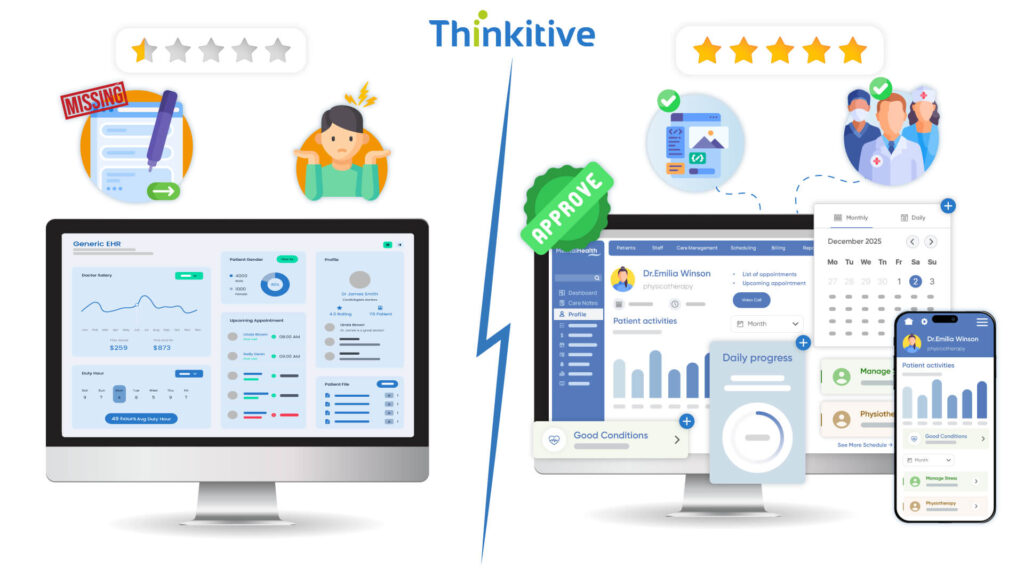
In mental health, discharge planning is much more complex, where one wrong step can disrupt the whole process. However, what makes it even more challenging is the generic EHRs that don’t support the nuances of behavioral health discharge.
Most of the EHRs lack built-in templates for aftercare planning in mental health, forcing clinicians to improvise documentation. Additionally, it is crucial for providers to coordinate to deliver better aftercare. However, generic EHRs are not interoperable, making it difficult to share patient data and care plans.
The result of these gaps in fragmented care and patient records leads to a challenging patient readmission prevention. Furthermore, an EHR system with an effective mental healthcare practice-specific discharge workflow can prove to be essential for closing these gaps and streamlining the continuity of care even after the discharge.
In short, generic EHRs lack the needed workflows and tools to prevent readmissions and solve all the administrative overload.
Elements of an Effective Mental Health Discharge Plan
An effective discharge planning strategies in mental health is more than just some points on paper. It’s a roadmap of the patient’s journey to stabilizing the condition after recovery. In addition, a structured discharge plan has elements that help clinics in patient readmission prevention. Let’s take a look at those elements:
| Element | Description / Key Benefit |
| Personalized Aftercare Roadmap | Includes therapy schedules, medication plans, and follow-up visits tailored to individual patient needs. |
| Risk Management & Crisis Planning | Identifies relapse warning signs, suicide prevention strategies, and immediate interventions to minimize risk. |
| Patient Education & Engagement | Provides resources and tools to help patients understand their condition, treatment, and self-care responsibilities. |
| Care Team Coordination | Ensures seamless communication between psychiatrists, therapists, case managers, and community providers. |
When clinicians integrate these elements into a unified behavioral health discharge workflow, it ensures patients have clarity when leaving the clinic. Moreover, EHR-enabled coordination reduces administrative burden, strengthens aftercare planning in mental health, while improving outcomes, and minimizes readmission rates.
How Technology Can Automate & Simplify Discharge Planning
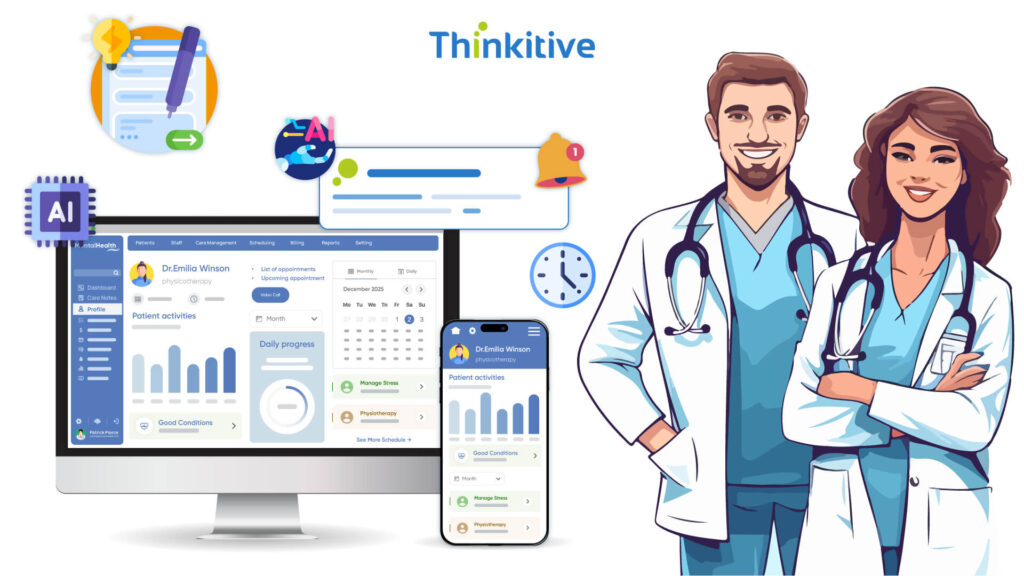
Modern mental health EHR discharge workflows are transforming how behavioral health teams manage transitions of care. Smart templates standardize discharge documentation, ensuring that every patient leaves with a complete, consistent aftercare plan. These templates streamline aftercare planning in mental health, reducing errors and saving clinicians valuable time.
Automating aftercare and follow-up plans in mental health reminders keeps patients on track with therapy sessions, medication refills, and outpatient appointments, supporting patient readmission prevention by closing gaps that often lead to relapse. Integration with care coordination and remote patient monitoring systems ensures that all providers, therapists, and case managers stay aligned, sharing real-time updates and insights.
Finally, real-time tracking of post-discharge outcomes allows care teams to intervene early if a patient shows signs of deterioration, enabling proactive, data-driven care. By embedding these capabilities into EHR systems, behavioral health providers can turn discharge planning from a manual, error-prone process into a seamless, automated workflow that supports continuity of care, improves recovery outcomes, and reduces clinician burnout.
The Future of Behavioral Health Discharge Planning
The future of mental health discharge planning is increasingly data-driven and proactive. Predictive analytics will allow providers to identify high-risk patients before issues arise, enabling targeted interventions that reduce relapse and support patient readmission prevention.
Continuity of care dashboards will consolidate post-discharge information into a single, actionable view. These dashboards make it easy for psychiatrists, therapists, and case managers to track adherence to therapy, medications, and follow-up appointments, ensuring that aftercare planning in mental health is coordinated and efficient.
Mobile app integration will further transform post-discharge engagement. Patients can receive reminders, educational resources, and virtual check-ins directly on their devices, creating a seamless bridge between inpatient care and community-based recovery.
Together, these advancements promise a future where behavioral health discharge is smarter, more connected, and more effective. By leveraging predictive insights, real-time monitoring, and patient-centered technology, mental health teams can improve outcomes, reduce readmissions, and make transitions of care safer and more supportive than ever before.
Conclusion
Discharge planning is often called the last mile of patient care, and for good reason. In behavioral health, this final step can make the difference between sustained recovery and readmission. Traditional workflows fall short, but mental health–specific EHR discharge workflows provide structured, automated, and coordinated care that ensures patients leave with a clear aftercare plan, follow-up schedules, and ongoing support.
By adopting these specialized tools, clinics can reduce administrative burden, improve patient readmission prevention, and enhance overall outcomes.
See how custom mental health EHRs can automate discharge workflows and reduce readmissions.
Frequently Asked Questions
Discharge planning in mental health is a structured process that prepares patients to transition safely from inpatient care to home or community settings, ensuring continuity of therapy, medications, follow-ups, and support networks to prevent relapse or readmission.
It’s critical because behavioral health patients face high relapse risk, medication non-adherence, and complex social challenges. Effective discharge planning reduces readmissions, ensures continuity of care, strengthens patient engagement, and supports clinicians in delivering safer, more coordinated recovery pathways.
EHR automation streamlines documentation, schedules follow-ups, sends reminders, and tracks post-discharge outcomes. It reduces manual tasks, ensures standardized aftercare planning in mental health, improves coordination among care teams, and lowers the risk of errors or missed interventions.
Yes, custom EHRs can integrate with care coordination platforms, telehealth tools, and remote monitoring systems. This allows real-time information sharing between psychiatrists, therapists, case managers, and community providers, improving continuity and reducing gaps in post-discharge care.
Effectiveness can be measured using readmission rates, patient adherence to follow-up care, therapy attendance, medication compliance, and post-discharge outcome tracking. EHR dashboards and predictive analytics help monitor these metrics, identifying areas for improvement in discharge workflows.


