Building Templates That Actually Match DSM-5 Requirements

You’ve just completed a therapy session, and it’s time to document, but what should have taken five to ten minutes takes almost 20 minutes. Sounds familiar, right?
The reason? Generic EHR templates that lack DSM-5 standards and the necessary fields to capture patient details completely and accurately. As a mental health provider, you know how essential the Diagnostic and Statistical Manual for Mental Disorders, Fifth Edition (DSM-5) is.
It ensures accurate diagnoses while supporting correct medical coding. Without the DSM-5-compliant EHR templates, capturing complete patient details and billing accurately becomes nearly impossible.
Providers use workarounds like free-text fields to record patient data into the EHR. This leads to incomplete documentation, further increasing the chances of misdiagnoses and claim rejections.
In short, misaligned templates put both patients and clinicians at risk. However, there is good news. With custom mental health EHR development, these challenges can be effectively addressed. This software has DSM-5-aligned custom behavioral health templates designed for behavioral health workflows.
In this blog, we’ll break down how to build documentation templates that not only meet DSM-5 standards but also streamline workflows, reduce errors, and keep your practice audit-ready.
The Problem with Generic EHR Templates
On the surface, generic EHR templates seem convenient; they are quick to set up, easy to duplicate, and promise a universal approach to mental health documentation. But mental health care is not one-size-fits-all, and neither is the DSM-5. Generic templates often fail to meet DSM-5 documentation standards, leaving practices exposed to clinical, financial, and compliance gaps.
1. One-Size-Fits-All Templates Miss DSM-5 Specific: When the templates are generic, they dilute the diagnostic process. Instead of guiding clinicians to record DSM-5’s required details, like symptom counts, duration, and severity. Moreover, generic fields reduce diagnoses to vague categories. Using proper mental health diagnostic templates ensures every note aligns with the DSM-5, improving both accuracy and credibility.
2. Inaccurate Diagnostic Coding: Insurance payers require precise DSM-5 aligned coding. Mental health coding templates that don’t reflect DSM-5 requirements often result in incorrect ICD-10 codes, leading to rejected claims. This translates to wasted hours, delayed reimbursements, and unnecessary stress for the practice.
3. Audit & Compliance Risks from Poor Documentation: Audits are a reality in behavioral health care. Without a DSM-5 compliant EHR or EHR for mental health compliance, practices risk failing audits and facing penalties or repayment demands. Generic templates rarely include all necessary DSM-5 fields, increasing exposure to compliance risks.
4. Clinician Burnout from Manual Corrections: Perhaps the most overlooked consequence is clinician fatigue. When critical DSM-5 fields are missing, spend extra time manually editing notes. Adopting custom behavioral health templates that align with DSM-5 not only ensures compliance but also reduces repetitive documentation tasks, letting clinicians focus on patient care.
Now that we have seen the limitations of a generic EHR template, let’s take a look at what risks it brings to a clinic.
Key Risks of Non-DSM-5-Aligned Documentation
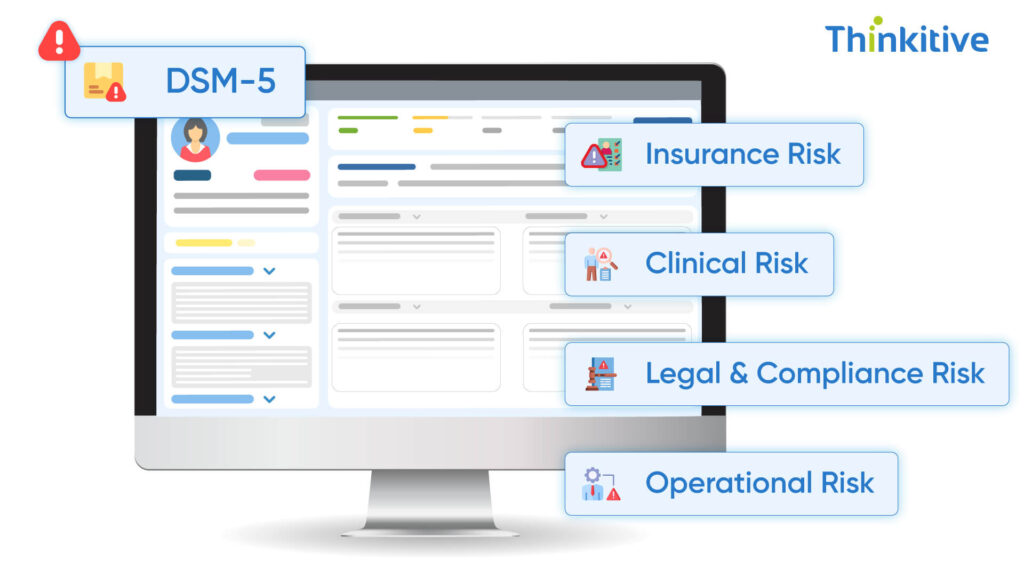
Using documentation that isn’t aligned with DSM-5 standards comes with serious consequences for mental health practices. Generic EHR templates might seem sufficient, but missing key DSM-5 details can create ripple effects across insurance, clinical care, compliance, and operations.
1. Insurance Risk: Without DSM-5-compliant EHR templates or accurate mental health coding templates, claims are more likely to be rejected. Insurers require precise DSM-5-aligned diagnoses for reimbursement, and incomplete mental health diagnostic templates can lead to delayed payments. Additionally, the resubmissions and unnecessary administrative work make it difficult to claim reimbursement quickly.
2. Clinical Risks: Generic or non-specific DSM-5 EHR templates often fail to capture required symptom details, severity, and duration. This can result in misdiagnosis, suboptimal treatment plans, and poor patient outcomes. Using custom behavioral health templates ensures every note aligns with DSM-5 standards, supporting accurate, consistent clinical care.
3. Legal & Compliance Risks: Regulatory bodies and payers routinely audit mental health records. Practices using generic EHR templates that aren’t built for behavioral health EHR compliance risk noncompliance findings, penalties, or even malpractice exposure.
4. Operational Risks: Non-DSM-5-aligned templates increase manual corrections, rework, and billing errors. Clinicians spend extra hours editing notes, resubmitting claims, and verifying codes. By investing in EHR for mental health compliance with accurate DSM-5 diagnosis templates, practices save time, streamline workflows, and reduce operational inefficiencies.
How Custom DSM-5 EHR Templates Solve These Issues
The solution to documentation gaps is simple: use a custom mental health EHR and specialized DSM-5 EHR templates designed specifically for mental health practices. Unlike generic templates, these are built to reflect DSM-5 documentation standards, streamline workflows, and reduce compliance and billing risks.
1. Built-In DSM-5 Diagnostic Codes for Accurate Charting and Billing: Custom templates come with pre-built DSM-5 diagnosis templates and corresponding ICD-10 codes. This ensures every note is aligned with mental health coding templates, making charting more accurate. Moreover, claims can be processed quickly and are more likely to be approved upon first submission.
2. Streamlined & Automated Clinical Workflow: By guiding clinicians through the necessary DSM-5 criteria, mental health diagnostic templates reduce the need for manual corrections. Providers can complete documentation faster and more accurately, freeing time to focus on patient care instead of data entries.
3. Reduce Audit Risks: DSM-5 compliant EHR templates ensure that every note captures required details like symptom counts, severity, and duration. This helps practices maintain behavioral health EHR compliance, lowering exposure to audits, penalties, and legal risks.
4. Improved Claim Approval Rates Through Standardized Coding: Standardized DSM-5 EHR templates reduce coding errors and improve alignment with insurer requirements. By using EHR for mental health compliance, practices increase first-pass claim approvals and minimize delays in reimbursement.
5. Integration with Progress Notes & Group Therapy Documentation: Custom templates can be fully integrated with progress notes, group therapy documentation, and treatment plans. This makes sure that everything is consistent across all patient records. Moreover, with seamless workflows, clinics can maintain adherence to DSM-5 documentation standards.
Implementation: Building & Using DSM-5 Templates in EHRs
Designing and implementing custom DSM-5 EHR templates is essential for mental health practices that want accurate documentation, smoother workflows, and better compliance. The process is not complicated if approached strategically, and it ensures your practice fully leverages DSM-5 documentation standards.
Steps for Integrating DSM-5 Templates in Custom EHR: Start by mapping your clinical workflows and identifying where mental health diagnostic templates are needed. Whether it is intake forms, progress notes, treatment plans, or group therapy documentation. The next step is to work with your EHR vendor or IT team to create templates that include all DSM-5 criteria and link directly to DSM-5 diagnosis templates.
Features to Include: Effective DSM-5 compliant EHR templates should include:
- Dropdowns for Diagnoses: Select the exact DSM-5 condition to ensure precise documentation.
- Automated ICD-10 Mapping: Converts DSM-5 selections into accurate billing codes automatically, reducing coding errors and rejected claims.
- Compliance Alerts: Notify clinicians if critical fields, such as symptom duration or severity, are missing to maintain behavioral health EHR compliance.
Training Clinicians to Use DSM-5 Workflows Effectively: Even the best EHR for mental health compliance fails if clinicians are not trained. Provide hands-on training, quick-reference guides, and ongoing support to ensure staff can confidently navigate mental health coding templates and complete notes efficiently. Well-trained teams reduce documentation errors, improve patient care, and increase claim approval rates.
Conclusion
In a nutshell, generic templates may seem convenient at first; however, for mental health, they often fail to meet DSM-5 documentation standards. This leads to misdiagnosis, rejected claims, compliance risks, and clinician burnout.
So, the smarter choice for every behavioral health clinic is to adopt custom EHR templates and EHR software designed for behavioral health workflows. These custom behavioral health templates not only improve accuracy and claim approval rates but also streamline workflows and reduce manual rework.
Talk to our healthcare software experts to upgrade your EHR for mental health compliance with built-in DSM-5 diagnosis templates to protect your revenue and deliver accurate care.
Frequently Asked Questions
A DSM-5 compliant template is a clinical document that is built by following all the standards and guidelines, ensuring all the documents follow a consistent set of criteria. It is also used for accurate diagnoses, proper coding, and compliance for clinical care, audits, and insurance reimbursement.
Clinics that use generic EHR templates lack DSM-5-specific fields like symptom duration, severity, and specifiers. This results in incomplete documentation, increased risks of misdiagnoses, and poor alignment with coding standards, making them inadequate for behavioral health compliance and accurate reimbursement.
DSM-5 aligned templates automatically map diagnostic criteria to ICD-10 codes, reducing errors in billing submissions. Accurate, standardized documentation improves first-pass claim approval rates, minimizing denials and speeding up reimbursements for mental health practices.
Non-DSM-5-compliant templates increase risks of misdiagnosis, denied claims, compliance penalties, and audit exposure. They also cause inefficiencies, forcing clinicians into time-consuming manual corrections, which contribute to burnout and inconsistent patient care.
Custom templates guide clinicians through DSM-5 criteria step by step, ensuring that all required details are captured. This structured documentation improves coding precision, aligns with ICD-10 standards, and supports consistent, accurate mental health billing.
Yes, DSM-5 templates can be built with automated ICD-10 mapping. This integration translates DSM-5 diagnoses into correct billing codes, reducing coding errors, improving compliance, and increasing reimbursement accuracy for mental health services.
Transitioning involves configuring custom templates, training staff on DSM-5 workflows, and providing ongoing support. With intuitive dropdowns, coding automation, and compliance alerts, clinicians adapt quickly while reducing documentation errors and workflow disruptions.


