Real-Time Progress Monitoring in Mental Health That Insurance Companies Demand

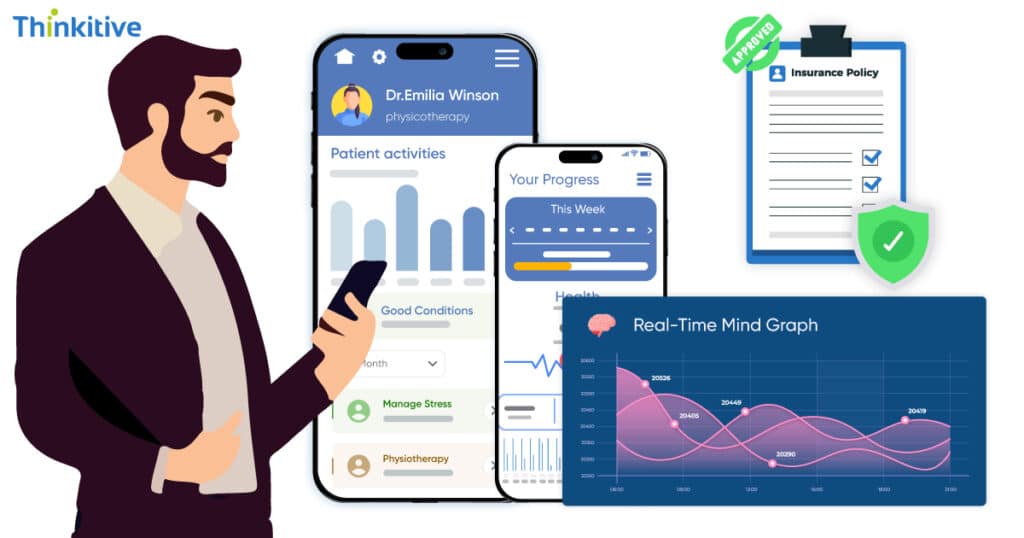
Did you ever feel your EHR failing you when proving the patient’s progress to insurers? If your answer is yes, then you are not alone.
When it comes to fulfilling the insurer’s requirements, many clinics feel it’s a never-ending process. After completing a requirement, another one comes up. This is especially true for the insurance companies now requiring real-time patient progress for approval.
This is where the clinicians feel the real pressure because they have to demonstrate the ongoing improvement. The reason for this is that most behavioral health providers use generic EHRs that are not designed for this.
As you must know, generic EHRs are good at capturing physical data, labs, and vitals. However, tracking behavioral patterns, therapy progress, and emotional changes, they fall short. That’s why clinicians have to use different third-party applications, which leads to them managing multiple screens at the same time, slowing down operations, and increasing the chances of errors.
So, what can help change this?
The answer is adopting a custom mental health EHR solution built through behavioral health EHR implementation services that automate outcome tracking for insurers. Most importantly, it easily tracks real-time progress monitoring in mental health with specialized EHR dashboards for mental health.
In this blog, we are going to explore how to track patient progress in real-time mental health EHRs, along with the best EHR features for insurance reporting in mental health. We will also dive into why dashboards for real-time mental health outcomes are essential for insurance-compliant EHR reporting.
Why Real-Time Monitoring Matters in Behavioral Health
In behavioral health, you can’t see any measurable sign of improvement or even regression; there may be some, but they are too subtle. That’s why timely information on this is important for clinicians, and real-time progress monitoring in mental health becomes crucial.
With this, identifying the signs of decline becomes easy, and you can easily adjust the care plan as needed. Moreover, it also brings measurement-based care monitoring to the next level by continuously capturing standardized assessments and outcome tracking changes.
This continuous data gives providers actionable insights, and they can make accurate decisions. In addition, for providers, personalizing care becomes more effective as they have updated data on each patient.
The benefits are not limited to only the clinical side, as with real-time monitoring, clinics can easily support insurance-compliant EHR reporting. This means that insurance companies can get up-to-date data to justify the need for care, reducing the risk of claim denials.
In short, real-time monitoring is the key pillar for getting reimbursements as well as improving patient outcomes and safety.
Challenges With Generic EHRs
As you may have heard already, generic EHRs were never designed for the behavioral health workflows. Their functions, features, and templates typically focus on physical and generic conditions, not mental health.
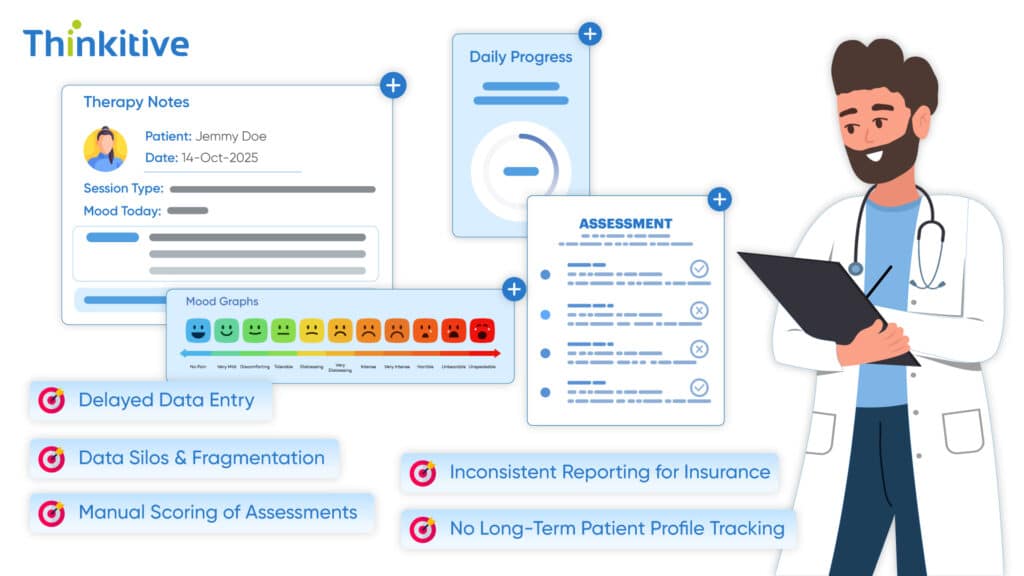
That’s why clinicians face many challenges, including delayed data entry and manual scoring of standardized assessments, making it difficult to track real-time patient progress. In addition, there are no features to track a patient’s profile over a long time.
After this, the biggest challenge they bring is a lack of support for assessment forms such as PHQ-9, GAD-7, and BDI, along with no automated scoring. All of this hinders providers from having a holistic view of the patient profile and slows down the decision-making process.
Furthermore, insurance-compliant EHR reporting is not possible with generic EHRs. The reason for this is that these systems usually record data in inconsistent reporting formats, which often leads to claim rejection.
The final challenge is data silos. Generic EHRs lack integration and interoperability, creating a fragmentation in data and scattering patient data across systems. This means when providers need to view a patient’s profile, the therapy notes are in one system and the progress notes in another, making outcome tracking difficult.
How Automated Real-Time Monitoring Works in Custom EHRs
Custom EHRs transform behavioral health care by making real-time progress monitoring in mental health effortless. Assessments like PHQ-9, GAD-7, and other standardized tools are automatically scored and integrated, eliminating manual entry errors and delays.
Providers can view each patient’s progress on live dashboards with trend visualization, giving a clear picture of changes over time. This makes it easy to identify patterns, track outcomes, and adjust treatment plans proactively, which is exactly what measurement-based care monitoring aims to achieve.
Automated alerts notify clinicians of significant score changes or emerging risk factors, ensuring timely interventions before small issues become serious.
On the administrative side, these systems simplify insurance reporting. Reports can be seamlessly exported for audits or submission, supporting insurance-compliant EHR reporting and reducing claim denials. With a unified platform, both clinical and administrative teams gain the insights they need fast, accurately, and stress-free.
Benefits of Real-Time Monitoring
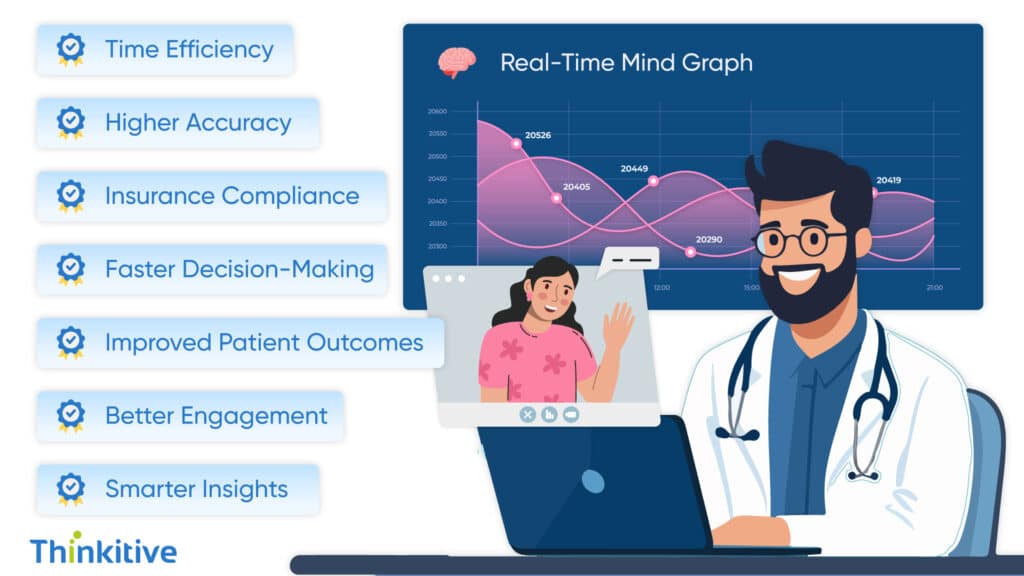
One of the biggest wins of real-time progress monitoring in mental health is time efficiency. Clinicians no longer need to spend hours manually scoring assessments or digging through spreadsheets—automated systems handle it all in the background.
Accuracy also improves dramatically. Automated scoring and integrated dashboards reduce human errors in documentation, ensuring that every PHQ-9, GAD-7, or BDI score is reliable and actionable.
From an administrative standpoint, these tools support insurance-compliant EHR reporting. Reports are ready to submit, meeting payer requirements and reducing the risk of claim denials.
Most importantly, patients benefit. Immediate access to trends and alerts allows clinicians to intervene promptly, improving engagement and outcomes. By combining behavioral health outcome tracking with actionable insights from dashboards for real-time mental health outcomes, providers can make care decisions that are both faster and more precise.
Future Trends in Real-Time Monitoring
The future of real-time progress monitoring in mental health is exciting. AI-driven predictive analytics will help clinicians identify at-risk patients before crises occur, enabling proactive interventions.
Integration with patient portals and telehealth platforms ensures that data flows seamlessly between providers and patients, creating a more connected care experience. Cross-system interoperability using FHIR and HL7 standards will break down information silos, giving providers a complete view of patient health.
Wearable devices and patient-reported data are also becoming part of the picture. By incorporating these sources, EHRs can offer a more comprehensive, continuous understanding of patient outcomes, enhancing behavioral health outcome tracking and supporting smarter clinical decisions.
Conclusion
Real-time monitoring is no longer a luxury; it’s a necessity for both patient care and insurance-compliant EHR reporting. While generic systems struggle with delayed data, fragmented information, and inconsistent reporting, custom EHRs provide automated dashboards, real-time alerts, and actionable insights.
By leveraging dashboards for real-time mental health outcomes, providers can improve care efficiency, enhance measurement-based care monitoring, and stay compliant with payer requirements.
Discover how your practice can implement real-time outcome monitoring to improve patient care and satisfy insurers.
Frequently Asked Questions
It’s the continuous tracking of a patient’s behavioral health status using standardized assessments, automatically updated in the EHR, allowing clinicians to see trends instantly, make timely interventions, and improve both clinical and administrative decision-making.
Insurers analyze behavioral health outcome data to verify treatment effectiveness, ensure compliance with care standards, and determine reimbursement eligibility. Accurate, timely reporting reduces claim disputes and supports value-based payment models tied to patient progress.
Generic EHRs are designed for broad medical data, not behavioral health. They often require manual scoring, have fragmented patient information, poor longitudinal trend visualization, and inconsistent reporting formats, making real-time progress monitoring in mental health difficult.
Standardized tools like PHQ-9, GAD-7, and BDI are most commonly tracked. These assessments measure depression, anxiety, and other behavioral health outcomes, providing actionable insights for measurement-based care monitoring and insurer reporting.
Custom dashboards offer live trend visualization, automated alerts for score changes, and integrated assessments. This allows clinicians to intervene promptly, adjust treatment plans in real time, and deliver more personalized, effective behavioral health care.
Yes. Automated, accurate data collection and standardized reporting ensure insurance-compliant EHR reporting, making claims easier to justify and submit, reducing errors, denials, and administrative burden while keeping both clinicians and payers satisfied.


