Mental Health Insurance Denials: How Incorrect Coding Costs You Thousands

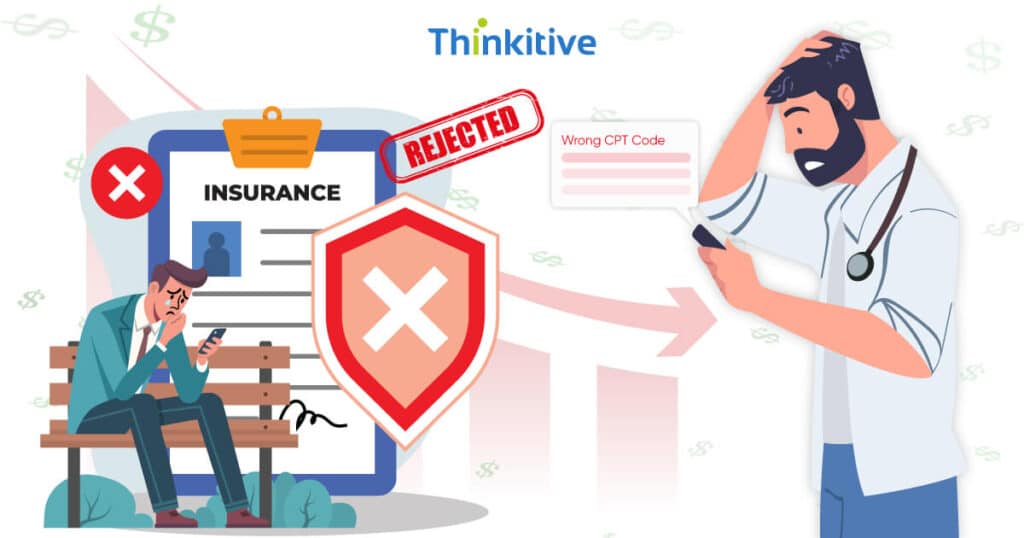
Typically, claiming insurance is already complicated, but it is much more complicated for behavioral health. But the most troubling thing for mental health clinicians? EHR coding in behavioral health. With multiple session types, each requires CPT codes for mental health, and even small mistakes can lead to costly mental health insurance denials.
Imagine this: you submit a claim and file every code that you thought was correct. However, it was still denied, and surprisingly, the reason was? Incorrect coding. This scenario has become the most common reason for insurance reimbursement denials in mental health.
Moreover, this not only frustrates clinicians but also affects time, adds administrative headaches, and diverts their attention from patient care. And what makes this more difficult is generic EHRs. With most mental health clinics using generic EHR, it falls short in supporting behavioral health needs and nuances.
So, what can make this situation better?
The solution is adopting a custom mental health EHR solution that simplifies the coding, ensures insurance-compliant documentation, and improves behavioral health revenue cycle management.
In this blog, we will explore how incorrect EHR coding causes insurance denials in mental health. Along with how practices can leverage behavioral health EHR implementation services to reduce mental health insurance denials, streamline claims, reduce mental health insurance denials, and reclaim revenue.
Let’s dive in!
The Scope of the Denial Problem
For mental health practices, claim denials are more than just an inconvenience. They are a challenge that slows down operations and finances. With each denial, a practice loses revenue, and each correction not only wastes time but also adds extra hours to an already tight schedule.
So, what’s causing this? The answer is incorrect CPT codes for mental health services. As I said earlier, incorrect codes have become the most common cause of claim denials. It is not possible to remember every code right for individual, group, family therapy, or specialized interventions, and this leads to rejection.
Most insurance companies need accurate coding, and with each type requiring its own CPT code, even a single error is enough. Along with incorrect coding, there is one more major contributor, and that is incomplete documentation.
With generic EHRs unable to capture behavioral-health specific details, documentation remains incomplete. This can lead to entering incorrect code, increasing the likelihood of claim denials.
In short, the main reasons for increased claim rejections are incorrect coding and incomplete documentation, along with a generic EHR. Recognizing this is the first step towards claim denial prevention and improving behavioral health revenue cycle management.
How Generic EHRs Cause Claim Denials With Incorrect Mental Health Coding
Learn HowWhy Generic EHRs Contribute to Denials
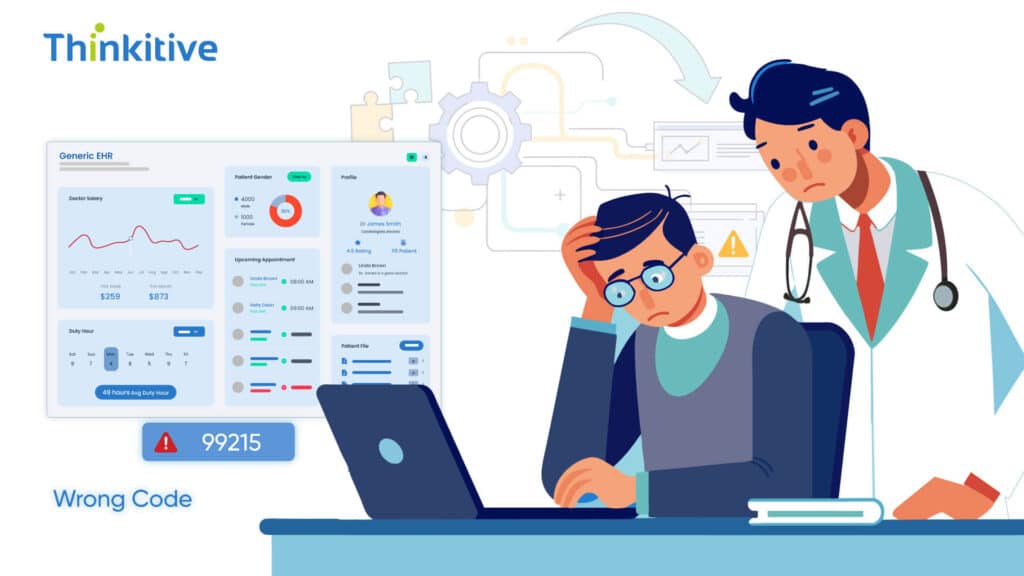
Although mental health care is completely different from physical care, many clinics still use generic EHRs designed for physical care. This means that the EHR does not match the workflows and nuances of behavioral health, contributing to mental health insurance denials.
Here, the first major limitation is the lack of specialized coding templates that are designed for behavioral health. Without these templates, clinicians get easily confused about which codes to use for individual sessions, group sessions, or family therapy. This confusion leads to errors and ultimately claim rejections.
Another challenge with generic EHR is its rigid workflows. These systems often force therapists to document like a primary care provider, making it difficult to track progress and consuming extra time. To solve this problem, providers use workarounds such as copy-pasting, increasing the risks of mistakes and inconsistencies.
The last reason for generic EHRs increasing the rate of denials is their lack of smooth integration with billing and insurance reporting systems. This leaves providers to manually transfer patient data without being verified, creating gaps and delays.
Long story short, generic EHRs might handle basic needs of behavioral health, but when it comes to billing, they fall short.
Why Mental Health PAs Keep Getting Denied
Read HereThe Cost of Denials
When it comes to insurance denials, the impact is deep on both clinics and clinicians. It’s not just frustration and increased workload, but time wasted on fixing and resubmitting claims multiple times. In addition, each denial means revenue loss for the clinic, often in thousands of dollars, depending on the session type.
However, the consequences go beyond just financial losses and wasted time; they impact patient care. With each resubmission, the provider focuses on the time that should be spent engaging with the patient rather than fixing incorrect codes.
This also impacts clinicians’ well-being. A resubmission means the administrative team and clinicians have to file the codes again, possibly for dozens of patients, adding extra hours of work, leading to burnout and then turnover.
So, the situation becomes like this: a mental health clinic experiences denials for incorrect coding sessions. The clinicians spend time fixing errors and feeling overwhelmed, which leads to turnover. For the clinic, this means lost revenue of thousands of dollars in reimbursements and added expense in hiring and onboarding the new staff.
In short, a single denial can lead to burnout, lost productivity, and revenue loss. That’s why the solution for reducing insurance claim denials in mental health clinics is. And that solution is adopting a custom mental health EHR solution.
How Custom EHRs Help Prevent Denials
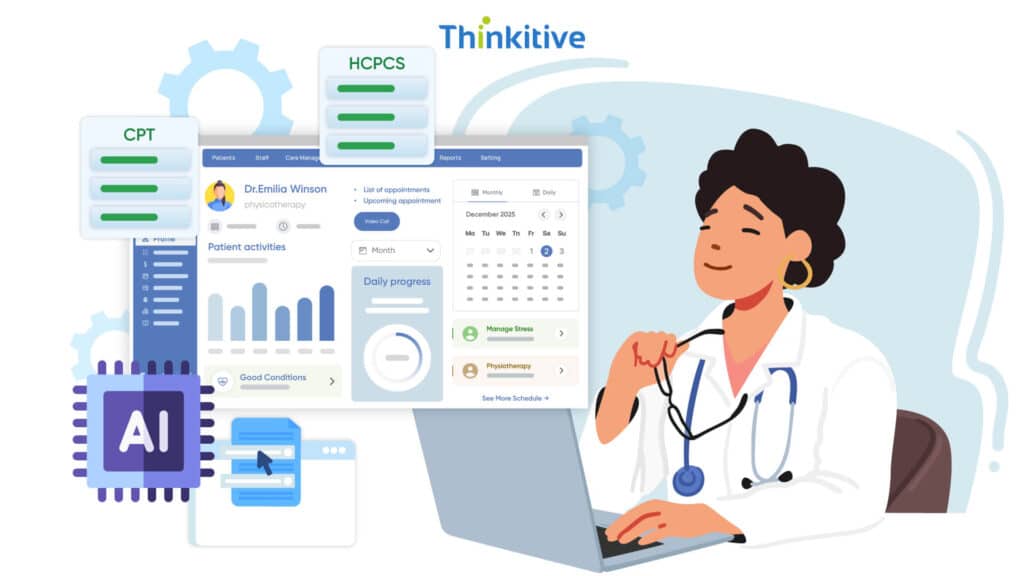
Now that you understand how generic EHRs make the already complicated insurance claiming more complex, let’s understand how a tailored EHR helps. Behavioral health faces some unique challenges that are not easy to overcome, so a custom EHR is equipped with features for resolving these issues.
The first feature is that it comes with built-in documentation templates and behavioral health CPT and HCPCS codes. This means the provider is automatically shown the appropriate codes as per the treatment provider, reducing the risk of entering incorrect codes.
Another feature that makes custom EHR better is automated claim scrubbing for mental health practices. It checks every claim before it is submitted and validates its compliance with the insurance company, and ensures that every document and CPT codes for mental health are correct.
This, combined with alerts for errors in claims, reduces errors and improves the accuracy of claim submission. One more feature that makes the whole process seamless is integration. Custom mental health EHRs effortlessly connect with insurance reporting workflows, allowing billing teams to submit and track the claims efficiently.
With all of these claim denial prevention features, the process becomes much smoother and more reliable, improving the behavioral health revenue cycle management and insurance reimbursement in mental health.
How Custom EHRs Reduce Denials with Automated Claim Scrubbing
Find Out HowBest Practices for Coding & Documentation
Even with the custom EHR, avoiding mental health insurance denials depends on how well your billing team codes and documents. That’s why it’s important to understand the best practices for CPT coding in behavioral health and documenting.
The challenge with mental health coding is that each session comes with its own unique codes and modifiers. With these confusing codes, entering even one wrong code can lead to denials or delayed insurance reimbursement for mental health clinics.
After this, documentation calls for similar accuracy. Every insurance company expects clear, consistent, and timely records that justify the service billed. This not only supports reimbursement but also strengthens clinical transparency and compliance.
Moreover, regular training for staff on EHR updates and behavioral health coding changes can make a significant difference. Mental health billing rules evolve frequently, and keeping your team current helps minimize errors.
Finally, conducting internal audits every few months helps identify recurring mistakes before they lead to costly denials. By following these best practices and using a custom behavioral health EHR, clinics can maintain clean claims, accelerate reimbursement, and protect their revenue cycle from disruption.
Real-World Example: Reducing Denials with a Custom Mental Health EHR

To better understand how a custom mental health EHR makes a difference, let’s take a hypothetical example. The clinic is struggling with recurring insurance denials and slow reimbursements. The clinic relied on a generic EHR that lacked behavioral health-specific coding templates and automation features.
As a result, billing staff spent hours correcting CPT code errors, reworking claims, and responding to payer rejections, causing significant revenue leakage each month.
To address this, the clinic implemented a custom mental health EHR equipped with built-in behavioral health CPT and HCPCS codes, automated claim scrubbing, and real-time documentation alerts. Within just three months, the clinic saw a 35% reduction in claim denials and a noticeable improvement in behavioral health revenue cycle management.
With the custom EHR, the results and improved ROI were clear. Moreover, the staff saved dozens of hours each week previously spent on rework, and monthly revenue increased due to faster reimbursements and fewer rejected claims. By investing in an EHR tailored to behavioral health, the clinic not only improved financial outcomes but also freed clinicians to focus more on patient care and less on paperwork.
Future Trends in Insurance & EHRs
The future of mental health insurance reimbursement is moving toward smarter, data-driven systems, and EHRs are evolving to keep pace. One of the most promising developments is the use of predictive analytics to identify high-risk claims before submission. By analyzing historical patterns, EHRs can flag potential coding or documentation issues early, giving billing teams a chance to correct them before payers reject the claim.
Another game-changer is AI-assisted claim validation and coding suggestions. Advanced EHR platforms are already integrating machine learning tools that recommend the most accurate CPT and HCPCS codes for behavioral health services. This not only reduces manual effort but also minimizes errors that lead to denials.
Finally, insurers are increasingly focusing on evidence-based outcomes. Mental health EHRs that can link clinical documentation, patient progress, and measurable treatment results will have a clear advantage in future reimbursement models.
In short, the next generation of behavioral health EHRs will go beyond documentation; they’ll act as intelligent billing partners that predict, prevent, and optimize the entire revenue cycle management process for mental health practices.
Conclusion
For healthcare, smooth insurance claims have always been a challenge. However, for mental health, it is on another level. With multiple session types and their unique codes and modifiers, most mental health insurance denials occur because of incorrect coding.
In addition, the generic EHRs these practices use are not designed with the needed codes and documentation templates, making the process more complicated. That’s why the clinics must adopt behavioral health EHRs that support insurance-compliant documentation and are equipped with features for claim denial prevention.
This makes it easy to improve revenue and reduce mental health insurance denials without compromising the clinicians’ well-being.
If your clinic is facing these frequent denials and losing thousands of dollars annually, then it’s time to upgrade to a tailored EHR solution. Book a demo and see how the custom EHR reduces denials and boosts revenue with smarter EHR coding.
Frequently Asked Questions
The top reasons include incorrect CPT or HCPCS codes, missing or incomplete documentation, improper use of modifiers, failure to meet payer-specific requirements, and coding errors for therapy session types like individual, group, or chronic care management.
Coding errors can lead to denied claims, delayed payments, and lost revenue. They also increase administrative workload, cause billing staff frustration, and can prevent clinicians from focusing on patient care, ultimately affecting a practice’s financial stability and workflow efficiency.
Behavioral health CPT codes include individual psychotherapy (90832, 90834, 90837), group therapy (90853), family therapy (90846, 90847), and psychiatric evaluation codes (90791, 90792). Each code has specific time requirements, session types, and modifiers for accurate billing.
Yes, automated claim scrubbing identifies coding errors, missing documentation, or invalid modifiers before submission. Catching mistakes early minimizes insurance denials, accelerates reimbursement, and reduces staff time spent on rework and claim corrections.
Custom EHRs provide built-in behavioral health coding templates, session-specific CPT/HCPCS codes, automated validation, and alerts for missing documentation. These features ensure claims are accurate, compliant, and complete, significantly reducing errors and denied reimbursements.
Clinics should conduct regular internal audits of claims, review documentation against payer requirements, update staff training on coding changes, correct recurring errors, and leverage EHR features like automated claim validation to prevent future denials.


