The Mental Health Documentation Crisis: When Generic EHRs Fail Your Practice

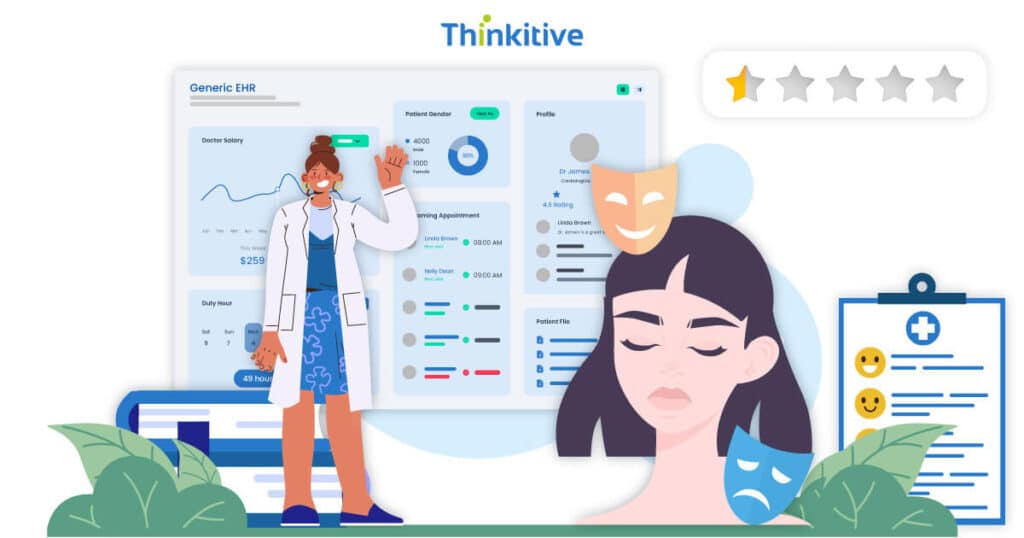
“Ask any clinician what keeps them up at night, it’s not patients, it’s paperwork.”
In mental health, the real problem is not the shortage of providers and the rising demand for services, but the documentation. The reason for this is that therapists are forced to document things like primary care providers.
Being a provider, you know that therapists don’t document in a fixed manner or in checkboxes. They need to create detailed narrative progress notes and care plans. Plus, what these clinicians document is the emotional states, changes, and triggers of the patients.
And here, generic EHRs fall short as they were designed to help generic care providers, not mental health providers. So, in mental health practices, EHR, a tool to make life easier, has become a burden that exhausts the clinicians.
Using a generic EHR means endless clicks through unnecessary fields, time wasted, and patient details lost in the system. Moreover, if not addressed properly, this creates a never-ending cycle where providers spend more time documenting and less time engaging patients.
So, you might be wondering what can solve this mental health documentation crisis?
The answer is building a custom mental health EHR that supports the behavioral health EHR documentation and workflows.
In this blog, we will explore how generic EHRs make documenting harder and cause burnout in mental health practice. While at it, we will look at how custom mental health EHR solutions can change the whole situation.
Let’s dive in.
Inefficient Workflows That Drain Time
For many mental health clinicians, the day does not end with the last patients; it continues till late at night. The reason for this is that an inefficient EHR doesn’t match their practice workflows. These providers are forced to click through the unnecessary fields, dropdowns, and screens that never seem to be of use. What should take minutes goes on for hours, eating up providers’ both personal time and time with patients.
Even during sessions, the system pulls attention away from patients. The therapist is constantly jumping from patient to EHR and navigating the screens that hold no relevance for the sessions. This means the attention is split, and by the end of the day, physicians are exhausted, and the data remains incomplete.
This isn’t just inconvenient; it directly impacts patient care. When documentation takes priority over engagement, the therapeutic relationship suffers, sessions feel rushed, and providers leave work feeling frustrated and ineffective. The cycle continuously repeats itself: after-hours charting eats into personal time, clinicians lose balance, and burnout becomes inevitable.
One-Size-Fits-All Design That Ignores Mental Health Needs
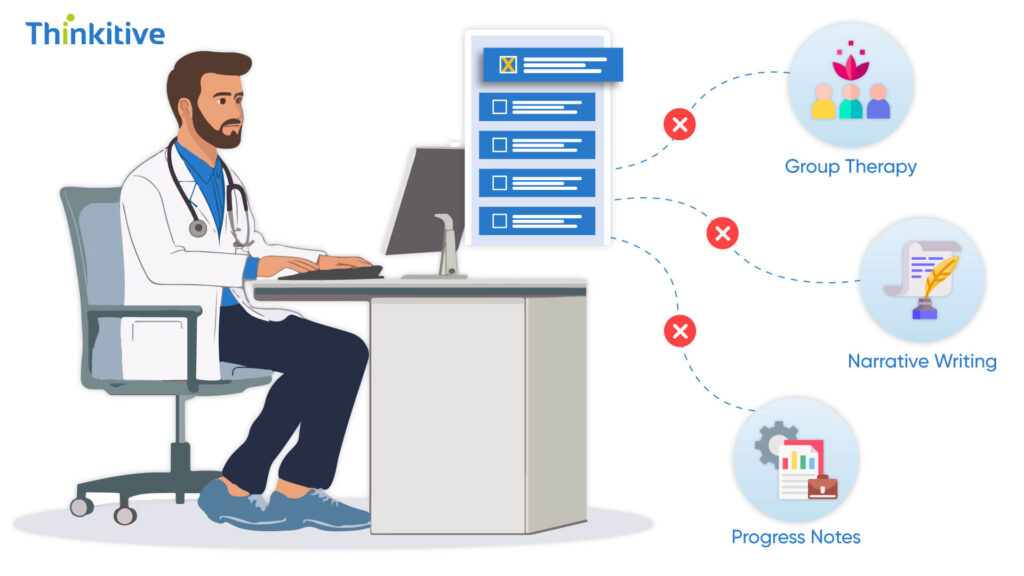
When it comes to generic EHRs, the templates are always designed for generic care, not to fit the specific workflows of behavioral health. The general practitioners work with a rigid format of checkboxes and fields that record vitals.
However, for therapists who conduct group counseling and therapy sessions, this format is like trying to fit square pegs into a circle. For mental health, the notes need to be detailed and narrative. However, the group therapy EHR documentation is not supported by the generic EHR, and clinicians are forced to put it in free-text boxes.
Similarly, progress note inefficiency in mental health is due to the lack of flexibility in the generic templates. All of these challenges make documentation a multiple-hour task with EHR instead of a task that is completed in minutes.
The next factor that makes data handling even more troublesome is the poor data standardization. Outcome tracking, research, and quality measurement become nearly impossible because systems can’t communicate in the same language. This means providers spend hours just finding workarounds such as copy-pasting notes, improvising templates, and juggling multiple systems.
The result of all this is a double burden, because not only is energy and time drained, but it also increases providers’ burnout. These inefficient tools make behavioral health EHR documentation a task that exhausts clinicians both mentally and physically.
Struggling with Long Progress Notes? Read How To Reclaim Your Time Here
Talk to our ExpertsBarriers to Connections & Care Coordination
Even if clinicians somehow manage to document all the sessions in the generic templates, connecting with all essential healthcare systems becomes difficult. The mental health specialty can’t function in isolation, but with these EHRs connecting with labs, wearable devices, and pharmacies, it becomes challenging.
For clinicians, this means spending extra time coordinating with labs and pharmacies. Moreover, without the proper integration with medical records, patient safety can be compromised by adverse drug reactions. Patients also feel unheard if the clinician gives more attention to the screen than to the ongoing session.
Over time, this affects the patient’s trust, frustrates patients, and weakens the therapeutic relationships. So, the lack of interoperability does not just slow workflows; it also creates real clinical and emotional consequences.
Providers feel overburdened and under-supported, and patients feel unheard and lack attention. Finally, burnout isn’t just about the stress, but a silent erosion of meaningful relationships and patient care.
The Hidden Costs of Burnout & Bad Documentation
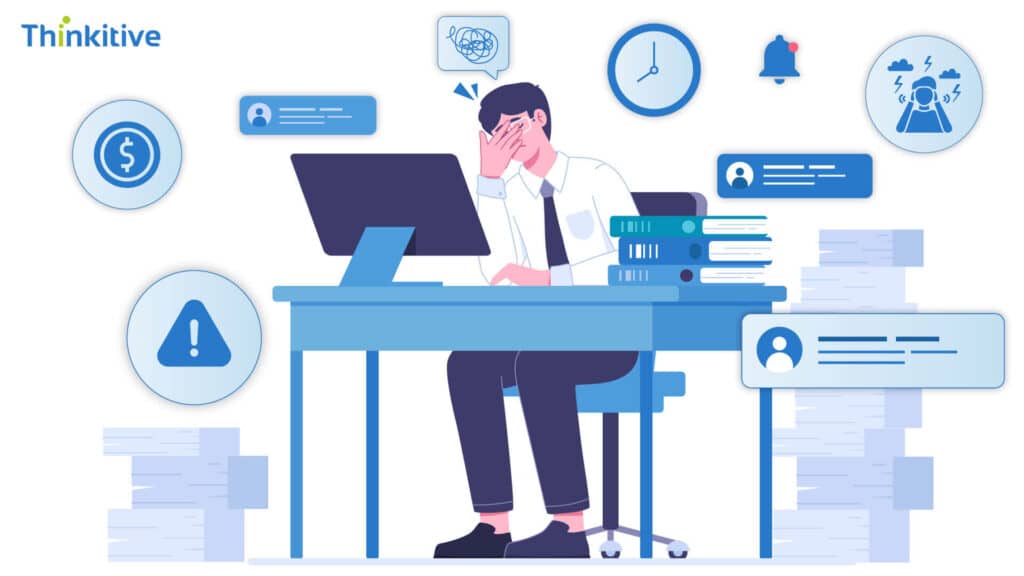
The impact of burnout is not just limited to clinicians; it ripples through all layers of the care and clinic. When the work becomes too much or the staff is stretched too thin, the stress climbs high, leading to high turnover rates. And the costs of recruitment, onboarding, and training new clinicians are not small, affecting clinics’ finances.
In addition, the quality of patient care is also affected. Although copying and pasting notes or any other workaround might be enough to fulfill compliance, insights are lost in this scramble. Making evidence-based decisions becomes harder, and treatment effectiveness is harder to keep track of.
Patients also notice these care gaps and the longer wait times. Moreover, missed follow-ups, rushed sessions, and distracted providers lead to dissatisfaction and in mental health relationships and reputation matters. Even if one frustrated patient leaves the clinic, it can spread quickly, undermining trust and discouraging others from seeking care.
Then there is the patient safety risk. When documentation is redundant, cluttered, or inconsistent, it increases the chance of missed red flags and clinical errors. So, what starts as inefficient paperwork can escalate into compromised care.
In the end, burnout fueled by bad documentation costs more than time and energy. It drains finances, damages reputations, and most importantly, negatively impacts patient well-being.
Managing Multiple Clients In One Session? Learn How Standard Ehrs Fall Short
Read NowWhen Documentation Drains More Than It Delivers
Let’s understand the whole situation through a hypothetical case study. Consider the experience of a mid-sized community mental health center in Ohio that adopted a hospital-grade EHR a few years ago. On paper, the system promised efficiency and compliance, but in reality, it nearly doubled the documentation time for therapists.
Progress notes that should have taken 10 minutes stretched into 25-30 because templates were built for medical visits, not counseling sessions. Drop-down menus for vitals, medications, and lab work crowded out the space where therapists needed to record progress, behavior, and treatment goals. The result was that clinicians were staying late every evening, often finishing notes long after their last session.
Within a year, their turnover rose, and the leadership realized the issue wasn’t just staff resilience but the very tools they were asking their providers to use. When they piloted a custom behavioral health EHR with templates designed around therapy workflows, documentation time dropped significantly, and provider satisfaction rebounded.
And this is not just a story; it’s the reality that mental health practices across the country are facing this issue. So, rather than settling for a generic EHR, using a custom mental health EHR is the only solution for the mental health documentation crisis.
How Custom Mental Health EHRs Solve the Problem
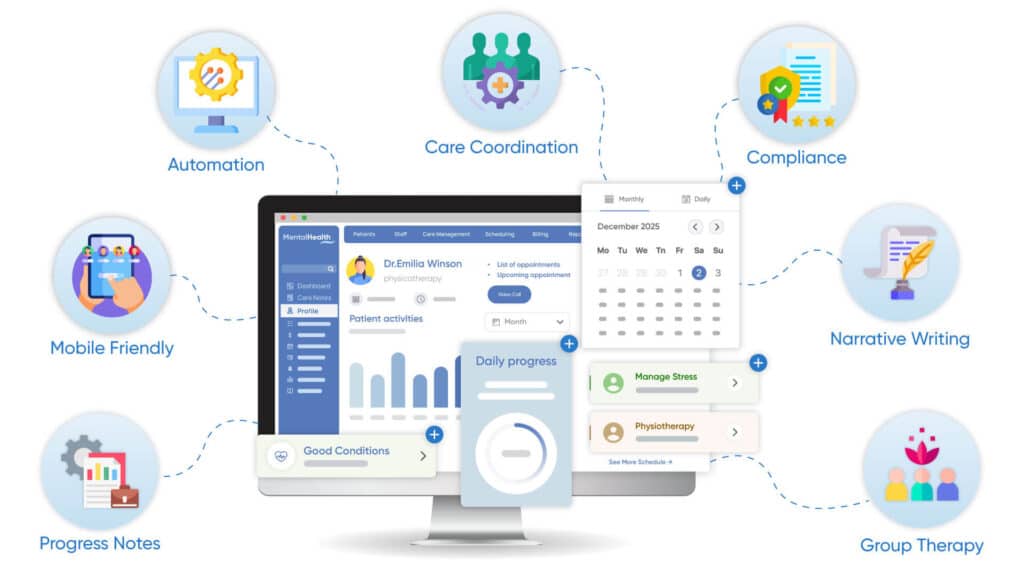
The main issue with the generic EHRs is that they were not built for the behavioral health workflows. That’s why adopting custom EHRs is the best option, as they effectively handle all the mental health documentation crises.
Custom mental health EHR takes a different path by adapting to the mental health practice workflows. With custom EHR templates that support progress notes, DSM-5 EHR documentation, and eliminate the unnecessary clicks, preventing them from creating workarounds for every document. Additionally, group therapy EHR documentation challenges are solved as the EHR can easily document all the summaries and care plans for the group sessions.
Moreover, it’s not just templates for clinical staff; administrators also get a smart way to work. With automation, the routine tasks like scheduling, billing, and charting are taken care of, freeing clinicians from manual grind and giving them hours each week.
Another advantage of using a custom mental health EHR is its mobile-friendly tools. The system can seamlessly function on the mobile, keeping the care mobile, and doctors can keep track of the patient’s health on the go. Even if they are away from their desks, providers can easily update patient details and care plans, without burning into personal time.
The next big change with the custom system is the improvement in care coordination between providers. With generic systems, all the involved care providers can’t talk seamlessly, but a custom EHR removes this barrier with features like shared care plans, task management, and progress tracking, keeping the whole care team on the same page.
Finally, the biggest worry of compliance is solved with a custom mental health EHR that is developed by adhering to all the regulations and compliance. Moreover, all the security measures, such as end-to-end encryption and role-based access control, ensure that patient data remains safe and the clinic is always audit-ready.
So, the difference is clear: a generic EHR is a tool that seems helpful but silently burdens the care providers. Custom EHR makes work much easier for clinicians, helps clinics reduce turnover, and significantly improves the quality of care.
Need DSM-5–aligned Templates? Discover How to Get them Right
Talk to our ExpertsConclusion
In a nutshell, generic EHR is the biggest contributor to the mental health documentation crisis. It is unable to support the specific needs of the behavioral health practice and makes documenting harder instead of easier.
Moreover, the providers have to work extra and compromise patient care to finish documenting all the data in a template that is not made for mental health practice. However, with a custom mental health EHR, it is possible to shift this situation.
With custom mental health templates and an EHR built to support behavioral health workflows, you can make documenting much easier and accurate. So, instead of choosing a generic EHR that will make your work stressful, build your own EHR that can help you care better for the patients.
Talk to our healthcare software experts for your initial assessment to build an EHR that suits your needs and works around your workflows.
Frequently Asked Questions
Generic EHRs contribute to clinician burnout by forcing mental health providers to navigate rigid templates, endless clicks, and after-hours charting that don’t match therapy workflows. This drains time, fragments focus, and shifts attention from patients to screens, leaving clinicians exhausted and frustrated while care suffers.
Mental health providers struggle with generic EHR documentation because these systems are designed for hospitals, not therapy sessions. Templates don’t fit counseling workflows, progress notes become repetitive, and after-hours charting eats into providers’ work and personal time. Clinicians end up spending more time on screens than with patients, fueling frustration and burnout.
Poor data standardization makes keeping document consistency difficult. Each note, lab result, and assessment is different, adding to the providers’ already huge burden. They spend extra time deciphering, reformatting, and duplicating the information. This slows down care, adds frustration, and chips away at both productivity and the joy of patient interactions.
Generic EHRs often distract clinicians from patients, forcing them to focus on screens instead of conversations. Long clicks, rigid templates, and after-hours charting turn sessions into administrative tasks, weakening trust, reducing empathy, and making patients feel unheard, ultimately straining the therapeutic relationship.
Yes. When EHR systems don’t communicate, clinicians spend extra time chasing information across labs, devices, and telehealth platforms. This fragmented workflow adds frustration, delays care, and forces providers to juggle screens instead of patients, turning what should be meaningful work into a constant source of stress and burnout.
Custom mental health EHRs reduce clinician burnout by streamlining workflows with therapy-specific templates, automating scheduling and billing, enabling mobile-friendly charting, and integrating care coordination tools. Built-in compliance and reporting save time and stress, letting providers focus on patients instead of paperwork.
EHR-related burnout makes clinicians feel overwhelmed, frustrated, and undervalued. Endless clicks, rigid templates, and after-hours charting lead many to leave for less stressful environments. High turnover disrupts continuity of care, increases recruitment costs, and forces remaining staff to shoulder heavier workloads, creating a vicious burnout cycle.
Yes, generic EHRs can put patient safety at risk because irrelevant templates, duplicate data, and siloed information increase the chance of missed red flags or clinical errors. When clinicians spend more time navigating the system than focusing on patients, critical details can go unnoticed, endangering patient safety.
Custom EHRs improve compliance by embedding regulatory requirements directly into clinicians’ workflows. From DSM-5–aligned templates to automated reporting for CCBHCs and grants, these systems reduce errors, simplify audits, and ensure documentation meets standards, all while letting providers focus on patient care instead of chasing forms.
Clinician burnout from EHR inefficiencies goes beyond just clinicians’ fatigue; it drives staff turnover, slows billing, and reduces productivity. Replacing clinicians and managing delayed documentation drains time and money, quietly inflating operational costs while compromising patient care and organizational stability.


